- Company Articles
- Industry articles
- Industry standards
- 4040B EU Standard Aluminum Profile Load Capacity: Static & Dynamic Performance Data

4040B EU Standard Aluminum Profile Load Capacity: Static & Dynamic Performance Data
Related Product
4040B EU Standard Aluminum Profile
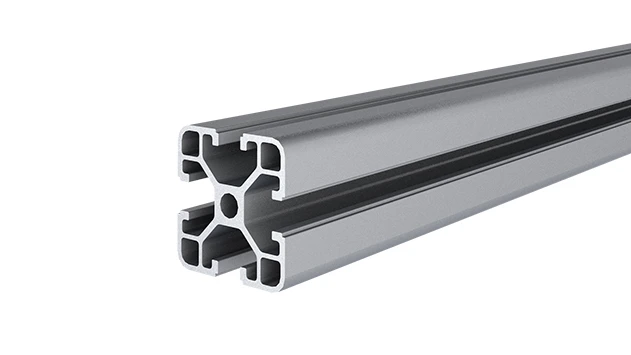
4040B is a 4.00x4.00 CM fractional 40 series square extrusion T-slot profile with four open T-slots, each side with 4.00cm face. The profile has align-a-grooves to assist in aligning connecting profiles.
In the world of manufacturing, warehousing, and industrial setups, the unsung heroes often lie in the materials that form the backbone of daily operations. Aluminum profiles, in particular, have become a cornerstone of modern facility design, prized for their versatility, strength, and adaptability. Among the myriad of profiles available, the 4040B EU Standard Aluminum Profile stands out as a workhorse, trusted by engineers and facility managers alike for its balance of durability and flexibility. But what truly sets it apart is its impressive load-bearing capabilities—both static and dynamic—that make it a go-to choice for everything from workbenches to material racks. In this article, we'll dive deep into the performance data of the 4040B profile, exploring how it handles stationary loads, moving weights, and the real-world factors that influence its reliability. Whether you're setting up a new production line or upgrading existing infrastructure, understanding these details will help you make informed decisions that keep your operations running smoothly and safely.
What is the 4040B EU Standard Aluminum Profile?
Before we jump into load capacities, let's take a moment to get familiar with the star of the show: the 4040B EU Standard Aluminum Profile. As the name suggests, this profile adheres to European union standards, ensuring consistency in dimensions, material quality, and performance across manufacturers. The "4040" refers to its cross-sectional dimensions—40mm in width and 40mm in height—making it a medium-sized profile ideal for applications that require a balance between strength and maneuverability. The "B" designation often indicates specific design features, such as groove configuration or wall thickness, which can vary slightly between suppliers but generally align with EU specifications for structural integrity.
Crafted through the aluminum extrusion process, this profile is formed by forcing heated aluminum alloy (typically 6063-T5, known for its excellent strength-to-weight ratio and corrosion resistance) through a die to create its characteristic shape. The result is a lightweight yet robust structure with precision-engineered T-slots running along its length. These T-slots are more than just a design quirk; they're the secret to the profile's versatility, allowing for easy attachment of aluminum profile accessories like brackets, connectors, panels, and shelves without the need for welding or drilling. This modularity means that a single 4040B profile can be reconfigured countless times, adapting to changing workflow needs—whether it's supporting a workbench in a workshop, forming the frame of a material rack in a warehouse, or serving as the backbone of an assembly line conveyor system.
But what truly makes the 4040B profile a staple in industrial settings is its reliability under load. In any application, the ability to safely support static weight (objects at rest) and dynamic weight (objects in motion) is non-negotiable. A workbench, for example, might need to hold heavy tools, components, and equipment day in and day out, while a material rack must withstand the stress of boxes being loaded, unloaded, and shifted. Even subtle movements—like the vibration from nearby machinery or the impact of a caster wheel rolling over a joint—can test a profile's limits. That's why understanding both static and dynamic load capacities isn't just about numbers on a spec sheet; it's about ensuring the safety of workers, the longevity of equipment, and the efficiency of operations.
Static Load Capacity: The Foundation of Stability
Static load capacity refers to the maximum weight a structure can support when the load is stationary and evenly distributed. For the 4040B EU Standard Aluminum Profile, this is the baseline measure of its strength—the weight it can hold without bending, warping, or failing over time. Think of it as the profile's "day-to-day" strength: the tools on a workbench, the boxes stacked on a material rack, or the components resting on a shelf. To determine this capacity, manufacturers conduct rigorous testing, applying incremental weights to the profile under controlled conditions and measuring deflection (how much it bends) until it reaches a critical point.
The static load capacity of the 4040B profile isn't a one-size-fits-all number, though. It depends on several key factors, starting with the profile's length. Unsurprisingly, a shorter section of 4040B can support more weight than a longer one. For example, a 1-meter length of 4040B profile mounted vertically (like a table leg) might handle upwards of 800 kg, while a 2.5-meter length mounted horizontally (like a shelf beam) might only support 200 kg before significant deflection occurs. This is because longer spans are more prone to bending under load—a principle known as beam deflection, where the weight creates a bending moment that increases with length. Wall thickness also plays a role: the 4040B typically has a wall thickness of 2mm to 3mm (depending on the manufacturer), which strikes a balance between weight savings and strength. A thicker wall would increase load capacity but add unnecessary weight, while a thinner wall would compromise durability.
Another critical factor is the mounting orientation. When the profile is mounted vertically, it acts as a column, and its load capacity is primarily determined by its compressive strength. In this orientation, the 4040B can handle much higher loads because the weight is distributed along the axis of the profile, minimizing bending. Horizontally, however, it acts as a beam, and the load capacity drops because the weight is applied perpendicular to the axis, creating that bending moment we mentioned earlier. The type of support also matters: a profile supported at both ends (a simply supported beam) will have a lower capacity than one supported continuously along its length or reinforced with additional brackets.
To put this into perspective, let's look at some typical static load data for the 4040B profile. The following table provides example values based on industry standards and common manufacturer specifications. Keep in mind that these are general guidelines; always consult your supplier for exact figures, as they may vary slightly based on alloy composition, surface treatment, and manufacturing tolerances.
| Profile Length (m) | Mounting Orientation | Support Type | Static Load Capacity (kg) | Maximum Deflection (mm) |
|---|---|---|---|---|
| 1.0 | Vertical (Column) | Fixed at Base | 800 – 1000 | < 1.5 |
| 1.5 | Vertical (Column) | Fixed at Base | 650 – 750 | < 2.0 |
| 1.0 | Horizontal (Beam) | Simply Supported (Both Ends) | 450 – 550 | < 2.5 |
| 1.5 | Horizontal (Beam) | Simply Supported (Both Ends) | 300 – 350 | < 4.0 |
| 2.0 | Horizontal (Beam) | Simply Supported (Both Ends) | 200 – 250 | < 6.0 |
| 2.5 | Horizontal (Beam) | Simply Supported (Both Ends) | 150 – 180 | < 8.0 |
| 1.5 | Horizontal (Beam) | Continuous Support (Along Length) | 500 – 600 | < 2.0 |
As you can see, the data underscores the importance of length and orientation. For instance, a 1-meter horizontal beam supported at both ends can hold around 450–550 kg, but that drops to just 150–180 kg at 2.5 meters. This is why, in applications like workbenches, designers often use shorter spans or add intermediate supports to maximize static load capacity. A typical workbench using 4040B profiles for its frame, for example, might have legs spaced 1–1.2 meters apart to ensure the tabletop can support 300–400 kg evenly distributed—more than enough for power tools, assembly components, and even heavy machinery parts.
It's also worth noting that static load capacity isn't just about avoiding immediate failure. Over time, even a load below the maximum can cause creep—a gradual deformation under constant stress—if the profile is pushed too close to its limits. That's why engineers often apply a safety factor, typically 1.5 to 2 times the expected load, to ensure long-term reliability. For example, if a workbench needs to hold 200 kg daily, the design would target a static load capacity of 300–400 kg, giving a comfortable buffer against unexpected weight spikes or material fatigue.

Dynamic Load Capacity: Handling Motion and Momentum
While static load capacity is about stationary weight, dynamic load capacity is about movement. It refers to the maximum weight the 4040B profile can support when the load is in motion—whether that's a trolley rolling across a shelf, parts sliding down a roller track, or even just vibrations from nearby equipment. Dynamic loads are more complex than static ones because they introduce additional forces: momentum, impact, and vibration. A box being placed gently on a shelf is a static load; the same box being slid onto the shelf or dropped from a short height is a dynamic load. The difference might seem small, but it can significantly increase the stress on the profile.
Dynamic loads are measured in two main ways: impact load and cyclic load. Impact load is the force exerted when a moving object hits the profile—like a tool being dropped on a workbench or a cart slamming into a material rack. Cyclic load, on the other hand, is the repeated application of load over time—think of a conveyor belt continuously moving parts along a 4040B frame, or a worker repeatedly placing and removing heavy items from a shelf. Both types of dynamic load can lead to fatigue failure, where the profile weakens over time due to repeated stress, even if each individual load is below the static limit.
For the 4040B EU Standard Aluminum Profile, dynamic load capacity is influenced by many of the same factors as static capacity—length, orientation, support—but with some added variables. The speed of the moving load, for example, directly affects momentum: a trolley moving at 0.5 m/s will exert less force than one moving at 1.5 m/s when it hits a stop. The surface of the profile also matters; a smooth, anodized finish might reduce friction, lowering the dynamic stress when loads slide across it, while a rough surface could increase friction and impact forces. The type of connection between profiles is another key factor: aluminum profile connectors that are loose or poorly fitted can create play in the structure, amplifying vibrations and reducing dynamic load capacity. Tight, secure joints, on the other hand, distribute forces more evenly, improving stability.
Let's consider a real-world example: a material rack built with 4040B profiles, designed to hold boxes that are loaded and unloaded using a hand trolley. When a worker pushes the trolley onto the rack's shelf, the wheels exert a dynamic load as they roll over the profile. If the shelf is a 2-meter horizontal beam supported at both ends, the dynamic load capacity might be 150–200 kg—lower than its static capacity of 200–250 kg—because the rolling motion introduces those additional forces. If the trolley is loaded to 250 kg and rolled quickly onto the shelf, the impact could cause the beam to deflect more than expected, potentially leading to permanent deformation or even failure over time.
To quantify dynamic load capacity, manufacturers often use testing standards like ISO 10253, which specifies methods for determining the dynamic behavior of structural members. These tests involve applying cyclic loads at various frequencies and amplitudes, measuring deflection and stress, and identifying the point at which the profile begins to show signs of fatigue. For the 4040B profile, typical dynamic load capacities (with a safety factor of 1.5) might look like this:
- Low-speed movement (≤ 0.5 m/s): 60–70% of static load capacity. For a 1-meter horizontal beam (static capacity 450–550 kg), dynamic capacity would be 270–385 kg.
- Medium-speed movement (0.5–1 m/s): 50–60% of static load capacity. For the same 1-meter beam, 225–330 kg.
- High-speed movement (> 1 m/s) or impact loading: 40–50% of static load capacity. For the 1-meter beam, 180–275 kg.
Vibration is another dynamic factor to consider. In manufacturing environments, nearby machinery can create continuous vibrations that, over time, loosen connections and weaken materials. The 4040B profile's rigidity helps here—its square cross-section and uniform wall thickness minimize resonant frequencies, reducing the risk of vibration-induced fatigue. When paired with tight-fitting aluminum profile connectors (like 90° aluminum profile connectors or gusset plates), the profile can maintain its structural integrity even in high-vibration settings, such as near stamping presses or CNC machines.
One practical application where dynamic load capacity shines is in roller track systems. Roller tracks, often used in assembly lines or material handling, rely on 4040B profiles as their support structure. As parts slide along the rollers, the profile must withstand not just the weight of the parts but also the friction and momentum of the movement. A well-designed roller track using 4040B profiles can handle dynamic loads of 150–200 kg per meter, ensuring smooth, consistent material flow without sagging or bending.
The Role of Aluminum Profile Accessories in Load Performance
While the 4040B EU Standard Aluminum Profile itself is a strong and versatile component, its load capacity doesn't exist in a vacuum. The aluminum profile accessories used to connect, support, and reinforce it play a critical role in determining overall structural performance. A high-quality profile paired with flimsy connectors or inadequate brackets is like a sports car with cheap tires—you're not getting the full potential of the system. Let's take a closer look at how accessories influence both static and dynamic load capacity.
Starting with connectors: these are the joints that hold the profile together, whether it's a 90° corner, a T-junction, or a straight extension. The 4040B profile uses T-slot connectors, which slide into the grooves and are secured with bolts or screws. The type of connector matters: a standard corner connector might be sufficient for light loads, but for medium-heavy applications, reinforced connectors or gusset plates are necessary. For example, an aluminum profile connector with a larger contact area (like a 4040 gusset plate) distributes stress more evenly across the profile, reducing the risk of localized bending or cracking. In testing, a 4040B frame assembled with standard connectors might see a 10–15% drop in load capacity compared to one with reinforced connectors—enough to turn a safe design into a risky one if overlooked.
Brackets and supports are another key accessory. Shelf brackets, for instance, attach to the 4040B profile to hold shelves or workbench tops. A flimsy bracket with a small mounting area might bend under load, even if the profile itself is strong enough. Heavy-duty brackets, on the other hand, with multiple mounting points and thick gauge steel or aluminum, transfer the load directly to the profile's T-slots, maximizing stability. For a material rack using 4040B uprights, using 2mm-thick steel brackets instead of 1mm brackets can increase the shelf's static load capacity by 20–30%.
End caps and feet also contribute, though they're often overlooked. End caps protect the profile's ends from damage and prevent debris from entering the T-slots, but they can also reinforce the profile's structural integrity by distributing load at the base. Adjustable feet, which allow for leveling on uneven floors, ensure that the profile stands squarely, preventing uneven weight distribution that could lead to bending. In a workbench setup, for example, uneven feet might cause the frame to twist, increasing stress on one side of the profile and reducing its effective load capacity.
Even something as simple as the fasteners used to secure accessories matters. Using the correct bolt size and torque ensures that connectors don't loosen over time, which is critical for dynamic load applications. A loose connector can create play in the structure, amplifying vibrations and reducing load capacity. Manufacturers often specify torque values (e.g., 8–10 Nm for M6 bolts) to ensure proper installation, and investing in high-quality fasteners (like stainless steel bolts) prevents corrosion that could weaken the connection.
To illustrate the impact of accessories, consider two scenarios: a workbench frame built with 4040B profiles. In Scenario A, the frame uses standard plastic connectors, thin steel brackets, and under-torqued bolts. In Scenario B, it uses reinforced aluminum connectors, heavy-duty brackets, and properly torqued stainless steel bolts. Even though both use the same 4040B profiles, Scenario B could have a static load capacity 25–30% higher than Scenario A, and a dynamic load capacity 30–40% higher, simply because the accessories are better at transferring and distributing load.
Real-World Applications: Putting It All Together
Now that we've explored static and dynamic load capacities, let's look at how the 4040B EU Standard Aluminum Profile performs in real-world applications. From workbenches to material racks, these are the scenarios where its load-bearing capabilities truly matter—and where the right design choices can make or break efficiency and safety.
Workbenches: In workshops and assembly lines, workbenches are the heart of productivity. A typical industrial workbench using 4040B profiles for its frame needs to support not just tools and parts but also the workers using it—who might lean, stand, or even sit on the bench. Let's say the bench is 1.8 meters long, with legs at each end and a center support (to reduce span length). The top is a 25mm-thick aluminum honeycomb panel, lightweight but rigid. With legs spaced 0.9 meters apart (thanks to the center support), the horizontal beams (4040B profiles) can support a static load of 400–500 kg evenly distributed. This is more than enough for a drill press (30–50 kg), a vice (10–15 kg), and a pile of steel components (200–300 kg). For dynamic loads—like sliding a 50 kg engine part across the bench—the dynamic capacity of 270–385 kg (at low speed) ensures the bench remains stable, with minimal deflection.
Material Racks: Warehouses and distribution centers rely on material racks to store inventory efficiently. A 4040B-based material rack might have uprights 2 meters tall, with horizontal beams spaced 0.6 meters apart vertically (to create shelves). Each horizontal beam, 1.2 meters long and supported at both ends, has a static load capacity of 300–350 kg. With three shelves, the rack can hold 900–1050 kg total—ideal for storing boxes of electronics, automotive parts, or consumer goods. When workers load and unload boxes using a hand trolley (moving at 0.5 m/s), the dynamic load capacity of 180–245 kg per shelf ensures safe operation, even with occasional heavy boxes.
Conveyor Systems: In manufacturing, conveyor systems move parts from one station to the next, and the 4040B profile often forms the frame that supports the conveyor belt or roller track. For a small conveyor (1.5 meters long), the 4040B side rails must support the weight of the conveyor itself, the parts being transported, and the dynamic forces of movement. If the conveyor carries parts weighing 5–10 kg each, with a maximum of 10 parts on the belt at once (total 50–100 kg), the dynamic load is well within the profile's capacity (which, for a 1.5-meter beam, would be 225–330 kg at medium speed). The rigidity of the 4040B also prevents the conveyor from flexing, ensuring parts move smoothly without jamming.
In each of these applications, the key is matching the profile's load capacity to the expected use. A workbench in a light assembly line might not need the full 400 kg capacity, but over-engineering (choosing a larger profile than necessary) adds cost and weight. Under-engineering, on the other hand, risks safety and downtime. The 4040B profile hits that sweet spot for medium-heavy applications, offering enough strength to handle common loads without being overly bulky or expensive.
Conclusion: Why the 4040B Profile Stands Out
The 4040B EU Standard Aluminum Profile isn't just another industrial component—it's a versatile, reliable workhorse that balances strength, flexibility, and cost-effectiveness. Its static load capacity, which ranges from 150 kg for long spans to over 1000 kg for short vertical columns, makes it ideal for stationary applications like workbenches and shelves. Its dynamic load capacity, adapted to handle movement, impact, and vibration, ensures it can keep up with the demands of material handling and conveyor systems. When paired with high-quality aluminum profile accessories—strong connectors, sturdy brackets, and secure fasteners—it becomes a structural solution that can adapt to almost any industrial need.
For facility managers, engineers, and anyone involved in industrial design, understanding the 4040B's load capacities isn't just about specs—it's about building safer, more efficient workspaces. Whether you're setting up a new production line, upgrading a warehouse, or designing a custom workbench, choosing the right profile and accessories ensures that your structure can handle the loads it will face, today and for years to come. And with the 4040B EU Standard Aluminum Profile, you're not just getting a piece of metal—you're getting peace of mind.