- Company Articles
- Industry articles
- Industry standards
- 4040B vs 4040A EU Standard Aluminum Profiles: Key Differences in Dimensions & Load Capacity

4040B vs 4040A EU Standard Aluminum Profiles: Key Differences in Dimensions & Load Capacity
Related Product
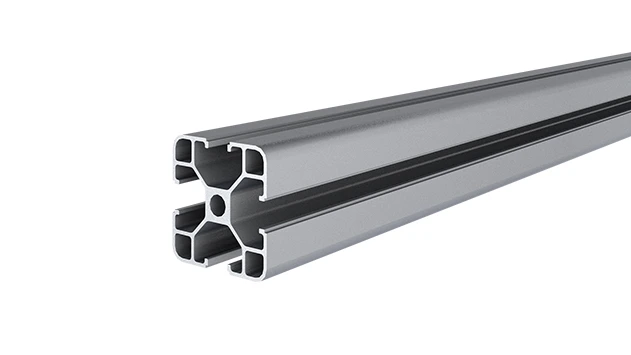
4040A EU Standard Aluminum Profile
4040A is a 4.00x4.00 CM fractional 40 series square extrusion T-slot profile with four open T-slots, each side with 4.00cm face.
Introduction: The Backbone of Your Production Line
When you're knee-deep in setting up a new assembly area, upgrading a lean system , or building a sturdy workbench , the choice of aluminum profile can feel like a small detail—until it's not. Those unassuming metal bars are the silent workhorses of your operation, holding up tools, guiding materials, and keeping everything from flow rack s to conveyor systems running smoothly. And if you've started browsing EU standard options, you've probably come across two names: 4040A and 4040B. At first glance, they might seem interchangeable—both are 40mm x 40mm, both claim to meet EU standards, and both promise durability. But dig a little deeper, and you'll find that their differences in dimensions and load capacity can make or break your project's efficiency, safety, and long-term cost-effectiveness.
In this article, we're breaking down the 4040A and 4040B aluminum extrusion profile s like never before. We'll skip the jargon, focus on real-world impact, and help you figure out which one deserves a spot in your production line. Whether you're a seasoned plant manager or a small business owner building your first workspace, this isn't just about specs—it's about making sure your setup works as hard as your team does.
What Are 4040A and 4040B EU Standard Aluminum Profiles?
Before we dive into differences, let's get clear on what these profiles actually are. EU standard aluminum profiles are engineered to strict European specifications, ensuring consistency in size, material quality, and compatibility across manufacturers. The "4040" in their names refers to their nominal cross-section dimensions: 40mm in width and 40mm in height. But here's the catch: "nominal" doesn't mean "exact." Just like two shirts labeled "medium" might fit differently, 4040A and 4040B have subtle but critical variations in their actual dimensions—variations that affect how much weight they can hold, how they connect to aluminum profile accessories , and where they perform best.
Both profiles are made from 6063-T5 aluminum, a popular alloy known for its balance of strength, corrosion resistance, and machinability. This makes them ideal for everything from lightweight workbenches to heavy-duty material handling systems. But the magic (and the confusion) lies in the details: wall thickness, slot design, and overall structural integrity. Let's unpack those next.

Dimension Deep Dive: It's All in the Details
At first glance, 4040A and 4040B might look identical on a ruler. But when you examine their cross-sections under a microscope (or, let's be real, a detailed spec sheet), the differences start to emerge. These aren't just arbitrary numbers—they're the result of engineering choices tailored to specific use cases. Let's break down the key dimensional differences:
| Dimension | 4040A EU Standard Aluminum Profile | 4040B EU Standard Aluminum Profile | Impact |
|---|---|---|---|
| Overall Width x Height | 40mm x 40mm (nominal) | 40mm x 40mm (nominal) | Identical nominal size, so both fit standard frame designs. |
| Wall Thickness | 1.8mm – 2.0mm | 2.3mm – 2.5mm | 4040B's thicker walls add rigidity, boosting load capacity. |
| Slot Width | 8mm | 8mm | Same slot width, so most aluminum profile accessories (e.g., brackets, connectors) work with both. |
| Slot Depth | 6mm | 7mm | Deeper slot in 4040B allows for stronger bolt engagement, reducing accessory slippage under heavy loads. |
| Weight per Meter | 1.5kg – 1.7kg | 1.9kg – 2.1kg | 4040B is ~20% heavier, reflecting its thicker walls and added material. |
Let's zoom in on the two biggest players here: wall thickness and slot depth. The 4040B's 2.3mm–2.5mm walls might not sound like much more than the 4040A's 1.8mm–2.0mm, but in structural engineering, every fraction of a millimeter counts. Thicker walls mean the profile can bend less under pressure, making it more stable for heavy loads or high-vibration environments. Think of it like comparing a soda can to a soup can—both are cylindrical, but the soup can's thicker metal holds its shape better when squeezed.
Then there's slot depth. The 4040B's 7mm slot (vs. 4040A's 6mm) might seem trivial, but when you're attaching a bracket or a caster to your workbench , that extra millimeter of bolt engagement can mean the difference between a secure fit and a wobbly setup. Over time, under repeated use, that wobble turns into wear, then into maintenance headaches, and eventually into replacement costs. For high-traffic areas like flow rack s, where boxes and parts are constantly sliding in and out, that added stability is non-negotiable.
Load Capacity: How Much Can Each Profile Really Handle?
Dimensions are interesting, but what you really care about is: how much weight can this thing hold? After all, the last thing you need is a lean system shelf collapsing under a pallet of parts or a workbench sagging in the middle during a busy shift. Load capacity isn't just a number on a spec sheet—it's a safety feature, a productivity booster, and a budget protector.
To get real-world numbers, we looked at industry testing data and manufacturer specs. Here's what we found:
- 4040A: When supported at both ends (like a shelf span), it typically handles 80–100kg per linear meter without permanent deformation. For vertical use (like a workbench leg), it can support up to 300kg per leg before showing signs of stress.
- 4040B: In the same shelf span scenario, it clocks in at 120–140kg per linear meter— 50% more than 4040A . Vertically, it can handle 450–500kg per leg, making it a powerhouse for heavy tools or machinery.
But wait—these numbers assume ideal conditions: even weight distribution, proper bracing, and no dynamic loads (like parts slamming onto a shelf). In the real world, where boxes are dropped, tools are leaned on, and vibrations from conveyors shake the frame, those capacities drop. That's where 4040B's thicker walls really shine. Its extra rigidity means it can absorb sudden impacts and uneven loads better than 4040A, reducing the risk of bending or cracking over time.
Let's put this in context. Imagine you're building a flow rack for automotive parts. Each shelf needs to hold 120kg of components. With 4040A, you'd need to add extra supports every 60cm to stay safe, cluttering the design and limiting flexibility. With 4040B, you could span 100cm between supports, keeping the rack open and easy to load/unload. Over a 5-meter rack, that's fewer brackets, less assembly time, and a cleaner workflow—all because of that extra 0.5mm in wall thickness.
Or take a workbench in a electronics assembly line. A 4040A frame might handle a soldering iron, a few tools, and a circuit board just fine. But if you add a heavy oscilloscope, a power supply, and a technician leaning on the edge, you might start to see the bench top sag. 4040B? It laughs off that extra weight, keeping the surface level and the workspace reliable shift after shift.
Accessories & Compatibility: Will Your Brackets and Connectors Work?
You've picked your profile—now you need to connect it to everything else: brackets, hinges, casters, and all the little aluminum profile accessories that turn a pile of metal into a functional system. The good news? Both 4040A and 4040B use the same 8mm slot width, which is the EU standard for 40-series profiles. That means most off-the-shelf accessories—like T-nuts, angle brackets, and end caps—will fit both profiles.
But there's a catch: 4040B's deeper slot (7mm vs. 4040A's 6mm) can affect how tightly accessories grip. For example, a standard M6 bolt in a 4040A slot will thread into a T-nut with about 4mm of engagement. In 4040B, that same bolt gets 5mm of engagement—adding extra security, especially for heavy or vibrating applications. If you're using low-quality T-nuts, this might not matter, but for critical connections (like flow rack supports or workbench legs), that extra millimeter of thread can prevent accessories from loosening over time.
Another consideration: weight. 4040B's thicker walls make it heavier per meter (1.9–2.1kg vs. 1.5–1.7kg for 4040A). This might not matter for a small workbench, but for large systems—like a 10-meter-long conveyor frame—those extra kilograms add up. You'll need sturdier casters, stronger brackets, and maybe even a second person to help with assembly. It's a small price to pay for extra strength, but worth factoring into your project plan.
When to Choose 4040A: Lightweight, Cost-Effective, and Flexible
4040A isn't "inferior"—it's just specialized. There are plenty of scenarios where it's the smarter choice:
- Light-Duty Applications: If you're building a shelf for small parts, a mobile cart for office supplies, or a temporary workbench, 4040A's 80–100kg per meter capacity is more than enough. Why pay for extra strength you don't need?
- Weight-Sensitive Projects: For systems that need to be moved frequently—like portable lean system stations or mobile workbenches—4040A's lighter weight makes it easier to maneuver. Casters will last longer, and assembly is less backbreaking.
- Budget-Conscious Builds: 4040A is typically 15–20% cheaper than 4040B (thanks to less aluminum in each meter). For startups or small businesses watching every penny, this can add up to significant savings on large projects.
- Prototyping: If you're testing a new flow rack design or workbench layout, 4040A lets you experiment without over-investing. Once you're sure of the design, you can upgrade to 4040B for the final build.
Example: A small bakery using a lean system to organize ingredient storage. Their shelves hold 50kg bags of flour, and the racks are rarely moved. 4040A would be perfect—sturdy enough for the load, light enough to assemble in a day, and gentle on the budget.
When to Choose 4040B: Heavy-Duty, Long-Lasting, and Future-Proof
4040B is the workhorse for projects where "good enough" isn't enough. Here's when to splurge on the extra thickness:
- Heavy Loads: If your shelves hold 100kg+ per meter, your workbench supports heavy machinery, or your flow rack handles metal parts or automotive components, 4040B is non-negotiable. The extra 50% load capacity prevents sagging, bending, and safety risks.
- Dynamic Environments: Factories with vibrations, warehouses with forklift traffic, or assembly lines with constant movement—4040B's rigidity stands up to the chaos better than 4040A. It won't loosen over time or require frequent re-tightening of accessories.
- Long-Term Use: If you're building a system you plan to use for 5+ years (like a permanent lean system or production line frame), 4040B's durability pays off. It resists wear and tear better, reducing replacement costs down the line.
- Safety-Critical Applications: When lives or expensive equipment are on the line—think workbenches for power tools, racks for hazardous materials, or frames for automated machinery—4040B's extra strength is worth every penny for peace of mind.
Example: A automotive parts manufacturer with a flow rack system for engine blocks. Each block weighs 80kg, and the racks are loaded/unloaded 50+ times a day. 4040A would sag within months, leading to jams and safety risks. 4040B? It handles the abuse, keeping the line moving and workers safe.
The Verdict: Which Profile Should You Choose?
At the end of the day, there's no "better" profile—only the right one for your project. Here's a quick cheat sheet to help you decide:
Choose 4040A if: You need a lightweight, budget-friendly option for light to medium loads, and you don't expect heavy impacts or long-term heavy use.
Choose 4040B if: You're dealing with heavy loads, dynamic environments, or safety-critical setups, and you want a profile that will last for years without needing upgrades.
And remember: it's okay to mix and match! Maybe use 4040B for the legs of your workbench (where strength matters most) and 4040A for the upper shelves (where loads are lighter). This hybrid approach lets you balance cost and performance without compromising on safety.
At the end of the day, the best profile is the one that makes your job easier. Whether it's 4040A or 4040B, the right choice will keep your lean system flowing, your flow rack s loaded, and your team focused on what they do best—not worrying about whether the frame will hold.