- Company Articles
- Industry articles
- Industry standards
- 4040C EU Standard Aluminum Profile Cost Analysis: Short-Term vs. Long-Term Value

4040C EU Standard Aluminum Profile Cost Analysis: Short-Term vs. Long-Term Value
Related Product
4040C EU Standard Aluminum Profile
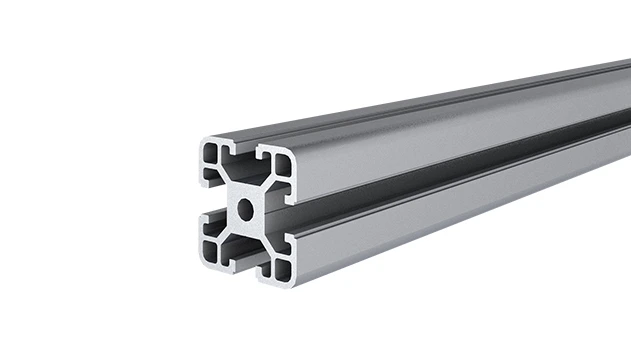
4040C is a 4.00x4.00 CM fractional 40 series square extrusion T-slot profile with four open T-slots, each side with 4.00cm face. The profile has align-a-grooves to assist in aligning connecting profiles.
Introduction: Why Aluminum Profiles Matter in Today's Workspaces
Walk into any modern factory, warehouse, or workshop, and you'll likely spot a common thread: sleek, modular structures that seem to adapt effortlessly to the task at hand. From workbenches where technicians assemble delicate electronics to material racks organizing parts for the production line, these structures are often built with one key component: aluminum profiles. And among the most popular choices out there is the 4040C EU Standard Aluminum Profile. But if you're new to this world, you might wonder: Why spend more on aluminum when steel or wood seems cheaper upfront? That's exactly the question we're diving into today. Let's unpack the real cost of choosing 4040C—not just the price tag you see first, but the value it brings over months, years, and even decades.
At first glance, any purchase decision tends to fixate on the "sticker price." How much does the material cost? What's the delivery fee? But in industrial settings, where equipment and workspaces are the backbone of productivity, focusing only on upfront costs can be a costly mistake. The 4040C aluminum extrusion profile isn't just a piece of metal; it's an investment in durability, flexibility, and long-term efficiency. Whether you're setting up a small workshop or scaling a large manufacturing plant, understanding the balance between short-term expenses and long-term gains will help you make a choice that doesn't just save money today, but grows with your business tomorrow.
First Things First: What Exactly Is 4040C EU Standard Aluminum Profile?
Before we talk costs, let's get clear on what we're actually discussing. The 4040C is part of the EU standard aluminum extrusion profile family—a line of modular, T-slot aluminum rails designed for building everything from simple shelving to complex automated systems. The "4040" refers to its dimensions: 40mm by 40mm, a versatile size that strikes a balance between strength and maneuverability. The "C" denotes a specific groove design and wall thickness, optimized for stability without unnecessary weight.
What makes it stand out? Unlike generic aluminum pipes, EU standard profiles like the 4040C come with standardized T-slots along their length. These slots let you attach aluminum profile accessories—joints, brackets, end caps, even panels—without welding or drilling. Imagine building a workbench in the morning and reconfiguring it into a material cart by afternoon, all with basic hand tools. That's the flexibility we're talking about. And because it's EU standard, you can mix and match components from different suppliers, ensuring you're never locked into one brand.
Common uses? You'll find 4040C in lean system setups, where workflow efficiency is king. It's the backbone of custom workbenches, flow racks that keep parts moving smoothly, and even safety barriers that protect workers without blocking visibility. Its lightweight yet sturdy nature also makes it ideal for mobile structures, like trolleys that glide across factory floors with ease. In short, it's the Swiss Army knife of industrial framing—and that versatility is the first clue that its value goes beyond the initial cost.

Short-Term Costs: The Price Tag You See First
Let's start with the elephant in the room: upfront expenses. If you're comparing 4040C to, say, a wooden workbench or a basic steel frame, the aluminum option will almost always look pricier on paper. Let's break down where that initial cost comes from.
1. The Profile Itself: Material Costs
Aluminum, as a raw material, isn't the cheapest option. Steel, for example, often costs less per kilogram, and wood is even more budget-friendly for simple structures. A 2-meter length of 4040C might set you back $20–$40, depending on the supplier and order volume, while a similar steel profile could be $15–$30. But here's the catch: aluminum is lighter. A 4040C profile weighs roughly 1.8kg per meter, compared to steel's 3.2kg for the same dimensions. That might not sound like much, but when you're buying 50 meters for a project, the total weight (and thus shipping costs) drops significantly. Plus, aluminum's strength-to-weight ratio means you can use thinner walls without sacrificing stability—so you're not just paying for metal; you're paying for efficiency.
2. Accessories: The "Little" Costs That Add Up
You can't build much with just the profile alone. To turn those 40mm rails into a functional structure, you'll need aluminum profile accessories: joints to connect corners, end caps to cover sharp edges, brackets to mount shelves, and maybe even casters to make it mobile. A single 90° aluminum profile connector might cost $3–$5, and a pack of end caps could be $10–$15. It's easy to think, "These are just small parts—how much can they really add?" But if you're building a workbench with 8 joints, 4 end caps, and 6 brackets, those "small parts" can add $50–$100 to your total. That said, these accessories are designed to last. Unlike plastic connectors (which crack) or welded steel joints (which rust), aluminum accessories resist corrosion and wear, so you won't be replacing them every few months.
3. Installation: Labor and Tools
Installing aluminum profiles is generally easier than steel or wood, but it still requires time and basic tools. If you're a DIYer, you might only need a hex key, a rubber mallet, and a level. But if you're hiring a contractor, labor costs can range from $50–$80 per hour. Here's where aluminum shines, though: its modular design cuts installation time. A steel frame might require welding (skilled labor, special equipment) or drilling (risk of mistakes), while wood needs cutting, sanding, and painting. With 4040C, you can assemble a basic workbench in an hour or two—no power tools required. That means lower labor costs upfront, even if the materials cost a bit more.
4. Choosing a Supplier: Why "Cheap" Might Cost You More
Not all aluminum pipe suppliers are created equal. A quick online search might turn up "bargain" 4040C profiles from overseas, priced 30% lower than EU-based suppliers. But before you hit "buy," ask: What's the quality like? Is the profile straight, or will it warp when you try to assemble it? Are the T-slots precise, or will accessories wiggle loose? A low-quality profile might save you $10 per meter now, but if it bends under load or the slots don't fit standard accessories, you'll end up replacing parts (or the whole structure) sooner. Reputable suppliers often offer better quality control, consistent dimensions, and even technical support—services that prevent costly do-overs down the line.
Long-Term Value: The Benefits That Outlast the Sticker Price
Now, let's shift gears. Short-term costs are important, but they're just the start of the story. The real magic of 4040C lies in how it performs over time—how it saves you money, reduces headaches, and adapts as your needs change. Let's break down these long-term wins.
1. Durability: It Doesn't Rust, Rot, or Wear Out Easily
Steel rusts. Wood warps, rots, or gets chewed by pests. Aluminum? It's naturally resistant to corrosion, thanks to a thin oxide layer that forms on its surface. That means you can use 4040C in humid warehouses, near water, or even outdoors (with proper care) without worrying about it degrading. I once visited a food processing plant that had been using 4040C workbenches for 12 years—they still looked nearly new, despite daily exposure to sanitizing sprays. Compare that to a wooden workbench, which might need replacing every 2–3 years, or a steel frame that requires repainting every 12–18 months to fight rust. Over a decade, the aluminum profile pays for itself in longevity alone.
2. Low Maintenance: Time (and Money) Saved on Upkeep
Let's talk about maintenance. Wood needs sanding, staining, or painting to stay looking good. Steel needs rust checks and touch-ups. Aluminum? Wipe it down with a damp cloth, and it's clean. No painting, no sealing, no expensive treatments. Even if it gets scratched, the oxide layer reforms quickly, preventing further damage. For busy operations, this is a game-changer. A maintenance team that would spend 20 hours a year refinishing wooden workbenches can redirect that time to more critical tasks—like keeping production lines running smoothly. Over time, those saved labor hours add up to significant cost savings.
3. Flexibility: Reconfigure, Don't replace
Here's where the modular design of 4040C really pays off: it's not a one-and-done investment. Business needs change. Maybe your production line shifts from assembling phones to tablets, and suddenly your workbench is too narrow. Or you need to add a shelf for new tools. With aluminum profiles, you don't need to buy a whole new structure—just loosen a few joints, add a new rail, and tighten everything back up. I worked with a small electronics manufacturer that reconfigured their 4040C material rack three times in two years as their product line expanded. Each time, they reused 90% of the original parts, saving thousands of dollars on new equipment. Steel or wood? You'd be lucky to reuse 50%—and you'd need to cut, weld, or rebuild from scratch.
4. Efficiency Gains: Work Smarter, Not Harder
Lean system principles are all about eliminating waste—whether that's wasted time, space, or effort. 4040C profiles are practically built for lean workflows. Want a workbench with built-in tool holders at arm height? Design it. Need a flow rack that tilts to feed parts directly to the assembly line? Build it. The ability to customize your workspace to fit your team's exact needs reduces unnecessary movement, speeds up tasks, and cuts down on errors. A study by the Manufacturing Extension Partnership found that custom workbenches (often built with aluminum profiles) can improve productivity by 15–20% by reducing reach time and organizing tools. Over a year, that efficiency boost translates to more products made, more orders filled, and higher profits—easily outweighing the initial cost of the profiles.
5. Sustainability: Green Savings for the Planet (and Your Brand)
Aluminum is 100% recyclable, and recycling it uses just 5% of the energy needed to produce new aluminum. That's not just good for the planet—it's good for your bottom line and reputation. Many customers today prioritize working with eco-friendly suppliers, and using sustainable materials like aluminum can open doors to new business opportunities. Plus, if you ever need to scrap an old structure, aluminum has scrap value. A steel frame might get you $0.10 per kg at the scrapyard; aluminum fetches $0.80–$1.20 per kg. It's a small bonus, but it adds up when you're replacing large structures.
Case Study: Small Manufacturer's 5-Year Journey with 4040C
Let's put this into real numbers with a hypothetical (but realistic) example. Meet "TechBuild," a small electronics manufacturer with 20 employees. In 2018, they needed to replace 10 aging wooden workbenches. Here's how their options stacked up:
Option 1: Wooden Workbenches
- Upfront cost: $150 per bench x 10 = $1,500
- Annual maintenance: $50 per bench (sanding, painting) = $500/year
- Replacement cycle: Every 3 years (due to warping, scratches)
- Total cost over 5 years: $1,500 (initial) + ($500 x 5) + $1,500 (replacement after 3 years) = $5,500
Option 2: 4040C Aluminum Workbenches
- Upfront cost: $350 per bench (profile + accessories + labor) x 10 = $3,500
- Annual maintenance: $0 (just cleaning)
- Replacement cycle: No replacement needed (still functional after 5 years)
- Efficiency gain: 15% productivity boost (per earlier study), translating to $10,000/year in extra revenue
- Total cost over 5 years: $3,500 (initial) + $0 (maintenance) - $50,000 (extra revenue) =
Net gain of $46,500
TechBuild chose Option 2. By year 3, they'd already recouped the upfront cost through saved maintenance and higher productivity. By year 5, the aluminum workbenches had paid for themselves many times over—and they're still in use today, with plans to reconfigure them for a new product line next year.
Comparing 4040C to Alternatives: Why "Cheaper" Often Costs More
To really understand 4040C's value, let's compare it to two common alternatives: steel profiles and "budget" aluminum grades.
Steel Profiles: Heavy, Rigid, and Rust-Prone
Steel is strong, no doubt. But it's heavy—making installation harder and shipping costlier. It also rusts, which means extra maintenance (painting, rust treatments) or shorter lifespans in humid environments. A steel workbench might cost $200 upfront vs. $350 for aluminum, but over 5 years, the steel bench would need $500 in maintenance and replacement parts, while the aluminum one stays strong with $0. Plus, steel isn't modular—if you need to adjust the height, you're cutting and welding, not just swapping parts.
Budget Aluminum Grades: Thin Walls, Loose Tolerances
You might find "4040 aluminum profiles" online for $15 per meter, half the price of 4040C. But these are often non-EU standard, with thinner walls (0.8mm vs. 1.5mm for 4040C) and poorly cut T-slots. They bend under heavy loads, and accessories don't fit snugly—meaning your structure wobbles or even collapses. A budget profile might save $100 on a project, but if it fails and damages $500 worth of parts (or worse, causes an accident), the "savings" vanish instantly. 4040C's EU standard ensures consistent quality—so you know it will perform as promised.
Wood: The "Classic" Choice That Ages Poorly
Wood is cheap and easy to work with for simple projects. But in industrial settings, it's a liability. It absorbs moisture, swells, and shrinks with temperature changes, leading to uneven surfaces that throw off precision work. It also harbors bacteria (a big issue in food or medical manufacturing) and can't withstand heavy use. A wooden workbench might last 2–3 years in a busy shop; 4040C will last 10+ with zero hassle.
Key Considerations for Buyers: How to Balance Short-Term and Long-Term Needs
So, you're convinced 4040C has long-term value—but how do you make sure you're getting the most bang for your buck? Here are a few tips:
1. Think About Total Cost of Ownership (TCO), Not Just Upfront Price
TCO includes everything: initial cost, maintenance, replacement parts, labor, and even efficiency gains. A $350 aluminum workbench might have a higher TCO than a $150 wooden one for a hobbyist working 10 hours a week. But for a business using it 40 hours a week, the aluminum bench's TCO plummets thanks to lower maintenance and higher productivity.
2. Choose a Supplier Who Understands Your Needs
A good aluminum pipe supplier doesn't just sell profiles—they offer expertise. They'll help you design structures that fit your workflow, recommend the right accessories, and even provide samples to test before you buy. Look for suppliers with positive reviews, clear quality standards, and responsive customer service. A supplier that cuts corners on support will cost you more in the long run, even if their prices are low.
3. Start Small, Then Scale
You don't need to replace your entire workshop with 4040C overnight. Start with one high-use area—a workbench, a material rack—and track the difference in productivity and maintenance. Once you see the value firsthand, scaling up becomes an easy decision.
Conclusion: 4040C Isn't Just a Purchase—It's an Investment
At the end of the day, the 4040C EU Standard Aluminum Profile isn't for everyone. If you need a temporary structure for a one-time project, wood or budget steel might suffice. But if you're building a workspace that needs to grow, adapt, and perform reliably for years to come, 4040C is more than worth the upfront cost. Its durability, low maintenance, and flexibility turn it from a "cost" into a tool that generates value—saving you time, reducing headaches, and boosting your bottom line.
So the next time you're comparing price tags, remember: the cheapest option isn't always the least expensive. Sometimes, the smartest choice is the one that keeps working for you long after the initial invoice is paid. And in the world of industrial framing, 4040C is exactly that—a investment in your workspace, your team, and your business's future.
| Factor | Short-Term Cost Impact | Long-Term Value Impact |
|---|---|---|
| Material cost | Higher than steel/wood upfront | Lower total cost due to longevity |
| Accessories | Additional $50–$100 per structure | Durable, reusable accessories reduce replacement costs |
| Installation | Modular design reduces labor time | Easy reconfiguration saves on future labor |
| Maintenance | Minimal tools needed | $0 annual upkeep vs. $500+ for wood/steel |
| Efficiency | No immediate gain | 15–20% productivity boost over time |