- Company Articles
- Industry articles
- Industry standards
- 4040C EU Standard Aluminum Profile in Food Processing Equipment: Hygiene Compliance

4040C EU Standard Aluminum Profile in Food Processing Equipment: Hygiene Compliance
Related Product
4040C EU Standard Aluminum Profile
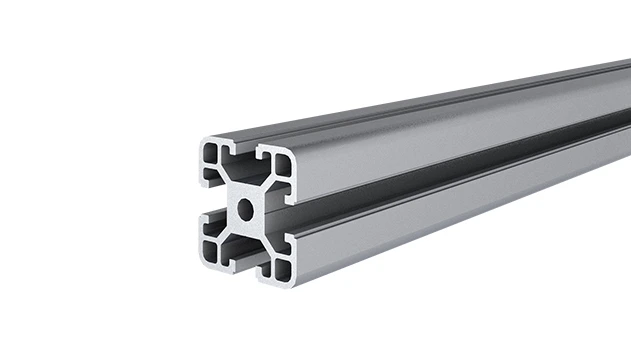
4040C is a 4.00x4.00 CM fractional 40 series square extrusion T-slot profile with four open T-slots, each side with 4.00cm face. The profile has align-a-grooves to assist in aligning connecting profiles.
Why Hygiene Isn't Just a Requirement—It's the Foundation of Food Processing
Walk into any food processing facility, and you'll quickly realize that every surface, tool, and workflow is designed with one non-negotiable priority: keeping food safe. From the moment raw ingredients arrive to the final packaging of finished products, even the smallest oversight in hygiene can lead to contamination, product recalls, or worse—threatening consumer health and a brand's reputation. In this high-stakes environment, the equipment and infrastructure that form the backbone of production play a critical role. That's where the 4040C EU standard aluminum profile comes into focus: a material and design solution that doesn't just meet hygiene regulations but redefines what's possible for safe, efficient food processing.
Food safety standards like the EU's EC 1935/2004 (which governs materials in contact with food) and ISO 22000 (food safety management systems) set strict benchmarks for equipment. These regulations demand that surfaces are non-toxic, easy to clean, resistant to corrosion, and free of crevices where bacteria, mold, or residue can hide. For plant managers and engineers, finding materials that check all these boxes while also supporting operational efficiency—like adaptability, durability, and cost-effectiveness—can feel like a balancing act. Traditional materials, from stainless steel to plastic or wood, often fall short in one area or another. Stainless steel, for example, is durable but heavy and hard to reconfigure. Wood is porous, making it a breeding ground for microbes. Plastic may degrade under harsh cleaning chemicals. So, what if there was a material that combined the best of hygiene, flexibility, and strength? Enter the 4040C EU standard aluminum profile.
The 4040C Aluminum Profile: More Than Just Metal—A Hygiene-Engineered Solution
At first glance, aluminum might seem like an unlikely hero in food processing. We often associate it with soda cans or window frames, not the high-precision world of food safety. But the 4040C EU standard aluminum profile is far from ordinary. Engineered to meet rigorous European standards, this extruded aluminum profile is designed with hygiene as its core. Let's break down why it stands out.
Material Matters: Aluminum's Inherent Hygiene Advantages
Aluminum is naturally resistant to corrosion, a key trait in environments where daily sanitization with acids, alkalis, or high-pressure water is the norm. Unlike steel, which can rust if its protective coating is compromised, aluminum forms a thin, inert oxide layer when exposed to air—this layer acts as a barrier, preventing further oxidation and making it impervious to the harsh chemicals used in food processing cleaning protocols. For example, common sanitizers like peracetic acid or chlorine dioxide won't degrade the aluminum surface, ensuring the profile remains intact and safe for years.
But corrosion resistance is just the start. The surface finish of the 4040C profile is equally critical. Most food-grade aluminum profiles undergo anodization—a process that thickens the natural oxide layer, creating a surface that's not just durable but ultra-smooth. A smooth surface (measured by a low Ra value, or roughness average) leaves nowhere for food particles, bacteria, or moisture to cling. Imagine trying to clean a textured surface versus a mirror-smooth one: the latter requires less time, less water, and fewer chemicals to achieve a bacteria-free state. In food processing, where downtime for cleaning directly impacts productivity, this efficiency is game-changing.
Another advantage? Aluminum is non-toxic and non-reactive. Unlike some plastics that can leach chemicals when exposed to heat or acidic foods, aluminum profiles certified to EU standards (like 4040C) are tested to ensure they don't transfer harmful substances into food. This compliance with EC 1935/2004 gives processors peace of mind: the material itself won't become a source of contamination.
Design for Cleanability: No Crevices, No Compromises
Even the most hygienic material can fail if its design creates hidden spaces for bacteria to thrive. That's why the 4040C profile's extruded shape is a masterclass in cleanability. Unlike welded steel structures, which often have seams, gaps, or sharp corners, the 4040C profile is extruded as a single piece, with rounded edges and a continuous surface. This eliminates crevices—those tiny, hard-to-reach spots where water, food residue, and microbes accumulate over time.
The profile's signature T-slot design is another stroke of genius for hygiene. T-slots allow for the attachment of accessories (like brackets, shelves, or tool holders) without the need for welding or drilling—processes that can create rough edges or gaps. Instead, accessories slide into the slots and are secured with bolts or clamps, creating a flush, seamless connection. When it's time for deep cleaning, these accessories can be quickly removed without tools, leaving the profile's surface smooth and easy to wipe down or pressure-wash.
Open ends of the profile are sealed with food-grade end caps, preventing debris, moisture, or insects from nesting inside the hollow aluminum tube. Even the smallest detail, like the radius of the profile's corners, is engineered to minimize dirt traps. EU standards specify that internal corners should have a minimum radius of 2mm to prevent residue buildup; the 4040C profile exceeds this, with rounded edges that guide water and cleaning solutions off the surface, rather than trapping them.

How 4040C Stacks Up Against Traditional Materials: A Hygiene Showdown
To truly appreciate the 4040C's impact, let's compare it to the materials historically used in food processing equipment. The table below breaks down key hygiene and operational factors, highlighting why aluminum profiles are becoming the go-to choice for forward-thinking facilities.
| Factor | 4040C EU Aluminum Profile | Stainless Steel | Wood | Plastic (PVC/PP) |
|---|---|---|---|---|
| Surface Smoothness (Bacteria Resistance) | Anodized finish (Ra ≤ 0.8μm) – minimal residue buildup | Polished (Ra 0.8–1.6μm) – good, but welded seams create crevices | Porous (Ra ≥ 5μm) – traps moisture and bacteria | Smooth, but can develop micro-scratches over time |
| Corrosion Resistance | Excellent – oxide layer resists acids/alkalis | Good, but prone to pitting in chloride-rich environments | Poor – absorbs water, swells, and rots | Fair – degrades with strong sanitizers (e.g., peroxides) |
| Cleaning Efficiency | High – quick wipe-down or pressure wash; no disassembly needed for routine cleaning | Medium – requires scrubbing of seams; heavy, hard to move for deep cleaning | Low – requires frequent sanding/sealing to prevent bacterial growth | Medium – scratches harbor bacteria; can't withstand high-temperature cleaning |
| Modularity (Adaptability) | Excellent – T-slot design allows tool-free reconfiguration | Poor – welded structures are fixed; modifications require rework | Poor – permanent; can't be reconfigured | Limited – glued or bolted joints are hard to adjust |
| Food Safety Compliance | Meets EC 1935/2004, FDA, and ISO 22000 standards | Meets standards, but welding may introduce contaminants | Not compliant – porous nature violates hygiene regulations | Meets some standards, but chemical leaching is a risk |
The data speaks for itself: while stainless steel has long been a staple, its rigidity and tendency to develop hard-to-clean seams make it less ideal for modern, flexible food processing lines. Wood is all but obsolete in hygienic environments, and plastic struggles with durability. The 4040C profile, by contrast, excels in every category that matters for hygiene and efficiency.
Aluminum Profile Accessories: The Unsung Heroes of Hygiene
A profile is only as good as the system it builds. The 4040C EU standard aluminum profile shines brightest when paired with aluminum profile accessories designed to maintain its hygiene promise. These accessories—brackets, connectors, hinges, and work surfaces—are engineered with the same attention to detail as the profile itself, ensuring no weak links in the hygiene chain.
Connectors and Brackets: No Threads, No Crevices, Just Clean Connections
Traditional metal brackets often rely on screws, nuts, or welds to attach to frames—all of which create tiny gaps where bacteria can hide. 4040C accessories, however, use T-slot compatible connectors that slide into the profile's grooves and lock in place with cam levers or spring-loaded pins. These connections are seamless, with no exposed threads or protruding parts. For example, a 90° aluminum corner bracket fits flush against the profile, its edges rounded to match the profile's radius. When disassembled for cleaning, there's no residue left in screw holes or weld seams—just a smooth surface ready for sanitization.
Work Surfaces: From Honeycomb Panels to Anti-Microbial Laminates
The top surface of a food processing workbench is where the action happens—chopping, mixing, assembling, or packaging. It needs to be durable, non-porous, and easy to disinfect. 4040C-based workbenches often pair the aluminum frame with accessories like aluminum honeycomb panels (lightweight, rigid, and naturally resistant to bacteria) or phenolic resin boards (anti-microbial, heat-resistant, and impervious to stains). These surfaces are designed to integrate with the profile's T-slots, allowing for tool rails, utensil holders, or even integrated sinks—all without drilling holes that could trap water.
Consider a poultry processing workbench: the surface must withstand daily hosing with hot water and sanitizer, resist scratches from metal tools, and support heavy cutting boards. A 4040C frame with a phenolic resin top meets all these needs. The smooth resin surface repels blood, fat, and bacteria, while the aluminum frame's corrosion resistance ensures it won't degrade over time. Even better, the workbench can be fitted with height-adjustable legs (another aluminum accessory) to accommodate workers of different heights, reducing fatigue and improving productivity—all without sacrificing hygiene.
Mobility Without Compromise: Casters and Locking Systems
In dynamic food processing environments, mobility is key. Workbenches, material racks, or packaging stations often need to be moved to accommodate batch changes or deep cleaning of the facility floor. 4040C frames can be fitted with caster wheel accessories—heavy-duty, lockable, and designed with hygiene in mind. These casters have sealed bearings to prevent lubricant leakage (a contamination risk) and smooth, non-porous treads that won't trap debris. When locked, they create a stable base; when unlocked, they roll easily, even with heavy loads. After moving, a quick wipe-down of the casters (and the frame) ensures no dirt is tracked from one area to another.
Aligning with Lean Systems: Hygiene and Efficiency, Hand in Hand
Food processing isn't just about safety—it's also about efficiency. Tight margins, changing consumer demands, and short product lifecycles require facilities to operate with minimal waste. This is where lean system principles come into play: eliminating waste, optimizing workflows, and maximizing value. The 4040C aluminum profile isn't just a hygiene solution; it's a lean enabler.
Modularity: Adapt Fast, Waste Less
Lean systems thrive on flexibility. A facility producing 10,000 units of a single product one month might shift to 10 small-batch artisanal products the next. Traditional fixed equipment can't keep up, leading to underutilized space or costly retooling. 4040C profiles, with their T-slot design and modular accessories, allow for rapid reconfiguration. A workbench used for mixing can be converted into a packaging station by swapping out the top surface and adding a conveyor rail—all in an hour or two, without welding or specialized tools.
This adaptability reduces waste in two ways: first, by eliminating the need to purchase new equipment for every product change; second, by allowing facilities to optimize space. For example, a seasonal fruit processing plant can reconfigure its sorting racks to handle different fruit sizes in summer, then collapse them for storage in winter—freeing up floor space for other operations.
5S and Visual Management: A Place for Everything, Everything in Its Place
The 5S methodology (Sort, Set in Order, Shine, Standardize, Sustain) is a cornerstone of lean systems, and it aligns perfectly with hygiene goals. "Shine" (cleanliness) is literally about keeping equipment spotless, while "Set in Order" ensures tools and materials are stored in designated, visible locations. 4040C profiles support 5S through customizable storage solutions: tool hooks that clip into T-slots, labeled bins on aluminum shelving, and shadow boards for quick visual checks of missing tools. When everything has a place, cleaning becomes faster, and workers spend less time searching for equipment—boosting efficiency and reducing the risk of cross-contamination from misplaced tools.
Real-World Impact: How a Bakery Cut Contamination Risks with 4040C Profiles
Let's put this all into context with a real (anonymized) example. A mid-sized artisanal bakery in Germany was struggling with recurring hygiene issues on its packaging line. The facility used wooden workbenches and stainless steel racks, which were heavy, hard to clean, and prone to developing cracks in welds over time. Audits revealed bacterial counts in these cracks that occasionally exceeded EU limits, leading to increased testing and production delays.
The bakery's engineering team decided to replace the packaging line infrastructure with 4040C EU standard aluminum profile systems. They installed modular workbenches with phenolic resin tops, aluminum material racks with roller tracks (for easy movement of trays), and adjustable shelving for packaging supplies. The results were striking:
- 50% reduction in cleaning time: The smooth aluminum surfaces and tool-free accessory removal cut daily sanitization time from 2 hours to 1 hour.
- Zero bacterial exceedances: Post-installation audits showed no detectable bacteria in previously problematic areas, as there were no crevices for buildup.
- 30% faster product changeovers: The modular racks and workbenches could be reconfigured in 30 minutes instead of 2 hours, allowing the bakery to handle more small-batch orders.
The bakery's quality manager summed it up: "We used to dread hygiene audits. Now, we look forward to showing off our aluminum line—it's become a selling point for our retail partners, who see it as a commitment to safety."
Conclusion: 4040C Aluminum Profiles—Where Hygiene, Efficiency, and Compliance Converge
In food processing, hygiene compliance isn't a box to check—it's a daily commitment. The equipment and infrastructure that support this commitment must be up to the task, balancing strict regulatory demands with the need for operational flexibility and efficiency. The 4040C EU standard aluminum profile , paired with aluminum profile accessories , rises to this challenge. Its corrosion-resistant material, smooth anodized finish, and modular design make it a hygienic powerhouse, while its alignment with lean system principles ensures it supports efficient, adaptable production.
From the smallest workbench in a boutique chocolate shop to the largest conveyor system in a multinational dairy plant, 4040C profiles are redefining what's possible for food safety. They prove that hygiene and efficiency don't have to be trade-offs—with the right materials, they can strengthen each other. As food processing continues to evolve, driven by stricter regulations and consumer demands for transparency, the 4040C profile isn't just a trend; it's a foundation for the future of safe, sustainable food production.