- Company Articles
- Industry articles
- Industry standards
- 4040C EU Standard Aluminum Profile in Lean Manufacturing: Supporting Continuous Improvement

4040C EU Standard Aluminum Profile in Lean Manufacturing: Supporting Continuous Improvement
Related Product
4040C EU Standard Aluminum Profile
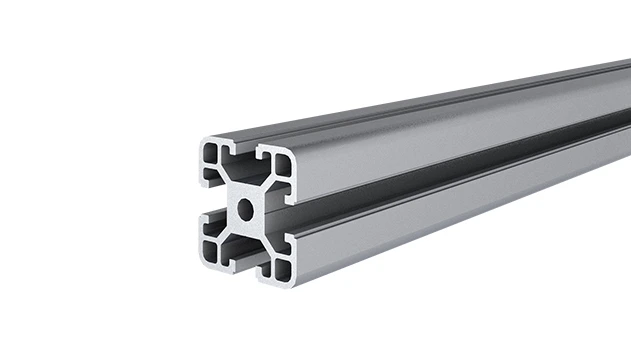
4040C is a 4.00x4.00 CM fractional 40 series square extrusion T-slot profile with four open T-slots, each side with 4.00cm face. The profile has align-a-grooves to assist in aligning connecting profiles.
In the world of manufacturing, where every second counts and waste is the enemy, lean principles have become more than just a buzzword—they're the backbone of competitive, efficient operations. At the heart of any successful lean system lies the tools and infrastructure that enable teams to eliminate waste, streamline workflows, and adapt quickly to change. Enter the 4040C EU Standard Aluminum Profile : a deceptively simple component that's quietly revolutionizing how manufacturers build, adapt, and improve their production environments. It's not just a piece of metal; it's a building block for continuous improvement.
The Basics of Lean Manufacturing: Why Flexibility Matters
Before diving into the specifics of the 4040C profile, let's take a step back. Lean manufacturing, born from the Toyota Production System, is all about flow —ensuring materials, information, and people move through the production process with minimal friction. Key principles like Just-In-Time (JIT), 5S (Sort, Set in Order, Shine, Standardize, Sustain), and Kaizen (continuous improvement) demand one critical thing from your equipment: flexibility . Rigid, fixed structures—think heavy steel workbenches or welded racks—might work for static production lines, but in today's fast-paced market, where product designs change, batch sizes shrink, and customer demands shift overnight, inflexible infrastructure becomes a liability.
Imagine a team trying to implement a Kaizen event to reduce changeover time on a line with fixed steel workstations. To reconfigure the layout, they'd need welders, cutting tools, and days of downtime—hardly "continuous improvement." Now, picture the same team with modular, adjustable equipment that can be reassembled in hours with basic hand tools. That's the difference flexibility makes. And that's where the 4040C EU Standard Aluminum Profile comes in.
What Is the 4040C EU Standard Aluminum Profile?
At first glance, the 4040C profile looks like a simple rectangular tube. But its design is anything but basic. Measuring 40mm by 40mm (hence "4040"), this aluminum extrusion profile is engineered to EU standards, meaning it meets strict criteria for dimensional accuracy, material quality, and durability. Made from high-grade aluminum alloy, it's lightweight yet surprisingly strong—think of it as the Goldilocks of manufacturing materials: not too heavy, not too flimsy, but just right for most industrial applications.
The magic, however, lies in its extrusion process. Unlike steel tubes that are bent or welded, aluminum profiles are shaped by forcing heated aluminum through a die, creating consistent, precise cross-sections. For the 4040C, this results in a profile with T-slots—longitudinal grooves running along its length—that act as built-in connection points. These slots aren't just for show; they're the reason the 4040C is so versatile. With the right aluminum profile accessories —connectors, brackets, casters, or even tool holders—you can assemble everything from workbenches to flow racks in hours, not days.

Why Aluminum? The Material Science Behind the 4040C's Appeal
You might be wondering: Why aluminum, and why this specific profile? Let's break it down. Aluminum offers a unique blend of properties that make it ideal for lean environments:
- Strength-to-weight ratio : Aluminum is about one-third the weight of steel but offers comparable strength for most manufacturing applications. This makes the 4040C easy to handle—no need for cranes or heavy machinery when reconfiguring a workstation.
- Corrosion resistance : Unlike steel, aluminum naturally forms a protective oxide layer, meaning it won't rust or degrade in humid or harsh environments. This longevity reduces replacement costs and keeps equipment looking (and functioning) like new.
- Precision and consistency : Thanks to the extrusion process, every 4040C profile is identical. No more "close enough" measurements—this consistency ensures that accessories fit perfectly, assembly is frustration-free, and structures are stable.
- Sustainability : Aluminum is 100% recyclable, aligning with lean's focus on eliminating waste (including environmental waste). When a profile reaches the end of its life, it can be melted down and reused, reducing your carbon footprint.
4040C and Lean Systems: A Partnership for Efficiency
Now, let's connect the dots: How does the 4040C profile directly support lean manufacturing principles? Let's look at three key areas where it shines.
1. Enabling Quick Changeovers (Supporting JIT and Kaizen)
Just-In-Time production relies on producing only what's needed, when it's needed. This often means small batch sizes and frequent changeovers. With traditional equipment, changing a production line to accommodate a new product can take days. The 4040C profile, paired with aluminum profile accessories like quick-connect joints or adjustable feet, turns reconfiguration into a task that can be done in hours. For example, a team producing smartphone components might need to switch from assembling screens to batteries. With 4040C workbenches, they can adjust heights, add tool rails, or reposition shelves in minutes—no welding, no downtime, just continuous flow.
2. Building Organized, Visual Workspaces (Supporting 5S)
The "Set in Order" step of 5S is all about arranging tools and materials so they're easy to find, use, and return. The 4040C profile excels here. Its T-slots let you mount tool holders, bins, or label holders exactly where operators need them—no more hunting for a wrench or reaching across a cluttered bench. Add roller track accessories, and you've got a flow rack that ensures materials move smoothly from storage to assembly, with clear visual cues for FIFO (First-In-First-Out) inventory management. Even better, the clean, modular look of aluminum profiles makes the "Shine" (cleanliness) step easier—no crevices for dust to hide, just smooth surfaces that wipe clean.
3. Supporting Ergonomics and Operator Well-Being
Lean isn't just about efficiency—it's about people. Fatigued or injured operators can't perform at their best, and rigid workstations are a common culprit. The 4040C profile's lightweight nature and adjustable accessories let you build workbenches that adapt to operators , not the other way around. Need a bench that raises from 70cm to 90cm to accommodate tall and short team members? Use telescopic legs with 4040C profiles. Want to angle a work surface to reduce wrist strain? Attach hinges and gas springs. When operators are comfortable, they're more productive, and turnover decreases—another win for lean.
Real-World Applications: From Workbenches to Flow Racks
The 4040C profile isn't a one-trick pony. Its versatility means it can be used to build almost any structure in a lean environment. Let's explore two common applications where it truly shines: workbench setups and flow rack systems.
Workbenches: The Heart of the Production Cell
A workbench is where the action happens—where operators assemble, inspect, or package products. A poorly designed workbench leads to wasted motion, errors, and frustration. A 4040C-based workbench, however, is a blank canvas for customization. Here's how it comes together:
- Frame : 4040C profiles form the legs and rails, connected by 90° aluminum profile connectors for stability.
- Top : An aluminum honeycomb panel (lightweight yet strong) or ESD (Electrostatic Discharge) surface for electronics manufacturing.
- Accessories : Tool hooks, bin holders, and cable management clips mount directly into T-slots, keeping the surface clutter-free.
- Mobility : Add casters (another key accessory) to make the bench mobile, supporting U-shaped or cellular production layouts.
One manufacturer we worked with—a producer of medical devices—switched from wooden workbenches to 4040C setups and saw a 25% reduction in operator-reported fatigue, thanks to adjustable heights and better tool placement. "It's like the bench was built around how we work, not the other way around," one operator noted.
Flow Racks: Keeping Materials Moving
In lean systems, stagnant materials are wasted materials. Flow racks—used to store and transport parts from storage to assembly—are critical for maintaining flow. The 4040C profile is the ideal frame for these racks, especially when paired with roller track accessories. Here's why:
Roller tracks, often made of plastic or aluminum, mount to 4040C frames using brackets that slide into T-slots. This allows you to adjust the angle of the track (for gravity flow) or add dividers to separate parts. For example, a flow rack for automotive components might use yellow plastic roller track guide rails (a common accessory) to channel bins of screws and bolts directly to the assembly line. Since the 4040C frame is lightweight, the entire rack can be moved with casters if production lines shift—no more permanent "material islands" cluttering the floor.
Comparing Materials: Why 4040C Beats Steel and Other Alternatives
You might be thinking: "Can't I just use steel profiles instead?" It's a fair question. Steel is strong, after all. But when it comes to lean manufacturing, strength alone isn't enough. Let's compare the 4040C aluminum profile to two common alternatives: stainless steel pipe and traditional steel tubing.
| Feature | 4040C EU Standard Aluminum Profile | Stainless Steel Pipe | Traditional Steel Tubing |
|---|---|---|---|
| Weight (per meter) | ~1.2kg (lightweight, easy to handle) | ~3.5kg (heavy, requires lifting equipment) | ~2.8kg (still heavier than aluminum) |
| Max Load Capacity | Up to 500kg (sufficient for most workbenches/racks) | Up to 800kg (overkill for many lean applications) | Up to 600kg (strong, but less flexible) |
| Corrosion Resistance | Excellent (no rust, ideal for humid environments) | Excellent (but more expensive than aluminum) | Poor (prone to rust without painting/coating) |
| Modularity | High (T-slots and accessories enable tool-free reconfiguration) | Low (requires welding or specialized connectors) | Very low (fixed once welded; hard to modify) |
| Best For | Lean systems, quick changeovers, ergonomic workstations | Heavy-duty, high-moisture environments (e.g., food processing) | Static, high-load applications (e.g., warehouse shelving) |
The takeaway? Steel has its place, but for lean manufacturing, the 4040C profile offers the best balance of strength, weight, and flexibility. It's strong enough for most tasks, light enough to reconfigure without heavy equipment, and modular enough to grow with your needs.
The Role of Accessories: Turning Profiles into Systems
A 4040C profile alone is just a tube. It's the aluminum profile accessories that transform it into a lean powerhouse. Let's highlight a few must-have accessories and how they enable flexibility:
Connectors: The Glue That Holds It All Together
Connectors are the unsung heroes of modularity. From 90° angle connectors for right-angle joints to swivel connectors that allow rotation, these small parts make assembly a breeze. For example, internal rotary aluminum joints let you adjust the angle of a shelf or tool rail without disassembling the entire structure—perfect for fine-tuning a workstation during a Kaizen event.
Casters: Mobility for Cellular Manufacturing
Casters, mounted to 4040C legs using castor installation bases, turn static workbenches and racks into mobile units. This is game-changing for cellular manufacturing, where production cells are arranged around the product, not the other way around. A team can wheel a 4040C workbench with casters into place, connect it to a flow rack, and have a functional cell up and running in minutes.
End Caps and Cable Management
Details matter in lean environments. End caps for 4040C profiles prevent snags and give structures a clean, professional look (supporting the "Shine" step of 5S). Cable management clips, which slide into T-slots, keep wires and hoses organized—no more tripping hazards or tangled cords slowing down work.
Looking Ahead: 4040C in the Age of Smart Lean Manufacturing
Lean manufacturing isn't standing still—and neither is the 4040C profile. As Industry 4.0 (smart manufacturing) takes hold, manufacturers are adding sensors, IoT devices, and automation to their lean systems. The 4040C profile is uniquely positioned to support this evolution. Its T-slots can hide sensors that monitor workstation usage or track material flow. Aluminum's conductivity even makes it suitable for grounding ESD workbenches in electronics plants. And as collaborative robots (cobots) become more common, 4040C frames provide lightweight, stable mounts for these machines—no need for heavy steel bases.
One emerging trend is the integration of aluminum honeycomb panels with 4040C profiles for workbench tops. These panels are not only lightweight but also offer built-in channels for routing cables, making them ideal for smart workstations where cobots and operators work side by side.
Conclusion: More Than a Profile—A Catalyst for Improvement
At the end of the day, the 4040C EU Standard Aluminum Profile is more than just a piece of hardware. It's a catalyst for the continuous improvement that defines lean manufacturing. By providing the flexibility to adapt, the precision to organize, and the durability to last, it empowers teams to stop fighting their equipment and start focusing on what matters: making better products, faster, with less waste.
Whether you're building a single workbench or overhauling an entire production line, the 4040C profile and its accessories offer a simple truth: lean manufacturing isn't about perfection—it's about progress. And progress, as any lean practitioner will tell you, starts with the right tools. For today's manufacturers, that tool is increasingly the 4040C EU Standard Aluminum Profile.