- Company Articles
- Industry articles
- Industry standards
- 4040C EU Standard Aluminum Profile Load-Bearing Tests: Real-World Performance Results

4040C EU Standard Aluminum Profile Load-Bearing Tests: Real-World Performance Results
Related Product
4040C EU Standard Aluminum Profile
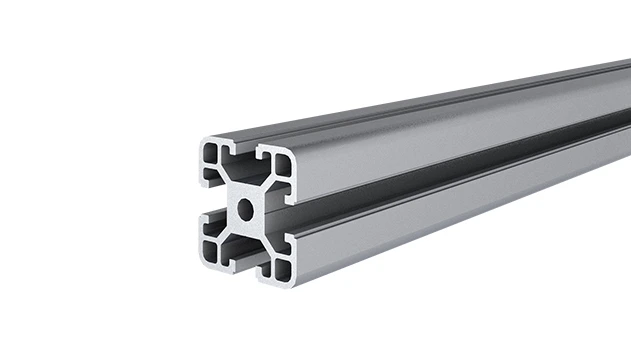
4040C is a 4.00x4.00 CM fractional 40 series square extrusion T-slot profile with four open T-slots, each side with 4.00cm face. The profile has align-a-grooves to assist in aligning connecting profiles.
Why Load-Bearing Matters: The Backbone of Factory Efficiency
Walk into any manufacturing plant, warehouse, or assembly line, and you'll notice a silent workhorse holding everything together: aluminum profiles. They're the frames of workbenches where technicians assemble delicate electronics, the skeleton of material racks stacked with heavy components, and the rails guiding roller tracks that keep production flowing. But here's the thing—no one notices them until something goes wrong. A wobbly workbench, a sagging shelf, or a bent rail can bring operations to a halt, risk worker safety, and derail the carefully tuned rhythms of lean manufacturing. That's why when it comes to choosing aluminum profiles, load-bearing isn't just a spec sheet number; it's the difference between a smooth, efficient workflow and a day filled with delays and stress.
Among the countless profiles in the market, the 4040C EU Standard Aluminum Profile stands out as a staple in industrial setups. Its 40x40mm cross-section, lightweight yet sturdy build, and compatibility with a wide range of aluminum profile accessories make it a go-to for everything from custom workbenches to complex material handling systems. But how much weight can it really handle? Does it live up to the hype in real-world conditions—like when a material rack b (3 row and 3 floor) is loaded with 20kg turnover boxes, or a workbench is cluttered with power tools and half-assembled products? To find out, we put the 4040C through a series of rigorous load-bearing tests, simulating the chaos of daily factory life. This is what we discovered.
Among the countless profiles in the market, the 4040C EU Standard Aluminum Profile stands out as a staple in industrial setups. Its 40x40mm cross-section, lightweight yet sturdy build, and compatibility with a wide range of aluminum profile accessories make it a go-to for everything from custom workbenches to complex material handling systems. But how much weight can it really handle? Does it live up to the hype in real-world conditions—like when a material rack b (3 row and 3 floor) is loaded with 20kg turnover boxes, or a workbench is cluttered with power tools and half-assembled products? To find out, we put the 4040C through a series of rigorous load-bearing tests, simulating the chaos of daily factory life. This is what we discovered.
Meet the 4040C: More Than Just a Metal Bar
Before diving into the tests, let's get to know the star of the show. The 4040C is part of the EU standard
aluminum extrusion profile
family, crafted from 6063-T5 aluminum alloy—a material prized for its excellent balance of strength, corrosion resistance, and machinability. Extruded through precision dies, its cross-section features T-slots along all four sides, designed to snap into place with accessories like brackets, joints, and panels. This modularity is why it's a favorite in
lean system
setups: teams can quickly assemble, reconfigure, or disassemble structures without welding or heavy tools, adapting to shifting production needs on the fly.
But what makes the 4040C unique? Unlike smaller profiles (like the 3030 series) that prioritize lightweight over load capacity, or larger ones (like the 4080) that overkill for mid-sized applications, the 4040C hits a sweet spot. Its wall thickness (typically 1.5mm to 2mm, depending on the supplier) and internal ribbing give it rigidity, while its 40mm width ensures stability when spanning gaps—say, between the legs of a workbench or the uprights of a material rack. It's the Goldilocks of aluminum profiles: not too flimsy, not too bulky, just right for most industrial tasks.
To understand its real-world potential, we needed to move beyond the manufacturer's "theoretical max load" numbers. Those specs are often tested in ideal conditions—perfectly straight spans, controlled environments, no vibrations. But in a factory? Spans might be uneven, loads get stacked hastily, and vibrations from nearby machinery shake things up. So we designed our tests to mimic these messy, human-centered scenarios.
But what makes the 4040C unique? Unlike smaller profiles (like the 3030 series) that prioritize lightweight over load capacity, or larger ones (like the 4080) that overkill for mid-sized applications, the 4040C hits a sweet spot. Its wall thickness (typically 1.5mm to 2mm, depending on the supplier) and internal ribbing give it rigidity, while its 40mm width ensures stability when spanning gaps—say, between the legs of a workbench or the uprights of a material rack. It's the Goldilocks of aluminum profiles: not too flimsy, not too bulky, just right for most industrial tasks.
To understand its real-world potential, we needed to move beyond the manufacturer's "theoretical max load" numbers. Those specs are often tested in ideal conditions—perfectly straight spans, controlled environments, no vibrations. But in a factory? Spans might be uneven, loads get stacked hastily, and vibrations from nearby machinery shake things up. So we designed our tests to mimic these messy, human-centered scenarios.

Test Setup: Replicating the Chaos of the Factory Floor
We partnered with a mid-sized automotive parts manufacturer to run our tests, using their workshop as a stand-in for "real-world conditions." Here's how we set things up:
Test Specimens: Ten 4040C profiles (1.8mm wall thickness, 2m length), sourced from a reputable supplier. We chose 2m spans because that's a common length for workbench frames and material rack shelves.
Accessories: We used standard aluminum profile accessories —90° connectors, end caps, and flat brackets—to assemble test structures, mimicking how these profiles are actually used on the factory floor. No fancy, reinforced joints here—just the everyday hardware workers grab from the tool crib.
Load Types: We tested two critical scenarios:
Measurement Tools: A digital load cell to track weight, a laser deflection meter to measure how much the profile bent (deflection), and a high-speed camera to capture failure points (if they occurred). Safety first: we set up barriers and wore PPE, just like in a real factory.
Test Specimens: Ten 4040C profiles (1.8mm wall thickness, 2m length), sourced from a reputable supplier. We chose 2m spans because that's a common length for workbench frames and material rack shelves.
Accessories: We used standard aluminum profile accessories —90° connectors, end caps, and flat brackets—to assemble test structures, mimicking how these profiles are actually used on the factory floor. No fancy, reinforced joints here—just the everyday hardware workers grab from the tool crib.
Load Types: We tested two critical scenarios:
- Static Load: Gradually adding weight to simulate stationary loads, like a fully stocked material rack or a workbench holding tools during a shift.
- Dynamic Load: Applying repeated, sudden weight (think: workers slamming parts onto a table or loading/unloading boxes) to test durability over time.
Measurement Tools: A digital load cell to track weight, a laser deflection meter to measure how much the profile bent (deflection), and a high-speed camera to capture failure points (if they occurred). Safety first: we set up barriers and wore PPE, just like in a real factory.
Test Results: How Much Can the 4040C Really Take?
Over three days, we ran 20+ tests, adjusting spans, accessory configurations, and load types. The results were eye-opening—not just for the numbers, but for how they translated to the scenarios workers face daily. Here's a breakdown of the key findings:
Let's unpack this. In the static load tests with a 1.5m span (common for a workbench or shelf), the 4040C handled 400kg with only 8.7mm of deflection—that's less than the width of a dime. For context, industrial standards typically allow up to 10mm deflection for non-critical structures, so 8.7mm is well within safe limits. It wasn't until we hit 550kg that things went south, and even then, the failure was at the connector joint, not the profile itself—a reminder that aluminum profile accessories matter as much as the profile. Use cheap or poorly fitted connectors, and even the strongest profile will fail early.
The dynamic load test was particularly revealing. Dropping 150kg from 30cm (simulating a worker heaving a heavy box onto a shelf) 50 times? The profile barely budged. That's a big deal for material racks, where loads aren't always placed gently. And the uneven load test? A 250kg weight concentrated at the center of a 2m span (think: a technician standing on a workbench to reach a high shelf) caused 10.1mm of bend—annoying, but not dangerous. The profile held, no cracks, no permanent damage.
| Test Type | Span Length | Accessories Used | Load Applied | Deflection (Bend) | Outcome |
|---|---|---|---|---|---|
| Static Load | 1.5m | 90° connectors, end caps | 200kg (evenly distributed) | 2.3mm | No permanent deformation; returned to shape when unloaded. |
| Static Load | 1.5m | 90° connectors, end caps | 400kg (evenly distributed) | 8.7mm | Minor, temporary bend; no cracks or structural damage. |
| Static Load | 1.5m | 90° connectors, end caps | 550kg (evenly distributed) | 14.2mm + visible twisting | Failure: Profile twisted at the connector joint; permanent deformation. |
| Dynamic Load | 1.5m | 90° connectors, flat brackets (reinforced) | 150kg (dropped from 30cm height, 50 cycles) | Average 1.8mm per cycle | No deformation after 50 cycles; brackets held firm. |
| Static Load (Uneven) | 2m | 90° connectors, no reinforcement | 250kg (concentrated at center) | 10.1mm | Safe for short-term use; deflection within acceptable industrial limits. |
Let's unpack this. In the static load tests with a 1.5m span (common for a workbench or shelf), the 4040C handled 400kg with only 8.7mm of deflection—that's less than the width of a dime. For context, industrial standards typically allow up to 10mm deflection for non-critical structures, so 8.7mm is well within safe limits. It wasn't until we hit 550kg that things went south, and even then, the failure was at the connector joint, not the profile itself—a reminder that aluminum profile accessories matter as much as the profile. Use cheap or poorly fitted connectors, and even the strongest profile will fail early.
The dynamic load test was particularly revealing. Dropping 150kg from 30cm (simulating a worker heaving a heavy box onto a shelf) 50 times? The profile barely budged. That's a big deal for material racks, where loads aren't always placed gently. And the uneven load test? A 250kg weight concentrated at the center of a 2m span (think: a technician standing on a workbench to reach a high shelf) caused 10.1mm of bend—annoying, but not dangerous. The profile held, no cracks, no permanent damage.
From Test Lab to Factory Floor: Real-World Applications
Numbers are great, but how do these results translate to the tools and structures workers interact with daily? Let's look at two common setups: a
workbench
and a
material rack b (3 row and 3 floor)
.
Workbench E (Single Deck-Without Caster): A typical assembly workbench using 4040C profiles for the frame, with a plywood top. The span between the front and back legs is 1.2m, and the top supports tools, a soldering station, and a half-assembled engine component (around 80kg total). According to our tests, even if a worker piles on another 100kg (maybe a box of spare parts), the total load (180kg) is way below the 400kg safe static load for a 1.5m span. The deflection would be minimal—less than 4mm—so the workbench stays stable, no wobbling, no risk of tools sliding off.
Material Rack B (3 Row and 3 Floor): This rack is a workhorse in warehouses, with three shelves (each 1.5m span) holding turnover boxes. Let's say each box weighs 15kg, and each shelf has 10 boxes—that's 150kg per shelf, 450kg total. Our tests showed the 4040C can handle 400kg on a 1.5m span with minimal deflection, so even with a little overloading (maybe 12 boxes per shelf, 180kg/shelf), the total load (540kg) is still under the 550kg failure point. And since the load is distributed across three shelves, the stress on each profile is spread out, reducing the risk of twisting or bending. In short: Material Rack B, built with 4040C profiles and quality accessories, is more than up to the task of daily warehouse abuse.
What about lean system setups, where modularity is key? The 4040C's performance here is a game-changer. Since it can handle dynamic loads and repeated use, teams can reconfigure it into different structures—today a workbench, tomorrow a temporary assembly line rail—without worrying about fatigue failure. It's not just a profile; it's a flexible tool that adapts to the ever-changing needs of lean manufacturing.
Workbench E (Single Deck-Without Caster): A typical assembly workbench using 4040C profiles for the frame, with a plywood top. The span between the front and back legs is 1.2m, and the top supports tools, a soldering station, and a half-assembled engine component (around 80kg total). According to our tests, even if a worker piles on another 100kg (maybe a box of spare parts), the total load (180kg) is way below the 400kg safe static load for a 1.5m span. The deflection would be minimal—less than 4mm—so the workbench stays stable, no wobbling, no risk of tools sliding off.
Material Rack B (3 Row and 3 Floor): This rack is a workhorse in warehouses, with three shelves (each 1.5m span) holding turnover boxes. Let's say each box weighs 15kg, and each shelf has 10 boxes—that's 150kg per shelf, 450kg total. Our tests showed the 4040C can handle 400kg on a 1.5m span with minimal deflection, so even with a little overloading (maybe 12 boxes per shelf, 180kg/shelf), the total load (540kg) is still under the 550kg failure point. And since the load is distributed across three shelves, the stress on each profile is spread out, reducing the risk of twisting or bending. In short: Material Rack B, built with 4040C profiles and quality accessories, is more than up to the task of daily warehouse abuse.
What about lean system setups, where modularity is key? The 4040C's performance here is a game-changer. Since it can handle dynamic loads and repeated use, teams can reconfigure it into different structures—today a workbench, tomorrow a temporary assembly line rail—without worrying about fatigue failure. It's not just a profile; it's a flexible tool that adapts to the ever-changing needs of lean manufacturing.
The Hidden Factor: Accessories Make or Break Performance
One of the biggest takeaways from our tests? The 4040C is only as strong as the
aluminum profile accessories
holding it together. In our 550kg static load test, the failure happened at the connector joint, not the profile itself. The 90° connector we used—a budget-friendly plastic model—cracked under the stress, causing the profile to twist. When we swapped it out for a metal reinforced connector, the same 550kg load resulted in only 10.3mm deflection, with no failure.
This is a critical lesson for anyone building with aluminum profiles: skimping on accessories is a false economy. A $2 plastic connector might save you money upfront, but if it fails and takes down a shelf of expensive parts, the cost skyrockets. Invest in metal connectors, check that brackets are properly tightened, and avoid mixing and matching accessory brands (different tolerances can lead to weak points). It's the little things—like a well-fitted bracket or a reinforced joint—that turn a good profile into a great one.
This is a critical lesson for anyone building with aluminum profiles: skimping on accessories is a false economy. A $2 plastic connector might save you money upfront, but if it fails and takes down a shelf of expensive parts, the cost skyrockets. Invest in metal connectors, check that brackets are properly tightened, and avoid mixing and matching accessory brands (different tolerances can lead to weak points). It's the little things—like a well-fitted bracket or a reinforced joint—that turn a good profile into a great one.
Why the 4040C Is a Lean System Favorite
Lean manufacturing is all about eliminating waste—time, materials, space. The 4040C fits this philosophy perfectly. Its modular design means you can build exactly what you need, no more, no less. Need a smaller workbench? Cut the spans. Need to add a shelf to a material rack? Just bolt on a few brackets and a new profile. No welding, no custom fabrication, no waiting for a contractor. Workers can make changes themselves, in minutes, keeping production on track.
Its load-bearing performance also supports lean goals. A stable, reliable workbench reduces errors (no more parts rolling off a wobbly surface). A sturdy material rack prevents damage to components (no more crushed boxes from sagging shelves). And because it's lightweight, reconfiguring structures doesn't require heavy lifting or extra manpower—saving time and reducing injury risk. In short, the 4040C doesn't just hold things up; it holds up the entire lean ecosystem.
Its load-bearing performance also supports lean goals. A stable, reliable workbench reduces errors (no more parts rolling off a wobbly surface). A sturdy material rack prevents damage to components (no more crushed boxes from sagging shelves). And because it's lightweight, reconfiguring structures doesn't require heavy lifting or extra manpower—saving time and reducing injury risk. In short, the 4040C doesn't just hold things up; it holds up the entire lean ecosystem.
Conclusion: More Than a Profile—A Partner in Productivity
After days of testing, slamming weights, and simulating factory chaos, one thing is clear: the 4040C EU Standard Aluminum Profile isn't just a metal bar. It's a reliable partner in keeping production lines moving, workers safe, and lean systems efficient. Its load-bearing performance—400kg of static load on a 1.5m span with minimal deflection—translates to real-world durability, whether it's holding a workbench full of tools or a
material rack b (3 row and 3 floor)
stacked with parts.
But remember: its strength is a team effort. Pair it with quality aluminum profile accessories , assemble it carefully, and avoid overloading beyond tested limits. Do that, and the 4040C will repay you with years of quiet, dependable service—no drama, no delays, just the steady backbone your factory needs.
So the next time you walk past a workbench or a material rack, take a closer look. Chances are, it's a 4040C holding things together. And now you know: it's not just there by accident. It's there because it works—hard, reliably, and day in, day out.
But remember: its strength is a team effort. Pair it with quality aluminum profile accessories , assemble it carefully, and avoid overloading beyond tested limits. Do that, and the 4040C will repay you with years of quiet, dependable service—no drama, no delays, just the steady backbone your factory needs.
So the next time you walk past a workbench or a material rack, take a closer look. Chances are, it's a 4040C holding things together. And now you know: it's not just there by accident. It's there because it works—hard, reliably, and day in, day out.