- Company Articles
- Industry articles
- Industry standards
- 4040C EU Standard Aluminum Profile Recycling: Environmental Impact & Sustainability

4040C EU Standard Aluminum Profile Recycling: Environmental Impact & Sustainability
Related Product
4040C EU Standard Aluminum Profile
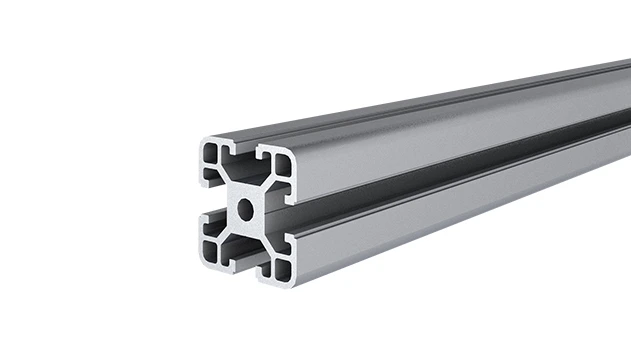
4040C is a 4.00x4.00 CM fractional 40 series square extrusion T-slot profile with four open T-slots, each side with 4.00cm face. The profile has align-a-grooves to assist in aligning connecting profiles.
In the bustling world of manufacturing, where efficiency and precision reign supreme, there's a silent workhorse that keeps production lines moving, workbenches stable, and material racks organized: the aluminum profile. Among these, the 4040C EU Standard Aluminum Profile stands out as a staple in lean systems, thanks to its durability, versatility, and adherence to strict European quality norms. But as industries worldwide pivot toward sustainability, the question isn't just how well these profiles perform—it's how responsibly they can be reused, recycled, and reimagined. Let's dive into the recycling journey of the 4040C profile, exploring its environmental impact, sustainability benefits, and why it's more than just a metal frame—it's a cornerstone of green manufacturing.
What Makes the 4040C EU Standard Aluminum Profile Special?
Before we talk recycling, let's get to know the star of the show: the 4040C EU Standard Aluminum Profile. If you've ever walked through a factory floor, visited a workshop, or even peeked inside a warehouse, chances are you've seen its handiwork. This profile is a type of aluminum extrusion profile—meaning it's shaped by pushing heated aluminum through a die to create a consistent cross-section. The "4040" refers to its dimensions: 40mm by 40mm, a size that strikes the perfect balance between strength and flexibility. The "C" denotes its specific design within the EU standard lineup, often featuring T-slots along its length that make it easy to attach accessories like brackets, panels, or shelves.
What sets the 4040C apart? For starters, it's built to last. Made from high-grade aluminum alloy, it resists corrosion, handles heavy loads, and stands up to the wear and tear of daily industrial use. But its real superpower? Adaptability. Whether it's forming the frame of a lean workbench, a flow rack for assembly lines, or a conveyor system, the 4040C profile can be configured and reconfigured with minimal effort, thanks to compatible aluminum profile accessories like end caps, connectors, and hinges. This modularity isn't just great for productivity—it's a game-changer for sustainability. A profile that can be easily disassembled and repurposed is one that's less likely to end up in a landfill.
Aluminum: The Ultimate Recyclable Material
To understand why recycling the 4040C profile matters, we first need to appreciate aluminum itself. Unlike many materials, aluminum is 100% recyclable. That means it can be melted down, reprocessed, and turned into new products repeatedly without losing an ounce of its strength or quality. Think of it as the metal world's version of a glass bottle—except aluminum's recycling story is even more impressive.
Let's put it in perspective: producing aluminum from raw bauxite ore is an energy-intensive process. It involves mining, refining, smelting, and casting—steps that collectively guzzle electricity and release significant greenhouse gases. In contrast, recycling aluminum requires just 5% of the energy needed to produce it from scratch. That's a 95% energy savings! To put that into numbers: recycling one ton of aluminum saves roughly 14,000 kWh of electricity—enough to power an average home for over a year. It also cuts down on carbon emissions by about 90% compared to virgin production, according to the Aluminum Association.
For the 4040C profile, this recyclability is a huge advantage. Since it's often used in industrial settings where durability is key, many 4040C frames stay in service for decades. When they do reach the end of their lifecycle, they're not just scrap metal—they're a valuable resource waiting to be reborn. And because the 4040C is an aluminum extrusion profile with minimal coatings (unlike some painted or plastic-covered metals), it's relatively easy to recycle compared to mixed-material products. No fancy chemicals or complex separation processes are needed—just a little sorting, cleaning, and melting.

The Recycling Journey: From Old Profile to New
So, what happens to a 4040C profile when it's time to retire? Let's walk through its recycling journey, step by step.
Step 1: Collection and Sorting
It all starts with collection. In manufacturing facilities, 4040C profiles might be discarded during production (think off-cuts from cutting or drilling) or when a production line is upgraded. End-of-life products, like old workbenches or obsolete material racks, also contribute to the recycling stream. These profiles are often collected by scrap yards, recycling centers, or even directly by aluminum suppliers who specialize in circular economy practices.
Once collected, the profiles are sorted. This is usually a manual or automated process where aluminum is separated from other materials. Since 4040C profiles are primarily aluminum, this step is straightforward, but any attached aluminum profile accessories—like plastic end caps or rubber gaskets—may need to be removed. Metal accessories, such as steel brackets, can often be recycled alongside the aluminum, as they'll be separated later during melting.
Step 2: Cleaning and Preparation
Next, the sorted aluminum profiles are cleaned to remove dirt, grease, paint, or any remaining accessories. For the 4040C, which is often used in clean industrial environments, this step is usually minimal—maybe a quick rinse or brush to remove dust or oil. Unlike some aluminum products that are coated in plastics or adhesives, the 4040C's bare metal surface makes cleaning a breeze, reducing the water and energy used in this stage.
Step 3: Melting and Purification
The cleaned profiles are then shredded into smaller pieces (to speed up melting) and loaded into a furnace. The furnace heats the aluminum to around 660°C (1,220°F)—the metal's melting point. As it melts, impurities like dirt or non-aluminum metals rise to the surface and are skimmed off, leaving behind pure molten aluminum. This purification ensures the recycled material meets the same quality standards as virgin aluminum—critical for a precision product like the 4040C profile.
Step 4: Re-Extrusion and Reuse
Finally, the molten aluminum is cast into ingots, which are then rolled into billets. These billets are reheated and pushed through an extrusion die to create new profiles—including, you guessed it, new 4040C EU Standard Aluminum Profiles. The cycle repeats, with the recycled aluminum performing just as well as the original, at a fraction of the environmental cost.
Environmental Impact: Beyond the Energy Savings
We've talked about the energy savings, but the environmental benefits of recycling 4040C profiles go far beyond that. Let's break down the impact:
| Environmental Factor | Virgin Aluminum Production | Recycled Aluminum Production | Reduction with Recycling |
|---|---|---|---|
| Energy Consumption | ~15,000 kWh/ton | ~750 kWh/ton | 95% |
| Carbon Emissions | ~12 tons CO2/ton | ~0.6 tons CO2/ton | 95% |
| Water Usage | ~1,000 liters/ton | ~50 liters/ton | 95% |
| Bauxite Mining | Requires mining of bauxite ore | No mining needed | 100% reduction in mining impact |
Let's unpack these numbers. By recycling a single ton of 4040C profiles, we avoid mining approximately 4 tons of bauxite ore—a process that disrupts ecosystems, contributes to deforestation, and contaminates water sources. We also save 950 liters of water, which is crucial in regions facing water scarcity. And perhaps most importantly, we cut carbon emissions by 11.4 tons per ton of recycled aluminum. For context, that's equivalent to taking 2.5 cars off the road for a year.
Landfill space is another win. Aluminum doesn't biodegrade, so profiles that end up in landfills take up permanent space. Recycling keeps these materials in circulation, reducing the need for new landfills and the methane emissions they produce. In fact, the Aluminum Association estimates that over 75% of all aluminum ever produced is still in use today—proof that recycling works.
Sustainability for Businesses: More Than Just "Going Green"
For manufacturers, suppliers, and lean system operators, recycling 4040C profiles isn't just an environmental choice—it's a smart business move. Let's start with costs. Recycled aluminum is often cheaper than virgin aluminum, thanks to the lower energy and processing costs. For a lean system supplier, switching to recycled 4040C profiles can reduce material expenses without sacrificing quality, boosting profit margins in the process.
Then there are ESG (Environmental, Social, Governance) goals. Today's customers—whether they're automotive companies, electronics manufacturers, or small workshops—are increasingly prioritizing sustainability when choosing suppliers. A lean system supplier that uses recycled aluminum profiles can market itself as eco-conscious, attracting clients who want to reduce their own carbon footprints. It's a competitive edge that goes beyond price.
Regulatory compliance is another factor. The EU, in particular, has strict environmental regulations, including targets for waste reduction and carbon neutrality. By recycling 4040C profiles, businesses can stay ahead of these regulations, avoiding fines and positioning themselves as leaders in sustainable manufacturing.
Take, for example, a mid-sized lean system supplier based in Germany. A few years ago, they noticed a growing demand from clients for "greener" production solutions. They decided to switch 30% of their 4040C profile sourcing to recycled aluminum. Within a year, they saw a 15% drop in material costs, received positive feedback from clients, and even qualified for a government grant for sustainable manufacturing practices. Their story isn't unique—it's a preview of where the industry is heading.
The Role of Aluminum Profile Accessories in Lifecycle Extension
We've focused a lot on the 4040C profile itself, but let's not overlook its sidekicks: aluminum profile accessories. These small but mighty components—think end caps, T-slot nuts, hinges, and connectors—play a big role in extending the lifecycle of the profiles, making them easier to recycle in the long run.
Durable accessories mean less frequent replacement. A well-made hinge or bracket won't break after a few months, so the entire assembly (profile + accessories) stays in use longer. When it does come time to retire, many accessories are made from aluminum or steel, which are also recyclable. Even plastic accessories, like some end caps, can often be separated and recycled separately, ensuring minimal waste.
Modularity is key here. The 4040C's T-slots and compatible accessories make it easy to disassemble a workbench or rack, replace a single part, and reassemble—no need to throw out the entire structure. This "repair, don't replace" mindset is at the heart of sustainability, and it's built into the design of the 4040C system.
Challenges in Recycling: What Stands in the Way?
Of course, recycling 4040C profiles isn't without its hurdles. One common challenge is collection. Unlike aluminum cans, which have well-established recycling programs, industrial aluminum waste can be fragmented. Small manufacturers might not have the infrastructure to separate aluminum profiles from other scrap, leading to contamination. To tackle this, some aluminum suppliers now offer take-back programs, where they collect old profiles from clients and ensure they're properly recycled.
Another issue is sorting. While 4040C profiles are mostly pure aluminum, they can sometimes be attached to non-aluminum materials like wood (in workbench tops) or plastic (in some accessories). Sorting these out requires manual labor or advanced technology, which can add costs. However, as recycling facilities invest in better sorting equipment—like infrared scanners that can identify metals—the process is becoming more efficient.
Education is also a barrier. Many workers on factory floors might not realize that old aluminum profiles are recyclable, so they end up in general waste. Training staff to recognize and separate these materials can go a long way in boosting recycling rates.
The Future of 4040C Profile Recycling: Closing the Loop
So, what does the future hold? The goal for many in the industry is a "closed-loop" system, where 4040C profiles are designed, used, recycled, and reused within the same supply chain. Imagine a lean system supplier that collects old profiles from its clients, recycles them, and uses the recycled aluminum to make new profiles—all without ever sending material to a landfill. It's not just a dream; some suppliers are already testing this model.
Advancements in technology will also play a role. New melting techniques that use renewable energy (like solar-powered furnaces) could further reduce the carbon footprint of recycling. Innovations in aluminum alloys might even make profiles lighter or stronger while remaining recyclable. And as 3D printing becomes more common, we could see on-demand production of aluminum profile accessories, reducing waste from overproduction.
Perhaps most importantly, the cultural shift toward sustainability is here to stay. As consumers, businesses, and governments demand greener practices, recycling 4040C profiles will move from "optional" to "essential." It's not just about being good for the planet—it's about being good for business, too.
Conclusion: The 4040C Profile—A Sustainable Legacy
The 4040C EU Standard Aluminum Profile is more than a building block of manufacturing. It's a symbol of how industry can evolve—prioritizing both performance and planet. Its recyclability, durability, and compatibility with sustainable practices make it a cornerstone of green manufacturing, proving that efficiency and eco-friendliness don't have to be at odds.
From the factory worker tightening a T-slot nut to the recycling facility operator melting down old profiles, every step in the lifecycle of the 4040C profile matters. By choosing recycled aluminum, investing in durable accessories, and supporting closed-loop systems, we can ensure that this humble metal profile continues to drive productivity—without driving environmental harm.
So, the next time you see a workbench, a flow rack, or a conveyor system, take a closer look. Chances are, there's a 4040C profile in there—and with a little care, it might just be part of the solution to a more sustainable future.