- Company Articles
- Industry articles
- Industry standards
- 4040C EU Standard Aluminum Profile vs. Non-Standard Alternatives: Quality Comparison

4040C EU Standard Aluminum Profile vs. Non-Standard Alternatives: Quality Comparison
Related Product
4040C EU Standard Aluminum Profile
4040C is a 4.00x4.00 CM fractional 40 series square extrusion T-slot profile with four open T-slots, each side with 4.00cm face. The profile has align-a-grooves to assist in aligning connecting profiles.
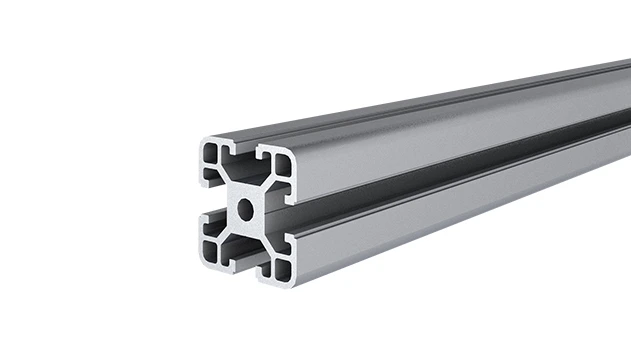
In the world of manufacturing, assembly lines, and workshop setups, the aluminum profile plays a starring role. It's the backbone of workbenches, the skeleton of material racks, and the silent organizer of production floors. But not all aluminum profiles are created equal. Today, we're diving deep into a critical comparison: the 4040C EU Standard Aluminum Profile versus its non-standard counterparts. If you've ever struggled with wobbly workbenches, ill-fitting accessories, or unexpected breakdowns, this article is for you. We'll break down why standards matter, how 4040C stands out, and why cutting corners with non-standard options might cost you more in the long run.
What Even Is a "Standard" Aluminum Profile, Anyway?
Let's start with the basics. When we talk about "EU Standard" aluminum profiles, we're referring to products manufactured to meet strict guidelines set by European union regulatory bodies. These standards cover everything from the alloy composition of the aluminum to the precision of the extrusion process, the tolerances of the T-slots, and even the durability of the finish. For the 4040C specifically, the "4040" denotes its cross-sectional dimensions—40mm by 40mm—while the "C" indicates a specific groove design and wall thickness that's consistent across all compliant manufacturers.
Non-standard profiles, on the other hand, are exactly what they sound like: profiles made without adhering to these universal specs. They might be produced by manufacturers looking to cut costs, skip quality checks, or cater to niche markets with "custom" dimensions. At first glance, they might look similar—same 40x40mm size, same silver color—but dig a little deeper, and the differences become glaring. And those differences? They can make or break your production efficiency, safety, and bottom line.
The 4040C EU Standard: Built for Consistency, Reliability, and Lean Systems
To understand why the 4040C EU Standard is a workhorse in factories and workshops, let's unpack what goes into making it. These profiles aren't just pieces of aluminum—they're engineered solutions designed to integrate seamlessly into lean systems, where every millimeter and every gram counts.
1. Material Quality: It's All in the Alloy
EU standards demand that aluminum extrusion profiles like the 4040C use high-grade alloys, typically 6063-T5 or 6061-T6. These alloys are chosen for their perfect balance of strength, lightweight, and corrosion resistance. The 6063-T5, for example, has excellent extrudability (meaning it can be shaped into precise T-slots and grooves) and a smooth surface finish that resists scratches and wear. What's more, the manufacturing process strictly limits impurities like iron, copper, or silicon—impurities that can weaken the profile over time or cause brittleness.
I once visited a small electronics assembly plant that switched from non-standard to 4040C profiles. The plant manager, Maria, told me, "Before, we had profiles that would bend under the weight of our circuit board racks. The non-standard ones felt 'soft'—like they'd warp if you looked at them wrong. The 4040C? We've had the same racks for three years, and they're still straight as a ruler. The difference in the aluminum quality is night and day."
2. Dimensional Accuracy: No Guesswork, Just Precision
If you've ever tried to assemble a bookshelf from a flat pack and found the holes didn't line up, you know the frustration of poor dimensional tolerance. Now imagine that on an industrial scale: workbenches that wobble, conveyor rails that jam, or material racks that can't support the weight of parts because the joints don't fit snugly. That's the reality of non-standard profiles.
The 4040C EU Standard leaves no room for error. Its T-slots (the grooves that hold accessories like brackets, shelves, or panels) are machined to within ±0.1mm of their specified width and depth. The cross-section—40mm x 40mm—is consistent along the entire length of the profile, even for 6-meter sections. This precision ensures that aluminum profile accessories—like 90° connectors, end caps, or shelf brackets—fit perfectly every single time. No filing down edges, no forcing joints, no wasted time.
A maintenance technician I spoke to, Raj, put it this way: "With non-standard profiles, I'd spend 20 minutes just trying to get a bracket to clamp onto a T-slot. The slot was either too narrow (so the bolt wouldn't fit) or too wide (so it slipped loose). Now with 4040C, I line up the bracket, tighten the bolt, and move on. It's saved me hours every week."
3. Compatibility with Accessories: A System, Not Just a Profile
One of the unsung heroes of the 4040C is its universal compatibility with aluminum profile accessories. Because the standard is recognized across Europe (and increasingly globally), manufacturers of accessories—from hinges and handles to casters and panel mounts—design their products to fit 4040C profiles perfectly. Need a 4080 aluminum profile end cap? It'll snap onto the 4040C's end without a gap. Looking for a 90° aluminum profile connector? It'll lock into the T-slot with zero play.
This compatibility is a game-changer for lean systems, where flexibility and adaptability are key. A workshop might start with a simple workbench using 4040C profiles, then later add a material rack, then a conveyor—all using the same accessories. With non-standard profiles, this kind of modularity is nearly impossible. You'd be stuck buying proprietary accessories from the same manufacturer, or worse, fabricating custom parts in-house (which eats up time and money).

Non-Standard Alternatives: The Hidden Costs of "Good Enough"
Non-standard profiles often lure buyers with a lower upfront price tag. "Why pay more for a 'standard' when this looks the same?" It's a tempting question—until the hidden costs start piling up. Let's take a closer look at what you're really getting (or not getting) with non-standard options.
1. Material Shortcuts: Weak Alloys and Hidden Impurities
Non-standard manufacturers often cut corners on material. They might use recycled aluminum with unknown alloy compositions or mix in cheaper metals to reduce costs. The result? Profiles that are weaker, prone to corrosion, or difficult to work with. I've seen non-standard profiles with surface pitting after just a few months in a humid workshop—something that would never happen with a 4040C's anodized finish.
Another issue? Inconsistent wall thickness. Non-standard profiles might have thicker walls in some sections and thinner in others, leading to weak points that fail under stress. A warehouse in my city once had a non-standard roller track collapse because the supporting profile bent—sending a cart full of auto parts crashing to the floor. The cost of replacing the track, the cart, and the damaged parts? Far more than the savings on the initial profile purchase.
2. Dimensional Chaos: When "Close Enough" Isn't Close Enough
Non-standard profiles play fast and loose with tolerances. A "40x40mm" non-standard profile might actually measure 39.2mm x 40.8mm, or have T-slots that vary in width by 0.5mm along the length. This might not sound like much, but it's enough to throw off an entire assembly.
Consider a simple workbench E (single deck-without caster), a common setup in many factories. If the non-standard profiles used to build it have inconsistent dimensions, the tabletop might sit unevenly, causing tools to slide off. Or the legs might not align with the frame, leading to a wobbly surface that makes precision work impossible. For a quality control station, that wobble could mean misaligned measurements and defective products slipping through the cracks.
3. Accessory Nightmares: Custom Parts and Frustration
Remember how 4040C works with any standard accessory? Non-standard profiles often require custom aluminum profile accessories—or none at all. A friend who runs a small furniture workshop once bought non-standard profiles to build workbenches. He quickly discovered that standard T-slot nuts wouldn't fit the narrow, irregular grooves. He ended up having to drill new holes and use bolts, which weakened the profiles and took twice as long to assemble. "I saved $50 on the profiles," he joked, "and spent $500 in labor fixing the mess."
4040C vs. Non-Standard: A Side-by-Side Comparison
To make the differences crystal clear, let's put the 4040C EU Standard and non-standard alternatives head-to-head. The table below breaks down key factors that matter most in real-world use:
| Feature | 4040C EU Standard Aluminum Profile | Non-Standard Aluminum Profile |
|---|---|---|
| Alloy Grade | 6063-T5 or 6061-T6 (high strength, corrosion-resistant) | Unknown/recycled alloys with impurities; often low-grade |
| Dimensional Tolerance | ±0.1mm on cross-section; T-slot width consistent to 0.05mm | ±0.5mm or more; uneven T-slots and wall thickness |
| Accessory Compatibility | Works with all standard aluminum profile accessories (connectors, end caps, brackets) | Requires custom or non-standard accessories; often incompatible with off-the-shelf parts |
| Load-Bearing Capacity | Typically 200-300kg per linear meter (depending on setup) | Unpredictable; often 50-100kg less due to weaker alloys |
| Corrosion Resistance | Anodized or powder-coated finish; resists rust and wear for 5-10+ years | Poor finish; prone to pitting, rust, or discoloration in 6-12 months |
| Long-Term Cost | Higher upfront cost, but lower total cost of ownership (minimal maintenance, no replacements) | Lower upfront cost, but high hidden costs (repairs, replacements, labor inefficiencies) |
Choosing the Right Aluminum Profile Supplier: It's About Partnership, Not Just Price
Even the best profile is only as good as the supplier behind it. A reputable aluminum profile supplier doesn't just sell you a product—they provide expertise, support, and consistency. When shopping for 4040C profiles, look for suppliers who:
- Certify compliance: Ask for EU standard certifications (like EN 755) to verify the profile meets material and dimensional specs.
- Offer a range of accessories: A good supplier will stock aluminum profile accessories like connectors, end caps, and brackets, ensuring you can get everything you need in one place.
- Provide technical support: Whether you're designing a custom workbench or troubleshooting a joint fit, a supplier with knowledgeable staff can save you hours of frustration.
Non-standard suppliers, by contrast, often lack these credentials. They might not have certification documents, offer limited accessories, or disappear when you need help with a defective profile. As Maria, the plant manager I mentioned earlier, put it: "With our 4040C supplier, if a profile is ever off-spec, they replace it no questions asked. With the non-standard guys? We called and got a voicemail that was never returned."
Conclusion: Invest in Standards, Invest in Your Productivity
At the end of the day, the choice between 4040C EU Standard aluminum profiles and non-standard alternatives isn't just about aluminum—it's about investing in your operation's efficiency, reliability, and future. The 4040C isn't the most expensive option on the market, but it's the smartest. It's built to last, designed to integrate into lean systems, and backed by a network of suppliers and accessories that make your life easier.
Non-standard profiles might save you a few dollars today, but they'll cost you in bent racks, jammed conveyors, wasted labor, and lost productivity tomorrow. As any lean system expert will tell you, in manufacturing, consistency is king—and the 4040C EU Standard delivers that consistency in spades.
So the next time you're tempted by a "cheap" aluminum profile, ask yourself: Can I afford the hidden costs? For most of us, the answer is no. Choose 4040C. Your workbench (and your bottom line) will thank you.