- Company Articles
- Industry articles
- Industry standards
- 4040C EU Standard Aluminum Profile: Why It's Essential for Exporting to EU Markets

4040C EU Standard Aluminum Profile: Why It's Essential for Exporting to EU Markets
Related Product
4040C EU Standard Aluminum Profile
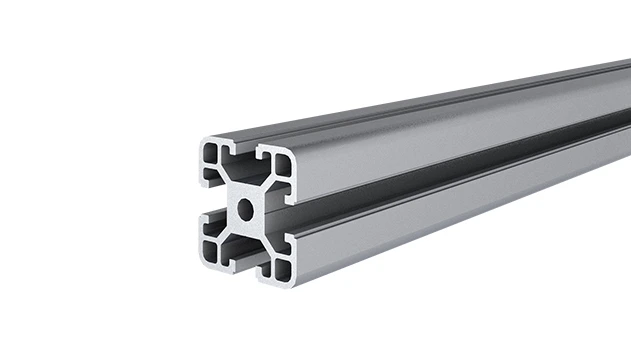
4040C is a 4.00x4.00 CM fractional 40 series square extrusion T-slot profile with four open T-slots, each side with 4.00cm face. The profile has align-a-grooves to assist in aligning connecting profiles.
Introduction: The EU Market's Unique Demands
Exporting to the European union (EU) is a goal for many manufacturers worldwide. With its strong economy, strict quality standards, and emphasis on sustainability, the EU represents a lucrative but challenging market. When it comes to industrial equipment—from factory workbenches to material flow racks—one component stands out as a cornerstone of successful exports: the 4040C EU standard aluminum profile. But what makes this specific profile so critical? Why not just use any aluminum extrusion profile and hope for the best?
Let's start by acknowledging a simple truth: the EU doesn't cut corners on quality. Whether you're selling workbenches to a German automotive plant or flow racks to a French electronics manufacturer, your products must meet rigorous standards. These standards cover everything from material safety to structural integrity, and non-compliance can lead to costly delays, rejected shipments, or even banned products. That's where the 4040C EU standard aluminum profile comes in. It's not just a piece of metal; it's a passport to the EU market.
What Exactly Is the 4040C EU Standard Aluminum Profile?
Before diving into why it's essential, let's clarify what the 4040C is. At its core, it's a type of aluminum extrusion profile—a long, uniform shape created by forcing aluminum alloy through a die. The "4040" refers to its cross-section: 40mm by 40mm, a common size for industrial applications. The "C" denotes its specific design within the EU standard series, which includes details like groove dimensions, wall thickness, and material composition.
But it's not just about size. The 4040C is engineered to meet EN (European Norm) standards, which govern everything from the aluminum alloy's chemical composition to the precision of its extrusion. This means every 4040C profile you source from a reputable lean system supplier should have consistent dimensions, reliable strength, and compatibility with a wide range of aluminum profile accessories—think brackets, joints, end caps, and guide rails. That consistency is key when building equipment that needs to perform flawlessly in EU factories.
Imagine ordering 100 workbenches for a client in Spain. If your aluminum profiles vary even slightly in width or groove depth, the aluminum profile accessories (like the brackets that hold the workbench top) might not fit properly. Suddenly, you're dealing with assembly delays, unhappy clients, and the risk of returns. The 4040C eliminates that risk by ensuring every profile adheres to the same strict specifications.

EU Standards: Why Compliance Isn't Optional
The EU's regulatory landscape is complex, but two frameworks stand out for manufacturers: CE marking and REACH compliance. Let's break down what they mean for your aluminum profiles.
CE Marking: Your Product's "Green Light"
CE marking is mandatory for most industrial products sold in the EU. It indicates that a product meets the EU's health, safety, and environmental requirements. For aluminum profiles used in equipment like workbenches or conveyor systems, CE marking requires proof of structural stability, chemical safety, and resistance to wear and tear. The 4040C is designed with these requirements in mind.
For example, the aluminum alloy used in 4040C profiles is typically 6063-T5, a material known for its excellent strength-to-weight ratio and corrosion resistance. This alloy is compliant with EU standards for heavy metals and harmful substances, ensuring it doesn't leach toxins into the environment or pose health risks to workers. Non-EU profiles, on the other hand, might use cheaper alloys with higher lead or cadmium levels—immediate red flags for EU customs.
REACH and RoHS: Protecting People and the Planet
REACH (Registration, Evaluation, Authorization, and Restriction of Chemicals) is another critical EU regulation. It restricts the use of certain hazardous substances in products, including aluminum profiles. The 4040C, when sourced from a trusted lean system supplier, undergoes rigorous testing to ensure it's free from REACH-restricted chemicals like phthalates or mercury.
Then there's RoHS (Restriction of Hazardous Substances), which applies to electronic and electrical equipment. If your 4040C-based products include electrical components—say, an ESD workstation with built-in lighting—RoHS ensures those components (and the aluminum profile itself) don't contain lead, mercury, or other harmful materials. Again, the 4040C's EU standard design simplifies compliance, as its material and finish are pre-vetted for these regulations.
The 4040C's Secret Weapon: Versatility with Aluminum Profile Accessories
One of the biggest advantages of the 4040C is how seamlessly it works with aluminum profile accessories. In EU factories, efficiency is king, and equipment needs to be adaptable. A workbench today might need to be reconfigured into a material rack tomorrow; a flow rack might require additional shelves next month. The 4040C's standardized T-slot design makes this adaptability possible.
Let's take aluminum guide rail A as an example. These guide rails are used to create smooth-sliding surfaces for conveyor systems or drawer units. Because the 4040C's T-slots are precisely sized (per EU standards), aluminum guide rail A (and other accessories like end caps, corner brackets, or hinge joints) fit perfectly without modification. This isn't just convenient—it's cost-effective. EU manufacturers hate waste, and the ability to reuse and reconfigure equipment with compatible accessories aligns with their sustainability goals.
Compare this to non-EU profiles, which often have proprietary slot designs. If you export a workbench built with a non-standard profile, your EU client might struggle to find compatible accessories locally. They'd have to import parts from you, leading to longer lead times and higher costs. Over time, that client is likely to switch to a competitor using 4040C profiles, simply because sourcing aluminum profile accessories is easier and cheaper within the EU.
Durability and Performance: Built for EU Factory Floors
EU factories are busy places. Heavy loads, constant movement, and strict hygiene standards (especially in sectors like food processing or pharmaceuticals) demand equipment that can keep up. The 4040C delivers here, too. Its 1.5mm to 2.0mm wall thickness (depending on the specific variant) provides excellent load-bearing capacity—enough to support heavy tools on a workbench or stacks of materials on a flow rack.
Then there's the surface treatment. Most 4040C profiles undergo anodization, a process that forms a protective oxide layer on the aluminum. This layer resists corrosion, scratches, and chemical damage—critical in EU factories where cleanliness is non-negotiable. For example, in a German automotive plant, oil and coolant spills are common; anodized 4040C profiles can withstand these without rusting or degrading. Non-EU profiles might use cheaper powder coating, which can chip or peel under similar conditions, leading to premature equipment failure.
Let's not forget about weight. Aluminum is naturally lighter than steel, making 4040C-based equipment easier to move and install. This is a big plus for EU manufacturers, who often prioritize ergonomics to reduce workplace injuries. A lighter workbench or turnover trolley is easier for workers to reposition, improving both safety and efficiency.
Why a Lean System Supplier Matters for 4040C Sourcing
So, you're convinced the 4040C is essential—but where do you get it? This is where partnering with a reputable lean system supplier becomes crucial. Not all aluminum extrusion profile suppliers are created equal, and when exporting to the EU, cutting corners on sourcing can derail your entire operation.
A trusted lean system supplier will provide 4040C profiles with full documentation: material certificates (like EN 755-2 compliance for aluminum alloys), test reports for anodization thickness, and declarations of conformity for CE, REACH, and RoHS. This documentation isn't just paperwork; it's what EU customs officials will ask for when your shipment arrives. Without it, your products could be held in port indefinitely, costing you time and money.
Moreover, a good lean system supplier understands the nuances of EU markets. They'll know, for example, that German clients might prefer profiles with a specific surface finish, or that French clients often require additional load-testing reports. By working with a supplier who specializes in EU exports, you can tailor your 4040C-based products to meet these regional preferences, giving you a competitive edge.
4040C vs. Non-EU Profiles: A Clear Advantage
To truly grasp why the 4040C is essential, let's compare it to non-EU aluminum profiles. The table below highlights key differences that matter to EU buyers and regulators:
| Feature | 4040C EU Standard Aluminum Profile | Typical Non-EU Aluminum Profile | Why It Matters for EU Exports |
|---|---|---|---|
| Dimensions | Precisely 40mm x 40mm cross-section; T-slots 8mm wide (standardized) | Often "close enough" (e.g., 39.5mm x 40.2mm); proprietary slot sizes | EU clients need consistency for interchangeable parts and accessories. |
| Material Compliance | Aluminum alloy 6063-T5 (EN 755-2 compliant); REACH/RoHS tested | May use untested alloys with higher impurity levels | Non-compliant materials risk customs rejection and legal penalties. |
| Surface Treatment | Anodized (20-30μm thickness); corrosion-resistant | Often powder-coated (prone to chipping) or untreated | EU factories demand long-lasting, low-maintenance equipment. |
| Accessories Compatibility | Works with all EU-standard aluminum profile accessories (guide rails, brackets, etc.) | Requires custom or imported accessories | EU clients prioritize local, easy-to-source parts for quick repairs/reconfigurations. |
| Load Capacity | Tested to 200kg/m (uniform load); CE-certified for structural safety | Uncertified; load ratings often exaggerated | EU safety regulations require verifiable load capacities to prevent workplace accidents. |
The table tells a clear story: the 4040C isn't just better—it's built for the EU market. Non-EU profiles might be cheaper upfront, but the hidden costs (compliance issues, lost clients, replacement parts) far outweigh the savings.
Real-World Impact: A Case Study
Let's put this into context with a hypothetical (but realistic) scenario. Imagine a manufacturer in Asia that produces ESD workstations for electronics assembly. They've been selling to domestic markets for years using a non-standard aluminum profile. Now, they want to export to Poland, a growing hub for electronics manufacturing in the EU.
Their first shipment of 50 workstations arrives in Gdansk. Polish customs inspects the goods and asks for CE marking documentation. The manufacturer provides certificates, but upon closer inspection, the aluminum profile's alloy isn't EN 755-2 compliant. The shipment is held. While the manufacturer scrambles to test the alloy and obtain new certifications, the Polish client grows frustrated. By the time the workstations are released (three weeks later), the client has already found a local supplier using 4040C profiles—workstations that arrived on time, with full compliance docs, and compatible with local aluminum profile accessories.
Now, imagine the same manufacturer switches to 4040C profiles sourced from a lean system supplier. Their next shipment to Poland includes CE certificates, REACH/RoHS reports, and a list of EU-based suppliers for aluminum guide rail A and other accessories. The shipment clears customs in two days. The Polish client is impressed, places a repeat order, and recommends the manufacturer to other EU partners. That's the difference the 4040C makes.
Conclusion: The 4040C—Your Key to EU Market Success
Exporting to the EU is challenging, but it's also incredibly rewarding. To succeed, you need more than a good product—you need a product built for the EU's unique demands. The 4040C EU standard aluminum profile is that foundation. It ensures compliance with strict regulations, works seamlessly with locally available aluminum profile accessories, and delivers the durability EU manufacturers expect.
But remember: the 4040C is only as good as the supplier behind it. Partner with a lean system supplier who understands EU standards, provides comprehensive documentation, and offers support beyond just the product. With the right profile and the right supplier, you'll not only export to the EU—you'll thrive there.
So, if you're serious about breaking into the EU market, start with the 4040C. It's not just an aluminum extrusion profile; it's your ticket to building trust, reliability, and long-term success in one of the world's most competitive markets.