- Company Articles
- Industry articles
- Industry standards
- 4040E EU Standard Aluminum Profile Connection Systems: Compatibility with Lean Accessories

4040E EU Standard Aluminum Profile Connection Systems: Compatibility with Lean Accessories
Related Product
4040E EU Standard Aluminum Profile
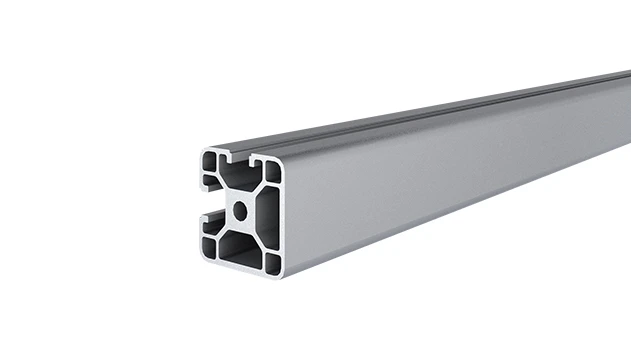
4040E is a 4.00x4.00 CM fractional 40 series square extrusion T-slot profile with two side open T-slots, two side with closed face, each side with 4.00cm face. The profile has align-a-grooves to assist in aligning connecting profiles.
In the fast-paced world of modern manufacturing and warehouse operations, the ability to adapt, streamline, and optimize is more than just a competitive advantage—it's a necessity. Lean manufacturing principles, which focus on minimizing waste while maximizing value, have become the backbone of efficient operations. At the heart of many lean systems lies a deceptively simple yet incredibly versatile component: the aluminum profile. Among the various profiles available, the 4040E EU Standard Aluminum Profile stands out for its robustness, flexibility, and—most importantly—its seamless compatibility with a wide range of lean accessories. Whether you're building a workstation, a material rack, or a conveyor system, understanding how this profile connects with lean accessories can transform your workflow from disjointed to dynamic. Let's dive into the world of 4040E aluminum profiles, explore their connection systems, and uncover why they're the unsung heroes of lean efficiency.
What is the 4040E EU Standard Aluminum Profile?
Before we delve into connections and compatibility, let's start with the basics: what exactly is the 4040E EU Standard Aluminum Profile? At its core, it's an extruded aluminum component defined by its dimensions and adherence to European (EU) standards. The "4040" refers to its cross-sectional measurements: 40mm in width and 40mm in height, creating a square profile that balances strength and versatility. The "E" denotes a specific groove design within the profile—typically featuring T-slots along all four sides. These T-slots are the secret to its adaptability, allowing for easy attachment of accessories, connectors, and components without the need for welding or complex machining.
Manufactured from high-grade aluminum alloy (most commonly 6063-T5), the 4040E profile offers an impressive strength-to-weight ratio. This means it can support heavy loads—often up to several hundred kilograms per linear meter—while remaining lightweight enough to be maneuvered and assembled by a small team. Its surface is usually anodized, a process that creates a protective oxide layer, making it resistant to corrosion, scratches, and wear. This durability ensures that systems built with 4040E profiles stand the test of time, even in harsh industrial environments where dust, moisture, or chemicals are present.
But what truly sets the 4040E apart is its role in modular design. Unlike fixed, custom-built structures, 4040E profiles allow teams to create, modify, and reconfigure systems on the fly. Need to adjust a workstation's height? Swap out a few connectors. Expand a material rack to accommodate new inventory? Add a few extra profile sections. This modularity aligns perfectly with lean principles, where adaptability is key to eliminating waste (like excess inventory or underutilized space) and responding to changing production needs.
The Backbone of Connectivity: 4040E Profile Connection Systems
A profile is only as useful as its ability to connect to other components. The 4040E's connection systems are engineered to be both strong and user-friendly, ensuring that even those without specialized training can assemble sturdy structures. Let's break down the most common connection methods and the accessories that make them possible.
T-Slot Connections: The Foundation of Flexibility
The T-slots running along the 4040E profile's sides are the primary interface for attaching accessories. These slots are designed to accept a variety of fasteners, including T-nuts, bolts, and sliding brackets. Here's how they work: a T-nut is inserted into the T-slot and rotated 90 degrees, locking it in place. A bolt is then threaded through the accessory (like a bracket or connector) and into the T-nut, securing the component firmly to the profile. This system allows for infinite adjustability—accessories can be positioned anywhere along the slot, and repositioning is as simple as loosening the bolt, sliding the T-nut to the new location, and retightening.
T-slot connections are ideal for attaching everything from flat panels (like workbench tops) to more complex components (like roller tracks or caster wheels). They're also compatible with a wide range of aluminum profile accessories , such as end caps (which protect the profile's edges and give a clean finish), rubber strips (to reduce noise or prevent slipping), and gussets (to reinforce joints and increase load capacity).
Angle Connectors: Building Strong Corners
When constructing frames, workstations, or racks, connecting profiles at angles—most commonly 90 degrees—is essential. This is where angle connectors come into play. For 4040E profiles, these connectors are specifically designed to fit the profile's dimensions and T-slot layout. The most common types include:
- 90° Aluminum Profile Connectors : These are L-shaped brackets that attach to two perpendicular 4040E profiles using T-nuts and bolts. They're available in solid aluminum (for heavy loads) or lightweight plastic (for lighter applications) and often feature built-in reinforcement ribs to prevent bending under stress.
- 45° and 135° Connectors : For non-right-angle joints—such as when building sloped racks or triangular frames—45° and 135° connectors provide the same secure attachment as their 90° counterparts but at different angles.
- Three-Way and Four-Way Connectors : These allow for connections in multiple directions (e.g., adding a vertical profile to a horizontal frame with two perpendicular arms). They're particularly useful for building complex structures like multi-tiered material racks.
What makes these connectors so effective is their precision. EU standards ensure that 4040E profiles and their connectors have consistent tolerances, meaning a 90° connector from one manufacturer will fit seamlessly with a 4040E profile from another. This interoperability reduces the risk of compatibility issues and gives teams the freedom to source components from multiple suppliers.
Internal and External Joints: Streamlining Aesthetics and Strength
For applications where a clean, uncluttered look is desired—or where space is limited—internal joints are a game-changer. These joints fit inside the 4040E profile's hollow core, connecting two profiles end-to-end or at angles without protruding externally. For example, an internal straight aluminum joint can link two 4040E sections to create a longer profile, while an internal rotary joint allows for limited rotation between connected profiles (useful for adjustable workstations).
External joints, by contrast, attach to the outside of the profile. While they may be slightly bulkier, they often offer higher load capacities and are easier to install (since there's no need to insert components into the profile's core). Examples include external corner brackets and parallel aluminum joints, which connect two parallel profiles (like the sides of a trolley) to add stability.

Compatibility with Lean Accessories: Bridging Profiles and Productivity
The true power of the 4040E profile lies in its ability to work harmoniously with the lean accessories that drive operational efficiency. Lean systems rely on tools like workbenches, material racks, conveyors, and trolleys—all of which require specific accessories to function. Let's explore how 4040E profiles connect with some of the most critical lean accessories, and why this compatibility matters.
Lean Pipe Joints: Mixing Systems for Cost-Effective Solutions
While 4040E aluminum profiles are robust and durable, some lean systems still use lean pipes—flexible, often PE-coated steel pipes known for their low cost and ease of bending. The good news? 4040E profiles can connect with lean pipe joints , allowing teams to mix and match materials for optimal results. For example, you might use 4040E profiles for the heavy-duty frame of a workstation and lean pipes for lightweight tool holders or dividers attached to the frame.
This compatibility is made possible by specialized adapters and clamps. A typical lean pipe joint adapter features a clamp that wraps around the lean pipe and a plate with holes that align with the 4040E's T-slots. By inserting T-nuts into the profile's slots and bolting the adapter plate in place, the lean pipe is securely attached to the aluminum frame. This hybrid approach lets teams leverage the strength of aluminum profiles where needed and the flexibility of lean pipes elsewhere, reducing costs without sacrificing performance.
Caster Wheels: Adding Mobility to Static Structures
In lean manufacturing, mobility is often key. Workstations that can be moved to the production line, trolleys that transport materials between stations, and racks that shift with changing inventory—all rely on caster wheels. The 4040E profile's T-slot system makes adding casters a breeze, thanks to caster installation bases.
A caster wheel assembly typically includes a mounting plate, a swivel or rigid fork, and the wheel itself. For 4040E profiles, the mounting plate is designed to fit the profile's T-slots. By securing the plate to the profile with T-nuts and bolts, the caster is firmly attached. This system supports various caster types, including:
- Swivel Casters with Brakes : These allow 360° rotation and can be locked in place, making them ideal for workstations that need to stay put during use but move when needed.
- Rigid Casters : These only roll forward and backward, offering stability for straight-line movement (e.g., trolleys used on assembly lines).
- Heavy-Duty Casters : With larger wheels and reinforced forks, these can support hundreds of kilograms, making them suitable for loaded material racks.
The beauty of this setup is adjustability. If a trolley needs to be taller, you can add spacer profiles between the caster base and the frame. If you need better maneuverability, swap out rigid casters for swivel ones. This flexibility ensures that even static structures can evolve with changing operational needs.
Roller Tracks: Streamlining Material Flow
In lean systems, minimizing manual material handling is crucial for reducing waste and preventing injuries. Roller tracks—conveyor-like systems that allow materials to slide or roll from one point to another—are a staple for this purpose. 4040E profiles excel at supporting roller tracks, thanks to their T-slots and compatibility with specialized mounting brackets.
A typical roller track system for 4040E profiles includes aluminum or plastic guide rails, rollers (made of steel, plastic, or rubber), and mounting hardware. The guide rails are attached to the 4040E profile using brackets like the "roller track placon mount for aluminum profile flat"—a flat plate with holes that align with the profile's T-slots. Once mounted, the rollers are inserted into the guide rails, creating a smooth surface for boxes, bins, or components to glide along.
These systems can be customized to fit specific needs: for example, using ESD (electrostatic discharge) rollers in electronics manufacturing to prevent static damage, or angled tracks to use gravity for material flow. They're also easy to extend or reconfigure—simply add more 4040E sections and roller track segments, and secure them with T-nuts and bolts.
| Accessory Type | Connection Method to 4040E Profile | Key Benefits | Common Applications |
|---|---|---|---|
| Aluminum Profile Accessories (End Caps, Rubber Strips) | Press-fit into T-slots or secured with T-nuts | Protects profiles, reduces noise, enhances safety | Workbench edges, rack corners, exposed profile ends |
| Lean Pipe Joints (via Adapters) | Clamp-style adapters bolted to T-slots | Mixes aluminum and lean pipe systems, cost-effective | Tool holders, dividers, lightweight shelving |
| Caster Wheels | Caster installation bases secured with T-nuts and bolts | Adds mobility, easy to swap or adjust | Trolleys, mobile workstations, movable racks |
| Roller Tracks | Placon mounts or brackets bolted to T-slots | Enables smooth material flow, customizable angles | Assembly lines, picking stations, material racks |
| 90° Aluminum Profile Connectors | T-nuts and bolts through L-shaped brackets | Strong, rigid corner joints, high load capacity | Workstation frames, rack uprights, trolley sides |
Workbench Components: Building Ergonomic, Functional Spaces
Workstations are the heart of any production or assembly area, and 4040E profiles are a popular choice for building custom workbenches. To turn a basic 4040E frame into a functional workstation, several accessories are needed—all of which connect seamlessly to the profile:
- Workbench Tops : These can be made of plywood, aluminum honeycomb panels, or ESD-safe materials (for electronics). They're attached to the 4040E frame using T-nuts and bolts, with adjustable height settings to accommodate different users.
- Shelving and Drawers : Additional storage is often built into workbenches using 4040E profiles for shelves or drawer frames. These are connected using angle brackets and T-slots, allowing for easy adjustment of shelf heights.
- Lighting and Power Rails : Task lighting or power strips can be mounted to the 4040E frame using clamp-on brackets, keeping cords organized and tools within reach.
The result is a workstation tailored to the user's needs—ergonomic, efficient, and adaptable. If production requirements change, the workbench can be reconfigured by adding or removing components, all without replacing the entire frame.
Practical Applications: 4040E Profiles in Action
To truly understand the value of 4040E profiles and their compatibility with lean accessories, let's look at a few real-world applications. These examples highlight how the profile's flexibility and accessory compatibility translate to tangible operational improvements.
Case Study 1: Assembly Line Workstation
A small electronics manufacturer needed a workstation for assembling circuit boards. The requirements were: ESD protection (to prevent static damage to components), adjustable height, built-in material storage, and mobility for easy repositioning. Using 4040E profiles, they built a frame with:
- An ESD-safe workbench top bolted to the 4040E frame via T-slots.
- Two levels of shelving (connected with 90° aluminum profile connectors) for storing tools and components.
- A roller track (mounted with placon brackets) along the back edge to feed circuit boards into the workstation.
- Swivel caster wheels with brakes (attached via caster installation bases) for mobility.
- ESD rubber strips in the T-slots to prevent static buildup.
The result? A workstation that reduced assembly time by 15% (thanks to easier material access) and decreased static-related defects by 20%. When the manufacturer expanded production, they simply added more 4040E sections and roller track segments to extend the workstation—no need for a complete rebuild.
Case Study 2: Material Handling Trolley
A warehouse needed a trolley to transport heavy pallets of raw materials between storage and the production line. The trolley had to support up to 500kg, navigate narrow aisles, and be easy to clean. Using 4040E profiles, they constructed a sturdy frame with:
- Heavy-duty 4040E profiles for the frame, reinforced with gussets at corners.
- Large-diameter caster wheels (with brakes) attached via heavy-duty installation bases.
- A flat aluminum top bolted to the frame, with raised edges (made from 4040E sections) to prevent pallets from sliding off.
- Push handles (made from lean pipes connected to the frame via lean pipe joint adapters) for easy maneuvering.
The trolley exceeded load expectations, reduced manual handling injuries, and was simple to disassemble for cleaning. When the warehouse added a new production line, they reconfigured the trolley by shortening the frame and adding side rails—all using existing 4040E components and accessories.
The Benefits of 4040E Compatibility: Why It Matters for Lean Systems
At this point, you might be wondering: why does compatibility between 4040E profiles and lean accessories matter so much? The answer lies in the core principles of lean manufacturing—eliminating waste, improving flexibility, and maximizing value. Here's how this compatibility drives those outcomes:
Reduced Waste: No More "One-Size-Fits-None" Solutions
Traditional fixed structures—welded steel frames, custom-built racks—often lead to waste. If production needs change, the structure becomes obsolete and must be replaced, wasting materials and labor. 4040E profiles, with their compatible accessories, eliminate this waste by allowing endless reconfiguration. A workstation can become a trolley, a rack can become a conveyor—all by swapping out accessories, not the entire frame.
Lower Costs: Mix, Match, and Reuse
By supporting a wide range of accessories—including existing lean pipe joints, casters, and roller tracks—4040E profiles let teams reuse components from old systems. There's no need to buy entirely new accessories when upgrading to aluminum profiles; instead, you can mix old and new for significant cost savings. Additionally, the modular nature of the system reduces inventory costs—you can stock a few standard 4040E profiles and accessories, rather than dozens of custom parts.
Faster Setup and Changeover: Minimizing Downtime
In manufacturing, downtime is costly. 4040E profiles and their accessories can be assembled and disassembled in minutes, not hours. With T-slots and simple bolt-on connections, even complex systems like conveyor lines can be set up by a small team without specialized tools. This speed is a game-changer for lean operations, where quick changeovers between production runs are essential.
Improved Safety: Sturdy, Secure Systems
Lean isn't just about efficiency—it's about safety, too. 4040E profiles and their accessories are engineered to meet strict EU safety standards, ensuring that structures like workstations and racks are stable and secure. For example, caster wheels with brakes prevent unintended movement, while ESD accessories protect both workers and sensitive components. The ability to reinforce joints with gussets or upgrade to heavy-duty connectors also means systems can be adapted to meet evolving safety requirements.
Conclusion: The 4040E Profile—A Cornerstone of Lean Efficiency
In the world of lean manufacturing, every component must earn its place. The 4040E EU Standard Aluminum Profile does more than that—it excels. Its robust design, modular T-slot system, and seamless compatibility with lean accessories like aluminum profile accessories, lean pipe joints, caster wheels, and roller tracks make it a cornerstone of efficient, adaptable operations. Whether you're building a simple workstation or a complex conveyor system, the 4040E profile empowers you to create solutions that grow with your needs, reduce waste, and maximize value.
So, the next time you walk through a manufacturing plant, warehouse, or workshop, take a closer look at the frames, workstations, and racks. Chances are, you'll spot 4040E profiles hard at work—quietly connecting the dots between lean principles and operational success. And now, you'll know why they're there: because when it comes to building efficient, adaptable systems, compatibility isn't just a feature—it's everything.