- Company Articles
- Industry articles
- Industry standards
- 4040E EU Standard Aluminum Profile Environmental Benefits: Recyclability & Eco-Friendliness

4040E EU Standard Aluminum Profile Environmental Benefits: Recyclability & Eco-Friendliness
Related Product
4040E EU Standard Aluminum Profile
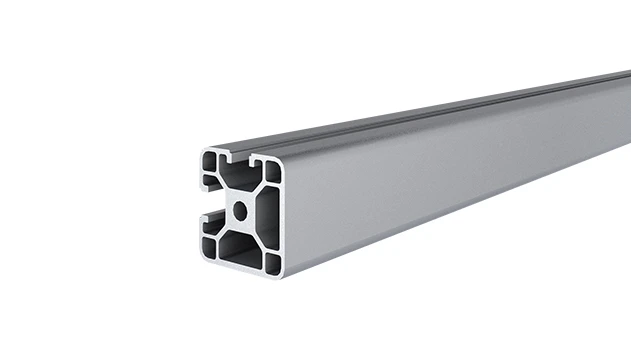
4040E is a 4.00x4.00 CM fractional 40 series square extrusion T-slot profile with two side open T-slots, two side with closed face, each side with 4.00cm face. The profile has align-a-grooves to assist in aligning connecting profiles.
Walk into any modern factory, warehouse, or workshop today, and you'll likely notice a common sight: sleek, modular structures—workbenches, material racks, assembly lines—crafted from silver-toned metal. More often than not, these are built using aluminum extrusion profiles, and among the most widely trusted is the
4040E EU Standard Aluminum Profile
. But beyond its reputation for durability and flexibility, there's a quieter, more critical story to tell: how this unassuming component is becoming a cornerstone of sustainable manufacturing. In a world grappling with climate change and resource depletion, the choices we make about materials matter. Let's dive into why the 4040E aluminum profile isn't just a tool for efficiency, but a champion for the planet—starting with its unmatched recyclability and eco-friendly design.
Why Aluminum? The Green Foundation of Modern Manufacturing
Before we zoom in on the 4040E specifically, let's take a step back and appreciate aluminum itself. Unlike plastics or even some metals, aluminum is a sustainability standout. Here's why: it's 100% recyclable, and it can be recycled repeatedly without losing quality. That's right—your 4040E profile today could become part of a bicycle frame, a window frame, or another workbench tomorrow, with no degradation in performance.
The real magic, though, is in the energy savings. Producing aluminum from raw bauxite ore is energy-intensive, but recycling aluminum requires just 5% of the energy needed to make it from scratch. That's a 95% reduction in energy use—a statistic that makes environmentalists and cost-conscious manufacturers alike sit up and take notice. For context, recycling one ton of aluminum saves enough energy to power a typical home for over 10 years. When you scale that up to the millions of tons of aluminum used in manufacturing annually, the impact is staggering.
But aluminum's eco-credentials don't stop at recyclability. It's also lightweight, which reduces transportation emissions. A 4040E profile, for example, weighs significantly less than a steel equivalent of the same strength, meaning fewer trucks on the road to transport materials, and lower fuel consumption. Plus, aluminum is naturally resistant to corrosion, so it lasts longer—reducing the need for frequent replacements and cutting down on waste. All of this makes aluminum the material of choice for brands and manufacturers aiming to shrink their carbon footprint.
The real magic, though, is in the energy savings. Producing aluminum from raw bauxite ore is energy-intensive, but recycling aluminum requires just 5% of the energy needed to make it from scratch. That's a 95% reduction in energy use—a statistic that makes environmentalists and cost-conscious manufacturers alike sit up and take notice. For context, recycling one ton of aluminum saves enough energy to power a typical home for over 10 years. When you scale that up to the millions of tons of aluminum used in manufacturing annually, the impact is staggering.
But aluminum's eco-credentials don't stop at recyclability. It's also lightweight, which reduces transportation emissions. A 4040E profile, for example, weighs significantly less than a steel equivalent of the same strength, meaning fewer trucks on the road to transport materials, and lower fuel consumption. Plus, aluminum is naturally resistant to corrosion, so it lasts longer—reducing the need for frequent replacements and cutting down on waste. All of this makes aluminum the material of choice for brands and manufacturers aiming to shrink their carbon footprint.
4040E EU Standard Aluminum Profile: Engineered for Sustainability
Now, let's focus on the star of the show: the 4040E EU Standard Aluminum Profile. What makes this particular profile a leader in eco-friendliness? It starts with the "EU Standard" label. In Europe, environmental regulations are some of the strictest in the world, and the 4040E isn't just compliant—it's designed with sustainability in mind from the ground up.
First, the 4040E is an aluminum extrusion profile , meaning it's formed by pushing heated aluminum through a die to create its signature rectangular cross-section (40mm x 40mm, hence "4040"). Extrusion is a highly efficient manufacturing process with minimal waste—unlike cutting or machining, which often leaves behind scrap. Any excess aluminum from extrusion is immediately recycled back into the production process, so nothing goes to landfill.
Then there's the profile's durability. The 4040E is built to withstand heavy use in industrial settings—think constant loading, daily assembly line operations, and exposure to dust or moisture. Its robust design means it has a long lifespan, often decades. When a manufacturing facility upgrades or reconfigures its layout, the 4040E profiles aren't discarded; they're disassembled, reconfigured, and reused. This "second life" reduces the demand for new materials and keeps old profiles out of landfills.
Even the finish of the 4040E plays a role. Unlike some metal profiles that require toxic coatings or paints, the 4040E typically uses anodization—a process that creates a protective oxide layer on the aluminum surface using only electricity and mild acids. Anodization is non-toxic, produces minimal waste, and the resulting finish is scratch-resistant, ensuring the profile stays looking and performing like new for longer. No harmful chemicals, no volatile organic compounds (VOCs)—just a clean, durable surface.
First, the 4040E is an aluminum extrusion profile , meaning it's formed by pushing heated aluminum through a die to create its signature rectangular cross-section (40mm x 40mm, hence "4040"). Extrusion is a highly efficient manufacturing process with minimal waste—unlike cutting or machining, which often leaves behind scrap. Any excess aluminum from extrusion is immediately recycled back into the production process, so nothing goes to landfill.
Then there's the profile's durability. The 4040E is built to withstand heavy use in industrial settings—think constant loading, daily assembly line operations, and exposure to dust or moisture. Its robust design means it has a long lifespan, often decades. When a manufacturing facility upgrades or reconfigures its layout, the 4040E profiles aren't discarded; they're disassembled, reconfigured, and reused. This "second life" reduces the demand for new materials and keeps old profiles out of landfills.
Even the finish of the 4040E plays a role. Unlike some metal profiles that require toxic coatings or paints, the 4040E typically uses anodization—a process that creates a protective oxide layer on the aluminum surface using only electricity and mild acids. Anodization is non-toxic, produces minimal waste, and the resulting finish is scratch-resistant, ensuring the profile stays looking and performing like new for longer. No harmful chemicals, no volatile organic compounds (VOCs)—just a clean, durable surface.

Beyond the Profile: Aluminum Profile Accessories and the Circular Economy
A profile is only as good as the accessories that bring it to life. The 4040E doesn't work alone; it relies on a ecosystem of
aluminum profile accessories
—connectors, end caps, brackets, and more—to form functional structures. And here's the good news: these accessories are designed with the same sustainability ethos as the profile itself.
Take the 4040 aluminum profile end cap , for example. These simple plastic or aluminum caps fit snugly over the ends of the 4040E profile, preventing dust buildup, protecting workers from sharp edges, and adding a polished look. But they're also designed to be easily removable. When the profile is eventually recycled, the end caps can be popped off, sorted, and either recycled (if aluminum) or reused (if plastic, though many manufacturers now opt for recycled plastic end caps). No glue, no permanent attachments—just a design that prioritizes disassembly and reuse.
Then there are the connectors. Whether it's a 90° aluminum profile connector, a three-way joint, or a hinge, these accessories are made from high-quality aluminum or durable, recyclable plastics. They're engineered to withstand repeated assembly and disassembly, so when a workshop rearranges its layout, the connectors can be reused with new profiles. This "modular mindset" is key to the circular economy—where products and components are designed to be reused, repaired, or recycled, rather than thrown away.
Even small details matter. For instance, many aluminum profile accessories use T-slot designs, which allow for tool-free adjustments. No need for welding or drilling, which can damage the profile and make it harder to recycle later. Instead, you can slide a bracket into the T-slot, tighten a screw, and you're done. When it's time to reconfigure, just loosen the screw and move the bracket. This flexibility not only makes the system more user-friendly but also extends its lifespan, as components can adapt to changing needs without being replaced.
Take the 4040 aluminum profile end cap , for example. These simple plastic or aluminum caps fit snugly over the ends of the 4040E profile, preventing dust buildup, protecting workers from sharp edges, and adding a polished look. But they're also designed to be easily removable. When the profile is eventually recycled, the end caps can be popped off, sorted, and either recycled (if aluminum) or reused (if plastic, though many manufacturers now opt for recycled plastic end caps). No glue, no permanent attachments—just a design that prioritizes disassembly and reuse.
Then there are the connectors. Whether it's a 90° aluminum profile connector, a three-way joint, or a hinge, these accessories are made from high-quality aluminum or durable, recyclable plastics. They're engineered to withstand repeated assembly and disassembly, so when a workshop rearranges its layout, the connectors can be reused with new profiles. This "modular mindset" is key to the circular economy—where products and components are designed to be reused, repaired, or recycled, rather than thrown away.
Even small details matter. For instance, many aluminum profile accessories use T-slot designs, which allow for tool-free adjustments. No need for welding or drilling, which can damage the profile and make it harder to recycle later. Instead, you can slide a bracket into the T-slot, tighten a screw, and you're done. When it's time to reconfigure, just loosen the screw and move the bracket. This flexibility not only makes the system more user-friendly but also extends its lifespan, as components can adapt to changing needs without being replaced.
How 4040E Stacks Up: A Comparison with Other Materials
To truly appreciate the 4040E's eco-friendliness, let's compare it to two common alternatives: steel and plastic profiles.
| Feature | 4040E Aluminum Profile | Steel Profile | Plastic Profile |
|---|---|---|---|
| Recyclability | 100% recyclable; infinite recycling without quality loss | Recyclable, but quality degrades over time; higher energy to recycle | Often not recyclable (especially mixed plastics); can leach toxins |
| Energy to Recycle vs. Produce New | 95% less energy than primary production | 30-40% less energy than primary production | Not applicable (most plastic isn't recycled) |
| Weight | Lightweight (1/3 the weight of steel) | Heavy; increases transportation emissions | Light, but less durable |
| Durability/Lifespan | 50+ years with proper care | 30-40 years (prone to rust without coating) | 5-10 years (prone to cracking, warping) |
| End-of-Life Impact | High value as scrap; recycled into new products | Lower scrap value; may end up in landfills if rusted | Mostly ends up in landfills or oceans; slow decomposition |
The table speaks for itself: aluminum outperforms steel and plastic across key sustainability metrics. Steel, while strong, is heavier (increasing transportation emissions) and requires more energy to recycle. Plastic, meanwhile, is lightweight but short-lived and rarely recycled, making it a poor choice for long-term sustainability. The 4040E, with its combination of recyclability, durability, and energy efficiency, emerges as the clear eco-friendly winner.
The Role of the Lean System Supplier: Ensuring Sustainability from Cradle to Grave
A sustainable profile is only as good as the supply chain behind it. That's where the
lean system supplier
comes in. Lean manufacturing isn't just about efficiency—it's about eliminating waste, and that includes environmental waste. A responsible lean system supplier doesn't just sell 4040E profiles and accessories; they ensure the entire lifecycle of the product is as green as possible.
For starters, they source aluminum from smelters that use renewable energy. Many EU-based suppliers, for example, power their aluminum production with hydroelectric or wind energy, further reducing the carbon footprint of the 4040E. They also prioritize recycled aluminum feedstock, using scrap aluminum from old profiles, beverage cans, and other sources to make new 4040E profiles. This "closed-loop" sourcing minimizes reliance on virgin materials and keeps existing aluminum in circulation.
Manufacturing processes matter too. A committed lean system supplier will invest in energy-efficient extrusion presses, water recycling systems for anodization, and waste reduction programs. They'll also design packaging that's minimal and recyclable—think cardboard instead of plastic bubble wrap, and reusable pallets instead of single-use plastic strapping. Even the shipping is optimized: consolidating orders to reduce truck trips, using electric or hybrid delivery vehicles where possible.
Post-purchase support is another area where suppliers shine. Many lean system suppliers offer take-back programs, where old or unused profiles are collected, disassembled, and recycled or refurbished. They also provide guidance on how to extend the life of 4040E structures—whether through repair, reconfiguration, or upgrading accessories. By partnering with such a supplier, manufacturers aren't just buying a product; they're joining a sustainability journey.
For starters, they source aluminum from smelters that use renewable energy. Many EU-based suppliers, for example, power their aluminum production with hydroelectric or wind energy, further reducing the carbon footprint of the 4040E. They also prioritize recycled aluminum feedstock, using scrap aluminum from old profiles, beverage cans, and other sources to make new 4040E profiles. This "closed-loop" sourcing minimizes reliance on virgin materials and keeps existing aluminum in circulation.
Manufacturing processes matter too. A committed lean system supplier will invest in energy-efficient extrusion presses, water recycling systems for anodization, and waste reduction programs. They'll also design packaging that's minimal and recyclable—think cardboard instead of plastic bubble wrap, and reusable pallets instead of single-use plastic strapping. Even the shipping is optimized: consolidating orders to reduce truck trips, using electric or hybrid delivery vehicles where possible.
Post-purchase support is another area where suppliers shine. Many lean system suppliers offer take-back programs, where old or unused profiles are collected, disassembled, and recycled or refurbished. They also provide guidance on how to extend the life of 4040E structures—whether through repair, reconfiguration, or upgrading accessories. By partnering with such a supplier, manufacturers aren't just buying a product; they're joining a sustainability journey.
Real-World Impact: How 4040E is Driving Change in Industries
Let's move from theory to practice. Industries around the world are already leveraging the 4040E's sustainability benefits to reduce their environmental impact. Here are a few examples:
Automotive Manufacturing: Car factories are notoriously resource-intensive, but many are now using 4040E profiles for assembly line workbenches and material racks. When a model line is retired, the profiles are disassembled, recycled, or repurposed for the next model. This has cut down on waste by up to 40% in some facilities, according to industry reports.
Electronics Production: Cleanrooms and electronics assembly lines require precision and durability. The 4040E's anodized finish resists static and corrosion, making it ideal for these environments. And when products like smartphones or laptops are updated, the 4040E workstations can be quickly reconfigured with new accessories, avoiding the need for new furniture.
Warehousing and Logistics: Warehouses rely on racks, shelving, and picking stations to keep operations running. The 4040E's lightweight design reduces the load on warehouse floors, while its modularity allows for easy expansion or downsizing. When a warehouse relocates or upgrades, the profiles are often taken apart and reused at the new site, saving on disposal and replacement costs.
Even small businesses are getting in on the action. A local machine shop in Germany, for example, replaced all its steel workbenches with 4040E aluminum ones. Within a year, they noticed lower energy bills (thanks to lighter transportation of materials), less waste (no rusted steel to discard), and easier reconfiguration as they took on new projects. "It's not just better for the planet," the shop owner noted. "It's better for our bottom line, too."
Automotive Manufacturing: Car factories are notoriously resource-intensive, but many are now using 4040E profiles for assembly line workbenches and material racks. When a model line is retired, the profiles are disassembled, recycled, or repurposed for the next model. This has cut down on waste by up to 40% in some facilities, according to industry reports.
Electronics Production: Cleanrooms and electronics assembly lines require precision and durability. The 4040E's anodized finish resists static and corrosion, making it ideal for these environments. And when products like smartphones or laptops are updated, the 4040E workstations can be quickly reconfigured with new accessories, avoiding the need for new furniture.
Warehousing and Logistics: Warehouses rely on racks, shelving, and picking stations to keep operations running. The 4040E's lightweight design reduces the load on warehouse floors, while its modularity allows for easy expansion or downsizing. When a warehouse relocates or upgrades, the profiles are often taken apart and reused at the new site, saving on disposal and replacement costs.
Even small businesses are getting in on the action. A local machine shop in Germany, for example, replaced all its steel workbenches with 4040E aluminum ones. Within a year, they noticed lower energy bills (thanks to lighter transportation of materials), less waste (no rusted steel to discard), and easier reconfiguration as they took on new projects. "It's not just better for the planet," the shop owner noted. "It's better for our bottom line, too."
Looking Ahead: The Future of Sustainable Manufacturing with 4040E
As the world moves toward a more sustainable future, the 4040E EU Standard Aluminum Profile is poised to play an even bigger role. Innovations in aluminum recycling technology—like improved sorting systems and more efficient melting processes—will make recycling aluminum even greener. We're also seeing advancements in "green" aluminum production, where smelters use 100% renewable energy to make primary aluminum, closing the loop even further.
The rise of the circular economy is another trend that favors the 4040E. Governments and corporations alike are setting ambitious sustainability goals—carbon neutrality by 2050, zero-waste manufacturing, 100% recycled content in products. The 4040E, with its recyclability, durability, and modular design, fits perfectly into these goals. It's not just a material; it's a tool for meeting sustainability targets.
Perhaps most importantly, the 4040E is changing mindsets. Manufacturers are starting to see sustainability not as a "nice-to-have" but as a competitive advantage. Customers, investors, and regulators are demanding greener practices, and the 4040E makes it easier to deliver. It proves that you don't have to sacrifice performance for the planet—you can have both.
The rise of the circular economy is another trend that favors the 4040E. Governments and corporations alike are setting ambitious sustainability goals—carbon neutrality by 2050, zero-waste manufacturing, 100% recycled content in products. The 4040E, with its recyclability, durability, and modular design, fits perfectly into these goals. It's not just a material; it's a tool for meeting sustainability targets.
Perhaps most importantly, the 4040E is changing mindsets. Manufacturers are starting to see sustainability not as a "nice-to-have" but as a competitive advantage. Customers, investors, and regulators are demanding greener practices, and the 4040E makes it easier to deliver. It proves that you don't have to sacrifice performance for the planet—you can have both.
Conclusion: The 4040E—More Than a Profile, a Promise
The 4040E EU Standard Aluminum Profile is more than just a piece of metal. It's a symbol of how manufacturing can evolve—toward materials that are strong, flexible, and kind to the planet. Its 100% recyclability, energy efficiency, and eco-friendly design make it a cornerstone of sustainable manufacturing, while its accessories and modularity ensure it contributes to a circular economy.
Whether you're a large factory owner, a small workshop operator, or just someone interested in sustainable design, the 4040E offers a simple truth: every choice we make about materials ripples outward. By choosing aluminum extrusion profiles like the 4040E, and partnering with responsible suppliers, we're not just building better structures—we're building a better future.
So the next time you see a sleek aluminum workbench or a modular rack, take a moment to appreciate what's beneath the surface: a material that's been used, reused, and recycled, saving energy, reducing waste, and proving that sustainability and efficiency can go hand in hand. The 4040E isn't just shaping our factories—it's shaping a greener world.
Whether you're a large factory owner, a small workshop operator, or just someone interested in sustainable design, the 4040E offers a simple truth: every choice we make about materials ripples outward. By choosing aluminum extrusion profiles like the 4040E, and partnering with responsible suppliers, we're not just building better structures—we're building a better future.
So the next time you see a sleek aluminum workbench or a modular rack, take a moment to appreciate what's beneath the surface: a material that's been used, reused, and recycled, saving energy, reducing waste, and proving that sustainability and efficiency can go hand in hand. The 4040E isn't just shaping our factories—it's shaping a greener world.