- Company Articles
- Industry articles
- Industry standards
- 4040E EU Standard Aluminum Profile Thermal Conductivity: Benefits for Industrial Environments

4040E EU Standard Aluminum Profile Thermal Conductivity: Benefits for Industrial Environments
Related Product
4040E EU Standard Aluminum Profile
4040E is a 4.00x4.00 CM fractional 40 series square extrusion T-slot profile with two side open T-slots, two side with closed face, each side with 4.00cm face. The profile has align-a-grooves to assist in aligning connecting profiles.
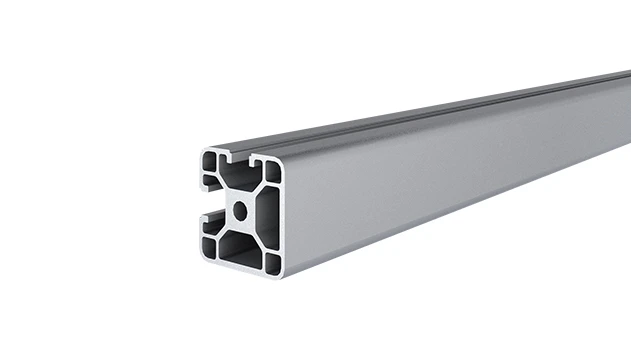
Walk into any modern factory, warehouse, or manufacturing plant, and you'll likely spot a silent workhorse holding everything together: aluminum profiles. These unassuming structures form the backbone of workbenches, material racks, conveyor systems, and countless other setups that keep production lines moving. But not all aluminum profiles are created equal. Among the most trusted in industrial circles is the 4040E EU standard aluminum profile —a staple in lean manufacturing and efficient workspace design. What sets it apart? Beyond its strength and versatility, one often-overlooked property plays a critical role in industrial performance: thermal conductivity. In this article, we'll explore why this feature matters, how the 4040E profile excels here, and the real-world benefits it brings to factory floors, workshops, and industrial environments.
What Is the 4040E EU Standard Aluminum Profile?
First, let's get to know the star of the show. The 4040E is part of the EU standard aluminum extrusion profile family, a category of materials shaped through a precision extrusion process that ensures consistency, strength, and adaptability. As the name suggests, it measures 40mm by 40mm in cross-section—compact enough for tight spaces yet robust enough to support heavy loads. Its "E" designation refers to specific groove and wall thickness specifications, making it compatible with a wide range of aluminum profile accessories , from brackets and connectors to end caps and hinges.
Unlike generic aluminum tubes, the 4040E is engineered for industrial rigor. Its hollow design reduces weight without sacrificing durability, and the T-slot grooves running along its length allow for quick, tool-free adjustments. This flexibility is why it's a favorite for everything from custom workbenches to modular material racks. But what truly elevates its performance in industrial settings is its thermal conductivity—a property inherent to aluminum, but optimized in extrusion profiles like the 4040E.
Thermal Conductivity: What It Means for Aluminum Profiles
Thermal conductivity is simply a material's ability to transfer heat. Measured in watts per meter-kelvin (W/m·K), it tells us how quickly heat moves through a substance. For context, metals are generally good conductors, while plastics and wood are poor (insulators). Aluminum, in particular, boasts impressive thermal conductivity—around 205 W/m·K for pure aluminum, and slightly lower for alloys (which are used in profiles like the 4040E to balance strength and conductivity).
Why does this matter for an aluminum profile? In industrial environments, heat is everywhere: from machinery motors and electronic components to friction in moving parts and even ambient temperature spikes. If a structure can't dissipate this heat, it can lead to hotspots, warped materials, or even damage to sensitive equipment. The 4040E's thermal conductivity acts like a built-in cooling system, drawing heat away from critical areas and distributing it evenly across the profile's surface, where it can dissipate into the air.

Why Thermal Conductivity Matters in Industrial Settings
To understand the importance of thermal conductivity, let's step onto a typical factory floor. Imagine a busy electronics assembly line: workers stand at a workbench fitted with the 4040E profile, soldering components onto circuit boards. The soldering iron generates intense localized heat, and nearby electronic parts (like microchips) are sensitive to temperature fluctuations. If the workbench's frame trapped heat, the surface could grow hot enough to damage components or make the workspace uncomfortable for workers. Here, the 4040E's ability to conduct heat away from the soldering area keeps the bench surface cool and stable.
Or consider a material rack B (3 row and 3 floor) —a common setup for storing parts, tools, or finished products. If this rack is placed near a heat source (like a furnace or a running conveyor motor), a poor-conductivity material might absorb and retain that heat, warming the items stored on it. For heat-sensitive materials (such as certain plastics or chemicals), this could spell disaster. The 4040E, however, would transfer that ambient heat across its structure, preventing hotspots and keeping stored items at a more consistent temperature.
Heat isn't just a threat to equipment and materials—it also affects worker comfort and safety. A workbench or that stays cool reduces the risk of burns and fatigue, especially during long shifts in warm environments. In short, thermal conductivity in the 4040E isn't just a "nice-to-have"—it's a practical feature that impacts productivity, safety, and product quality.
Key Benefits of the 4040E's Thermal Conductivity
Now that we've established why thermal conductivity matters, let's dive into the specific advantages the 4040E brings to the table:
1. Prevents Overheating in High-Use Areas – In busy workstations where tools or machinery run for hours, heat buildup is inevitable. The 4040E's conductivity ensures that heat doesn't pool in one spot. For example, a workbench used for laser cutting or 3D printing (both heat-intensive processes) will stay cooler to the touch, protecting both the equipment mounted on it and the operator using it.
2. Enhances Equipment Longevity – Many industrial tools and devices (like small motors, sensors, or power supplies) are mounted directly onto aluminum profiles. When these devices generate heat during operation, the 4040E acts as a heat sink, drawing excess warmth away from internal components. This reduces wear and tear on sensitive parts, extending the lifespan of expensive equipment.
3. Improves Energy Efficiency – In environments where cooling systems (like fans or air conditioning) are used to regulate temperature, the 4040E can lighten the load. By naturally dissipating heat, it reduces the need for artificial cooling, lowering energy costs over time. This is a small but impactful step toward greener, more sustainable manufacturing.
4. Ensures Stability in Temperature-Sensitive Processes – Industries like pharmaceuticals, food processing, or electronics manufacturing require strict temperature control. The 4040E's ability to maintain consistent surface temperatures helps stabilize the environment around sensitive tasks, reducing the risk of product defects or process errors.
5. Boosts Worker Comfort and Safety – A hot workbench or material rack isn't just uncomfortable—it's a hazard. The 4040E's cool-to-the-touch surface minimizes the risk of accidental burns, while its heat dissipation helps keep work areas at a more pleasant temperature, reducing fatigue and improving focus during long shifts.
How Does the 4040E Compare to Other Materials?
To truly appreciate the 4040E's thermal performance, it helps to compare it to other common industrial materials. Let's look at a quick breakdown:
| Material | Thermal Conductivity (W/m·K) | Industrial Use Case | Thermal Performance Note |
|---|---|---|---|
| 4040E Aluminum Extrusion Profile | ~180-200 | Workbenches, material racks, machine frames | Excellent heat dissipation; prevents hotspots |
| Steel (Mild) | ~45 | Heavy-duty shelving, structural supports | Poor conductivity; retains heat, leading to hotspots |
| Plastic (PVC/ABS) | ~0.1-0.5 | Light-duty racks, non-conductive enclosures | Insulates heat; can warp or melt under high temps |
| Wood | ~0.1-0.2 | Traditional workbenches, temporary storage | Traps heat; prone to warping with moisture/heat |
As the table shows, the 4040E outperforms steel, plastic, and wood by a wide margin in thermal conductivity. Steel, while strong, conducts heat slowly, meaning it holds onto warmth and creates hotspots—a problem in high-heat areas. Plastic and wood are even worse, acting as insulators that trap heat, which can lead to warping or damage. The 4040E, by contrast, acts like a thermal equalizer, ensuring heat spreads evenly and dissipates quickly.
Compatibility with Aluminum Profile Accessories: A Perfect Pair
A profile is only as good as the accessories it works with, and the 4040E's thermal benefits are amplified by its seamless integration with aluminum profile accessories . These include brackets, hinges, end caps, and connectors—all designed to fit the profile's T-slot grooves without compromising its structural or thermal properties.
For example, when building a workbench with the 4040E, you might add a metal top, a tool rail, or a light fixture using compatible accessories. Since these accessories are also often made of aluminum or thermally compatible materials, they don't block heat flow. The result? The entire workbench—profile, accessories, and all—functions as a unified thermal system, efficiently moving heat away from critical areas.
Even non-metallic accessories, like plastic end caps or rubber gaskets, are designed to have minimal impact on thermal conductivity. They cover only small surface areas, leaving most of the profile exposed to dissipate heat. This attention to detail ensures that the 4040E's thermal benefits aren't lost when customizing industrial setups.
Real-World Applications: Where Thermal Conductivity Shines
Let's put theory into practice with a few examples of how the 4040E's thermal conductivity makes a difference in everyday industrial scenarios:
1. Electronics Manufacturing Workbenches – In facilities assembling smartphones, laptops, or circuit boards, precision is everything. The 4040E's ability to dissipate heat from soldering irons, hot air stations, and other tools keeps sensitive components (like semiconductors) cool and prevents thermal damage during assembly.
2. Automotive Parts Storage Racks – Automotive factories often store metal parts near welding stations or paint booths, where ambient heat is high. A 4040E-based material rack (like the 3-row, 3-floor design) keeps parts from absorbing excess heat, ensuring they maintain their structural integrity and fit specifications when used in assembly.
3. Food Processing Conveyor Frames – In food production, hygiene and temperature control are critical. The 4040E's thermal conductivity helps keep conveyor frames cool, even near ovens or heating elements, preventing heat transfer to food products and maintaining compliance with safety standards.
4. Laboratory Workstations – Research labs often use heat-generating equipment like centrifuges or hot plates. A 4040E workbench ensures these tools don't overheat, protecting delicate experiments and samples from temperature fluctuations.
Why Choose the 4040E for Your Industrial Setup?
At the end of the day, the 4040E EU standard aluminum profile isn't just a structural material—it's a solution to common industrial challenges. Its thermal conductivity addresses heat-related issues that can slow down production, damage equipment, or compromise safety. Pair that with its strength, lightweight design, and compatibility with aluminum profile accessories, and you have a material that grows with your needs.
Whether you're building a new workbench, upgrading material racks, or designing a custom production line, the 4040E's ability to manage heat quietly and effectively is a game-changer. It's the kind of detail that might not make headlines, but it's the reason why so many industrial managers swear by aluminum extrusion profiles for their most critical setups.
Final Thoughts
Thermal conductivity might not be the first thing you think of when shopping for industrial aluminum profiles, but it's a feature that pays dividends in the long run. The 4040E EU standard aluminum profile proves that even the most technical properties can have a tangible impact on daily operations—from cooler workbenches and safer material storage to happier workers and more reliable equipment. So the next time you're evaluating industrial materials, remember: sometimes, the best innovations are the ones that keep things cool under pressure.