- Company Articles
- Industry articles
- Industry standards
- 4040E EU Standard Aluminum Profile vs. Plastic Extrusions: Industrial Performance Comparison

4040E EU Standard Aluminum Profile vs. Plastic Extrusions: Industrial Performance Comparison
Related Product
4040E EU Standard Aluminum Profile
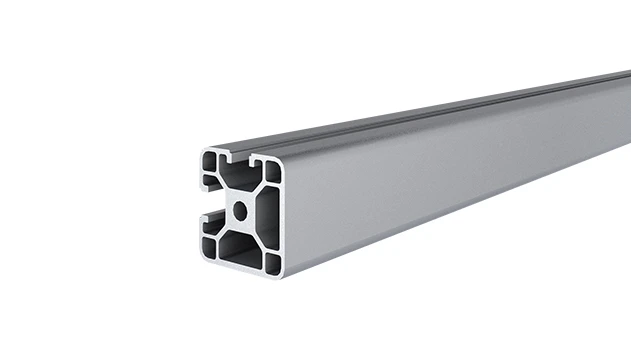
4040E is a 4.00x4.00 CM fractional 40 series square extrusion T-slot profile with two side open T-slots, two side with closed face, each side with 4.00cm face. The profile has align-a-grooves to assist in aligning connecting profiles.
Walk into any modern manufacturing facility, warehouse, or assembly plant, and you'll notice a silent workhorse holding everything together: extruded profiles. These unassuming structures—whether holding up workbenches, guiding conveyor belts, or organizing material racks—are the backbone of efficient operations. But not all extrusions are created equal. In one corner, we have the 4040E EU standard aluminum profile , a staple in industrial settings for its strength and versatility. In the other, plastic extrusions, often chosen for their low cost and lightweight nature. Today, we're diving deep into how these two stack up in real-world industrial performance—no jargon, just honest talk about what matters when your operation's efficiency, durability, and bottom line are on the line.
Material Origins: How They're Made (And Why It Matters)
Let's start at the beginning: how these profiles come to life. Aluminum extrusion, the process behind the 4040E, is a feat of engineering. Raw aluminum billets are heated to around 500°C (yes, that's hot enough to melt butter, but aluminum's melting point is much higher—around 660°C, for the curious), then pushed through a steel die under extreme pressure. The result? A uniform, precise shape—like the 4040E's 40mm x 40mm cross-section—with consistent wall thickness and structural integrity. This isn't just manufacturing; it's sculpting metal into a tool that works as hard as your team.
Plastic extrusions, on the other hand, start with polymer resins—think polyethylene or PVC—melted down into a viscous liquid. This molten plastic is then forced through a die to take shape, cooling quickly as it exits. It's a faster, lower-temperature process, which is why plastic extrusions often come with a lower price tag. But here's the catch: plastic's molecular structure is less dense than aluminum's. While that makes it lighter, it also means it's more prone to warping under stress or heat—something we'll circle back to later.
The 4040E, as an aluminum extrusion profile , benefits from aluminum's inherent properties: high strength-to-weight ratio, natural corrosion resistance (thanks to its oxide layer), and thermal conductivity. Plastic, by contrast, varies widely by type—some are rigid, others flexible, but few match aluminum's all-around industrial grit.
Strength Under Pressure: When Loads and Limits Collide
Let's get practical: when you're building a workbench for assembling heavy machinery, or a material rack to hold pallets of components, how much weight can your extrusion handle? This is where the 4040E truly shines. Aluminum's tensile strength (the force needed to pull it apart) averages around 200 MPa for standard alloys used in extrusions like the 4040E. To put that in perspective, that's roughly 20 times the tensile strength of many common plastics, which often max out around 10 MPa. What does this mean on the factory floor? A 4040E-based workbench can easily support 200-300 kg of tools, parts, and equipment without so much as a creak. Swap in a plastic extrusion, and you might start seeing sagging or bending after just 50-100 kg—hardly ideal for a lean, efficient workspace.
But it's not just about static weight. Industrial environments are dynamic: parts slide, workers lean, equipment vibrates. The 4040E's rigid structure resists deformation, even under repeated stress. Plastic, however, has a tendency to "creep"—slowly deforming over time when under constant load. Imagine a plastic extrusion supporting a conveyor belt in a busy electronics plant: after months of daily use, that slow creep could throw off alignment, leading to jams, downtime, and frustrated operators. Not exactly the stuff lean system dreams are made of.
Don't just take my word for it. Let's look at a real scenario: a material rack in an automotive parts facility. The 4040E, paired with aluminum profile accessories like T-slot nuts and brackets, can build a multi-tiered rack that holds 50 kg per shelf, day in and day out, for years. A plastic extrusion rack might start strong, but after a few heat cycles (summer in a non-air-conditioned warehouse, anyone?) or accidental bumps from forklifts, those plastic shelves could crack or warp. Suddenly, your "cost-effective" choice becomes a costly replacement project.

Durability: Corrosion, Wear, and the Test of Time
Industrial spaces are tough on equipment. Moisture from cleaning, chemicals from coolants or lubricants, temperature swings—all of these take a toll. Here, aluminum's natural corrosion resistance is a game-changer. The 4040E's surface forms a thin, protective oxide layer when exposed to air, preventing rust and degradation. Even in humid environments or near water-based coolants, it holds its own. Plastic extrusions, while resistant to some chemicals, can absorb moisture over time, leading to swelling or brittleness. PVC, for example, is prone to cracking in cold temperatures, while polyethylene can degrade under UV light—bad news if your extrusion is near a window or skylight.
Wear and tear is another battleground. In areas where parts slide or rub against the extrusion—like guide rails for conveyors or workbench edges—aluminum holds up surprisingly well. Its smooth, hard surface resists scratches, and if it does get scuffed, it's easy to clean or even repaint. Plastic, however, can scratch or gouge more easily. A stray wrench dropped on a plastic extrusion might leave a permanent dent; on the 4040E, it might just leave a mark that polishes out. Over time, those small scratches on plastic can trap dirt and bacteria, making it harder to maintain a clean, compliant workspace—critical in industries like food processing or pharmaceuticals.
Customization: T-Slots, Accessories, and the Art of Adaptability
One of the 4040E's biggest advantages is its adaptability. Thanks to its T-slot design—a signature of quality aluminum extrusions—adding, removing, or repositioning components is a breeze. Need to mount a tool holder on your workbench? Slide a T-slot nut into the 4040E's groove, bolt it down, and you're done. Want to add a shelf to your material rack? Grab some angle brackets and aluminum profile accessories, and you've got a custom solution in minutes. This flexibility is why the 4040E is a favorite in lean manufacturing: it lets you adapt your workspace as needs change, without rebuilding from scratch.
Plastic extrusions, by comparison, are often "one and done." While some have basic slots or holes, they lack the precision and strength of aluminum's T-slot system. Drilling into plastic can cause cracking, and adhesives may fail under heat or stress. If your operation evolves—say, you need to reconfigure a production line for a new product—the plastic extrusion setup might need to be entirely replaced. The 4040E? It evolves with you. That's the difference between a static tool and a long-term partner in productivity.
A Side-by-Side Breakdown: The Numbers That Matter
To bring all this together, let's look at a head-to-head comparison of key performance metrics:
| Feature | 4040E EU Standard Aluminum Profile | Plastic Extrusions |
|---|---|---|
| Material Composition | Aluminum alloy (typically 6063 or 6061) | Polymer resins (PVC, polyethylene, ABS, etc.) |
| Tensile Strength | ~200 MPa | 5-15 MPa (varies by type) |
| Max Static Load (per meter) | 200-300 kg | 50-100 kg |
| Corrosion Resistance | High (natural oxide layer) | Moderate (varies by plastic type; prone to moisture absorption) |
| Temperature Range | -40°C to 120°C (higher with special alloys) | -20°C to 60°C (may warp/melt above 60°C) |
| Customization Options | Extensive (T-slot design, aluminum profile accessories) | Limited (basic slots/holes; prone to damage when modified) |
| Estimated Lifespan | 10-15 years (industrial use) | 3-5 years (industrial use) |
| Environmental Impact | 100% recyclable; low embodied energy | Non-biodegradable; limited recyclability (depends on type) |
Cost: The Initial Price Tag vs. the Long Game
Let's address the elephant in the room: plastic extrusions are often cheaper upfront. A meter of basic plastic extrusion might cost half as much as a 4040E aluminum profile. But industrial equipment isn't a one-time purchase—it's an investment. Let's crunch the numbers over a 10-year lifespan. A 4040E setup costs $50 per meter initially, lasts 10 years, and requires minimal maintenance (maybe a quick cleaning or replacement of a bracket). Total cost: $50 + $5 (maintenance) = $55 over 10 years. A plastic extrusion might cost $25 per meter, but needs replacement every 3-5 years. Over 10 years, that's 2-3 replacements: $25 x 3 = $75, plus labor for installation each time. Suddenly, the "cheaper" option is costing you more—before even factoring in downtime from replacements or lost productivity due to failures.
And let's not forget opportunity cost. A 4040E-based workbench or material rack stays reliable, letting your team focus on production, not fixing equipment. A plastic extrusion that warps or breaks? That's hours of downtime, missed deadlines, and frustrated workers. In a lean system, every minute counts—and the 4040E helps you keep those minutes productive.
Environmental Impact: Building Sustainably, One Extrusion at a Time
Sustainability isn't just a buzzword—it's a business imperative. Aluminum is one of the most recyclable materials on the planet: 95% of the energy used to produce new aluminum is saved by recycling scrap aluminum. The 4040E, at the end of its long life, can be melted down and turned into a new extrusion, with no loss in quality. Plastic, by contrast, is often downcycled (turned into lower-quality products) or ends up in landfills, where it can take centuries to decompose. For companies aiming to reduce their carbon footprint or meet green manufacturing certifications, the 4040E is a clear choice.
Aluminum's thermal conductivity also plays a role in sustainability. In facilities with temperature control, aluminum extrusions help dissipate heat, reducing the load on HVAC systems. Plastic, being a poor conductor, traps heat, leading to higher energy use. Small differences, but they add up—for both your utility bill and the planet.
Real-World Applications: Where the 4040E Shines Brightest
Let's wrap up with some examples of where the 4040E outperforms plastic extrusions in everyday industrial life:
- Lean Manufacturing Cells: The 4040E's modular design makes it perfect for building custom workstations, flow racks, and kanban systems—all hallmarks of a lean system. Its strength ensures these setups stay aligned and efficient, even with constant use.
- Electronics Assembly: In cleanrooms or ESD-sensitive environments, aluminum's non-conductive oxide layer (when paired with ESD accessories) helps prevent static damage to components. Plastic, unless specially treated, can generate static, putting sensitive electronics at risk.
- Automotive Production: With high loads, constant vibration, and exposure to oils and coolants, automotive plants need tough materials. The 4040E's corrosion resistance and durability make it ideal for conveyor rails, tool storage, and part transport systems.
- Food and Beverage Processing: Aluminum's easy-to-clean surface and resistance to food-grade chemicals make it a safer choice than plastic, which can harbor bacteria in scratches or cracks.
Conclusion: The 4040E—More Than an Extrusion, a Productivity Partner
At the end of the day, choosing between the 4040E EU standard aluminum profile and plastic extrusions comes down to priorities. If you're looking for a quick, cheap fix with a short lifespan, plastic might work—temporarily. But if you want a solution that grows with your operation, stands up to industrial chaos, and delivers long-term value, the 4040E is the clear winner.
As an aluminum extrusion profile, it combines strength, durability, and flexibility in a way plastic simply can't match. Paired with aluminum profile accessories, it becomes a blank canvas for innovation—letting you build the exact workspace your team needs, today and tomorrow. And in a world where efficiency, sustainability, and reliability are more critical than ever, the 4040E isn't just a part of your operation—it's a partner in your success.
So the next time you're planning a workspace upgrade, ask yourself: Do I want to replace extrusions every few years, or invest in a solution that lasts? The answer, for any serious industrial operation, is clear. The 4040E isn't just built to perform—it's built to outperform.