- Company Articles
- Industry articles
- Industry standards
- 4040E vs. 4040A EU Standard Aluminum Profile: Key Differences in Performance

4040E vs. 4040A EU Standard Aluminum Profile: Key Differences in Performance
Related Product
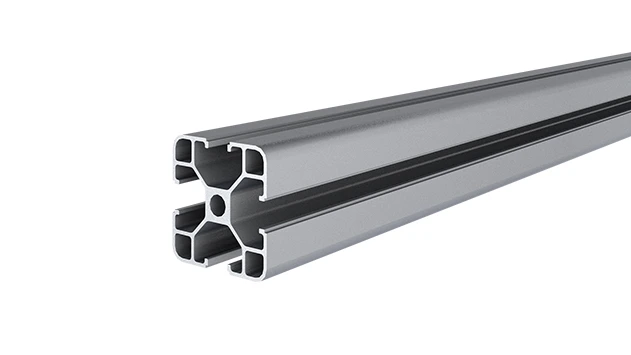
4040A EU Standard Aluminum Profile
4040A is a 4.00x4.00 CM fractional 40 series square extrusion T-slot profile with four open T-slots, each side with 4.00cm face.
Introduction: The Backbone of Modern Manufacturing
In the bustling world of manufacturing, where efficiency, flexibility, and durability are the cornerstones of success, one component quietly holds everything together: the aluminum extrusion profile . From the workbenches where assembly line workers piece together electronics to the conveyors that move materials across factory floors, from the lean systems that streamline workflows to the racks that organize inventory—aluminum profiles are the unsung heroes, shaping the way we build, produce, and innovate.
Among the countless aluminum profile series available today, the 4040 series stands out as a workhorse. Its 40mm x 40mm cross-section strikes a perfect balance between strength and versatility, making it a go-to choice for everything from light-duty shelving to heavy-duty machinery frames. But within the 4040 family, two variants often spark debate among engineers and facility managers: the 4040E and 4040A EU Standard Aluminum Profiles. While they share the same nominal dimensions, their subtle differences in design and performance can have a big impact on your project's success. In this article, we'll dive deep into what sets these two profiles apart, helping you make an informed decision for your next workbench, conveyor, or lean system.
Understanding EU Standard Aluminum Profiles: A Quick Primer
Before we compare the 4040E and 4040A, let's take a step back to understand what "EU Standard" means in the context of aluminum profiles. These standards, often aligned with DIN (Deutsches Institut für Normung) or ISO (International Organization for Standardization) guidelines, ensure consistency in dimensions, material quality, and performance across manufacturers. For businesses operating in Europe or sourcing globally, EU-compliant profiles guarantee compatibility with a wide range of aluminum profile accessories —think brackets, connectors, and fasteners—from different suppliers, reducing headaches during assembly and maintenance.
The "4040" in their names refers to the profile's cross-sectional dimensions: 40mm in width and 40mm in height. But don't let the simplicity of that number fool you. Within this 40x40mm frame, engineers have designed countless variations, each optimized for specific tasks. The "E" and "A" suffixes are two such variations, each with unique traits tailored to different industrial needs.

Meet the Contenders: 4040E and 4040A Explained
What is the 4040E EU Standard Aluminum Profile?
The 4040E is often described as the "heavyweight" of the 4040 series. Engineered with a focus on structural integrity, it's designed to handle higher loads and more demanding applications. The "E" is sometimes said to stand for "enhanced" or "extra strength," though manufacturers don't always agree on the exact origin of the suffix. What they do agree on, however, is that the 4040E is built to last in environments where stability is non-negotiable—think automotive assembly lines, heavy-duty workbench setups, or material racks that hold bulky components.
What is the 4040A EU Standard Aluminum Profile?
The 4040A, on the other hand, is the "versatile lightweight" of the family. While it still boasts impressive strength, its design prioritizes flexibility and cost-effectiveness. The "A" is often associated with "standard" or "all-purpose," reflecting its popularity in general manufacturing, light to medium-duty applications, and projects where weight reduction or quick assembly is key. You'll commonly find it in conveyor systems, temporary workstations, and lean system setups where adaptability takes precedence over maximum load capacity.
Specifications Showdown: The Numbers Behind the Design
To truly understand the differences between the 4040E and 4040A, we need to start with the basics: their physical specifications. While both profiles adhere to EU standards, their internal geometry—wall thickness, T-slot design, and weight—varies, laying the groundwork for their distinct performance characteristics. Let's break it down:
| Specification | 4040E EU Standard Aluminum Profile | 4040A EU Standard Aluminum Profile |
|---|---|---|
| Cross-Section Dimensions | 40mm x 40mm (nominal) | 40mm x 40mm (nominal) |
| Wall Thickness | 2.0mm–3.0mm (varies by manufacturer, typically 2.5mm) | 1.5mm–2.0mm (varies by manufacturer, typically 1.8mm) |
| Weight per Meter | 2.2kg–2.8kg (average: 2.5kg) | 1.6kg–2.2kg (average: 1.9kg) |
| T-Slot Configuration | 4 slots (one per side), 8mm slot width, deeper slot depth (~10mm) | 4 slots (one per side), 8mm slot width, standard slot depth (~8mm) |
| Material Grade | 6063-T5 (common, high strength-to-weight ratio) | 6063-T5 (same base material, optimized for formability) |
At first glance, these differences might seem minor—after all, we're talking about a few millimeters in wall thickness or a kilogram per meter in weight. But in the world of structural engineering, these small variations translate to significant differences in how the profiles perform under stress, how they interact with aluminum profile accessories , and how they fit into your overall project budget.
Performance Face-Off: Key Differences That Matter
Now that we've laid out the specs, let's explore how these differences play out in real-world scenarios. From load capacity to assembly speed, from durability to flexibility—here's how the 4040E and 4040A stack up.
1. Load Capacity: When Strength Takes Center Stage
Perhaps the most critical difference between the 4040E and 4040A is their load-bearing capability. Thanks to its thicker walls (typically 2.5mm vs. 1.8mm for the 4040A), the 4040E offers superior bending strength and torsional rigidity. To put this in perspective, let's consider a simple scenario: a 1-meter-long horizontal beam supported at both ends. The 4040E can typically support a static load of 150–200kg at its midpoint before noticeable deflection (bending) occurs, while the 4040A tops out at around 100–150kg under the same conditions.
Why does this matter? If you're building a workbench for assembling heavy machinery parts—say, engine components weighing 50kg each—the 4040E will provide the stability you need, minimizing flex and ensuring precision during assembly. On the flip side, if you're constructing a light-duty conveyor for small electronic parts (each weighing less than 1kg), the 4040A's 100kg capacity is more than sufficient, and its lighter weight will reduce strain on the conveyor's motors and support structure.
It's also worth noting that torsional rigidity—the profile's resistance to twisting—is higher in the 4040E. This makes it ideal for applications where the profile is subjected to off-center loads or rotational forces, such as a material rack with unevenly distributed inventory or a workbench with a vice mounted on one corner.
2. Compatibility with Aluminum Profile Accessories: The Ease of Assembly
Aluminum profiles are only as useful as the accessories that connect them—brackets, hinges, connectors, and fasteners. Both the 4040E and 4040A use the standard 8mm T-slot width, which means they're compatible with most universal aluminum profile accessories (e.g., M8 bolts, corner brackets, end caps). However, the 4040E's deeper T-slots (~10mm vs. 8mm) offer an advantage when it comes to securing heavy or bulky accessories.
For example, if you're attaching a large plywood top to a workbench frame, the deeper slots of the 4040E allow for longer bolts, creating a stronger, more secure connection. Similarly, when mounting heavy-duty casters to a mobile cart, the extra slot depth provides more thread engagement, reducing the risk of bolts coming loose over time. The 4040A, with its standard slot depth, works perfectly with lighter accessories—think light brackets for tools or plastic end caps for safety—but may require additional reinforcement (like washers or locking nuts) for heavier attachments.
Another consideration is slot spacing. While both profiles have four slots (one per side), some manufacturers design the 4040E with slots positioned slightly closer to the edges, which can improve the distribution of stress when accessories are mounted near the profile's corners. This is a subtle detail, but it can make a difference in applications where the profile is under constant stress, such as a conveyor rail supporting a continuous flow of materials.
3. Weight and Handling: Balancing Strength and Portability
At 2.5kg per meter, the 4040E is noticeably heavier than the 4040A (1.9kg/m). For small projects—like a single workbench —this difference might be negligible. But for large-scale installations, such as a 50-meter-long conveyor system or a lean system with dozens of interconnected profiles, the cumulative weight adds up quickly. A 50-meter run of 4040E would weigh 125kg, while the same length of 4040A would weigh 95kg—a 30kg difference that can impact installation time, transportation costs, and even the structural requirements of the floor or support beams.
The 4040A's lighter weight also makes it easier to handle during assembly. In facilities without heavy lifting equipment, workers can carry longer lengths of 4040A without strain, speeding up the build process. This is especially valuable in lean manufacturing environments, where rapid reconfiguration of workstations or material flows is common. Imagine needing to rearrange a production line overnight: lighter profiles mean fewer workers are needed to move and reassemble components, minimizing downtime.
That said, the 4040E's weight is a trade-off for strength. In fixed installations—like a permanent workbench or a stationary material rack—its heft provides stability, reducing vibration and movement during use. For example, a workbench built with 4040E will feel solid under heavy tools, while one built with 4040A might vibrate slightly when using a power drill or impact driver. For some applications, this stability is non-negotiable; for others, the 4040A's lighter weight and easier handling are worth the minor trade-off in rigidity.
4. Cost: Investing in Long-Term Value vs. Short-Term Savings
Unsurprisingly, the 4040E's thicker walls and higher material content make it more expensive than the 4040A. On average, you can expect to pay 15–20% more per meter for the 4040E. For small projects, this price difference might be manageable, but for large-scale builds—like a lean system spanning an entire factory floor—the cost can add up quickly.
But here's the catch: the 4040E often offers better long-term value. Its higher load capacity means you can use fewer profiles to achieve the same strength, reducing the total number of profiles needed. For example, a workbench frame built with 4040E might require 4 vertical supports, while the same bench built with 4040A might need 6 to handle the same load. Over time, the reduced number of profiles and accessories can offset the higher per-meter cost of the 4040E.
The 4040A, on the other hand, is the more cost-effective choice for short-term projects or applications with low load requirements. If you're building a temporary workbench for a three-month project or a light-duty conveyor for small parts, the 4040A will get the job done without breaking the bank. It's also a great option for prototyping, where you might need to modify or rebuild the structure multiple times—lighter profiles are easier to cut, drill, and reconfigure, saving time and material costs during the design phase.
5. Durability and Lifespan: Standing the Test of Time
Both the 4040E and 4040A are made from 6063-T5 aluminum, a heat-treated alloy known for its corrosion resistance and durability. However, the 4040E's thicker walls give it an edge when it comes to long-term wear and tear. In high-traffic areas—like a factory floor where forklifts or pallet jacks might occasionally bump into the profiles—the 4040E is less likely to dent or bend. Its higher rigidity also means it's better at absorbing impact without permanent deformation.
The 4040A, while still durable, may show signs of wear sooner in harsh environments. For example, if used as a guard rail in a busy warehouse, the 4040A might develop small dents over time, whereas the 4040E would remain largely unscathed. That said, for indoor applications with minimal impact—like a lean system in an electronics assembly cleanroom—the 4040A's durability is more than sufficient, and its lighter weight can reduce the risk of damage to flooring or other structures if the profile is accidentally moved.
Another factor to consider is fatigue resistance. In applications where the profile is subjected to repeated loading and unloading (like a conveyor that starts and stops frequently), the 4040E's thicker walls distribute stress more evenly, reducing the risk of cracks or failure over time. The 4040A, with its thinner walls, may develop stress fractures in high-cycle applications, requiring more frequent inspections and replacements.
Application Spotlight: Which Profile is Right for Your Project?
To bring these differences to life, let's look at a few common industrial applications and see how the 4040E and 4040A perform in each scenario.
Scenario 1: Heavy-Duty Workbench for Automotive Assembly
Imagine you're tasked with building a workbench for an automotive assembly line, where workers will assemble engine parts weighing up to 80kg. The bench needs to be stationary, rock-solid, and able to withstand daily use with power tools. Here, the 4040E is the clear choice. Its 2.5mm walls and high load capacity will ensure the bench doesn't flex under the weight of the parts, and its deep T-slots will securely hold the heavy plywood top and any mounted tools (like vices or torque wrenches). The 4040A, while adequate for lighter workbenches, would likely bend over time, leading to misalignment and potential safety hazards.
Scenario 2: Light-Duty Conveyor for Electronic Components
Now, consider a conveyor system for moving small electronic circuit boards (each weighing 0.5kg) between workstations in a cleanroom. The conveyor needs to be lightweight, easy to clean, and flexible enough to reconfigure if production needs change. Here, the 4040A shines. Its 1.9kg/m weight reduces strain on the conveyor's motors and support structure, and its standard T-slots work perfectly with light plastic guides and aluminum brackets. The 4040E would be overkill here, adding unnecessary weight and cost without providing any meaningful benefit.
Scenario 3: Lean System for Material Handling in a Warehouse
A lean system in a warehouse might include mobile carts, flow racks, and pick stations, all designed to minimize waste and improve efficiency. For mobile carts that need to carry heavy boxes (up to 150kg), the 4040E is ideal—it provides the strength to support the load while maintaining stability during movement. For flow racks holding lightweight packages, the 4040A is more cost-effective, and its lighter weight makes the racks easier to adjust as inventory needs change. In this case, a hybrid approach might even work: 4040E for the cart frames and 4040A for the flow rack rails, balancing strength and cost.
Scenario 4: Prototyping a Custom Machine Frame
When prototyping a new machine, engineers often need to build, test, and modify the frame multiple times. The 4040A's lighter weight and lower cost make it easier to handle during these iterations—cutting, drilling, and reconfiguring the profile takes less time and effort. Once the design is finalized and put into production, the frame can be upgraded to 4040E for long-term durability. This approach saves money during the prototyping phase while ensuring the final product is built to last.
Conclusion: Choosing the Right Profile for Your Needs
At the end of the day, there's no "better" profile between the 4040E and 4040A—only the right profile for your specific needs. The 4040E excels in applications where strength, durability, and load capacity are paramount: heavy-duty workbenches, mobile carts for heavy loads, and structural components in high-stress environments. The 4040A, with its lighter weight, lower cost, and flexibility, is perfect for light to medium-duty tasks: light conveyors, temporary workstations, and lean systems where adaptability is key.
When making your decision, ask yourself: What is the maximum load the profile will need to support? How often will it be moved or reconfigured? What is my budget, and how does long-term durability factor into that budget? By answering these questions, you'll be able to choose between the 4040E and 4040A with confidence, knowing your aluminum extrusion profile will not only meet but exceed your project's requirements.
Remember, aluminum profiles are more than just pieces of metal—they're the foundation of your manufacturing process. Choosing the right one can mean the difference between a smooth, efficient operation and costly delays, repairs, or safety issues. So take the time to evaluate your needs, weigh the pros and cons, and select the profile that will help you build a stronger, more efficient, and more successful operation.