- Company Articles
- Industry articles
- Industry standards
- 4040F EU Standard Aluminum Profile Extrusion Tolerances: Why Precision Matters in Manufacturing

4040F EU Standard Aluminum Profile Extrusion Tolerances: Why Precision Matters in Manufacturing
Related Product
4040F EU Standard Aluminum Profile
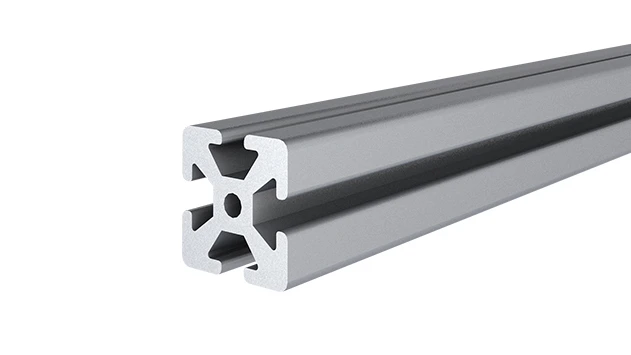
4040F is a 4.00x4.00 CM fractional 40 series square extrusion T-slot profile with four side open T-slots, each side with 4.00cm face. The profile has align-a-grooves to assist in aligning connecting profiles.
Walk into any modern factory, and you'll likely spot them: sleek, modular structures holding up assembly lines, organizing tools, and keeping workflows moving like clockwork. Chances are, those structures are built from aluminum extrusion profiles—quiet workhorses that form the backbone of lean manufacturing systems. Among these, the 4040F EU Standard Aluminum Profile stands out as a versatile staple, used in everything from workbenches to material racks. But here's the thing: not all 4040F profiles are created equal. The difference often comes down to one critical factor: extrusion tolerances. Those tiny, often overlooked measurements can make or break a production line's efficiency, reliability, and bottom line. Let's dive into why precision in 4040F profile tolerances isn't just a technical detail—it's the unsung hero of smooth manufacturing.
First Things First: What Even Is a 4040F EU Standard Aluminum Profile?
Before we get into tolerances, let's make sure we're all on the same page about the star of the show. The 4040F is part of the EU standard aluminum extrusion profile family, named for its approximate dimensions: 40mm in width and 40mm in height. Think of it as a sturdy, lightweight building block with a T-slot design running along its length—those slots let you attach aluminum profile accessories like brackets, shelves, and panels with ease. It's the Swiss Army knife of industrial framing: strong enough to support heavy equipment on a workbench, yet nimble enough to build flexible material racks (like the popular material rack b (3 row and 3 floor) configuration) that adapt as production needs change.
But what makes the 4040F "EU Standard"? It means it adheres to strict European guidelines for dimensions, material quality, and performance. This standardization is key for manufacturers across borders—whether you're building a production line in Germany or assembling workbenches in France, a 4040F profile from a reputable supplier should fit with aluminum profile accessories from another, no guesswork required. That is, assuming the tolerances are tight.
Tolerances 101: Why "Close Enough" Isn't Good Enough
Tolerances are the allowable variation in a part's dimensions. For example, a 40mm width might have a tolerance of ±0.2mm, meaning the actual width can be as small as 39.8mm or as large as 40.2mm and still be considered "within spec." Seems tiny, right? But in manufacturing, tiny variations add up—fast. Imagine trying to assemble a workbench where one 4040F profile is 40.2mm wide and the next is 39.8mm. The T-slots might misalign, making it impossible to attach a shelf evenly. Or picture a material rack b (3 row and 3 floor) where the vertical profiles are slightly warped—suddenly, the shelves tilt, products slide off, and your "organized" storage becomes a safety hazard.
Tolerances aren't just about fit, though. They impact structural integrity, too. A profile with inconsistent wall thickness (say, 1.5mm in one section and 1.2mm in another) might bend under the weight of tools, compromising the workbench's stability. On an assembly line, that wobble could throw off precision tasks like electronics assembly, leading to defective products and wasted materials. For a lean system supplier, this is a nightmare—lean manufacturing thrives on consistency, and inconsistent tolerances are a direct source of waste: time wasted fixing misaligned parts, money wasted on scrap, and productivity wasted on rework.

Breaking Down 4040F Profile Tolerances: What Matters Most
Not all tolerances are created equal. For 4040F profiles, three key areas demand attention: dimensional accuracy, straightness, and surface finish. Let's break them down.
1. Dimensional Tolerances: The "Measure Twice, Cut Once" of Extrusions
This covers the basics: width, height, and wall thickness. EU standards for 4040F profiles typically specify a width and height tolerance of around ±0.3mm for general-purpose use, but high-precision applications (like aerospace or medical device manufacturing) might require tighter tolerances of ±0.1mm. Wall thickness tolerances are equally critical—too thin, and the profile can't support heavy loads; too thick, and it adds unnecessary weight, increasing shipping costs and making assembly bulkier.
2. Straightness: No More "Wobbly" Workbenches
A profile might be the perfect width and height, but if it's curved or bowed, it's useless for building level structures. Straightness tolerances measure how much a profile deviates from a perfectly straight line over its length. For a 2-meter 4040F profile, a common tolerance is 1mm per meter—meaning the total bow over 2 meters should be no more than 2mm. Exceed that, and your workbench top will slope, your material rack shelves will tilt, and your team will spend more time shimming and adjusting than actually working.
3. Surface Finish: More Than Just Looks
Surface finish tolerances ensure the profile's exterior is smooth, free of scratches, dents, or pitting. While this impacts aesthetics (no one wants a workbench with ugly blemishes), it also affects functionality. A rough surface can catch on gloves or tools, and corrosion-resistant finishes (critical in food or pharmaceutical industries) rely on consistent surface quality to perform. Plus, aluminum profile accessories like brackets or panels adhere better to smooth surfaces, reducing the risk of loosening over time.
The Impact of Tolerances: A Real-World Example
Let's put this in perspective with a story. A few years back, a automotive parts manufacturer reached out to a lean system supplier desperate for help. Their production line was in chaos: workbenches wobbled, material racks (including several material rack b (3 row and 3 floor) units) wouldn't line up, and assembly times were 30% slower than projected. The culprit? They'd switched to a cheaper 4040F profile supplier to cut costs. The new profiles had loose tolerances—widths varied by up to 0.5mm, and some were bowed by 3mm over 2 meters. As a result, aluminum profile accessories like shelf brackets fit poorly, requiring workers to drill new holes or use shims to make things work. The "cost-saving" switch ended up costing them thousands in lost productivity and rework.
Compare that to a electronics manufacturer that stuck with tight-tolerance 4040F profiles. Their assembly line used standardized workbenches and material racks, all built from profiles with ±0.1mm dimensional tolerances and 0.5mm/m straightness. Because every profile was consistent, workers could assemble a complete workbench in 20 minutes instead of an hour. Material rack b units slotted together perfectly, so parts flowed smoothly from one station to the next. The result? On-time deliveries, lower scrap rates, and a production line that could adapt quickly to new product launches—all thanks to precision tolerances.
Tolerances vs. Cost: Striking the Right Balance
You might be thinking, "Tight tolerances sound great, but they must cost a fortune." It's true—achieving ±0.1mm tolerances requires advanced extrusion dies, strict process control, and rigorous quality testing, all of which add to the supplier's costs. But here's the thing: the cost of poor tolerances is almost always higher. Let's break it down:
| Tolerance Type | Loose Tolerances (±0.3mm) | Tight Tolerances (±0.1mm) |
|---|---|---|
| Profile Cost | Lower upfront (e.g., $10 per meter) | Higher upfront (e.g., $12 per meter) |
| Assembly Time | Longer (e.g., 60 mins per workbench) | Shorter (e.g., 20 mins per workbench) |
| Rework/Scrap Rate | Higher (e.g., 15% of profiles) | Lower (e.g., 2% of profiles) |
| Long-Term Productivity | Reduced (wobbling workbenches, misaligned racks) | Enhanced (stable, consistent workflows) |
| Total Cost Over 1 Year | Higher (e.g., $50,000 in lost productivity/scrap) | Lower (e.g., $10,000 in saved time/reduced scrap) |
As the table shows, the upfront savings of loose-tolerance profiles vanish quickly when you factor in assembly delays, rework, and lost productivity. For manufacturers focused on lean principles—eliminating waste, streamlining processes—tight-tolerance 4040F profiles aren't a luxury; they're an investment in efficiency.
How Suppliers Achieve Tight Tolerances: The Science Behind the Scenes
Producing 4040F profiles with tight tolerances is no accident. It starts with the extrusion die—the metal tool that shapes molten aluminum into the profile's cross-section. Precision die design uses computer-aided engineering (CAE) to predict how aluminum will flow, ensuring uniform wall thickness and dimensions. Dies are also made from high-wear materials like H13 steel, so they maintain their shape even after thousands of extrusions.
Next, the extrusion process itself is tightly controlled. Aluminum billets (cylindrical blocks of aluminum) are heated to precise temperatures (around 450°C for 6063 alloy, common in 4040F profiles) to ensure consistent flow. The extrusion press applies steady pressure, and cooling systems (air or water quenching) rapidly solidify the profile to prevent warping. After extrusion, profiles are stretched on a tensioning table to correct any bowing, ensuring straightness. Finally, each profile undergoes quality checks—laser measurements for dimensions, straightness gauges, and visual inspections for surface finish—before it's shipped.
Reputable suppliers also invest in ongoing training for operators and use statistical process control (SPC) to monitor tolerances in real time. If a dimension starts drifting out of spec, they can adjust the process immediately, preventing a batch of defective profiles from reaching customers. For a lean system supplier, this commitment to quality is non-negotiable—their reputation depends on delivering parts that work seamlessly with aluminum profile accessories and integrate into lean workflows.
Choosing the Right Supplier: What to Look For
So, how do you ensure you're getting 4040F profiles with the tolerances your manufacturing line needs? Start by asking potential suppliers these questions:
- What tolerances do you guarantee for 4040F profiles? Look for suppliers who can provide detailed specs—avoid vague claims like "close enough to EU standards."
- What quality control processes do you have in place? Do they use laser measurements? How often do they test profiles?
- Can you provide certificates of compliance? Reputable suppliers will share test reports or third-party certifications proving their profiles meet EU standards.
- How do you handle non-conforming parts? A good supplier will replace defective profiles quickly and investigate the root cause to prevent recurrence.
Remember, the cheapest supplier isn't always the best. A lean system supplier that prioritizes precision tolerances might charge a bit more upfront, but they'll save you money in the long run by reducing waste, speeding up assembly, and ensuring your workbenches and material racks perform reliably.
Final Thoughts: Precision Tolerances = Manufacturing Success
At the end of the day, 4040F EU Standard Aluminum Profile extrusion tolerances are about more than numbers on a spec sheet. They're about building manufacturing systems that work with your team, not against them. They're about reducing frustration on the factory floor, where workers spend less time fixing problems and more time making products. They're about aligning with lean principles, where every part has a purpose and waste is minimized.
So, the next time you're evaluating aluminum extrusion profiles, don't overlook those tiny tolerance numbers. They might just be the difference between a production line that sputters and one that thrives. And when you find a supplier who gets tolerances right—one who understands that a 0.1mm variation can impact your entire operation—hold onto them. They're not just a vendor; they're a partner in your manufacturing success.