- Company Articles
- Industry articles
- Industry standards
- 4040F EU Standard Aluminum Profile: Key Features & Compliance with EN Standards

4040F EU Standard Aluminum Profile: Key Features & Compliance with EN Standards
Related Product
4040F EU Standard Aluminum Profile
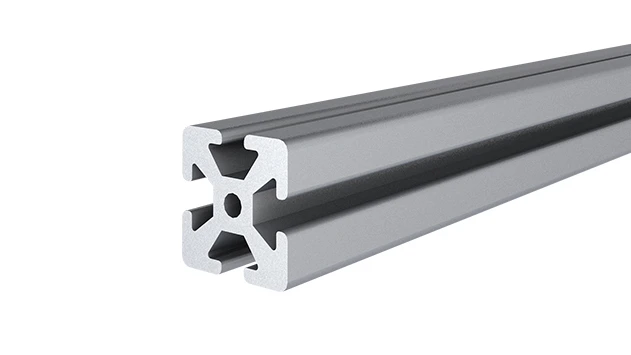
4040F is a 4.00x4.00 CM fractional 40 series square extrusion T-slot profile with four side open T-slots, each side with 4.00cm face. The profile has align-a-grooves to assist in aligning connecting profiles.
Introduction: The Backbone of Modern Industrial Design
Walk into any manufacturing plant, warehouse, or assembly line today, and you'll notice a common thread tying together workbenches, material racks, conveyor systems, and lean production setups: aluminum extrusion profiles. These unassuming yet versatile building blocks have revolutionized how industries design, build, and adapt their workspace. Lightweight yet strong, customizable yet standardized, they're the silent workhorses behind efficient, flexible, and safe industrial environments. Among the vast array of aluminum profiles available, the 4040F EU Standard Aluminum Profile stands out as a go-to choice for engineers, facility managers, and lean system suppliers alike. But what makes this profile so special? Why do so many professionals trust it for critical applications? In this article, we'll dive deep into the key features of the 4040F, explore its compliance with strict EN standards, and uncover why it's become a cornerstone of modern industrial design.
What Exactly Is the 4040F EU Standard Aluminum Profile?
Before we get into its features, let's clarify what the "4040F" label actually means. In the world of aluminum extrusion profiles, numbers and letters tell a story. The "4040" refers to the cross-sectional dimensions: 40 millimeters in width and 40 millimeters in height, making it a square profile. The "F" is a designation used by manufacturers to denote a specific variation within the 4040 series—think of it as a "model number" that distinguishes it from other 4040 profiles like the 4040A, 4040B, or 4040C (all of which are also EU standard profiles, but with slight differences in design, wall thickness, or T-slot configuration).
The 4040F is part of the broader family of EU standard aluminum profiles, which are engineered to meet rigorous European norms for quality, safety, and performance. Unlike generic or non-standard profiles, which can vary wildly in dimensions and material quality, the 4040F is built to a uniform specification, ensuring consistency whether you order it from a supplier in Germany, Poland, or China. This standardization is critical for industries where precision and interchangeability matter—after all, if you're building a modular workbench or a lean production line, you need to know that every profile, bracket, and connector will fit together seamlessly.

Key Features of the 4040F: Why It Stands Out
1. Material: The Strength of 6063-T5 Aluminum Alloy
At the heart of the 4040F's performance is its material: 6063-T5 aluminum alloy. This isn't just any aluminum—it's a heat-treated alloy known for its exceptional balance of strength, corrosion resistance, and workability. The "T5" designation means the alloy is solution heat-treated and then artificially aged, a process that enhances its mechanical properties without making it brittle. For industrial applications, this translates to a profile that can handle heavy loads (we're talking hundreds of kilograms, depending on the setup) without bending or warping, even in demanding environments like automotive factories or electronics assembly lines.
But strength isn't everything. 6063-T5 is also lightweight, which is a huge advantage when building structures that need to be moved or reconfigured—think turnover trolleys, mobile workbenches, or temporary material racks. Compared to steel, aluminum extrusion profiles like the 4040F can reduce the weight of a structure by up to 40%, making installation easier and reducing strain on floors and equipment.
2. Cross-Section Design: T-Slots for Unmatched Versatility
If there's one feature that makes aluminum extrusion profiles like the 4040F indispensable, it's the T-slots. These are the long, narrow grooves running along the length of the profile, and they're the reason these profiles are so modular. The 4040F typically features four T-slots (one on each side of the square cross-section), though some variations may have additional slots on the corners for extra flexibility. Each T-slot is designed to accept a range of aluminum profile accessories—think bolts, nuts, brackets, hinges, and panel holders—without the need for welding or drilling. This means you can assemble, disassemble, and reconfigure structures in minutes, not hours.
Imagine you're setting up a new assembly station for smartphone components. With the 4040F, you could bolt a worktop to the T-slots, add a shelf for tools using angle brackets, and attach a small conveyor using roller track connectors—all without modifying the profile itself. If next month you need to expand the station to accommodate a new machine, you can simply unbolt the existing components, add more 4040F profiles, and reattach everything. This flexibility is a game-changer for lean manufacturing, where adaptability is key to reducing waste and improving efficiency.
3. Wall Thickness: Built for Durability Without the Bulk
Wall thickness is a critical factor in any structural profile, and the 4040F hits the sweet spot between durability and weight. While exact measurements can vary slightly by manufacturer (all within EU standard tolerances), most 4040F profiles have a wall thickness of around 2.0 to 2.5 millimeters. This is thicker than some lighter-duty profiles (like the 4040A, which might have a 1.5mm wall) but thinner than heavy-duty options (like the 4040C, which could go up to 3.0mm). The result? A profile that's strong enough for most industrial applications—think supporting a workbench with tools, or a material rack loaded with parts—without adding unnecessary weight.
This balance is especially important for mobile structures, like the turnover trolleys and racks mentioned earlier. A thicker wall might make a trolley sturdier, but it would also make it harder to push or maneuver. The 4040F's wall thickness ensures that even when loaded, the trolley remains stable and easy to handle, reducing the risk of workplace injuries.
4. Surface Treatment: Protection Against the Elements
Industrial environments can be tough on materials. From oil and grease in automotive plants to humidity in food processing facilities, the 4040F needs to stand up to it all. That's why most 4040F profiles come with an anodized surface treatment. Anodizing is an electrochemical process that creates a protective oxide layer on the aluminum's surface, making it more resistant to corrosion, scratches, and wear. Unlike paint or powder coating, which can chip or peel over time, anodized finishes are integrated into the metal itself, so they last longer and require less maintenance.
The standard anodized finish for the 4040F is a clear or natural silver color, but some suppliers offer custom colors (like black or blue) for applications where aesthetics matter—for example, in consumer electronics showrooms or cleanrooms where appearance is part of the brand image. Regardless of the color, the anodized layer ensures the profile retains its integrity even after years of use, making it a cost-effective choice in the long run.
5. Compatibility: Works Seamlessly with Aluminum Profile Accessories
A profile is only as good as the accessories it works with, and the 4040F is designed to play well with a vast ecosystem of aluminum profile accessories. From simple end caps (to cover sharp edges and prevent dust buildup) to complex hinges and locking mechanisms, there's an accessory for nearly every need. This compatibility is thanks to the EU standardization of T-slot sizes and profiles, which ensures that accessories from different manufacturers (as long as they're EU-compliant) will fit the 4040F.
For example, if you need to connect two 4040F profiles at a 90-degree angle, you can use a 90° aluminum profile connector (another keyword from our list!). If you want to add a shelf, you might use a gusset plate or a parallel aluminum joint. Need to attach a panel or a worktop? T-slot nuts and bolts will do the trick. This wide range of accessories means the 4040F isn't just a profile—it's a building block for almost any industrial structure you can imagine.
Compliance with EN Standards: Why It Matters
When you're buying industrial equipment, compliance with standards isn't just a box to check—it's a guarantee of safety, quality, and reliability. The 4040F EU Standard Aluminum Profile is designed to meet several key European norms (EN standards), which are developed by the European Committee for Standardization (CEN) to ensure products are safe, consistent, and fit for purpose. Let's break down the most important standards the 4040F adheres to:
EN 755: Mechanical Properties of Extruded Aluminum Alloys
EN 755 is a series of standards that specify the mechanical properties of extruded aluminum and aluminum alloys. For the 4040F, which uses 6063-T5 alloy, compliance with EN 755-2:2016 (the part of the standard covering wrought aluminum alloys for general engineering) is non-negotiable. This standard sets minimum requirements for tensile strength (the maximum stress the alloy can withstand before breaking), yield strength (the stress at which the alloy starts to deform permanently), and elongation (how much the alloy can stretch before breaking).
For 6063-T5, EN 755-2 typically requires a tensile strength of at least 160 MPa (megapascals), a yield strength of at least 110 MPa, and an elongation of at least 8% (for thicknesses up to 3 mm). Why does this matter? Because if a profile can't meet these standards, it might fail under load, putting workers at risk or damaging expensive equipment. By choosing a 4040F that complies with EN 755-2, you can trust that it will perform as expected, even in high-stress applications.
EN 755-9: Tolerances on Dimensions and Form
Imagine ordering 10 4040F profiles for a project, only to find that some are 39mm wide and others are 41mm—they wouldn't fit together, and your entire structure would be unstable. That's where EN 755-9:2016 comes in. This standard specifies tolerances for the dimensions and form of extruded aluminum profiles, ensuring that every 4040F you buy (from any compliant supplier) will have a cross-section within a narrow range (typically ±0.3mm for width and height) and minimal straightness or twist defects.
Tolerances might seem like a small detail, but they're critical for modular design. When you're building a structure with dozens of profiles, even tiny variations can add up, leading to misalignments, loose connections, or weak points. EN 755-9 ensures that the 4040F is consistent, so you can focus on designing your structure, not worrying about whether the parts will fit.
EN ISO 10209: Anodized Coatings for Aluminum
Earlier, we mentioned the anodized surface treatment of the 4040F. This treatment is regulated by EN ISO 10209:2018, which sets standards for the thickness, adhesion, and corrosion resistance of anodized coatings on aluminum. For industrial applications, the standard typically requires a coating thickness of at least 10 μm (microns) for general use, and up to 25 μm for more corrosive environments.
Why does coating thickness matter? A thicker anodized layer means better protection against scratches, chemicals, and rust. In a factory where profiles might come into contact with oils, coolants, or cleaning agents, a compliant anodized coating ensures the 4040F will last longer and require less maintenance. EN ISO 10209 also tests for adhesion—making sure the coating doesn't peel off—and corrosion resistance, often using salt spray tests to simulate harsh environments.
Fun Fact: EN standards aren't just for manufacturers—they're also a boon for buyers. By looking for the CE mark (which indicates compliance with EU directives, including EN standards), you can quickly verify that a 4040F profile meets all the necessary safety and performance requirements. Always ask your supplier for a compliance certificate if you're unsure!
Applications: Where the 4040F Shines
Now that we've covered the features and compliance, let's talk about real-world applications. The 4040F is incredibly versatile, but there are a few areas where it truly excels:
Workbenches: The Foundation of Efficient Assembly
Workbenches are the workhorses of any assembly line, and the 4040F is a popular choice for building them. Its strength and T-slot design make it easy to customize with shelves, tool holders, lighting, and even ESD (electrostatic discharge) protection for electronics manufacturing. For example, an aluminum workbench E (single deck, without casters) might use 4040F profiles for the frame, with a plywood or aluminum honeycomb panel for the worktop. Add some casters, and you've got a mobile workbench that can be moved to where it's needed most.
Lean Systems: Reducing Waste, Boosting Efficiency
Lean manufacturing is all about eliminating waste and streamlining processes, and the 4040F is a favorite among lean system suppliers for building the structures that make this possible. From material racks (like Material Rack B, a 3-row, 3-floor rack from our keyword list) to flow racks and conveyor systems, the 4040F's modularity allows for the creation of just-in-time production lines where materials move smoothly from one station to the next. For example, a lean system supplier might use 4040F profiles to build a gravity-fed flow rack, with roller tracks (another keyword!) to move parts from the storage area to the assembly line—no motors or complex machinery required.
Material Handling: Trolleys, Racks, and Conveyors
Moving materials around a factory or warehouse can be a logistical nightmare, but the 4040F simplifies it. Turnover trolleys, for instance, are often built with 4040F frames, thanks to their lightweight yet sturdy design. These trolleys can carry heavy loads (think boxes of components or finished products) without tipping, and their modularity means you can add dividers or shelves to organize items. Similarly, roller tracks (used in conveyors) can be mounted to 4040F profiles using roller track placon mounts, creating a smooth, reliable system for moving goods.
Cleanrooms and Electronics Manufacturing
In industries like semiconductors or medical device manufacturing, cleanliness and precision are critical. The 4040F's anodized surface is easy to clean and resistant to dust buildup, making it ideal for cleanroom environments. Its compatibility with ESD accessories (like ESD workbench mats or grounding clips) also makes it a top choice for electronics assembly, where static electricity can damage sensitive components.
Why Partner with a Reliable Lean System Supplier for 4040F?
With so many suppliers offering aluminum profiles, why should you go out of your way to choose a reliable lean system supplier for your 4040F needs? The answer is simple: expertise and quality. A reputable lean system supplier doesn't just sell profiles—they understand how to integrate them into efficient, safe, and compliant systems. They can help you design a workbench, material rack, or production line that maximizes the 4040F's strengths, and they'll ensure you get profiles that meet EN standards (no cutting corners with substandard materials).
Moreover, a good supplier will have a deep inventory of aluminum profile accessories, so you won't have to source parts from multiple vendors. They might also offer custom cutting, drilling, or fabrication services, saving you time and hassle. And if you run into issues—say, a profile doesn't fit as expected or you need help with a design—they'll provide technical support to get you back on track. In short, partnering with a reliable supplier isn't just about buying a product; it's about investing in a solution.
Comparing 4040F with Other EU Standard Profiles
To help you see how the 4040F stacks up, here's a quick comparison with two other popular EU standard profiles: the 4040A and 4040B.
| Profile Type | Cross-Section (mm) | Wall Thickness (mm) | T-Slots (Number/Side) | Typical Application |
|---|---|---|---|---|
| 4040A EU Standard | 40x40 | 1.5 | 1 per side | Light-duty structures, shelving, displays |
| 4040B EU Standard | 40x40 | 2.0 | 1 per side (wider slot) | Medium-duty workbenches, small trolleys |
| 4040F EU Standard | 40x40 | 2.0-2.5 | 1-2 per side (some with corner slots) | Heavy-duty workbenches, lean systems, material racks |
As you can see, the 4040F is the heaviest-duty option here, with thicker walls and more T-slot options, making it ideal for applications where strength and flexibility are key.
Conclusion: Why the 4040F Is a Smart Investment
The 4040F EU Standard Aluminum Profile isn't just another industrial product—it's a versatile, reliable, and compliant building block that can transform how you design and build your workspace. From its 6063-T5 aluminum alloy construction to its T-slot flexibility and strict adherence to EN standards, it's built to meet the demands of modern manufacturing, warehousing, and lean production.
Whether you're building a workbench, a material rack, or a complete lean system, the 4040F offers the strength, flexibility, and peace of mind that comes with EU standardization. And when paired with a trusted lean system supplier and the right aluminum profile accessories, it becomes a powerful tool for creating efficient, adaptable, and safe industrial environments.
So, the next time you're planning a workspace upgrade or a new production line, consider the 4040F. It might just be the unsung hero that takes your operations to the next level.