- Company Articles
- Industry articles
- Industry standards
- 4040F EU Standard Aluminum Profile Tolerances: Meeting EU Precision Requirements

4040F EU Standard Aluminum Profile Tolerances: Meeting EU Precision Requirements
Related Product
4040F EU Standard Aluminum Profile
4040F is a 4.00x4.00 CM fractional 40 series square extrusion T-slot profile with four side open T-slots, each side with 4.00cm face. The profile has align-a-grooves to assist in aligning connecting profiles.
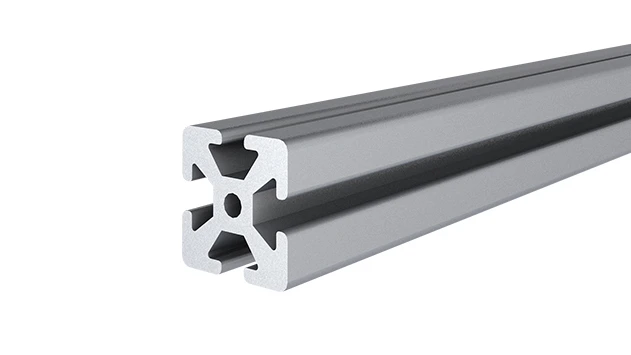
Walk into any modern factory, workshop, or manufacturing plant, and you'll likely spot a familiar sight: sleek, silver structures holding up workbenches, guiding conveyor belts, or organizing tools. These are aluminum extrusion profiles—unassuming yet indispensable building blocks of industrial efficiency. But not all profiles are created equal. For businesses operating in Europe or supplying to EU markets, one specification stands out as a benchmark of quality: the 4040F EU standard aluminum profile. What makes this profile a cut above the rest? It all comes down to tolerances—the tiny, critical measurements that determine how well parts fit, how strong structures stand, and how smoothly entire production lines run. In this article, we'll dive into the world of 4040F EU standard tolerances, why they matter for real-world applications like lean systems and workbench assembly, and how they set a global standard for precision.
What Is the 4040F EU Standard Aluminum Profile?
Before we get into tolerances, let's clarify what the 4040F EU standard actually is. At its core, it's a specific type of aluminum extrusion profile—a long, uniform shape created by forcing heated aluminum through a die. The "4040" refers to its cross-sectional dimensions: 40mm in width and 40mm in height, forming a square or rectangular tube (depending on design). The "F" denotes a specific flange or groove configuration, typically featuring T-slots along its length—those handy channels that let you slide in bolts, brackets, or accessories without drilling. And "EU standard"? That's the kicker. It means this profile isn't just designed to look good; it's engineered to meet strict European union regulations for precision, safety, and interoperability.
Why does this matter? Imagine ordering parts from three different suppliers and finding out none of them fit together. Or building a workbench that wobbles because the profiles are slightly warped. In the fast-paced world of manufacturing, these small inconsistencies add up—wasting time, money, and frustration. The 4040F EU standard eliminates that guesswork. It's a promise that, no matter which aluminum profile supplier you buy from, the dimensions will be consistent, the slots will align, and the profile will perform as expected.
Understanding Tolerances: The "Small Stuff" That Makes a Big Difference
Tolerances are the acceptable range of variation from a specified dimension. Think of them as the "margin of error" for manufacturing—but in the case of EU standards, that margin is extremely tight. For example, if a profile is supposed to be 40mm wide, a tolerance of ±0.1mm means the actual width can be as small as 39.9mm or as large as 40.1mm. Seems tiny, right? But in practice, that 0.1mm can be the difference between a bracket sliding smoothly into a T-slot and having to hammer it in (or worse, having it fall out).
In industrial settings, tolerances affect three critical areas: fit , function , and safety . A profile with loose tolerances might fit poorly with aluminum profile accessories like hinges or clamps, leading to unstable structures. If it's too warped (poor straightness tolerance), it could throw off the alignment of a conveyor system, causing jams or product damage. And in safety-critical applications—like machine guards or structural supports—tolerances ensure the profile can bear the intended load without bending or failing.

Key Tolerances of the 4040F EU Standard: A Closer Look
The 4040F EU standard doesn't just set one tolerance; it specifies dozens, covering everything from length to surface finish. Let's break down the most important ones and why they matter in real-world use. To make it easier, we've compared them to typical non-EU standards—so you can see the difference precision makes.
| Tolerance Type | 4040F EU Standard | Typical Non-EU Standard | Why It Matters |
|---|---|---|---|
| Width/Height (Cross-Section) | 40mm ±0.1mm | 40mm ±0.3mm | Ensures T-slots align perfectly with accessories like brackets or sliding nuts. A 0.3mm difference might mean a bolt won't tighten properly. |
| Length | Per meter: ±0.5mm | Per meter: ±1.0mm | Critical for large structures (e.g., 5-meter workbenches). Tighter tolerances prevent uneven ends or gaps between joined profiles. |
| Straightness | 0.5mm per meter | 1.0mm per meter | Warped profiles cause wobbly workbenches or misaligned conveyors. Imagine a production line where parts slide to one side—straightness fixes that. |
| Flatness (Surface) | 0.3mm across 100mm | 0.6mm across 100mm | Flat surfaces ensure tools, machines, or products sit evenly. A bumpy profile could damage delicate components or throw off measurements. |
| Surface Finish (Ra Value) | ≤1.6μm | ≤3.2μm | A smoother surface (lower Ra) resists corrosion, looks better, and reduces friction—key for sliding accessories or parts moving along the profile. |
| Wall Thickness | ±0.1mm | ±0.2mm | Thinner walls weaken the profile; thicker walls add unnecessary weight. Consistent thickness ensures reliable strength without waste. |
The Hidden Impact of Tight Tolerances: A Real-World Example
Let's say you're building a lean system workbench using 4040F profiles and aluminum profile accessories. With EU-standard tolerances, here's what happens: You unbox the profiles, lay them out, and they're straight enough that you don't need to spend 20 minutes bending them into alignment. You attach a bracket to the T-slot, and it slides in smoothly—no forcing, no stripping threads. The workbench top sits flat, so your drill press doesn't rock, and your measuring tools give accurate readings. At the end of the day, you've built a sturdy, functional workbench in 2 hours instead of 4.
Now, imagine using non-EU profiles. One is 0.2mm wider than the others, so the bracket won't seat properly—you have to file down the slot. Another is slightly curved, so the workbench legs don't line up, and you need shims to level it. By the time you're done, you've wasted materials, time, and patience. That's the difference tolerances make.
Why EU Precision Requirements Are a Game-Changer for Lean Systems
If you're familiar with lean manufacturing, you know its core principle: eliminate waste. Waste comes in many forms—time, materials, defects, and even frustration. Tight tolerances align perfectly with this philosophy, and that's why the 4040F EU standard is a favorite in lean systems. Here's how:
Less Rework, More Productivity: When profiles and accessories fit on the first try, workers spend less time adjusting, filing, or replacing parts. A study by the European Manufacturing Association found that companies using EU-standard aluminum profiles reduced assembly rework by up to 22% compared to those using non-standard parts.
Interoperability Across Suppliers: Lean systems often rely on modularity—building and reconfiguring structures as needs change. With EU tolerances, you can mix profiles from different aluminum profile suppliers and trust they'll work together. No more being locked into one brand or paying premium prices for "proprietary" parts.
Reduced Inventory Waste: Loose tolerances mean you might order extra profiles "just in case" some are defective. EU standards reduce defect rates (typically below 0.5% vs. 3-5% for non-standard), so you can order exactly what you need—cutting storage costs and waste.
Beyond the Numbers: How Suppliers Ensure 4040F EU Compliance
Meeting these tight tolerances isn't easy. It requires precision at every step, from raw material to finished product. Here's a peek behind the curtain at how reputable aluminum profile suppliers pull it off:
High-Quality Raw Materials: It starts with the aluminum itself. EU-standard suppliers use high-purity aluminum alloys (often 6063-T5) with consistent chemical composition. Impurities or inconsistencies in the alloy can lead to warping during extrusion.
Precision Extrusion Dies: The die—the metal tool that shapes the molten aluminum—must be machined to microns of accuracy. Dies wear over time, so suppliers inspect and rework them regularly. A die that's even 0.05mm out of spec can ruin thousands of profiles.
In-Process Quality Checks: During extrusion, sensors and operators monitor dimensions in real time. Lasers measure width, height, and straightness as the profile cools, flagging any deviations immediately. This prevents large batches of defective profiles.
Post-Extrusion Treatments: Processes like anodizing (coating the profile with a protective oxide layer) can affect dimensions if not controlled. EU-standard suppliers carefully regulate temperature and chemical baths to ensure the coating adds less than 0.01mm to the profile's size.
Third-Party Certification: Reputable suppliers don't just claim compliance—they prove it. Look for certifications like CE marking, ISO 9001, or DIN 17100, which require independent labs to verify tolerances and material quality.
Who Benefits Most from 4040F EU Standard Profiles?
You might be thinking, "This all sounds great, but do I really need EU-standard tolerances?" The answer depends on your industry and priorities. Here are the sectors where 4040F profiles shine brightest:
Automotive and Aerospace: These industries demand precision for jigs, fixtures, and assembly lines. A misaligned profile could throw off a car part's measurements, leading to safety issues.
Electronics Manufacturing: ESD workbenches (static-controlled workstations) rely on stable, flat surfaces to protect sensitive components. EU tolerances ensure no gaps where static could build up.
Medical Device Production: Cleanrooms and sterile environments need easy-to-clean, non-porous surfaces. The smooth finish (low Ra value) of EU-standard profiles resists bacteria growth and simplifies sanitization.
Lean System Integrators: Whether you're building kanban racks, material flow stations, or cellular manufacturing setups, the modularity and precision of 4040F profiles make reconfiguration fast and frustration-free.
The Bottom Line: Tolerances That Respect Your Work
At the end of the day, 4040F EU standard aluminum profile tolerances aren't just about numbers on a spec sheet. They're about respect—for your time, your team, and your products. When you choose EU-standard profiles, you're choosing to eliminate the little headaches that slow down production and drain morale. You're choosing to build systems that work as hard as you do.
So the next time you're sourcing aluminum extrusion profiles, remember: precision isn't a luxury. It's a foundation. And when that foundation is built on the 4040F EU standard, you're not just buying profiles—you're investing in smoother workflows, happier workers, and a manufacturing process that's truly lean.
Whether you're a small workshop owner or a large-scale manufacturer, the message is clear: tight tolerances lead to tight operations. And in today's competitive market, that's the difference between falling behind and moving forward.