- Company Articles
- Industry articles
- Industry standards
- 4040F vs 4040B EU Standard Aluminum Profile: Differences in Groove Design & Applications

4040F vs 4040B EU Standard Aluminum Profile: Differences in Groove Design & Applications
Related Product
4040B EU Standard Aluminum Profile
4040B is a 4.00x4.00 CM fractional 40 series square extrusion T-slot profile with four open T-slots, each side with 4.00cm face. The profile has align-a-grooves to assist in aligning connecting profiles.
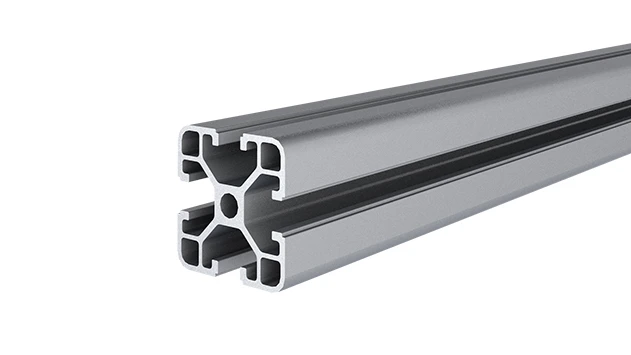
Walk into any modern factory, workshop, or even a tech startup's prototyping lab, and you'll likely spot the unsung heroes holding everything together: aluminum profiles. These sleek, versatile structures form the backbone of workbenches, material racks, conveyor systems, and lean manufacturing setups, quietly ensuring operations run smoothly day in and day out. Among the countless profiles available, the 4040 series stands out as a workhorse, prized for its balance of strength, flexibility, and compatibility with EU standard systems. Today, we're zooming in on two of its most popular variants: the 4040F and 4040B EU Standard Aluminum Profiles. While they share the same 40x40mm base dimensions, a closer look at their groove designs reveals why one might be the perfect fit for your heavy-duty assembly line, while the other shines in a fast-paced, modular workspace. Let's dive in.
EU Standard Aluminum Profiles: The Foundation of Consistent, Reliable Design
Before we compare the 4040F and 4040B, let's take a moment to appreciate why EU standardization matters. In the world of manufacturing and workspace design, consistency is key. EU standards for aluminum extrusion profiles ensure that regardless of the supplier, a 4040 profile from one manufacturer will fit seamlessly with accessories, connectors, and other profiles from another. This interoperability reduces downtime, simplifies sourcing, and gives businesses the freedom to customize without worrying about compatibility headaches. These standards cover everything from material composition (typically high-grade 6063-T5 aluminum, known for its strength and corrosion resistance) to dimensional tolerances and, crucially, groove specifications—the very feature that sets the 4040F and 4040B apart.
At their core, aluminum extrusion profiles are created by forcing heated aluminum through a die, shaping it into the desired cross-section. The grooves, or T-slots, running along their length are more than just design quirks; they're the interface that allows for the attachment of brackets, panels, casters, and other aluminum profile accessories. Think of them as the "universal language" that lets you build almost anything—from a simple workbench to a complex lean system—by snapping or bolting components into place. And when it comes to the 4040 series, the F and B variants speak slightly different dialects of that language.
Meet the 4040F: The Heavyweight Contender with Deep Grooves for Maximum Stability
First up is the 4040F, a profile built with stability and heavy-duty performance in mind. Let's start with the basics: like all 4040 profiles, it measures 40mm in width and 40mm in height, making it a versatile choice for medium to large-scale projects. But what truly defines the 4040F is its groove design. On each of its four sides, you'll find a single, deep T-slot—engineered to lock accessories in place with minimal play, even under significant weight.
The grooves on the 4040F typically measure 8mm in width and 10mm in depth, with a slightly tapered "T" shape that widens toward the base of the slot. This design is intentional: the wider base provides a larger surface area for bolts and nuts to grip, while the narrow opening ensures accessories stay aligned. The material thickness of the 4040F is another standout feature, often clocking in at 2.5mm (compared to the 2.0mm found in some lighter profiles). This extra thickness, combined with the deep grooves, gives the 4040F an impressive load capacity—often upwards of 200kg per linear meter when properly supported. That's enough to handle heavy tools, bulky workpieces, or stacked material racks without bending or flexing.
But the 4040F isn't just about brute strength. Its design also prioritizes precision. The tight tolerances on groove dimensions mean that even when assembling complex structures—like a multi-level material rack B (3 row and 3 floor) or a sturdy workbench E (single deck)—components align perfectly, reducing wobble and ensuring the final product feels solid. This precision is why many manufacturers turn to the 4040F for applications where safety and reliability are non-negotiable, such as assembly lines for automotive parts or heavy machinery.

Introducing the 4040B: The Agile Innovator with Shallow, Wide Grooves for Quick Assembly
Now, let's turn to the 4040B, a profile that trades some of the 4040F's depth for speed and flexibility. At first glance, it's nearly identical to the 4040F—same 40x40mm outer dimensions, same 6063-T5 aluminum composition—but a peek at its grooves tells a different story. The 4040B features shallower but wider T-slots, typically 10mm in width and 6mm in depth, with a more gradual taper. This might seem like a small difference, but it transforms how the profile interacts with accessories and how quickly you can build with it.
The wider groove opening on the 4040B makes it easier to slide in quick-connect accessories, like lever nuts or spring-loaded brackets, without needing to thread bolts from the end of the profile. This is a game-changer for setups that require frequent reconfiguration, such as prototyping labs or small-batch production lines where workflows evolve weekly. Imagine needing to rearrange your workbench to accommodate a new product line: with the 4040B, you can loosen a few levers, adjust the brackets, and tighten them back up in minutes, rather than spending hours unscrewing and rethreading bolts.
While the 4040B's shallower grooves mean it has a slightly lower load capacity than the 4040F (around 150kg per linear meter), it more than makes up for it in versatility. Its design is optimized for lightweight to medium-duty applications where agility matters most. For example, a hand trolley A used to transport components between workstations benefits from the 4040B's lighter weight (thanks to slightly thinner walls, around 2.0mm) and easy accessory attachment, making it easier to maneuver without sacrificing durability.
Side-by-Side: Groove Design & Key Specs Compared
To truly grasp the differences between the 4040F and 4040B, let's put their specs head-to-head. The table below breaks down their groove design, material properties, and performance metrics:
| Feature | 4040F EU Standard Aluminum Profile | 4040B EU Standard Aluminum Profile |
|---|---|---|
| Groove Quantity | 4 (one per side) | 4 (one per side) |
| Groove Width | 8mm | 10mm |
| Groove Depth | 10mm | 6mm |
| Groove Shape | Narrow opening, wide base (tapered T-slot) | Wide opening, gradual taper (open T-slot) |
| Material Thickness | 2.5mm | 2.0mm |
| Linear Weight | 1.8 kg/m | 1.5 kg/m |
| Static Load Capacity (per linear meter) | Up to 200kg | Up to 150kg |
| Primary Accessory Compatibility | Heavy-duty bolts, deep-reach brackets, lock nuts | Quick-connect levers, spring nuts, lightweight panels |
As you can see, the differences are subtle but significant. The 4040F's narrow, deep grooves prioritize grip and load-bearing, while the 4040B's wide, shallow grooves prioritize speed and adaptability. Neither is "better"—they're just better suited for different jobs.
Applications: When to Choose the 4040F
Now that we understand their specs, let's explore where the 4040F truly shines. Its deep grooves and high load capacity make it the go-to choice for applications where stability and durability are non-negotiable. Here are a few real-world scenarios where the 4040F would be right at home:
Heavy-Duty Workbenches & Assembly Stations: Imagine a workstation where workers assemble engine blocks or large electronic enclosures. These setups need to support heavy tools, clamps, and the workpiece itself without shifting. The 4040F's 200kg load capacity ensures the bench stays rigid, even when subjected to repeated vibrations or impacts. Pair it with sturdy aluminum honeycomb panels for the work surface, and you've got a setup that can handle years of heavy use.
Lean Systems for High-Volume Production: Lean manufacturing relies on minimizing waste and maximizing efficiency, and that starts with reliable infrastructure. The 4040F is ideal for building material rack B (3 row and 3 floor) systems, where pallets of components are stacked vertically. The deep grooves securely hold shelf brackets in place, preventing sagging even when fully loaded. It's also a favorite for conveyor systems that transport heavy parts, as the rigid frame reduces deflection and keeps the line running smoothly.
Industrial Machinery Frames: From small automated machines to large processing equipment, the frame needs to be both strong and precise. The 4040F's tight dimensional tolerances and thick walls make it a popular choice for building machine bases or safety guards, where misalignment could lead to costly downtime or safety risks.
Applications: When to Choose the 4040B
On the flip side, the 4040B is all about adaptability and speed, making it perfect for environments where change is constant. Here are some situations where it outperforms its F counterpart:
Modular Workstations for Small-Batch Production: If your business produces custom products or frequently switches between projects—like a startup building prototypes or a boutique electronics manufacturer—you need workspaces that can evolve. The 4040B's quick-connect accessories let you reconfigure shelves, tool holders, and lighting in minutes. For example, a workbench E (single deck-without caster) built with 4040B can easily be modified to add extra storage or adjust the height as your needs change.
Mobile Trolleys & Turnover Racks: When you need to move materials around the shop floor, weight matters. The 4040B's lighter linear weight (1.5kg/m vs. 1.8kg/m for the 4040F) translates to easier-to-push trolleys, reducing strain on workers. Hand trolley B, built with 4040B profiles and equipped with swivel casters, becomes a nimble helper in busy warehouses, gliding smoothly around corners and tight spaces.
Exhibition Booths & Temporary Displays: Even outside of manufacturing, the 4040B shines. Its quick assembly and lightweight design make it a favorite for building temporary structures like exhibition booths or pop-up retail displays. You can erect a sturdy frame in hours, attach signage and shelves using quick-connect brackets, and disassemble it just as fast when the event is over—no specialized tools required.
Choosing the Right Profile: A Practical Guide
So, how do you decide between the 4040F and 4040B for your project? Start by asking yourself three key questions:
1. What's the maximum load your structure will need to support? If you're building something that will hold heavy tools, machinery, or stacked materials (over 150kg per linear meter), the 4040F is the safer bet. For lighter loads—like a workstation with a laptop, small tools, and bins of components—the 4040B will work just fine and save you weight and cost.
2. How often will you need to reconfigure the structure? If your setup is permanent or rarely changes (e.g., a fixed assembly line), the 4040F's stability is worth the extra installation time. If you're constantly adding, removing, or moving components (e.g., a prototyping lab), the 4040B's quick-connect convenience will save you hours of frustration.
3. What accessories do you plan to use? Check if your preferred aluminum profile accessories—like brackets, hinges, or panels—are designed for narrow/deep grooves (4040F) or wide/shallow grooves (4040B). Most suppliers will specify compatibility, but if you're mixing and matching, the 4040B's wider grooves offer more flexibility for generic accessories.
Pro tip: If you're still on the fence, consider a hybrid approach. Use 4040F for the base structure (e.g., the legs of a workbench or the main frame of a material rack) where stability is critical, and 4040B for upper shelves or non-load-bearing components where adaptability matters. This way, you get the best of both worlds.
The Bottom Line: Two Profiles, One Goal—Building Better Workspaces
At the end of the day, the 4040F and 4040B EU Standard Aluminum Profiles are two sides of the same coin: both are high-quality, EU-compliant solutions designed to help you build better, more efficient workspaces. The 4040F is the reliable workhorse, ready to shoulder heavy loads and stand the test of time in demanding environments. The 4040B is the agile innovator, built for speed and adaptability in fast-changing settings. By understanding their groove designs and applications, you can choose the profile that aligns with your needs—whether that's a rock-solid lean system for mass production or a flexible workbench that grows with your business.
And remember, the true power of these profiles lies not just in their specs, but in the possibilities they unlock. With the right aluminum extrusion profile and a little creativity, you can transform a chaotic workshop into an organized, efficient space where your team can thrive. So, whether you go with F or B, you're one step closer to building something great.