- Company Articles
- Industry articles
- Industry standards
- 4040r EU Standard Aluminum Profile Anodization: Surface Finish Benefits

4040r EU Standard Aluminum Profile Anodization: Surface Finish Benefits
Related Product
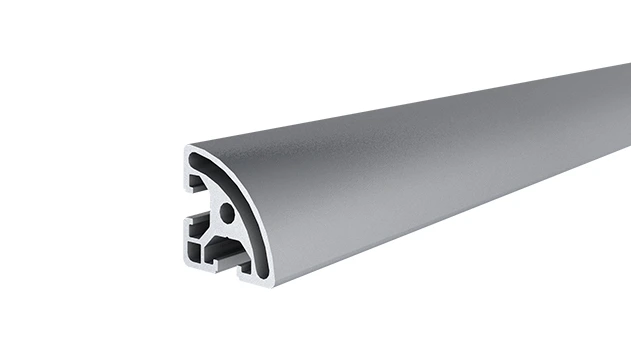
4040R EU Standard Aluminum Profile
4040R is a 4.00x4.00 CM fractional 40 series square extrusion T-slot profile with two side open T-slots, each side with 4.00cm face,the other side is round face. The profile has align-a-grooves to assist in aligning connecting profiles.
Walk into any modern factory, warehouse, or workshop, and you'll likely spot a silent workhorse holding everything together: aluminum profiles. These unassuming metal structures form the backbone of workbenches, material racks, conveyor systems, and more. But not all aluminum profiles are created equal. Today, we're zeroing in on one that's become a favorite in industrial settings worldwide: the 4040r EU Standard Aluminum Profile. And more specifically, why its anodized surface finish isn't just a cosmetic upgrade—it's a game-changer for durability, functionality, and long-term value.
First Things First: What *Is* the 4040r EU Standard Aluminum Profile?
Let's start with the basics. The "4040r" in its name isn't just a random code. It tells you exactly what you're getting: a square aluminum profile with a 40mm x 40mm cross-section (that's the "4040" part) and rounded edges (the "r" stands for "rounded"). The "EU Standard" label means it meets strict European manufacturing guidelines for quality, consistency, and safety—think precise dimensions, uniform material strength, and compliance with industry regulations. This makes it a go-to choice for businesses that can't afford sloppy fits or weak structures, whether they're building a simple workbench or a complex material handling system.
What makes the 4040r so versatile? Its T-slot design. Those grooves running along its length aren't just for show—they let you slide in accessories like brackets, connectors, and panels with ease. Need to add a shelf to your workbench? Screw a bracket into the T-slot. Want to reconfigure a material rack? Just loosen a few bolts and rearrange the profiles. This modularity is why you'll find 4040r profiles in everything from electronics assembly lines to automotive repair shops. But even the best base material needs a little help to stand up to the harsh realities of industrial life—and that's where anodization comes in.
Anodization: More Than a Pretty Face
If the 4040r aluminum profile is the canvas, anodization is the protective (and surprisingly attractive) paint. But unlike regular paint, which sits on top of the metal, anodization is a process that grows a protective layer from within the aluminum itself. Here's how it works, in non-chemist terms: the aluminum profile is submerged in an electrolyte bath (usually sulfuric acid) and becomes the anode in an electrical circuit. When electricity flows, oxygen ions from the bath bond with the aluminum's surface, forming a hard, porous layer of aluminum oxide. That layer is then sealed (often with hot water or a special chemical) to make it non-porous, creating a finish that's as tough as it is resilient.
You might be thinking, "Why not just paint it or powder-coat it?" Those methods have their place, but they're like putting a Band-Aid on a wound—effective for a while, but prone to peeling, chipping, or fading. Anodization is more like giving the aluminum its own built-in armor. The oxide layer is integral to the metal, so it won't chip off if you scratch it. It's also incredibly hard—harder than the aluminum beneath it—making it resistant to wear and tear. And unlike paint, it won't fade under UV light or chemical exposure. But don't just take my word for it—let's break down the real-world benefits.

The Top 5 Benefits of Anodized 4040r Aluminum Profiles
1. Corrosion Resistance: Say Goodbye to Rust and Degradation
Industrial environments are tough on metal. Between humidity, oils, cleaning chemicals, and even the occasional spill, unprotected aluminum can start to corrode over time. But anodized 4040r profiles laugh in the face of these threats. The sealed oxide layer acts as a barrier, blocking moisture and corrosive substances from reaching the underlying metal. Imagine a material rack b (3 row and 3 floor) in a busy warehouse, storing steel parts that sweat moisture when the temperature drops. A non-anodized rack might start showing spots of white corrosion within a year, weakening the structure and making it unsafe to hold heavy loads. An anodized 4040r rack? It'll stand tall, corrosion-free, for years—saving you the hassle and cost of premature replacements.
This resistance isn't just for warehouses, either. Food processing plants, where stainless steel is king, often use anodized aluminum profiles for secondary structures like tool racks or workbenches. Why? Because anodized aluminum won't react with acidic or alkaline cleaning agents, ensuring the workspace stays sanitary and compliant with food safety standards. Even in marine environments—think coastal factories with salty air—anodized 4040r profiles hold their own, outlasting painted or untreated aluminum by a mile.
2. Durability That Stands Up to Daily Abuse
Let's be honest: industrial equipment takes a beating. Tools get dropped on workbenches, parts get dragged across material racks, and forklifts occasionally (accidentally!) bump into structures. Anodized 4040r profiles are built to handle this chaos. The aluminum oxide layer formed during anodization has a hardness of around 300-500 HV (Vickers hardness), compared to the base aluminum's 40-60 HV. To put that in perspective: it's harder than most types of steel and far more scratch-resistant than painted or powder-coated surfaces.
Take a workbench E (single deck-without caster) made with 4040r profiles. In an electronics assembly line, technicians might slide circuit boards across the bench all day, or drop a screwdriver from time to time. A non-anodized bench top would quickly become covered in scratches, which could trap dirt and debris—bad news for sensitive electronics. An anodized bench top, though? Those scratches? Barely visible. The finish stays smooth and clean, reducing the risk of contamination and extending the bench's usable life. Over time, that durability translates to lower maintenance costs and fewer replacements—music to any operations manager's ears.
3. Aesthetic Longevity: Looks Good, Stays Good
Industrial spaces don't have to be eyesores. Many modern factories, especially those with customer tours or cleanroom environments, care about how their equipment looks. Anodized 4040r profiles deliver here, too. Unlike paint, which fades under sunlight or chemical exposure, anodized finishes retain their color for decades. The process allows for a range of natural tones—silver, black, gold, and even custom colors—all of which develop from the aluminum itself (no added pigments, in most cases). This means the color runs through the oxide layer, not just on top, so even if the surface gets scratched, the color underneath matches, making the damage far less noticeable.
Consider a 4040r-based material rack in a pharmaceutical facility. These environments demand both functionality and cleanliness, and a dull, faded rack can make the whole area feel unkempt. Anodized aluminum maintains its bright, uniform appearance, contributing to a professional, well-maintained vibe. Even in high-traffic areas, like a workshop where employees walk past material racks daily, the anodized finish stays fresh—no need for repainting every few years. It's a small detail, but it adds up to a workspace that feels cared for, which can boost morale and productivity.
4. Enhanced Wear Resistance for High-Traffic Areas
Some aluminum profiles aren't just static structures—they're part of systems that see constant movement. Think roller tracks on material racks, where parts slide from one station to the next, or conveyor systems that transport goods around a factory. In these cases, wear resistance isn't just a nice-to-have; it's critical. Anodized 4040r profiles excel here because their hard oxide layer can withstand the friction of repeated contact without wearing thin.
Let's say you're using 4040r profiles to build a roller track for a material rack. Every hour, dozens of heavy plastic bins slide along those tracks, their weight pressing down on the aluminum. A non-anodized track might start to develop grooves or rough spots within months, causing bins to stick or tip. An anodized track? The oxide layer acts as a built-in lubricant (well, not exactly lubricant, but its low friction coefficient helps) and resists abrasion, keeping the track smooth and functional for years. This isn't just about avoiding jams—it's about maintaining consistent workflow speeds and reducing the risk of damaged parts due to stuck bins.
5. Seamless Compatibility with Aluminum Profile Accessories
One of the biggest perks of 4040r profiles is their modularity, which relies on aluminum profile accessories—connectors, brackets, hinges, and more. But what if the surface treatment messed with that compatibility? Fortunately, anodization is a thin process—the oxide layer is only 5-20 microns thick (for reference, a human hair is about 50-100 microns). This means it doesn't add enough bulk to affect how accessories fit into the T-slots or onto the profile edges. You can still slide a bracket into a T-slot, bolt a hinge to the side, or attach a panel with ease—no need to sand down the surface or buy special "anodized-only" accessories.
This compatibility is a big deal for businesses that love to reconfigure their setups. Maybe you start with a simple workbench, then decide to add a shelf and a tool holder six months later. With anodized 4040r profiles, you can grab your existing accessories and get to work—no delays, no extra costs. It's this flexibility that makes anodized aluminum profiles a favorite for lean manufacturing systems, where adaptability is key to staying competitive.
Anodized vs. Non-Anodized: The Numbers Speak for Themselves
Still on the fence about whether anodization is worth the investment? Let's break it down with a side-by-side comparison. The table below pits anodized 4040r EU Standard Aluminum Profiles against their non-anodized counterparts in key areas that matter most to industrial users:
| Feature | Anodized 4040r Aluminum Profile | Non-Anodized 4040r Aluminum Profile |
|---|---|---|
| Corrosion Resistance | Excellent—resists moisture, chemicals, and salt air; lasts 10+ years in most environments | Poor—prone to white corrosion (oxidation) within 1-2 years in humid/industrial settings |
| Scratch Resistance | High—oxide layer hardness of 300-500 HV; resists scratches from tools and parts | Low—base aluminum hardness of 40-60 HV; scratches easily with minimal force |
| Color Retention | Outstanding—color embedded in oxide layer; fades minimally over decades | Poor—natural aluminum dulls quickly; painted finishes chip/fade within 2-3 years |
| Maintenance Needs | Low—only requires occasional wiping with a damp cloth | High—may need repainting, sanding, or replacement of corroded sections |
| Total Lifespan | 15-20+ years in industrial use | 5-8 years before significant degradation |
| Cost Over Time* | Lower—higher upfront cost offset by minimal maintenance and long lifespan | Higher—lower upfront cost, but frequent replacements and repairs add up |
*Based on average industrial usage and replacement costs
Why the 4040r EU Standard Anodized Aluminum Profile is Worth Every Penny
At this point, you might be thinking, "Okay, anodization sounds great, but isn't it more expensive?" It's true—anodized profiles cost more upfront than non-anodized ones. But when you factor in their longer lifespan, lower maintenance costs, and reduced need for replacements, they're actually the more economical choice. Let's do the math: a non-anodized 4040r workbench might cost $200 and last 5 years. An anodized one might cost $300 but last 15 years. Over 15 years, you'd need to replace the non-anodized bench three times, totaling $600—twice the cost of the anodized bench. And that doesn't even include the labor costs of replacing the bench or the downtime while you do it.
Beyond the numbers, there's the peace of mind. When you install anodized 4040r profiles, you know they'll stand up to whatever your workspace throws at them. You won't have to worry about a material rack collapsing because of corrosion, or a workbench looking shabby during a client visit. You'll have a structure that works as hard as your team does—day in, day out.
Final Thoughts: Invest in Surface Finish, Invest in Success
The 4040r EU Standard Aluminum Profile is already a standout in the industrial world, thanks to its strength, versatility, and compliance with strict standards. But when you add anodization to the mix, you're not just buying a metal profile—you're investing in a solution that will serve your business for decades. Whether you're building workbenches, material racks, or conveyor systems, the benefits of anodized surface finish—corrosion resistance, durability, aesthetic longevity, wear resistance, and compatibility with accessories—make it the clear choice for anyone who values quality and long-term value.
So the next time you're planning a workspace upgrade, don't just focus on the profile itself. Think about its surface finish. Because in the world of industrial equipment, the difference between good and great often comes down to the details—and anodization is one detail that pays off, big time.