- Company Articles
- Industry articles
- Industry standards
- 4040r EU Standard Aluminum Profile Dimensions: Complete Specification Guide

4040r EU Standard Aluminum Profile Dimensions: Complete Specification Guide
Related Product
4040R EU Standard Aluminum Profile
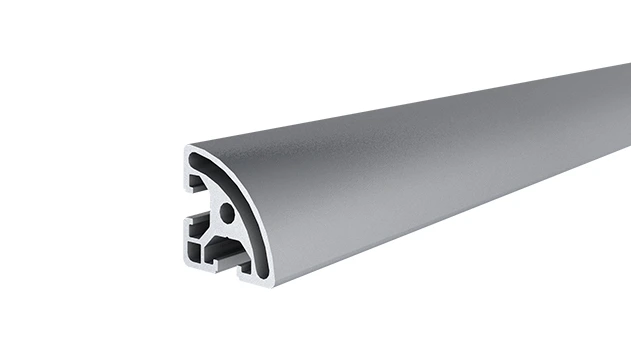
4040R is a 4.00x4.00 CM fractional 40 series square extrusion T-slot profile with two side open T-slots, each side with 4.00cm face,the other side is round face. The profile has align-a-grooves to assist in aligning connecting profiles.
In the world of industrial manufacturing, workshop setups, and lean production systems, the right tools and components can make all the difference between chaos and efficiency. Among the unsung heroes of this space are aluminum profiles—versatile, durable, and endlessly adaptable building blocks that form the backbone of everything from workbenches to material racks. Today, we're zeroing in on a standout in this category: the 4040r EU Standard Aluminum Profile . Whether you're a factory manager looking to optimize your assembly line, a small business owner building custom workstations, or a DIY enthusiast tackling a garage project, understanding the ins and outs of this profile will help you make smarter, more effective choices. Let's dive in.
What Is the 4040r EU Standard Aluminum Profile?
First things first: let's decode the name. The "4040" in 4040r refers to the profile's cross-sectional dimensions—40mm in width and 40mm in height. This square shape is a popular choice because it balances strength, stability, and flexibility, making it suitable for a wide range of applications. The "r" typically denotes a specific series or design feature, often rounded edges (a detail we'll explore later) that enhance safety and reduce the risk of damage to materials or equipment during handling. As for "EU Standard," this means the profile adheres to strict European manufacturing norms, ensuring consistent quality, dimensional accuracy, and compatibility with other EU-standard components.
Unlike generic aluminum extrusions, EU-standard profiles are engineered with precision. They're commonly made from 6063-T5 aluminum alloy, a material prized for its excellent combination of lightweight properties, corrosion resistance, and machinability. This alloy is heat-treated (the "T5" designation) to enhance its strength, making the 4040r profile sturdy enough to support heavy loads while remaining easy to cut, drill, and assemble. For anyone familiar with lean system principles—where minimizing waste and maximizing efficiency are key—this profile is a game-changer. Its modular design allows for quick reconfiguration, so you can adapt your workspace as your needs evolve without starting from scratch.
Key Dimensions: Breaking Down the 4040r Profile
To truly understand how the 4040r profile performs, we need to get granular with its dimensions. These specs aren't just numbers on a page—they dictate how the profile fits with accessories, how much weight it can bear, and how it integrates into larger systems. Let's break them down in detail:
| Parameter | Dimension (mm) | Tolerance | Description |
|---|---|---|---|
| Cross-Sectional Width | 40 | ±0.2 | Outer width of the profile, measured from edge to edge. |
| Cross-Sectional Height | 40 | ±0.2 | Outer height of the profile, matching the width for a square shape. |
| Wall Thickness | 2.0 – 3.0 (varies by grade) | ±0.15 | Thickness of the aluminum walls; thicker walls increase load capacity. |
| T-Slot Width | 8 | ±0.1 | Width of the T-shaped groove along the profile's length, critical for attaching accessories. |
| T-Slot Depth | 10 | ±0.2 | Depth of the T-slot, determining the size of bolts and connectors that can be used. |
| Corner Radius | 1.5 – 2.0 | ±0.2 | Radius of the rounded edges (the "r" in 4040r), enhancing safety and reducing sharpness. |
| Length | 2000 – 6000 (customizable) | ±5 | Standard lengths; most suppliers offer custom cutting to your exact needs. |
| Weight per Meter | 1.8 – 2.5 kg/m (varies by wall thickness) | ±0.1 kg/m | Weight of the profile per meter, important for transportation and load calculations. |
Let's unpack why these dimensions matter. Take the T-slot, for example: its 8mm width and 10mm depth are designed to work seamlessly with aluminum profile accessories like T-nuts, bolts, and brackets. This compatibility means you can attach shelves, panels, or other profiles without needing specialized tools—just a hex key or wrench. The corner radius, while a small detail, is crucial in busy work environments. Sharp edges can snag clothing, damage delicate materials, or cause injuries; rounded edges mitigate these risks, making the workspace safer for employees.
Wall thickness is another variable to consider. A 2.0mm wall is lightweight and ideal for applications where weight is a concern, like mobile carts or temporary structures. A 3.0mm wall, on the other hand, offers greater rigidity and load-bearing capacity, making it better suited for permanent workbenches or heavy-duty material racks. When ordering, be sure to specify your needs—reputable suppliers will guide you to the right thickness for your project.

Material and Mechanical Properties: Why 6063-T5 Aluminum Stands Out
The 4040r profile's performance isn't just about dimensions—it's also about what's under the hood: the aluminum alloy itself. As mentioned earlier, most EU-standard 4040r profiles are made from 6063-T5 aluminum. Let's break down what that means for durability, strength, and usability.
6063 aluminum is part of the 6000 series, which is alloyed with magnesium and silicon. This combination gives it excellent extrudability—meaning it can be shaped into complex cross-sections (like the T-slots in the 4040r) with high precision. The "T5" heat treatment involves cooling the alloy rapidly after extrusion and then artificially aging it at room temperature, which strengthens the material without making it brittle. The result? A profile that can handle static loads of up to 200-300 kg per linear meter (depending on wall thickness and support spacing) and resist bending or warping over time.
Corrosion resistance is another key benefit. 6063-T5 aluminum forms a natural oxide layer when exposed to air, protecting it from rust and degradation—even in humid or industrial environments. This makes the 4040r profile suitable for use in workshops, warehouses, and outdoor settings (with proper maintenance). Compare this to steel, which requires painting or coating to prevent rust, and you'll see why aluminum is a favorite for low-maintenance setups.
Mechanical properties like tensile strength (typically 180-220 MPa) and yield strength (110-160 MPa) might sound technical, but they translate to real-world reliability. Tensile strength is the maximum stress the profile can withstand before breaking; yield strength is the point at which it starts to deform permanently. For a workbench supporting tools and equipment, or a material rack holding heavy components, these numbers ensure the profile won't fail under normal use. And because aluminum is lightweight, you can build sturdy structures without the need for heavy lifting equipment during installation.
Accessories: Making the 4040r Profile Work for You
A profile is only as useful as the accessories that bring it to life. The 4040r's T-slot design is compatible with a wide range of EU-standard components, allowing you to customize your setup with ease. Let's explore some of the most common accessories and how they enhance the profile's functionality:
Connectors and Joints
These are the "glue" that holds your aluminum structure together. 90° aluminum profile connectors, for example, let you join two 4040r profiles at a right angle—perfect for building the legs and frame of a workbench . Three-way connectors allow for T-junctions, while swivel joints let you create angled structures. Most connectors use bolts that fit into the T-slot, so you can tighten them securely without drilling holes in the profile itself. This not only saves time but also preserves the profile's integrity, making disassembly and reconfiguration a breeze.
End Caps and Covers
End caps are small but essential. They fit over the cut ends of the profile, preventing dust, debris, or moisture from entering the T-slot and protecting workers from sharp edges. They also give your structure a clean, finished look. T-slot rubber seal covers are another useful accessory: they snap into the T-slot to seal it against dirt when not in use, keeping the slot clean and ready for future adjustments.
Panels and Shelves
Need a flat surface on your aluminum frame? Attach plywood, MDF, or aluminum honeycomb panels using panel brackets or T-slot nuts. These brackets slide into the T-slot, and you can position them anywhere along the profile, so you're not limited to fixed holes. This flexibility is a boon for lean system setups, where you might need to add or remove shelves as your workflow changes.
Wheels and Casters
For mobile structures like tool carts or temporary workstations, adding casters to the 4040r profile is simple. Caster mounting brackets bolt into the T-slot, and you can choose from swivel, locking, or rigid casters depending on your needs. This transforms a static frame into a portable solution, ideal for moving materials between workstations or reconfiguring your space on the fly.
Practical Applications: Where the 4040r Profile Shines
Now that we understand the dimensions, material, and accessories, let's look at how the 4040r profile is used in real-world scenarios. Its versatility means it pops up in industries ranging from automotive manufacturing to electronics assembly, and even in hobbyist workshops. Here are a few standout applications:
Workbenches and Assembly Stations
A well-designed workbench is the heart of any productive workspace, and the 4040r profile is perfect for building one. Its 40x40mm frame provides a stable base, while the T-slots let you attach tool holders, monitor arms, and storage bins exactly where you need them. For example, an electronics manufacturer might use a 4040r workbench with ESD (electrostatic discharge) accessories to protect sensitive components, while a mechanic could add hooks for tools and a vice mount for repairs. The rounded edges reduce the risk of damaging delicate parts, and the aluminum's lightweight nature makes the bench easy to move if needed.
Material Racks and Flow Racks
In warehouses and factories, efficient material storage is critical. The 4040r profile excels here, too. By combining profiles with roller tracks (another EU-standard accessory), you can build flow racks that use gravity to feed materials to the front, reducing the need for manual handling. A typical setup might have 4040r uprights supporting horizontal rails with rollers, allowing boxes or bins to slide smoothly as items are removed. The profile's load capacity ensures the rack can handle heavy materials like metal parts or automotive components, while its corrosion resistance keeps the structure looking and functioning like new for years.
Lean Production Cells
Lean manufacturing is all about eliminating waste—whether it's time, space, or materials. The 4040r profile's modular design aligns perfectly with this philosophy. Manufacturers can build custom production cells using 4040r frames, with integrated conveyors, workstations, and storage. If a process changes, the cell can be reconfigured in hours instead of days, minimizing downtime. For example, a pharmaceutical company might use 4040r profiles to build a cleanroom workstation that can be adjusted to accommodate new equipment, or a food packaging plant could reposition conveyors to optimize workflow during peak seasons.
DIY and Garage Projects
It's not just industrial users who benefit. DIY enthusiasts and homeowners are increasingly turning to aluminum profiles for garage storage, hobby workbenches, or even custom furniture. The 4040r profile is easy to work with—you can cut it with a miter saw, drill it with standard bits, and assemble it with basic hand tools. A quick search online reveals countless projects: from bike racks made with 4040r frames and hooks to gaming desks with built-in cable management (using T-slot covers to hide wires). The possibilities are limited only by your imagination (and, of course, your budget).
Choosing a Supplier: What to Look For
With so many suppliers offering aluminum profiles, how do you ensure you're getting a quality 4040r EU Standard product? Here are a few key factors to consider:
Certifications: Look for suppliers who can provide documentation that their profiles meet EU standards (e.g., EN 755-9, which covers aluminum extrusions). This ensures dimensional accuracy and material quality. Reputable suppliers will also have ISO 9001 certification, indicating a commitment to quality management.
Customization Options: While standard lengths are available, the best suppliers offer custom cutting, drilling, or anodizing (a surface treatment that enhances corrosion resistance and appearance). If you need a profile cut to 1523mm instead of 2000mm, or anodized in a specific color, your supplier should be able to accommodate that.
Accessory Compatibility: Ensure the supplier carries a full line of aluminum profile accessories (connectors, end caps, brackets) that are compatible with the 4040r profile. Mixing non-standard accessories can lead to fit issues and compromise the strength of your structure.
Customer Support: A good supplier doesn't just sell products—they offer expertise. Whether you need help calculating load capacities, choosing the right wall thickness, or troubleshooting an assembly issue, responsive customer support can save you time and frustration. Look for suppliers with technical teams or online resources like installation guides and CAD drawings.
Price vs. Quality: It's tempting to opt for the cheapest profile, but low-cost options often cut corners on material quality or dimensional accuracy. A slightly higher price for a certified EU-standard profile will pay off in durability and reliability, reducing the need for replacements down the line.
Maintenance Tips: Keeping Your 4040r Profile in Top Shape
Aluminum profiles are low-maintenance, but a little care goes a long way in extending their lifespan. Here are some simple tips:
Clean Regularly: Wipe down the profile with a damp cloth to remove dust, oil, or debris. For stubborn grime, use a mild detergent (avoid abrasive cleaners, which can scratch the surface). Dry thoroughly to prevent water spots.
Lubricate T-Slots: If you frequently adjust accessories, apply a small amount of silicone lubricant to the T-slot to keep bolts and nuts sliding smoothly. Avoid oil-based lubricants, which can attract dust.
Check Connections: Periodically inspect bolts and connectors to ensure they're tight. Vibration from machinery or frequent use can loosen them over time, which could compromise the structure's stability.
Protect from Impact: While aluminum is durable, heavy impacts can dent or bend the profile. Use corner guards or bumpers in high-traffic areas, especially if the profile is part of a mobile cart or workstation.
Address Corrosion Promptly: If you notice any signs of corrosion (uncommon with 6063-T5, but possible in extreme environments), clean the area with a wire brush and apply a corrosion-resistant coating like clear acrylic spray.
Conclusion: Why the 4040r EU Standard Aluminum Profile Deserves a Spot in Your Toolkit
The 4040r EU Standard Aluminum Profile is more than just a piece of metal—it's a foundation for efficiency, creativity, and adaptability. Its precise dimensions, durable material, and compatibility with a vast array of accessories make it a go-to choice for industrial professionals, DIYers, and everyone in between. Whether you're building a workbench for your garage, optimizing a lean system in a factory, or creating a custom storage solution, this profile delivers the strength, flexibility, and reliability you need.
As you embark on your next project, remember: the key to success lies in understanding your needs—load capacity, space constraints, and future adaptability—and choosing a quality profile and accessories that align with those needs. With the 4040r EU Standard Aluminum Profile, you're not just building a structure; you're building a solution that can grow and change with you. And in a world where flexibility is more important than ever, that's a powerful advantage.
So, whether you're a seasoned engineer or a first-time builder, give the 4040r profile a closer look. Chances are, it will become an indispensable part of your toolkit—one that helps you turn ideas into reality, one T-slot at a time.