- Company Articles
- Industry articles
- Industry standards
- 4040r EU Standard Aluminum Profile vs. Plastic Profiles: Durability Comparison

4040r EU Standard Aluminum Profile vs. Plastic Profiles: Durability Comparison
Related Product
4040R EU Standard Aluminum Profile
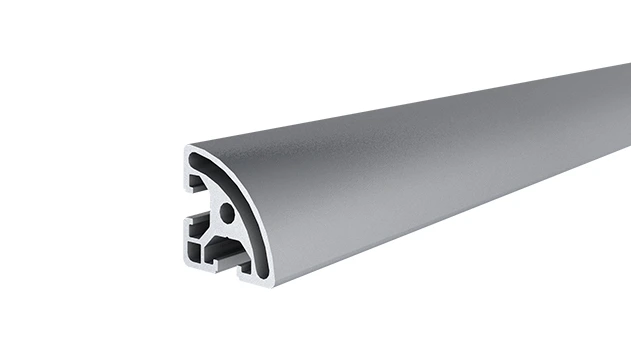
4040R is a 4.00x4.00 CM fractional 40 series square extrusion T-slot profile with two side open T-slots, each side with 4.00cm face,the other side is round face. The profile has align-a-grooves to assist in aligning connecting profiles.
Introduction: The Unsung Heroes of Modern Workspaces
Walk through any modern manufacturing facility, warehouse, or even a tech startup's workshop, and you'll notice a silent but critical component holding everything together: profiles. These unassuming structural elements form the backbone of workbenches, material racks, conveyor systems, and assembly lines. They're the reason workflows run smoothly, tools stay organized, and materials move seamlessly from one station to the next. But not all profiles are created equal. When it comes to durability—the ability to withstand daily wear, heavy loads, and harsh environments—two materials often stand out in the conversation: aluminum profiles and plastic profiles. Today, we're putting one of the most widely used aluminum profiles under the microscope: the 4040r EU Standard Aluminum Profile. We'll compare it head-to-head with plastic profiles, breaking down how they perform in real-world conditions, where they excel, and why choosing the right one can make or break your operational efficiency.
First Things First: What Are We Actually Comparing?
Before diving into durability, let's get clear on what these two materials are. Starting with the star of the show: the 4040r EU Standard Aluminum Profile . This isn't just any aluminum stick—it's a precision-engineered extrusion designed to meet strict European standards for quality and performance. The "4040" refers to its dimensions: 40mm by 40mm, a common size for medium-to-heavy-duty applications. The "r" likely denotes a specific design feature, such as rounded edges or a reinforced structure, which adds to its strength and safety (no sharp corners to scratch workers or damage materials). Made from aluminum alloy—typically containing magnesium and silicon for added toughness—this profile is created through an aluminum extrusion profile process, where heated aluminum is forced through a die to form its signature T-slot shape. Those T-slots are key: they allow for easy customization with aluminum profile accessories like brackets, connectors, end caps, and panels, making it adaptable to almost any workspace need.
On the other side of the ring, plastic profiles are a broad category, including materials like PVC, ABS, polypropylene, and nylon. Unlike aluminum, plastic profiles are often molded or extruded from polymers, sometimes blended with additives to improve strength, flexibility, or resistance to chemicals. They come in various shapes and sizes, from thin, lightweight strips to thicker, more rigid beams. Plastic profiles are popular for their low cost, corrosion resistance, and ease of fabrication—you can cut them with basic tools and they don't require special coatings to prevent rust. But here's the catch: not all plastics are built to last, and their performance can vary drastically based on the type of polymer used and the conditions they're exposed to.

Durability Showdown: Key Factors That Matter in the Real World
Durability isn't just about "being strong." It's about how well a material holds up over time, under stress, and in the face of whatever your workspace throws at it. Let's break down the critical factors and see how the 4040r Aluminum Profile and plastic profiles stack up.
1. Material Composition: The Building Blocks of Strength
The 4040r Aluminum Profile's strength starts at the molecular level. Aluminum itself is a lightweight metal, but when alloyed with elements like magnesium (for flexibility) and silicon (for hardness), it becomes surprisingly robust. The extrusion process—heating the alloy to a semi-liquid state and forcing it through a die—aligns the metal's grains, creating a uniform structure that resists bending and warping. This isn't just "aluminum foil for industrial use"; it's a engineered material designed to handle consistent pressure. In contrast, plastic profiles are made from polymers—long chains of molecules bound together. While some plastics (like ABS or polycarbonate) are reinforced with fibers or additives to boost strength, they're still fundamentally organic materials. Over time, these polymer chains can break down due to heat, UV light, or chemical exposure, leading to brittleness or deformation.
2. Load-Bearing Capacity: Can It Handle the Weight?
Let's talk real numbers. A standard 4040r Aluminum Profile, with its T-slot design and alloy composition, can typically support static loads of 500-800 kg per linear meter when properly mounted. That means if you're building a workbench or a material rack, you can stack heavy tools, metal parts, or even small machinery on it without worrying about collapse. Why? The T-slots distribute weight evenly across the profile, and the aluminum's rigidity prevents sagging. Plastic profiles, on the other hand, struggle here. Even heavy-duty plastic beams might top out at 100-200 kg per linear meter, and that's under ideal conditions. Add dynamic loads—like materials sliding across a conveyor or workers leaning on a bench—and plastic can start to flex or even crack. I've seen plastic racks in warehouses bow under the weight of cardboard boxes after just a few months; the same racks built with aluminum profiles? They're still straight as an arrow after years.
3. Environmental Resistance: Fighting Off the Elements
Workspaces aren't always clean, climate-controlled offices. Factories can be hot, humid, or dusty; warehouses might have temperature swings from freezing winters to sweltering summers; and some environments (like automotive or chemical plants) expose profiles to oils, solvents, or corrosive substances. How do our two contenders hold up?
Aluminum is naturally corrosion-resistant thanks to its oxide layer—a thin, invisible film that forms when aluminum reacts with oxygen. This layer self-heals if scratched, preventing rust or degradation. The 4040r profile, often anodized (a process that thickens this oxide layer), is even more resilient. I've visited coastal factories where salt air eats through metal equipment, but aluminum profiles there still look brand-new. Plastic profiles, meanwhile, are a mixed bag. PVC might handle moisture well, but it becomes brittle in cold temperatures and softens in heat (ever left a plastic bucket in a hot car? It warps). ABS is better with impact but can crack if exposed to harsh chemicals like acetone. UV light is another enemy: plastic profiles left near windows or in outdoor storage can fade, become chalky, and lose strength over time. Aluminum? Sunlight doesn't phase it.
4. Wear and Tear: Daily Abuse Test
Let's get granular: daily use. In a busy workshop, profiles get bumped by trolleys, scraped by tools, and even stepped on (we've all been there). The 4040r Aluminum Profile's hard, anodized surface resists scratches and dents. Sure, you might get a minor scuff if a metal part slides across it, but it won't chip or crack. Plastic profiles? They're prone to "gouging"—deep scratches from sharp objects—and if you drop a heavy tool on them, they'll often develop stress cracks. I once saw a plastic conveyor guide rail that had been rubbed by boxes for six months; the edges were worn down to a nub, whereas the aluminum guide rail next to it (same usage) was still smooth and functional. Even something as simple as tightening a bolt: aluminum's rigidity means you can snug up a bracket without stripping the material, but over-tightening a screw on plastic can crack the profile entirely.
5. Long-Term Performance: The 5-Year (and Beyond) Test
Durability isn't just about surviving a month or a year—it's about lasting for the long haul. Let's say you install a workspace today; how will these profiles look in 5 years? The 4040r Aluminum Profile will likely look almost identical to the day it was installed, minus some minor cosmetic wear. Its structural integrity? Unchanged. Aluminum doesn't fatigue easily, meaning it won't weaken after repeated loading and unloading. Plastic profiles, though, start to show their age. UV exposure, temperature cycles, and constant stress can lead to "creep"—slow, permanent deformation under load. A plastic workbench leg that was straight in year one might be slightly bent by year three, and by year five, it might need replacement. Aluminum? It's in it for the long run. I worked with a manufacturer that replaced all their plastic material racks with aluminum profiles a decade ago; they're still using the same aluminum racks today, while the plastic ones lasted maybe 2-3 years max.
The Comparison Table: At a Glance
| Durability Factor | 4040r EU Standard Aluminum Profile | Plastic Profiles (Average Performance) |
|---|---|---|
| Material Composition | Aluminum alloy (Mg, Si) with extruded, grain-aligned structure | Polymer-based (PVC, ABS, etc.), sometimes with additives; prone to molecular breakdown |
| Static Load Capacity | 500-800 kg per linear meter (properly mounted) | 100-200 kg per linear meter (varies by plastic type) |
| Environmental Resistance | Resists corrosion, UV, heat (up to 150°C), cold, and most chemicals | Moisture-resistant (some types); poor UV/heat/cold resistance; chemical sensitivity varies |
| Wear Resistance | Hard anodized surface resists scratches, dents, and gouging | Prone to scratches, cracks, and gouging from sharp/heavy objects |
| Longevity (Expected Lifespan) | 10+ years (often 15-20 with basic maintenance) | 2-5 years (varies widely; shorter in harsh environments) |
| Maintenance Needs | Minimal: occasional cleaning with soap and water | More frequent: may need repairs for cracks/warping; replacement of degraded sections |
But Wait—When Might Plastic Profiles Make Sense?
I don't want to paint plastic profiles as useless; they have their place. If you're building a lightweight, temporary structure (like a pop-up display or a short-term event booth), plastic's low cost and easy fabrication might be ideal. For applications with extremely low loads—think holding small electronic components or lightweight packaging—plastic could work. And in environments where electrical insulation is critical (though aluminum can be grounded), plastic might have a edge. But for the backbone of your operation—workbenches, material racks, conveyor systems, assembly lines—where durability directly impacts productivity and safety, aluminum profiles like the 4040r are hard to beat.
The Bottom Line: Invest in Durability, Invest in Efficiency
At the end of the day, choosing between the 4040r EU Standard Aluminum Profile and plastic profiles isn't just about material—it's about ROI. Aluminum profiles cost more upfront, sure, but they last 3-5 times longer, require less maintenance, and can handle more abuse. When you factor in the cost of replacing warped plastic racks, repairing cracked workbenches, or dealing with downtime because a conveyor rail failed, aluminum becomes the smarter financial choice. Plus, aluminum is infinitely recyclable, making it a sustainable option for businesses focused on reducing waste.
So, the next time you're designing a workspace or upgrading your facility, ask yourself: Do I want a material that bends, cracks, and fades, or one that stands strong, year after year? The 4040r EU Standard Aluminum Profile isn't just a profile—it's a long-term investment in your team's efficiency, your equipment's reliability, and your business's success. And when paired with the right aluminum profile accessories —connectors, brackets, end caps—you've got a system that's not just durable, but adaptable, growable, and ready to take on whatever your workflow throws at it.