- Company Articles
- Industry articles
- Industry standards
- 4080A EU Standard Aluminum Profile: Environmental Impact & Carbon Footprint

4080A EU Standard Aluminum Profile: Environmental Impact & Carbon Footprint
Related Product
4080A EU Standard Aluminum Profile
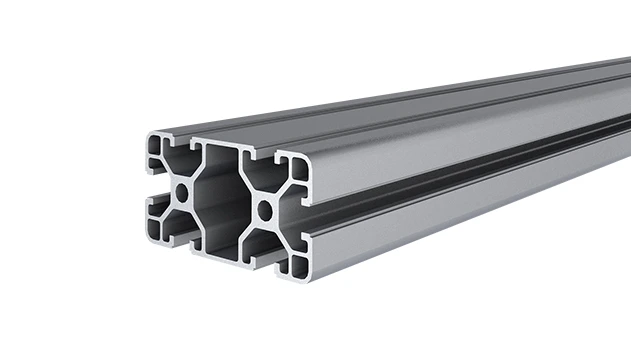
4080A is a 4.00x8.00 CM fractional 40 series square extrusion T-slot profile with two side open T-slots, each side with 4.00cm face, two side with 8.00cm face. The profile has align-a-grooves to assist in aligning connecting profiles.
Walk through any modern factory, warehouse, or manufacturing plant, and you'll likely spot them: sleek, silver structures holding up workbenches, guiding conveyor belts, or forming the backbone of material racks. These are aluminum profiles—quiet workhorses that shape the efficiency of production lines worldwide. Among them, the 4080A EU Standard Aluminum Profile stands out as a benchmark for quality, versatility, and increasingly, sustainability. In an era where businesses are racing to cut carbon footprints and align with green goals, understanding how this unassuming component impacts the planet isn't just good practice—it's essential. Let's dive into the world of 4080A aluminum profiles, exploring their environmental journey from raw material to recycled resource, and how they're quietly revolutionizing sustainable manufacturing.
What is the 4080A EU Standard Aluminum Profile?
First, let's get familiar with the star of the show. The 4080A EU Standard Aluminum Profile is a type of extruded aluminum product, named for its dimensions: 40mm in width and 80mm in height. The "EU Standard" tag isn't just a label—it's a promise. It means the profile adheres to strict European union regulations on material quality, safety, and environmental performance, from production to disposal. Unlike generic aluminum products, 4080A profiles are engineered for precision: their T-slot design (grooves running along the length) allows easy attachment of accessories like brackets, connectors, and panels, making them infinitely customizable. This modularity is key to their popularity in industries ranging from automotive to electronics, where adaptability is everything.
But what sets 4080A apart isn't just its size or design—it's the "extrusion" process that brings it to life. Aluminum extrusion is like squeezing toothpaste from a tube: heated aluminum billets are pushed through a die (a custom-shaped mold) to create long, uniform profiles. This method minimizes waste, as the final product is nearly the exact shape needed, reducing the need for excess cutting or machining. For the 4080A profile, this efficiency starts at the very first step of production, laying the groundwork for its environmental story.
From Bauxite to Bench: The Production Journey & Environmental Impact
To understand the environmental impact of the 4080A aluminum profile, we need to trace its roots—all the way back to the earth. Aluminum starts as bauxite, a reddish ore found in tropical regions like Guinea, Australia, and Brazil. Mining bauxite isn't without consequences: it can disrupt local ecosystems, contribute to soil erosion, and require significant water use. However, modern mining practices (especially in EU-aligned operations) have improved: companies now use reclamation techniques to restore mined areas, and water recycling systems to reduce consumption. Still, this initial step is a reminder that even "green" materials have an origin story tied to the planet's resources.
Once mined, bauxite is refined into alumina (aluminum oxide) via the Bayer process, which involves heating the ore with caustic soda. This step uses energy and water, but again, EU standards push for efficiency: facilities often use waste heat recovery systems and closed-loop water circuits to minimize losses. From there, alumina undergoes electrolysis in the Hall-Héroult process, where electric current splits the oxide into aluminum metal. This is the most energy-intensive stage—traditional smelters can use up to 15 kWh of electricity per kilogram of aluminum. But here's the twist: if that electricity comes from renewable sources (think hydropower in Norway or wind in Germany), the carbon footprint plummets. EU regulations mandate strict emissions limits for smelters, so 4080A producers often prioritize green energy, turning a high-energy step into a lower-impact one.
Finally, the molten aluminum is cast into billets and sent to extrusion plants. Here, the billets are heated (to around 500°C, far cooler than smelting) and pressed through the 4080A die. Extrusion is relatively low-energy compared to smelting, and because the profile's shape is formed in one step, there's little waste. Any scrap from cutting or trimming is collected and recycled on-site, feeding back into the production loop. This "closed-loop" approach at extrusion facilities is a cornerstone of the 4080A's environmental appeal: it's not just about making a product, but making it with as little excess as possible.

Breaking Down the Carbon Footprint
Carbon footprint is the total amount of greenhouse gases (GHGs) emitted throughout a product's lifecycle, measured in kilograms of CO2 equivalent (CO2e). For the 4080A aluminum profile, this footprint has three main chapters: production, transportation, and end-of-life.
Production (Scope 1 & 2 Emissions): Scope 1 covers direct emissions from the production process (e.g., fuel burned in mining equipment), while Scope 2 includes indirect emissions from purchased energy (e.g., electricity for smelting). As mentioned, smelting dominates here. A typical primary aluminum (made from bauxite) has a carbon footprint of 12–16 kg CO2e per kilogram. But 4080A profiles often use "low-carbon aluminum," where smelters run on renewables. In Norway, for example, smelters powered by hydropower cut this to 2–4 kg CO2e/kg—nearly an 80% reduction. Add in efficient extrusion and on-site recycling of scrap, and the 4080A's production footprint becomes surprisingly lean.
Transportation (Scope 3 Emissions): Aluminum is heavy, so moving billets from smelters to extrusion plants, then finished profiles to customers, adds emissions. But EU-based production helps: if your 4080A profile is made in Germany and shipped to France, the truck or train journey is far shorter than importing from Asia, slashing transportation-related CO2e. Some suppliers even use electric trucks or rail for deliveries, further trimming this chapter.
End-of-Life (The Silver Lining): Here's where aluminum shines. Unlike plastics, which degrade or release toxins when recycled, or steel, which loses quality over multiple recycles, aluminum can be melted down and reused infinitely without losing strength. Recycling aluminum uses just 5% of the energy needed to make it from bauxite, cutting emissions by 95%. For a 4080A profile that's served 10 years on a factory workbench, its end-of-life isn't an endpoint—it's a new beginning. Most manufacturers now offer take-back programs, ensuring old profiles are collected, shredded, and recycled into new billets, closing the loop on the carbon footprint.
How Does It Compare? Aluminum vs. Steel vs. Plastic
To truly appreciate the 4080A's environmental credentials, let's stack it against two common alternatives: steel and plastic. The table below compares key environmental metrics, drawing on data from EU Ecoinvent and industry reports.
| Metric | 4080A Aluminum Extrusion Profile | Standard Steel Profile | Plastic (PVC/Polypropylene) Profile |
|---|---|---|---|
| Carbon Footprint (kg CO2e/kg) | 3–6 (low-carbon aluminum) | 1.8–3.2 | 2.5–5.0 |
| Recyclability Rate (%) | 95–100% | 85–90% | 5–30% (varies by type) |
| Energy Use in Production (MJ/kg) | 40–60 (primary); 2–5 (recycled) | 20–30 | 15–30 |
| Durability (Average Lifespan) | 15–25 years | 20–30 years | 5–10 years (prone to UV/chemical damage) |
| Weight (kg/m for 40x80mm profile) | 2.8–3.2 | 8.5–10.0 | 1.2–1.5 |
At first glance, steel seems to have a lower carbon footprint—but look closer. Steel's production relies on coal (a high-emission fuel), and while it's recyclable, each cycle weakens it, limiting reuse. Plastic is lightweight but short-lived; most ends up in landfills or incinerators, releasing methane or toxic fumes. Aluminum, with its infinite recyclability and low-energy recycling process, pulls ahead over time. A 4080A profile might emit more CO2e upfront than plastic, but over 25 years of use and multiple recycles, its total lifecycle footprint is far smaller. For businesses planning long-term, this "cradle-to-cradle" advantage is game-changing.
Lean Systems & the 4080A: Waste Reduction in Action
Sustainability isn't just about materials—it's about how we use them. Enter lean systems: manufacturing philosophies centered on eliminating waste, optimizing flow, and continuous improvement. The 4080A aluminum profile is a lean system's dream partner, and here's why: modularity. Unlike fixed steel structures or one-time-use plastic setups, 4080A profiles and their aluminum profile accessories (think connectors, end caps, and brackets) let you build, adapt, and rebuild with minimal waste.
Imagine a electronics factory that needs to reconfigure its assembly line for a new smartphone model. With traditional steel workbenches, they'd have to cut, weld, and repaint—generating scrap metal and emissions. With 4080A profiles, it's different: loosen a few bolts, swap out a panel using aluminum profile accessories like T-slot nuts, and the workbench is ready for the new design. No cutting, no welding, no waste. This flexibility reduces the need for new materials, aligning perfectly with lean's "eliminate waste" core. It's why lean system suppliers increasingly recommend 4080A profiles: they don't just support efficient production—they embody it.
Take flow racks, for example. These are used to slide materials from storage to assembly lines, and they're often built with 4080A profiles. If production demand drops, you can shorten the rack by removing sections and reusing the profiles elsewhere. If a new part requires a steeper angle, adjust the legs with height-adjustable accessories. This isn't just efficient for operations—it's efficient for the planet. Less waste, fewer new purchases, and a longer lifespan for every component.
Aluminum Profile Accessories: Small Parts, Big Sustainability Wins
A profile is only as good as its accessories, and 4080A's ecosystem of aluminum profile accessories is designed with sustainability in mind. Let's start with connectors: these small, often unnoticeable parts link profiles together, and today's options are a far cry from the clunky, one-use fasteners of the past. Modern connectors, like the 90° aluminum profile connectors or internal rotary joints, are made from recycled aluminum, designed to be reused dozens of times without breaking. They clamp onto T-slots with precision, so you can disassemble a structure without bending or damaging the profile—meaning both the profile and the connector live to see another project.
Then there are end caps: simple plastic or aluminum covers that seal the ends of profiles, preventing dust buildup and adding a clean finish. Many suppliers now make these from 100% recycled plastic, and they're easy to pop on and off, so if a cap cracks, you replace just the cap, not the entire profile. Even gussets—triangular brackets that reinforce joints—are optimized: lightweight yet strong, made from thin-gauge recycled steel, so they add stability without adding unnecessary weight (and thus transportation emissions).
Perhaps the most underrated accessory? The humble T-slot nut. These small, threaded pieces slide into the profile's grooves, letting you attach shelves, lights, or tools anywhere along the length. No pre-drilling, no holes that weaken the profile—just endless flexibility. This means you can add or remove components as needs change, avoiding the "overbuilding" that leads to waste. For a small part, it's a huge contributor to the 4080A's sustainable edge.
The Future: Greener Profiles, Brighter Factories
As EU regulations tighten (hello, Carbon Border Adjustment Mechanism) and consumers demand eco-friendly products, the 4080A aluminum profile is poised to become even greener. Innovations are already in the pipeline: suppliers are experimenting with "green billets" made from 100% recycled aluminum, cutting production emissions to near-zero. Extrusion dies are being 3D-printed for faster, more precise shaping, reducing scrap. Even aluminum profile accessories are getting an upgrade, with bio-based plastics replacing traditional ones for end caps and brackets.
But the real future lies in circularity. Imagine a world where your 4080A profile's lifecycle is fully mapped: from bauxite mined with solar-powered equipment, to a smelter run on wind, to an extrusion plant that sends zero waste to landfills, to a factory that returns old profiles to be recycled into new ones. This isn't science fiction—it's the direction the industry is moving, and the 4080A is leading the charge.
In the end, the 4080A EU Standard Aluminum Profile is more than a piece of metal. It's a story of balance: between strength and sustainability, efficiency and adaptability, today's needs and tomorrow's planet. Whether you're a manufacturer building a lean system, a warehouse optimizing flow racks, or a business owner looking to cut carbon, this profile proves that small choices in materials can lead to big environmental wins. So the next time you see that sleek silver structure in a factory, remember: it's not just holding up a workbench. It's holding up a greener future.