- Company Articles
- Industry articles
- Industry standards
- 4080A EU Standard Aluminum Profile for Pharmaceutical Production: Cleanroom Compatibility

4080A EU Standard Aluminum Profile for Pharmaceutical Production: Cleanroom Compatibility
Related Product
4080A EU Standard Aluminum Profile
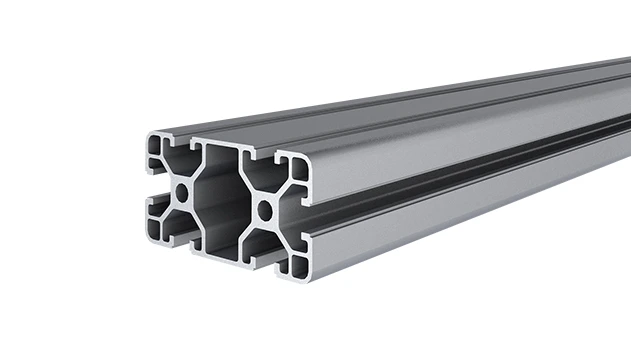
4080A is a 4.00x8.00 CM fractional 40 series square extrusion T-slot profile with two side open T-slots, each side with 4.00cm face, two side with 8.00cm face. The profile has align-a-grooves to assist in aligning connecting profiles.
In the world of pharmaceutical manufacturing, where precision isn't just a goal but a regulatory mandate, every detail of the production environment matters. From the air filtration systems that maintain ISO 5 air quality to the gowns worn by operators, every element is designed to prevent contamination and ensure product safety. But there's one often-overlooked component that forms the backbone of efficient, compliant pharmaceutical production: the infrastructure itself. Workbenches, material racks, conveyors, and process stations—these are the silent workhorses that keep production lines moving. And when it comes to building these critical structures, one material stands out for its ability to balance durability, cleanliness, and flexibility: aluminum extrusion profiles. Specifically, the 4080A EU standard aluminum profile has emerged as a game-changer for cleanroom design, offering a unique blend of compliance, adaptability, and performance that meets the strict demands of pharmaceutical manufacturing.
1. The Stakes of Cleanroom Material Selection in Pharma
Before diving into the specifics of the 4080A profile, let's first ground ourselves in why material choice matters so much in pharmaceutical cleanrooms. Unlike other industries, where "good enough" might suffice, pharma operates under the shadow of GMP (Good Manufacturing Practices) and ISO 14644 standards, which dictate everything from particle counts to surface finish. A single contaminated batch can lead to product recalls, regulatory fines, or worse—compromised patient safety.
Traditional materials like steel or wood fall short here. Steel, while strong, is prone to corrosion when exposed to the frequent sanitization protocols of pharma facilities (think daily wipe-downs with hydrogen peroxide or isopropyl alcohol). Rust not only weakens the structure over time but also creates microscopic crevices where bacteria and particles can hide. Wood, meanwhile, is porous by nature, making it nearly impossible to fully sanitize; it's a breeding ground for mold and microbes, which is a non-starter in environments where sterility is paramount.
Aluminum, by contrast, addresses these issues head-on. Its natural resistance to corrosion, combined with a smooth, non-porous surface, makes it inherently easier to clean and sanitize. But not all aluminum profiles are created equal. This is where EU standardization comes into play. EU-standardized profiles, like the 4080A, are manufactured to strict tolerances, ensuring consistency in dimensions, surface finish, and mechanical properties—critical for maintaining compliance across multiple production lines or facilities.
2. What Makes 4080A EU Standard Aluminum Profile Unique?
At its core, the 4080A is an aluminum extrusion profile —meaning it's formed by pushing heated aluminum through a die to create a specific cross-sectional shape. Its name gives away its dimensions: 40mm in width and 80mm in height, making it a versatile mid-sized profile that balances load-bearing capacity with flexibility. But its true value lies in the details of its design and manufacturing.
2.1 Precision Engineering for Cleanliness
The 4080A profile undergoes an anodization process, which electrochemically treats the aluminum surface to form a hard, protective oxide layer. This layer isn't just for aesthetics; it creates a surface that's ultra-smooth (Ra ≤ 0.8 μm, per EU standards) and resistant to chemical attack. In practical terms, this means when operators wipe down a 4080A workbench with a sanitizing agent, there are no rough patches or pores to trap residue—reducing the risk of cross-contamination between batches.
Another key feature is its T-slot design. Running the length of the profile, these slots allow for easy attachment of aluminum profile accessories —brackets, shelves, connectors, and even conveyor components—without the need for welding or drilling. This is a game-changer for cleanrooms, where drilling or welding would generate particles (a major contamination risk) and create uneven surfaces that are hard to clean. With T-slots, accessories snap into place using friction-fit connectors, keeping the surface seamless and sterile.
2.2 Strength Without the Weight
Pharmaceutical production equipment isn't light. Workbenches may hold precision scales, mixers, or automated filling machines; material racks need to support heavy ingredient containers or finished product cartons. The 4080A profile, despite being aluminum, delivers impressive load-bearing capacity. Thanks to its hollow, ribbed internal structure, it can support up to 200 kg per linear meter (depending on the configuration), making it suitable for even the heaviest production tools. And because it's 30% lighter than steel, it's easier to install and reconfigure—no need for heavy machinery or extensive labor during setup.

3. Cleanroom Compatibility: How 4080A Meets Pharma's Toughest Standards
Let's get specific about compliance. For a material to be cleanroom-compatible, it must meet three key criteria: low particle generation, chemical resistance, and microbial inertness. The 4080A profile excels in all three.
3.1 Low Particle Shedding
In ISO 7 cleanrooms (common in pharmaceutical packaging areas), the air must contain fewer than 352,000 particles of 0.5 μm or larger per cubic meter. Any material that sheds particles—like painted steel (which can chip) or plastic (which may degrade over time)—is a liability. The 4080A's anodized surface is inherently stable; it doesn't flake, chip, or degrade under normal operating conditions, ensuring minimal particle contribution to the cleanroom environment.
3.2 Chemical Resistance for Frequent Sanitization
Pharmaceutical cleanrooms are sanitized daily, often with aggressive agents like peracetic acid, quaternary ammonium compounds, or chlorine dioxide. The 4080A profile's anodized layer is impervious to these chemicals, maintaining its integrity even after repeated exposure. In contrast, unanodized aluminum or steel would corrode or discolor, requiring frequent replacement—a costly and disruptive process.
3.3 Microbial Inertness
Bacteria, fungi, and viruses need porous surfaces to colonize. The 4080A's smooth, non-porous anodized finish leaves nowhere for microbes to hide. Studies have shown that aluminum surfaces, when properly cleaned, harbor 90% fewer pathogens than stainless steel or plastic alternatives. For pharmaceutical manufacturers, this translates to fewer contamination incidents and greater peace of mind during regulatory audits.
4. Applications: Building the Pharma Production Line of Tomorrow
The versatility of the 4080A profile shines in its applications. From workbenches to material handling systems, it can be adapted to nearly every corner of the pharmaceutical production process. Let's explore a few key use cases:
4.1 Workbenches: The Heart of Production Stations
Workbenches are where much of the hands-on work happens—from weighing raw materials to assembling medical devices. A typical pharmaceutical workbench needs to be sturdy, easy to clean, and configurable to different tasks. The 4080A profile excels here. By combining 4080A rails with aluminum honeycomb panels (for a flat, stable work surface), manufacturers can build custom workbenches tailored to specific processes. Add aluminum profile accessories like tool holders, LED task lights, or ESD grounding strips, and you have a workstation that's both functional and compliant. Unlike fixed wooden or steel benches, these can be reconfigured in minutes by adjusting T-slot accessories—no tools required.
4.2 Material Racks: Organizing Inventory Without Contamination Risks
Raw materials, in-process goods, and finished products all need secure, accessible storage. The 4080A profile is ideal for building multi-tiered material racks, like the "Material Rack B (3 row and 3 floor)" configuration common in pharma facilities. These racks can be designed with adjustable shelving to accommodate different container sizes (from small vials to large drums) and integrated with roller track systems for easy loading/unloading. The smooth aluminum surfaces ensure that containers glide without snagging, reducing the risk of spills or particle generation. And because the racks are modular, they can be expanded or reconfigured as inventory needs change—no need to replace entire systems.
4.3 Conveyors: Streamlining Material Flow
Efficient material flow is critical in lean pharmaceutical production, and conveyors are the arteries that keep this flow moving. The 4080A profile serves as an excellent frame for roller conveyors, thanks to its T-slots, which allow easy mounting of roller track components like plastic roller track guide rails (available in yellow or grey, depending on cleanroom color-coding protocols). Whether transporting filled syringes from filling to labeling or moving bulk ingredients to mixing stations, these conveyors are designed to minimize friction and particle generation. And because the 4080A frame is lightweight, conveyors can be mounted overhead or at floor level, maximizing valuable cleanroom space.
4. Integrating 4080A Profiles with Lean Systems for Continuous Improvement
Pharmaceutical manufacturing isn't just about compliance—it's also about efficiency. Lean system principles, which focus on eliminating waste (time, materials, space) and improving process flow, are increasingly central to pharma operations. The 4080A profile aligns perfectly with lean goals, thanks to its modularity and adaptability.
Consider a scenario where a pharmaceutical company needs to switch production from a tablet formulation to a liquid injectable. Traditional fixed infrastructure would require weeks of retooling—disassembling steel racks, welding new workbenches, and reconfiguring conveyors. With 4080A-based systems, this process is streamlined. Operators can adjust shelving heights, reposition conveyors, or even repurpose workbenches by simply detaching and reattaching T-slot accessories. What once took weeks now takes days (or even hours), reducing downtime and lost production.
Another lean benefit: reduced inventory of spare parts. Because 4080A profiles and their accessories are standardized, manufacturers can stock a small number of universal components (brackets, connectors, rollers) that work across multiple systems. This eliminates the need to stock custom parts for every unique structure, cutting costs and simplifying maintenance.
5. Comparing 4080A to Other Aluminum Profiles: Why Size and Standardization Matter
Not all aluminum profiles are suited for pharmaceutical cleanrooms. To illustrate why the 4080A stands out, let's compare it to two common alternatives: the 4040A (40x40mm) and 3030A (30x30mm) EU standard profiles.
| Feature | 4080A EU Profile (40x80mm) | 4040A EU Profile (40x40mm) | 3030A EU Profile (30x30mm) |
|---|---|---|---|
| Load Capacity (kg/m) | Up to 200 kg (horizontal) | Up to 120 kg (horizontal) | Up to 80 kg (horizontal) |
| Surface Finish | Anodized (Ra ≤ 0.8 μm) | Anodized (Ra ≤ 0.8 μm) | Anodized (Ra ≤ 0.8 μm) |
| Cleanroom Compatibility | ISO 5–8 (suitable for sterile & non-sterile areas) | ISO 6–8 (ideal for packaging, warehousing) | ISO 7–8 (best for light-duty tasks) |
| Typical Pharma Applications | Heavy workbenches, material racks, conveyors | Light workbenches, small parts storage | Microscope stands, tool holders |
| Modularity | High (compatible with all EU-standard accessories) | High (same accessory compatibility as 4080A) | Medium (limited by smaller T-slot size) |
The 4080A's larger size gives it a clear advantage in heavy-duty applications, like supporting workbenches with automated equipment or multi-tiered material racks. Its compatibility with the full range of EU-standard aluminum profile accessories (from casters to roller tracks) also makes it more versatile than smaller profiles, which may have limited accessory options due to their smaller T-slot dimensions.
6. Real-World Impact: A Case Study in Pharma Efficiency
To put these benefits into context, let's look at a real-world example. A mid-sized European pharmaceutical company specializing in oncology drugs was struggling with outdated steel infrastructure in its packaging facility. Their workbenches were rusting despite frequent painting, material racks were fixed (making it hard to adapt to new packaging sizes), and conveyors were prone to jamming, leading to production delays. Worse, their annual GMP audit had flagged "inconsistent surface cleanliness" on multiple steel components, putting their certification at risk.
The solution? A complete overhaul using 4080A EU standard aluminum profiles. Over a two-week shutdown, the company replaced all steel workbenches with 4080A-based stations, installed modular material racks (3 row, 3 floor configuration), and upgraded conveyors with aluminum roller tracks. The results were striking:
- Reduced cleaning time: Sanitizing the new aluminum workbenches took 40% less time than the old steel ones, freeing up operators for value-added tasks.
- Fewer contamination incidents: Over six months post-installation, particle counts in the packaging area dropped by 25%, and there were zero contamination-related batch rejections.
- Improved adaptability: When the company introduced a new 50ml vial size, they reconfigured their material racks in under a day using T-slot accessories—no welding or custom fabrication needed.
- Audit success: The following GMP audit resulted in zero findings related to infrastructure cleanliness, with auditors noting the "exemplary material selection" for cleanroom compatibility.
7. Conclusion: Why 4080A EU Standard Aluminum Profile is the Future of Pharma Infrastructure
In pharmaceutical manufacturing, every decision is a balance between compliance, efficiency, and cost. The 4080A EU standard aluminum profile strikes this balance masterfully. Its cleanroom-compatible design—smooth, anodized surface, chemical resistance, low particle shedding—ensures compliance with GMP and ISO standards. Its modularity and compatibility with aluminum profile accessories make it a cornerstone of lean systems, enabling quick reconfigurations and continuous improvement. And its durability and lightweight nature reduce long-term maintenance costs, delivering a strong return on investment.
As pharmaceutical production continues to evolve—with smaller batch sizes, personalized medicines, and stricter regulatory demands—the need for flexible, compliant infrastructure will only grow. The 4080A profile isn't just a material choice; it's a strategic investment in the future of safe, efficient pharmaceutical manufacturing. For companies looking to build production lines that can adapt to tomorrow's challenges while meeting today's standards, the 4080A EU standard aluminum profile is more than a solution—it's a competitive advantage.