- Company Articles
- Industry articles
- Industry standards
- 4080A EU Standard Aluminum Profile for Window & Door Frames in Industrial Buildings

4080A EU Standard Aluminum Profile for Window & Door Frames in Industrial Buildings
Related Product
4080A EU Standard Aluminum Profile
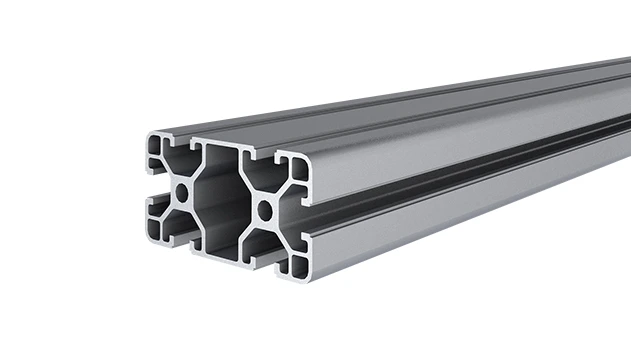
4080A is a 4.00x8.00 CM fractional 40 series square extrusion T-slot profile with two side open T-slots, each side with 4.00cm face, two side with 8.00cm face. The profile has align-a-grooves to assist in aligning connecting profiles.
The Backbone of Industrial Spaces: Why Window & Door Frames Matter
Walk into any industrial building—whether it's a bustling manufacturing plant, a high-tech warehouse, or a precision assembly facility—and you'll quickly realize that every detail serves a purpose. From the layout of production lines to the height of ceilings, every element is designed to boost efficiency, safety, and productivity. But there's one component that often flies under the radar, yet plays a critical role in how these spaces function: window and door frames. These structures aren't just about letting in light or providing access; they're the unsung heroes that maintain workflow continuity, protect against environmental hazards, and even contribute to energy efficiency. And when it comes to choosing the right material for these frames, one option stands out above the rest: aluminum extrusion profiles. Specifically, the 4080A EU Standard Aluminum Profile has emerged as a game-changer for industrial window and door frames, offering a rare blend of strength, flexibility, and sustainability that's hard to match.
Industrial buildings face unique challenges that residential or commercial spaces don't. They're exposed to heavy machinery vibrations, fluctuating temperatures, chemical fumes, and constant foot and equipment traffic. Traditional materials like steel or wood often fall short here—steel is heavy and prone to corrosion, while wood warps with moisture and requires frequent maintenance. Aluminum, on the other hand, brings a host of advantages to the table. It's lightweight yet incredibly strong, resistant to rust and corrosion, and can be customized to fit almost any design requirement. But not all aluminum profiles are created equal. The 4080A EU Standard Aluminum Profile, in particular, has become a go-to choice for engineers and architects who demand reliability and compliance with strict European standards. Let's dive into why this profile is redefining industrial window and door frames.
What Makes 4080A EU Standard Aluminum Profile Special?
First things first: let's break down what "4080A EU Standard" actually means. The numbers "4080" refer to the profile's cross-sectional dimensions: 40 millimeters in width and 80 millimeters in height. This specific size strikes a perfect balance between structural stability and versatility, making it ideal for larger window and door frames that are common in industrial settings—think 10-foot tall warehouse doors or expansive windows that flood production floors with natural light. The "A" in 4080A denotes a specific series within EU standard profiles, characterized by its T-slot design (more on that later) and compatibility with a wide range of aluminum profile accessories. And "EU Standard" is non-negotiable here; it means the profile meets rigorous European union regulations for strength, safety, and environmental impact, ensuring that your industrial building's frames aren't just functional, but also compliant with regional codes.
But the real magic of the 4080A profile lies in how it's made: through the aluminum extrusion process. Extrusion involves heating aluminum billets and forcing them through a die to create complex cross-sectional shapes. This method allows for incredible precision—so every 4080A profile you order will have consistent dimensions and structural integrity. It also means the profile can be tailored with features like T-slots, which run along its length and act as built-in channels for attaching accessories. These slots eliminate the need for welding or drilling, making assembly and modifications a breeze. Imagine being able to adjust a window frame's height or add a reinforcing bracket without having to bring in heavy machinery—T-slots make that possible, and the 4080A profile's T-slot design is optimized for industrial-grade accessories, from brackets to end caps.
Let's talk about strength. Industrial window and door frames need to withstand more than just the weight of glass or panels; they have to support insulation, security systems, and sometimes even automated opening mechanisms. The 4080A profile, with its 40x80mm dimensions and robust aluminum alloy composition (typically 6063-T5, a common grade for structural applications), offers impressive load-bearing capacity. Tests show that a single 4080A profile can support up to 200 kg of evenly distributed weight along its length—more than enough for most industrial window configurations. And because aluminum has a high strength-to-weight ratio, the frames remain lightweight, which reduces stress on the building's structure and makes installation easier (no need for cranes for every frame!).

Aluminum Profile Accessories: The Unsung Partners of 4080A
A profile is only as good as the accessories that bring it to life, and the 4080A EU Standard Aluminum Profile shines here thanks to its compatibility with a vast ecosystem of aluminum profile accessories. These small but mighty components turn a simple extrusion into a fully functional, customizable frame system. Let's take a closer look at some of the most essential accessories and how they enhance industrial window and door frames:
Connectors and Brackets: Building Strong Joints
When assembling window or door frames, the corners and joints are critical stress points. That's where connectors like the 90° aluminum profile connector come in. These compact, T-slot compatible brackets fit snugly into the 4080A's slots, creating a rigid 90-degree angle without the need for welding. For added strength, especially in larger frames, gusset plates like the gusset alp 4040 (yes, they work with 4080A too!) can be added to reinforce corners, distributing weight evenly and preventing flexing over time. There are also 45° aluminum profile connectors for angled frames (think sloped skylights) and three-way connectors for T-junctions, giving you endless design flexibility.
End Caps: Protecting and Polishing
Ever noticed how raw aluminum edges can be sharp or prone to collecting dust? End caps solve both problems. The 4040 aluminum profile end cap (which fits the 40mm side of the 4080A profile) snaps into place, covering exposed ends to prevent injuries and keep debris out of T-slots. They also give frames a clean, finished look—important for industrial spaces that prioritize professionalism, especially those with client visits. Available in colors like black, white, or silver, end caps can even add a subtle design touch without compromising functionality.
Mounting Hardware: Securing Frames in Place
Once your frame is assembled, you need to attach it to the building's structure. T-slot nuts and bolts are the workhorses here: slide a nut into the T-slot, align your mounting bracket, and tighten the bolt—it's that simple. For concrete walls, expansion bolts paired with aluminum foot bases provide a secure anchor, ensuring the frame stays put even during vibrations from nearby machinery. And if you need to adjust the frame's height slightly (to account for uneven floors, a common issue in older industrial buildings), adjustable leveling feet can be attached to the base of the profile, letting you tweak the position with a wrench.
The beauty of these accessories is that they're modular. If your industrial building's needs change—say, you need to add a window in a new location or modify a door frame to accommodate a larger piece of equipment—you can disassemble the old frame, reuse the 4080A profiles and accessories, and build something new. This modularity aligns perfectly with lean system principles, which focus on minimizing waste and maximizing efficiency. Instead of throwing away an entire frame when you need a change, you can repurpose components, saving time and money in the long run.
Why 4080A Stands Out: A Comparison with Other Profiles
You might be wondering: with so many aluminum profiles on the market, why choose 4080A specifically for industrial window and door frames? Let's put it head-to-head with two other common profiles to see how it stacks up. The table below compares the 4080A with the 4040A (a smaller 40x40mm profile) and the 3030A (a compact 30x30mm profile), both of which are EU standard but designed for different applications:
| Feature | 4080A EU Standard Aluminum Profile | 4040A EU Standard Aluminum Profile | 3030A EU Standard Aluminum Profile |
|---|---|---|---|
| Dimensions (WxH) | 40mm x 80mm | 40mm x 40mm | 30mm x 30mm |
| Typical Load Capacity (per meter) | 200 kg (evenly distributed) | 120 kg (evenly distributed) | 80 kg (evenly distributed) |
| Best For | Large industrial window/door frames, heavy-duty partitions | Smaller windows, machine guards, workbenches | Light-duty frames, shelving, DIY projects |
| T-Slot Compatibility | Works with all standard EU accessories (brackets, end caps, etc.) | Compatible with most accessories, but limited by size | Limited to smaller accessories; not ideal for heavy hardware |
| Weight (per meter) | 1.8 kg | 1.2 kg | 0.9 kg |
As the table shows, the 4080A profile's larger dimensions translate to significantly higher load capacity, making it the clear choice for industrial window and door frames that need to support heavy glass, insulation, or automated systems. The 4040A is a solid option for smaller frames, but it may require additional reinforcement for industrial use, which adds cost and complexity. The 3030A, while lightweight and affordable, simply isn't robust enough for most industrial applications—you wouldn't want to trust a 10-foot tall warehouse door to a 30x30mm profile!
Another key advantage of the 4080A is its versatility beyond window and door frames. Many industrial facilities adopt a "unified profile system" to standardize equipment and reduce costs. With 4080A, you can use the same profile for window frames, workbenches, material racks, and even machine enclosures. Imagine a production line where the workbench, the adjacent window frame, and the material rack beside it all use 4080A profiles—this consistency simplifies maintenance, as technicians only need to stock one set of accessories, and it creates a cohesive, professional look across the facility. It's a small detail, but it adds up to big efficiency gains over time.
Lean System Integration: How 4080A Supports Industrial Efficiency
Lean system principles have revolutionized industrial operations, focusing on eliminating waste, streamlining processes, and continuous improvement. At first glance, window and door frames might not seem like a "lean" topic, but they play a surprisingly important role in creating efficient workflows. The 4080A EU Standard Aluminum Profile aligns with lean goals in several key ways:
Modularity = Reduced Waste
Traditional window frames are often custom-built on-site, requiring precise measurements, cutting, and welding. If a design change is needed (e.g., the production line is reconfigured, and the window needs to be moved), the old frame is usually scrapped—creating waste. The 4080A profile, with its T-slot design and modular accessories, eliminates this problem. Frames can be disassembled and reassembled in new configurations, and components can be reused. This "build once, reuse often" approach cuts down on material waste and reduces the need for new purchases, aligning with lean's "reduce, reuse, recycle" mindset.
Quick Installation = Less Downtime
In industrial settings, downtime is the enemy. Every hour a production line is offline for construction work costs money. The 4080A profile's tool-free assembly (thanks to T-slots and compatible accessories) speeds up installation dramatically. A team of two workers can assemble a large window frame in hours instead of days, minimizing disruption to operations. And because there's no welding, there's no need for fire safety protocols or ventilation equipment, further streamlining the process.
Customization = Better Workflows
Lean systems thrive on optimizing workflows, and window/door placement is a big part of that. For example, a well-placed window can reduce the need for artificial lighting, making workstations more comfortable and reducing energy costs. The 4080A profile's flexibility allows for custom frame designs that fit these specific needs—whether it's a narrow, tall window above a conveyor belt or a wide door that opens directly onto a loading dock. And if workflows change (as they often do in lean environments), the frames can be adjusted without a complete overhaul.
Sustainability: Aluminum's Green Edge in Industrial Construction
In today's world, sustainability isn't just a buzzword—it's a business imperative, especially for industrial facilities looking to reduce their carbon footprint and meet EU environmental regulations. Aluminum, and by extension the 4080A profile, is a sustainability standout for several reasons:
Recyclability: Aluminum's Superpower
Aluminum is 100% recyclable, and recycling it uses just 5% of the energy required to produce new aluminum from raw ore. This means that even if a 4080A frame reaches the end of its life (which, with proper maintenance, could be 50+ years), its aluminum can be melted down and turned into new profiles with no loss of quality. EU standards for aluminum profiles often include recycled content requirements, and many 4080A suppliers offer profiles made with up to 70% recycled aluminum, further reducing environmental impact.
Energy Efficiency: Keeping Industrial Spaces Comfortable
Industrial buildings are notorious energy hogs, but well-designed window frames can help. The 4080A profile's hollow design (a byproduct of extrusion) creates natural air pockets that act as insulation, reducing heat transfer between the inside and outside. When paired with double-glazed glass and thermal breaks (accessories that separate the frame's interior and exterior parts to prevent condensation), 4080A frames can significantly lower heating and cooling costs. In fact, studies show that aluminum frames with thermal breaks can reduce energy loss by up to 40% compared to uninsulated steel frames—translating to lower utility bills and a smaller carbon footprint.
Longevity: Less Waste Over Time
Sustainability isn't just about recycling; it's also about durability. The 4080A profile's resistance to corrosion, rust, and weathering means it requires minimal maintenance over its lifetime. Unlike wood, which needs painting or sealing every few years, or steel, which may require rust treatment, aluminum frames can go decades without major repairs. This longevity reduces the need for replacement frames, cutting down on material consumption and waste in the long run.
Real-World Applications: 4080A in Action
To truly understand the impact of the 4080A EU Standard Aluminum Profile, let's look at a real-world example. A leading automotive parts manufacturer in Germany recently renovated its production facility, replacing outdated steel window frames with 4080A aluminum frames. The goals were to improve natural lighting, reduce maintenance costs, and align with the company's sustainability targets. Here's what happened:
- Natural Light: The 4080A's slim profile (compared to bulky steel frames) allowed for larger glass panels, increasing natural light on the production floor by 35%. Workers reported higher satisfaction, and the facility reduced artificial lighting use by 20% during daytime hours.
- Maintenance Savings: The previous steel frames required annual repainting and rust treatment, costing €15,000 per year. The 4080A frames, with their corrosion-resistant finish, eliminated this cost entirely.
- Sustainability Wins: The frames were made with 60% recycled aluminum, and the modular design allowed the old steel frames to be recycled (instead of landfilled). The project contributed to the company's goal of reducing its carbon footprint by 10%.
Another example comes from a logistics warehouse in France, which used 4080A profiles for its loading dock door frames. The facility needed doors that could withstand frequent use (dozens of trucks daily) and secure the warehouse overnight. The 4080A frames, paired with heavy-duty aluminum guide rails and automated opening systems, proved up to the task—withstanding years of wear and tear while maintaining smooth operation.
Installation Tips for 4080A Window & Door Frames
Ready to incorporate 4080A EU Standard Aluminum Profiles into your industrial building project? Here are some practical tips to ensure a smooth installation:
Plan for T-Slot Accessibility
When designing your frame, make sure the T-slots are accessible for attaching accessories. Avoid covering slots with panels or insulation unless absolutely necessary—you never know when you might need to add a bracket or adjust a component later.
Use the Right Tools
While 4080A assembly is tool-free for the most part, you'll need a few basics: a rubber mallet for tapping in end caps, a hex key set for tightening T-slot bolts, and a level to ensure frames are straight. For cutting profiles to length, a miter saw with a non-ferrous metal blade works best (aluminum is soft, so a sharp blade prevents burring).
Reinforce Large Frames
For frames taller than 2 meters or wider than 1.5 meters, add vertical or horizontal reinforcement using additional 4080A profiles or gusset plates. This prevents sagging over time, especially in areas with high wind loads or temperature fluctuations.
Test Fit Before Final Assembly
Aluminum profiles are precise, but it's always a good idea to dry-fit all components before tightening bolts. This allows you to adjust angles or lengths if needed, ensuring a perfect fit.
Future Trends: 4080A and the Smart Industrial Building
The industrial landscape is evolving, with "smart" buildings becoming increasingly common. These facilities use IoT sensors, automation, and data analytics to optimize everything from energy use to security. The 4080A EU Standard Aluminum Profile is well-positioned to support this trend, thanks to its modular design and T-slot system. Here's how we might see it used in the future:
Integrated Sensors
T-slots can house sensors for monitoring temperature, humidity, or even air quality near windows and doors. For example, a sensor in a window frame could alert facility managers if the temperature near a sensitive production line drops below a threshold, preventing product damage.
Automated Window Systems
With 4080A's load capacity, frames can support motorized window openers that adjust based on weather conditions (e.g., opening windows for natural ventilation when the temperature rises) or occupancy (closing when a area is unoccupied to save energy).
Security Integration
Access control systems, such as card readers or biometric scanners, can be mounted directly onto 4080A door frames using T-slot accessories, creating a seamless security setup that's easy to upgrade as technology advances.
Conclusion: Why 4080A is the Future of Industrial Window & Door Frames
Industrial buildings are the workhorses of the global economy, and their window and door frames deserve the same attention to quality and efficiency as any other component. The 4080A EU Standard Aluminum Profile delivers on all fronts: it's strong enough to handle industrial demands, flexible enough to adapt to changing needs, sustainable enough to meet environmental goals, and compatible with a vast array of aluminum profile accessories that simplify assembly and maintenance. Whether you're building a new facility or renovating an existing one, choosing 4080A means investing in a frame system that will stand the test of time—supporting your operations, your team, and your bottom line for years to come.
So, the next time you walk through an industrial building, take a moment to look at the window and door frames. Chances are, if they're lightweight, sleek, and built to last, they might just be made with 4080A EU Standard Aluminum Profiles. And if they're not, maybe it's time to consider an upgrade.