- Company Articles
- Industry articles
- Industry standards
- 4080A EU Standard Aluminum Profile for Window Frames in Industrial Buildings

4080A EU Standard Aluminum Profile for Window Frames in Industrial Buildings
Related Product
4080A EU Standard Aluminum Profile
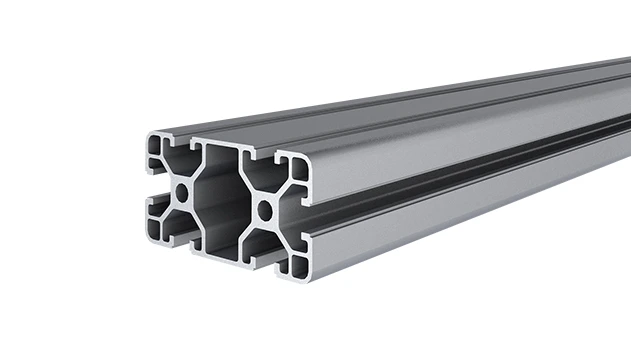
4080A is a 4.00x8.00 CM fractional 40 series square extrusion T-slot profile with two side open T-slots, each side with 4.00cm face, two side with 8.00cm face. The profile has align-a-grooves to assist in aligning connecting profiles.
Walk into any modern industrial building—whether it's a sprawling warehouse, a high-tech manufacturing plant, or a bustling logistics hub—and you'll notice something critical: the windows. They're not just there to let in light; they're silent workhorses, protecting the space from the elements, regulating temperature, and ensuring safety. But what makes a great industrial window frame? More often than not, it comes down to the materials and design. Today, we're diving deep into one material that's revolutionizing industrial window construction: the 4080A EU Standard Aluminum Profile. Let's explore why this aluminum extrusion profile, paired with the right aluminum profile accessories, is becoming the go-to choice for engineers, architects, and facility managers alike.
Why Aluminum Extrusion Profiles? The Backbone of Industrial Design
Before we zoom in on the 4080A, let's take a step back. Why aluminum? Industrial buildings demand materials that are tough, versatile, and cost-effective over the long haul. Steel is strong but heavy and prone to rust. Wood looks nice but warps in humidity and requires constant upkeep. Aluminum? It hits the sweet spot: lightweight yet surprisingly sturdy, corrosion-resistant, and infinitely customizable—especially when it's an aluminum extrusion profile.
Aluminum extrusion is the process that makes this possible. Imagine heating aluminum billets until they're malleable, then forcing them through a die (a custom-shaped mold) to create long, uniform profiles. The result? Precision-engineered pieces with consistent dimensions, intricate designs (like the T-slots that run along 4080A profiles), and zero weak points. This isn't just manufacturing—it's craftsmanship at scale. And for industrial window frames, that precision matters. You need frames that fit perfectly, align with other building components, and stand up to years of use without bending or breaking.
Meet the 4080A EU Standard Aluminum Profile: Built for Industrial Windows
Now, let's get specific: the 4080A EU Standard Aluminum Profile. The "4080" refers to its dimensions—40mm in width and 80mm in height—making it wider and taller than smaller profiles like the 4040A (40x40mm) or 3030A (30x30mm). The "A" denotes its slot configuration: two T-slots on each side, designed for easy attachment of aluminum profile accessories. And "EU Standard"? That's your guarantee of quality. EU standards for aluminum profiles are strict, covering everything from material purity (minimum 99.5% aluminum) to dimensional tolerance (often within ±0.1mm) and load-bearing capacity. When you choose 4080A, you're not just buying a piece of metal—you're buying peace of mind.
But why does size matter for window frames? Industrial windows are larger than residential ones—think 2m x 3m or bigger—to flood warehouses and factories with natural light. A 40x80mm profile provides the structural integrity needed to support large glass panes without adding excessive weight to the building. The T-slots are another game-changer. These grooves run the length of the profile, allowing you to slide in brackets, connectors, or even insulation strips without drilling holes. Want to mount a window screen? Screw a bracket into the T-slot. Need to add weatherstripping? Snap a rubber strip into place. It's modularity at its finest, and it's why 4080A is a favorite for custom window designs.
| Profile Type | Dimensions (WxH, mm) | T-Slots per Side | Weight (kg/m) | Best For |
|---|---|---|---|---|
| 4080A EU Standard | 40 x 80 | 2 | 2.5–3.0 | Large industrial window frames, heavy-duty partitions |
| 4040A EU Standard | 40 x 40 | 2 | 1.8–2.2 | Small windows, workbenches, shelving |
| 3030A EU Standard | 30 x 30 | 1 | 1.2–1.5 | Lightweight frames, display racks |

Aluminum Profile Accessories: The Unsung Heroes of Window Assembly
A profile is only as good as the accessories that bring it to life. Aluminum profile accessories are the nuts and bolts (literally) of window frame assembly, and 4080A works seamlessly with a range of them. Let's break down the essentials:
- End Caps: These plastic or aluminum caps snap onto the ends of the profile, covering sharp edges and preventing dust and debris from collecting inside. For industrial windows, they're a small detail that makes a big difference in longevity.
- Connectors: 90° brackets, 45° angle codes, and T-joints let you join profiles at any angle. Want a corner window? Use a 90° aluminum profile connector. Need to add a crossbar for extra support? A T-joint does the trick. These connectors lock into the T-slots, creating a tight, rattle-free fit.
- Rubber Strips: T-slot rubber seal covers fill the grooves when they're not in use, keeping out moisture and drafts. They also cushion glass panes, preventing cracks from vibrations in busy factories.
- Brackets: Heavy-duty brackets attach the window frame to the building's structure. Made from galvanized steel or aluminum, they distribute weight evenly, ensuring the frame stays secure even in high winds.
The beauty of these accessories is their standardization. No matter which supplier you buy from, EU-standard accessories fit EU-standard profiles like 4080A. This means you can mix and match parts, replace broken pieces easily, and even upgrade your windows later—say, adding a security grille—without rebuilding the entire frame.
Lean System Integration: How 4080A Streamlines Industrial Operations
Industrial facilities thrive on efficiency, and that's where lean system principles come in. Lean manufacturing is all about minimizing waste—whether it's time, materials, or effort—and maximizing value. 4080A aluminum profiles and their accessories are a lean manager's dream.
First, modularity reduces waste. Instead of cutting custom metal pieces for every window, you use pre-cut 4080A profiles. If a window is damaged, you replace just the affected section, not the whole frame. Second, standardized accessories mean you don't need a warehouse full of specialty parts—just a few boxes of connectors and brackets cover most jobs. Third, quick assembly saves labor hours. A team can put together a large window frame in hours, not days, using simple hand tools and T-slot fasteners.
Take a car manufacturing plant, for example. Their assembly lines run 24/7, and downtime is costly. When they need to replace a broken window in the production area, they can order a 4080A frame kit, assemble it on-site, and have the window back up in a morning. No waiting for custom fabrication, no disrupting the line. That's lean in action.
Industrial Window Applications: Where 4080A Shines
Let's look at real-world scenarios where 4080A EU Standard Aluminum Profile excels:
Warehouse Skylights
Warehouses need tall windows to let in light without sacrificing wall space for storage. 4080A frames support large, vertical glass panels that span from ceiling to mezzanine. The T-slots make it easy to add motorized shades for temperature control, and corrosion-resistant aluminum stands up to the humidity of stored goods.
Factory Production Lines
Factories often have windows near assembly lines to reduce eye strain from artificial light. 4080A frames with rubber-sealed glass keep out dust and noise, while modular design allows for quick removal if machinery needs to be moved or replaced.
Cold Storage Facilities
Refrigerated warehouses need windows that insulate as well as illuminate. 4080A profiles can be filled with foam insulation, and double-glazed glass panels (held in place by aluminum brackets) create a thermal barrier. The result? Less energy wasted on cooling, and clearer windows that don't fog up.
Sustainability: Aluminum's Green Advantage
In today's industrial landscape, sustainability isn't optional—it's expected. Aluminum extrusion profiles check this box, too. Aluminum is 100% recyclable, and recycling it uses just 5% of the energy needed to produce new aluminum. When an industrial building is renovated, old 4080A frames can be melted down and turned into new profiles, with no loss in quality.
What's more, aluminum frames are lightweight, reducing the carbon footprint of transportation. A truck can carry twice as many 4080A profiles as steel frames, cutting down on fuel use. And because aluminum doesn't rust, there's no need for toxic paints or coatings—just a simple anodized finish that lasts for decades.
Choosing the Right Supplier: What to Look For
Not all 4080A profiles are created equal. To ensure you're getting the best for your industrial windows, choose a supplier who:
- Certifies compliance with EU standards (look for CE marking).
- Offers a full range of aluminum profile accessories, so you can source everything from one place.
- Provides custom cutting services—no more paying for extra length you don't need.
- Has a track record in industrial projects. Ask for references from warehouses or factories they've supplied.
Conclusion: 4080A—More Than a Profile, a Building Block for Better Industrial Spaces
Industrial window frames are often overlooked, but they play a vital role in creating safe, efficient, and sustainable workplaces. The 4080A EU Standard Aluminum Profile, with its robust dimensions, precision engineering, and compatibility with aluminum profile accessories, is redefining what these frames can do. Whether you're building a new warehouse or upgrading an old factory, 4080A offers the strength, flexibility, and lean system integration needed to keep pace with modern industry.
So, the next time you walk through an industrial building and notice how bright, quiet, and well-ventilated it is, take a closer look at the windows. Chances are, there's a 4080A aluminum extrusion profile holding it all together—quietly, reliably, and leanly.