- Company Articles
- Industry articles
- Industry standards
- 4080A EU Standard Aluminum Profile in Aerospace Component Manufacturing

4080A EU Standard Aluminum Profile in Aerospace Component Manufacturing
Related Product
4080A EU Standard Aluminum Profile
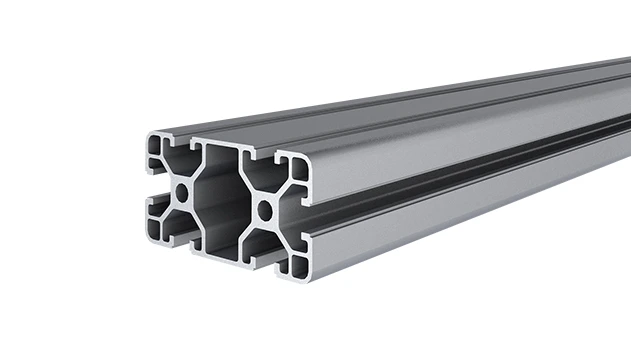
4080A is a 4.00x8.00 CM fractional 40 series square extrusion T-slot profile with two side open T-slots, each side with 4.00cm face, two side with 8.00cm face. The profile has align-a-grooves to assist in aligning connecting profiles.
Aerospace manufacturing is a world where precision isn't just a goal—it's the foundation of safety, reliability, and innovation. Every component, from a tiny sensor bracket to a large wing structure, must meet (stringent) standards to ensure it can withstand the extreme conditions of flight. But behind these components lies another critical element: the infrastructure that builds them. From assembly workbenches to material handling systems, the tools of production shape how efficiently and accurately aerospace parts come to life. In recent years, one material has emerged as a game-changer in this space: the 4080A EU Standard Aluminum Profile. More than just a piece of metal, it's a versatile, durable, and precision-engineered solution that's redefining what's possible in aerospace manufacturing.
What is 4080A EU Standard Aluminum Profile?
At its core, the 4080A EU Standard Aluminum Profile is an aluminum extrusion profile—meaning it's created by forcing heated aluminum alloy through a die to form a specific cross-sectional shape. The "4080A" refers to its dimensions: 40 millimeters in width and 80 millimeters in height, with "A" denoting a specific design variant within EU standard specifications. But to call it just a "profile" is to understate its complexity. This material is the result of decades of refinement in aluminum extrusion technology, engineered to meet the strictest European union standards for quality, consistency, and performance.
Most 4080A profiles are crafted from high-grade aluminum alloys, typically 6061 or 6063. These alloys are chosen for their exceptional balance of strength, ductility, and corrosion resistance—traits that are non-negotiable in aerospace settings. The extrusion process itself is a marvel of precision: molten aluminum is pushed through a steel die under extreme pressure, creating a profile with consistent dimensions and internal structure. This ensures that every meter of 4080A profile meets the same tight tolerances, a critical feature when building structures that require modularity and repeatability.
Surface treatments further enhance its appeal. Many 4080A profiles undergo anodizing, a process that forms a protective oxide layer on the surface. This layer not only boosts corrosion resistance but also provides a smooth, matte finish that's easy to clean—essential in aerospace cleanrooms where contamination control is paramount. Other treatments, like powder coating, can add color coding for organizational purposes, helping workers quickly identify tooling or material zones on the factory floor.
| Property | Specification | Benefit to Aerospace Manufacturing |
|---|---|---|
| Dimensions | 40mm (width) x 80mm (height) | Balances structural stability with space efficiency, ideal for compact aerospace workspaces |
| Alloy Type | 6061 or 6063 aluminum alloy | High strength-to-weight ratio; resists fatigue under repeated stress (critical for tooling durability) |
| Tolerance | ±0.1mm on key dimensions | Ensures modular compatibility; components fit together without gaps or misalignment |
| Surface Treatment | Anodized (20-30μm thickness) or powder-coated | Resists corrosion from coolants, lubricants, and humidity; easy to sanitize for cleanroom use |
| Maximum Load Capacity | Up to 500kg per meter (depending on support spacing) | Supports heavy aerospace components during assembly or testing |
Why Aerospace Manufacturing Chooses 4080A
Aerospace manufacturing is a sector that doesn't compromise—so why has 4080A become a go-to material? The answer lies in its ability to address three core challenges: weight, precision, and adaptability.
Lightweight Yet Incredibly Strong
Aircraft design is obsessed with weight reduction—every kilogram saved translates to lower fuel consumption and higher efficiency. The same logic applies to manufacturing tooling: heavy workbenches or material racks are cumbersome to move, require more energy to operate, and increase the risk of workplace injuries. 4080A profiles solve this with their exceptional strength-to-weight ratio. Aluminum is roughly one-third the weight of steel, yet 4080A (when reinforced with internal ribs, a common design feature) can support hundreds of kilograms. This makes it perfect for building mobile workstations, adjustable assembly jigs, or overhead material racks that are both sturdy and easy to reconfigure.
Precision That Meets Aerospace Standards
Aerospace components are often measured in microns—tiny units equal to one-millionth of a meter. The tooling used to assemble these components must be equally precise. 4080A profiles are extruded with tolerances as tight as ±0.1mm, ensuring that when you connect two profiles with aluminum profile accessories (like 90° aluminum profile connectors or end caps), there's no play or misalignment. This precision is critical for jigs and fixtures that hold parts during drilling, welding, or inspection. A misaligned fixture could result in a part that's out of specification, leading to costly rework or, worse, safety risks.
Adaptability for Lean Systems
Modern aerospace manufacturing thrives on lean systems—processes designed to minimize waste, reduce downtime, and improve workflow. 4080A profiles are inherently lean. Unlike traditional steel structures, which are often welded or bolted permanently, 4080A systems use modular aluminum profile accessories (connectors, hinges, casters) that allow for quick assembly and disassembly. Need to reconfigure a workbench for a new component? Swap out a section of profile. Want to add a roller track to move parts between stations? Attach it with a few brackets. This flexibility reduces setup time from days to hours, letting manufacturers adapt to changing production needs without investing in entirely new tooling.

Applications in Aerospace Component Manufacturing
The versatility of 4080A EU Standard Aluminum Profile is perhaps its most compelling feature. In aerospace factories, it's used in everything from simple work surfaces to complex automated systems. Let's explore some of its most impactful applications.
Workbenches: The Heart of Assembly
The workbench is where aerospace components come to life—where technicians assemble circuit boards, fit brackets, or test sensors. 4080A profiles have revolutionized workbench design. Traditional wooden or steel workbenches are heavy, static, and prone to wear. 4080A workbenches, by contrast, are lightweight, adjustable, and built to last. For example, a "Workbench E (single deck-without caster)" (a common configuration in aerospace settings) can be constructed using 4080A profiles for the frame, with an aluminum honeycomb panel top for a flat, stable surface. Add aluminum profile accessories like LED light bars, tool hooks, or ESD (electrostatic discharge) mats, and you have a workstation tailored to the unique needs of aerospace assembly.
What sets these workbenches apart is their ergonomics. Using adjustable feet and height-specific 4080A sections, manufacturers can build workbenches that accommodate technicians of all heights, reducing strain and improving productivity. And because they're modular, adding features like drawers or storage racks is as simple as attaching new profile sections—no welding required.
Material Handling with Roller Tracks
Moving components through the production line efficiently is a cornerstone of lean manufacturing. Here, 4080A profiles shine as the backbone of roller track systems. Roller tracks—assemblies of rotating rollers mounted on a frame—allow parts to glide smoothly from one workstation to the next, reducing manual lifting and speeding up workflow. 4080A profiles provide the perfect frame for these tracks: their rigidity ensures the track remains level, while their T-slot design (a key feature of many extrusion profiles) makes attaching roller track connectors and guides a breeze.
For example, a plastic roller track guide rail (yellow or grey, depending on zone coding) can be mounted directly to 4080A profiles using roller track placon mounts. These mounts are designed to fit snugly into the T-slots of the profile, creating a secure connection that won't loosen under the weight of heavy aerospace parts. The result? A material handling system that's quiet, low-maintenance, and adaptable to any production layout.
Testing and Inspection Fixtures
Aerospace components must undergo rigorous testing before they're approved for flight—stress tests, vibration tests, thermal cycling, and more. These tests require fixtures that can hold parts securely while subjecting them to extreme conditions. 4080A profiles are ideal for building these fixtures. Their high strength ensures they can withstand the forces of testing, while their precision allows for the creation of custom clamps and supports that match the exact contours of the component being tested.
Consider a fixture for testing a turbine blade. Using 4080A profiles and aluminum profile accessories like adjustable brackets and locking hinges, engineers can design a fixture that holds the blade at specific angles, allowing sensors to measure deflection under load. If the blade design changes, the fixture can be modified by swapping out profile sections—no need to machine a new fixture from scratch. This not only saves time but also reduces costs, a critical advantage in an industry where development cycles are long and budgets are tight.
Cleanroom Compatibility
Many aerospace components, such as avionics or satellite parts, are assembled in cleanrooms—environments with strict controls on dust, humidity, and temperature. 4080A profiles are uniquely suited to these settings. Their anodized surfaces are non-porous, preventing the accumulation of particles, and they're resistant to the cleaning agents used to maintain sterile conditions. Unlike steel, aluminum doesn't rust, eliminating the risk of corrosion flakes contaminating sensitive components. Even the aluminum profile accessories, like end caps and gaskets, are designed to be low-particulate, ensuring the cleanroom environment remains uncompromised.
The Role of Aluminum Profile Accessories
A 4080A profile is only as versatile as the accessories that accompany it. Aluminum profile accessories are the unsung heroes of modular systems, turning simple profiles into fully functional tools. In aerospace manufacturing, these accessories are critical for customizing solutions to specific needs.
Take connectors, for example. A 90° aluminum profile connector allows two 4080A profiles to be joined at a right angle, creating the corner of a workbench or rack. A 135° connector might be used for angled structures, like the frame of a material trolley. These connectors are designed to fit into the T-slots of the profile, secured with bolts or set screws—no welding, no drilling, just quick, tool-free assembly. Other accessories, like 4080 aluminum profile end caps, seal the ends of profiles to prevent dust buildup and protect technicians from sharp edges. Even small details, like T-slot rubber seal covers, add value by reducing noise, preventing debris from entering slots, and improving grip when handling profiles.
Casters are another essential accessory. Adding swivel casters with brakes to a 4080A frame transforms a static workbench into a mobile workstation, allowing technicians to move tools directly to where they're needed. In aerospace factories, where components can be large and heavy, this mobility reduces the need for forklifts or cranes, streamlining workflow and improving safety.
Sustainability: A Hidden Advantage
Aerospace manufacturers are increasingly focused on sustainability—not just for regulatory compliance, but for long-term cost savings and brand reputation. 4080A profiles align with this focus in several ways. Aluminum is 100% recyclable, with no loss of quality during the recycling process. When a 4080A structure reaches the end of its life, it can be melted down and extruded into new profiles, reducing reliance on virgin materials. Additionally, the energy required to recycle aluminum is just 5% of what's needed to produce it from bauxite ore, making it a low-carbon alternative to steel or plastic.
The modular nature of 4080A systems also contributes to sustainability. Instead of discarding an entire workbench when a component wears out, manufacturers can replace just the damaged section—reducing waste. And because 4080A profiles are so durable, they have a longer lifespan than traditional materials, further lowering the total environmental impact.
Future Trends: 4080A and the Next Generation of Aerospace Manufacturing
As aerospace manufacturing evolves—with the rise of electric aircraft, additive manufacturing, and AI-driven automation—4080A EU Standard Aluminum Profile is poised to evolve with it. One emerging trend is the integration of smart technology into 4080A systems. Imagine a workbench with embedded sensors that monitor vibration during assembly, alerting technicians to potential errors. Or a roller track with RFID tags that track components as they move through production, providing real-time data on workflow efficiency. Because 4080A profiles have T-slots and modular accessories, adding these technologies is as simple as attaching a sensor bracket or wiring channel—no major overhauls required.
Another trend is the use of 4080A in additive manufacturing support structures. As 3D printing of large aerospace components becomes more common, manufacturers need stable, adjustable platforms to hold printers and finished parts. 4080A profiles provide the rigidity and precision needed for these platforms, ensuring that printers remain level and parts are supported evenly during cooling.
Conclusion: Building the Future of Flight, One Profile at a Time
The 4080A EU Standard Aluminum Profile may not be as glamorous as a jet engine or a satellite, but it's just as critical to the future of aerospace manufacturing. It's a material that embodies the industry's values: precision, reliability, and innovation. By combining lightweight strength, modular flexibility, and compliance with strict standards, 4080A is helping manufacturers build better components, streamline workflows, and reduce costs—all while supporting sustainability goals.
As aerospace technology continues to push boundaries, the tools used to create it must keep pace. 4080A EU Standard Aluminum Profile isn't just keeping pace—it's leading the way. Whether it's in a workbench where a technician assembles a flight control system, a roller track moving a wing spar through production, or a test fixture ensuring a component can withstand the rigors of space, 4080A is more than a profile. It's the backbone of aerospace manufacturing's next chapter.