- Company Articles
- Industry articles
- Industry standards
- 4080A EU Standard Aluminum Profile in Pharmaceutical Cleanrooms: Compliance & Hygiene

4080A EU Standard Aluminum Profile in Pharmaceutical Cleanrooms: Compliance & Hygiene
Related Product
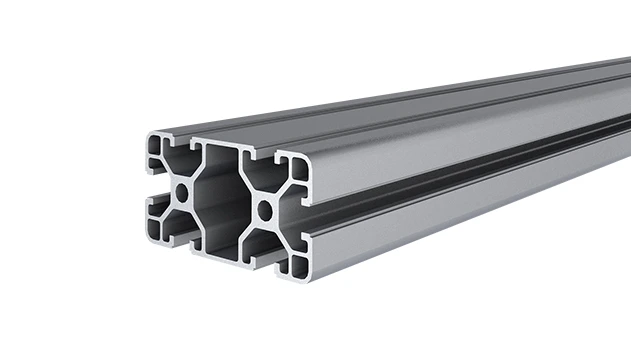
4080A EU Standard Aluminum Profile
4080A is a 4.00x8.00 CM fractional 40 series square extrusion T-slot profile with two side open T-slots, each side with 4.00cm face, two side with 8.00cm face. The profile has align-a-grooves to assist in aligning connecting profiles.
Walk into any pharmaceutical manufacturing facility, and you'll quickly realize that not all spaces are created equal. While most of us might picture labs with beakers and white coats, the heart of drug production lies in something far more critical: cleanrooms. These controlled environments are where medications, vaccines, and medical devices are made, and their design can mean the difference between a safe product and a contaminated batch that never reaches patients. But here's the thing—building a cleanroom that meets the strictest EU standards isn't just about installing HEPA filters or positive pressure systems. It starts with the materials you choose, right down to the frames that hold your workbenches, the racks that store ingredients, and the rails that guide product flow. That's where the 4080A EU standard aluminum profile comes in. It's not just a piece of metal; it's a quiet workhorse that's redefining how pharmaceutical teams approach compliance, hygiene, and adaptability in their most sensitive spaces.
The Stakes: Why Cleanrooms Can't Afford to Cut Corners
Let's start with the basics: pharmaceutical cleanrooms aren't just "clean" in the everyday sense. They're meticulously controlled environments where airborne particles, temperature, humidity, and even microbial counts are regulated to near-zero levels. Why? Because a single speck of dust, a stray bacteria, or a flake of paint from a deteriorating shelf could compromise a batch of antibiotics, cancer treatments, or life-saving vaccines. The consequences? Recalls costing millions, damaged reputations, and worst of all, risk to patient health. That's why regulatory bodies like the European Medicines Agency (EMA) and the World Health Organization (WHO) have laid out strict guidelines—think EU GMP Annex 1 and ISO 14644-1—that dictate everything from air filtration to surface materials.
For facility managers and engineers, this means walking a tightrope. They need spaces that are easy to clean and sanitize, durable enough to withstand daily use and harsh disinfectants, and flexible enough to adapt as production needs change. And here's the kicker: the materials used to build these spaces can either make compliance a breeze or a constant headache. Traditional options like wood are porous and impossible to fully sterilize. Stainless steel, while durable, is heavy, expensive, and tough to reconfigure. Plastic might seem lightweight, but it scratches easily, harboring bacteria in crevices. So, what's the alternative?
Enter the 4080A EU Standard Aluminum Extrusion Profile
If you've ever wondered how some cleanrooms manage to stay spotless while still being adaptable, chances are they're built with aluminum extrusion profiles—and not just any profiles, but ones like the 4080A EU standard. Let's break that down. "4080A" refers to the profile's dimensions: 40mm in width and 80mm in height, with "A" denoting a specific groove design that makes it compatible with a wide range of accessories. "EU standard" means it's manufactured to meet strict European norms for quality, safety, and performance—non-negotiable in pharmaceutical settings. But what really sets this aluminum extrusion profile apart is how it's made. Unlike materials that are cut, welded, or glued, extrusion involves pushing molten aluminum through a die to create a uniform, seamless shape. This process results in a surface that's smooth, consistent, and free of the nooks and crannies where contaminants love to hide.
But it's not just about the profile itself—it's about how it fits into the bigger picture. Pharmaceutical cleanrooms aren't static. A facility might produce tablets one month and switch to injectables the next, requiring workbenches to be repositioned, material racks to be adjusted, or new conveyor systems to be installed. The 4080A's modular design makes this possible. With the right aluminum profile accessories—think internal rotatary aluminum joints, end caps, and T-slot rubber seal covers—teams can assemble, disassemble, and reconfigure structures in hours, not days. No welding, no drilling, no leaving behind residue that could compromise cleanliness. It's like building with high-tech Legos, but for life-saving products.

Compliance: Checking Every Box for EU Standards
In pharmaceuticals, "compliance" isn't just a buzzword—it's the law. EU GMP Annex 1, updated in 2022, sets the bar for contamination control, requiring that all surfaces in cleanrooms are "smooth, non-porous, and non-shedding" to prevent particle accumulation. The 4080A profile doesn't just meet this requirement; it exceeds it. Let's start with the material: the 4080A is made from high-grade aluminum alloy (typically 6063-T5), which is not only lightweight but also inherently resistant to corrosion. This matters because cleanrooms are regularly cleaned with aggressive disinfectants—think hydrogen peroxide or alcohol-based solutions—that would eat away at lesser materials. Aluminum, when anodized (a process that forms a protective oxide layer on the surface), becomes even more resilient, ensuring it won't rust, chip, or release particles over time.
Then there's the small print: REACH and RoHS compliance. REACH (Registration, Evaluation, Authorization, and Restriction of Chemicals) restricts the use of hazardous substances in materials, while RoHS bans certain heavy metals like lead and mercury. The 4080A, being EU standard, is manufactured without these harmful chemicals, so you won't have to worry about leaching or off-gassing that could contaminate products or harm workers. And let's not forget structural integrity. EN 1090, the European standard for structural steel and aluminum, certifies that the 4080A can handle the loads of pharmaceutical equipment—whether it's a workbench stacked with vials or a material rack holding bulk ingredients—without warping or bending. For auditors, this means fewer questions and more confidence that your facility is built to last.
Hygiene: Designing Out Contamination Risks
If compliance is about checking boxes, hygiene is about creating a space where contamination simply can't take hold. Let's start with the obvious: smooth surfaces. The extrusion process gives the 4080A a mirror-like finish with no weld seams, rivets, or rough edges. Run a gloved hand along it, and you'll feel nothing but uniformity—no crevices for bacteria to cling to, no gaps where dust can settle. This makes cleaning a breeze. A quick wipe with a disinfectant-soaked cloth is all it takes to sanitize the surface, compared to scrubbing porous materials like wood or chipping away at rust on poorly finished steel.
But hygiene goes beyond just being easy to clean; it's about preventing contamination in the first place. Take the aluminum profile accessories that pair with the 4080A, for example. The 4080 aluminum profile end cap, a simple plastic or rubber cover that snaps onto the end of the profile, seals off the T-slot (the groove that runs along the profile) to prevent dust, moisture, or debris from collecting inside. Then there's the T-slot rubber seal cover, which lines the groove itself, creating a smooth, flush surface that's even easier to wipe down. Even the joints—like the internal rotatary aluminum joint—are designed to sit flush with the profile, eliminating gaps where particles might hide. It's these small details that add up to a cleanroom that stays cleaner, longer.
Another hygiene win? Aluminum's natural resistance to microbial growth. Unlike plastic, which can become a breeding ground for bacteria if scratched, or wood, which absorbs moisture, aluminum is inert. It doesn't provide food for microbes, and its smooth surface makes it hard for them to adhere. Studies have shown that aluminum surfaces harbor up to 90% fewer bacteria than untreated steel after routine cleaning—a statistic that should matter to anyone responsible for patient safety.
Beyond the Profile: Real-World Applications in Cleanrooms
Okay, so the 4080A is compliant, hygienic, and modular—but how does that translate to actual use in a pharmaceutical cleanroom? Let's take a walk through a typical facility and see where it shines.
Workbenches: The Heart of Production
Every cleanroom has workbenches where operators prepare ingredients, assemble components, or test samples. These workbenches need to be sturdy, easy to clean, and adjustable to different heights (to reduce operator fatigue). Enter the 4080A-based workbench. Using the 4080A as the frame, paired with a smooth, non-porous top (like stainless steel or antimicrobial laminate), these workbenches can support heavy equipment while remaining lightweight enough to reposition. Add aluminum profile accessories like adjustable feet (to level the bench on uneven floors) or fold-down sides (for extra workspace when needed), and you've got a setup that adapts to how your team works—not the other way around. Unlike fixed wooden or steel benches, which are permanent fixtures, a 4080A workbench can be disassembled and reconfigured if your production line changes, saving time and money in renovations.
Material Racks: Organizing Safely
Storing raw materials, intermediates, and finished products in a cleanroom is a balancing act: you need easy access, but you also need to prevent cross-contamination. Material racks built with 4080A profiles solve this by offering open, airy designs that allow for proper air circulation (critical for maintaining cleanroom pressure differentials) while still being rigid enough to hold heavy loads. For example, a "material rack B (3 row and 3 floor)" setup—common in pharmaceutical facilities—can be constructed using 4080A uprights and crossbars, with aluminum guide rails to keep bins and trays from sliding. The key here is that every part of the rack is made from compatible aluminum profile accessories, so there are no mismatched materials that could shed particles or trap dust. And if you need to add a shelf or adjust the height between levels? Just loosen a few joints, reposition, and tighten—no tools required beyond a hex key.
Lean Systems: Streamlining Flow, Reducing Waste
Pharmaceutical manufacturing thrives on efficiency, and lean systems—processes designed to minimize waste and maximize value—are central to that. The 4080A profile plays a starring role here, too. Take conveyor systems, for example. By using 4080A rails and roller track accessories (like plastic roller track guide rails in yellow or grey), teams can build custom conveyors that move products smoothly from one station to the next, reducing the need for manual handling (and thus the risk of human contamination). These conveyors are modular, so you can add curves, inclines, or diverters as your production flow changes. Similarly, turnover trolleys built with 4080A frames are lightweight enough for operators to push with minimal effort but strong enough to carry full batches of product. It's lean manufacturing in action, and it's all possible because the 4080A is designed to work seamlessly with other lean system components.
How Does 4080A Stack Up Against Other Materials? A Closer Look
To really understand why the 4080A is a game-changer, it helps to see how it compares to other materials commonly used in cleanrooms. Let's break it down in a table:
| Material | Load Capacity (kg/m) | Hygiene Rating (1-5) | EU Compliance | Cost (Relative) | Best For |
|---|---|---|---|---|---|
| 4080A EU Standard Aluminum Profile | Up to 300 | 5 (Smooth, non-porous, easy to clean) | Full compliance (EN 1090, REACH, RoHS) | Moderate (Higher than plastic, lower than stainless steel) | Modular workbenches, material racks, lean systems |
| Stainless Steel (304) | Up to 450 | 4 (Durable but heavy; welds can trap bacteria) | Compliant but requires strict welding standards | High (2-3x cost of aluminum) | Fixed, high-load applications (e.g., reactor frames) |
| Plastic (PVC/Polypropylene) | Up to 100 | 3 (Lightweight but scratches easily; prone to static) | Variable (Some grades meet REACH, others don't) | Low | Temporary setups or low-load storage |
| Wood (Plywood with Laminate) | Up to 150 | 1 (Porous; laminate can peel, harboring bacteria) | Not compliant (Difficult to sterilize; sheds particles) | Low | Non-cleanroom areas (e.g., warehouse storage) |
As the table shows, the 4080A aluminum profile hits the sweet spot: it's strong enough for most cleanroom needs, more hygienic than stainless steel (thanks to its seamless design), fully compliant with EU standards, and cost-effective compared to premium materials. For pharmaceutical teams, this means investing in a solution that won't just get them through their next audit but will grow with their facility for years to come.
Real Results: A Case Study in Compliance and Efficiency
Let's put this all into context with a real example. Consider a mid-sized pharmaceutical company in Ireland that specializes in generic antibiotics. A few years ago, they faced a problem: their existing cleanroom, built with wooden workbenches and steel racks, was struggling to meet the updated EU GMP Annex 1 requirements. Auditors noted that the wooden surfaces were impossible to fully sanitize, and the steel racks had weld seams that trapped dust, leading to frequent contamination incidents. The team knew they needed a overhaul, but they couldn't afford to shut down production for weeks.
After researching options, they settled on a 4080A aluminum profile system. Over a weekend, they replaced all workbenches and material racks with 4080A-based setups, using aluminum profile accessories like end caps and T-slot seals to ensure every surface was smooth and non-porous. The results were striking. Within three months, contamination incidents dropped by 75%. Cleaning time was cut in half because staff no longer had to scrub weld seams or worry about water seeping into wooden benches. And when the company expanded production to include a new oral suspension line six months later, they reconfigured the existing 4080A workbenches and racks in a single day—no need for new materials or construction delays. "It was like giving our cleanroom a reset button," one facility manager noted. "We went from dreading audits to looking forward to showing off our setup."
Looking Ahead: The Future of Cleanroom Design
As pharmaceutical manufacturing continues to evolve—with personalized medicine, continuous manufacturing, and stricter global regulations—cleanrooms will need to become even more adaptable and hygienic. The 4080A EU standard aluminum profile is poised to lead this charge. Innovations in aluminum extrusion technology are making profiles even more customizable, with features like integrated antimicrobial coatings or embedded sensors that monitor surface cleanliness in real time. Aluminum profile accessories are also advancing, with new joint designs that allow for 360-degree rotation or quick-release mechanisms for even faster reconfiguration.
Perhaps most exciting is the role the 4080A will play in sustainable manufacturing. Aluminum is 100% recyclable, and its lightweight nature reduces transportation emissions compared to steel. As pharmaceutical companies aim to reduce their carbon footprints, choosing materials that are both compliant and eco-friendly will become a priority—and the 4080A fits the bill. It's a material that doesn't just meet today's standards; it's ready for tomorrow's challenges, too.
Final Thoughts: More Than a Profile—A Partner in Patient Safety
At the end of the day, the 4080A EU standard aluminum profile isn't just about compliance checklists or clean surfaces. It's about something far more meaningful: ensuring that the medications and treatments produced in these cleanrooms are safe for the patients who rely on them. Every time a workbench built with 4080A resists contamination, every time a material rack assembled with aluminum profile accessories stays clean through another shift, every time a lean system built with 4080A rails reduces waste and errors, it's a step toward better patient outcomes.
For pharmaceutical teams, choosing the right materials isn't a luxury—it's a responsibility. And in the 4080A, they've found a partner that takes that responsibility as seriously as they do. It's durable, it's adaptable, it's compliant, and above all, it's hygienic. In a world where the smallest detail can have the biggest impact, that's not just a good choice—it's the only choice.