- Company Articles
- Industry articles
- Industry standards
- 4080A EU Standard Aluminum Profile in Semiconductor Manufacturing Cleanrooms

4080A EU Standard Aluminum Profile in Semiconductor Manufacturing Cleanrooms
Related Product
4080A EU Standard Aluminum Profile
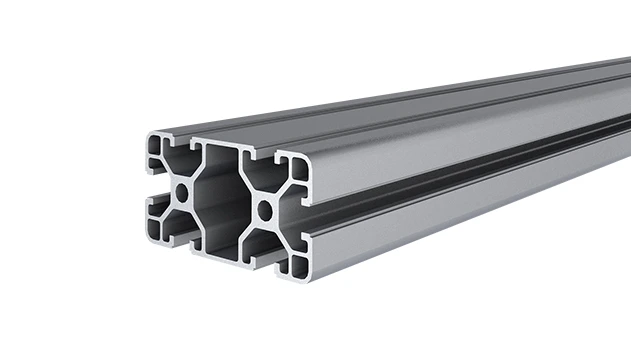
4080A is a 4.00x8.00 CM fractional 40 series square extrusion T-slot profile with two side open T-slots, each side with 4.00cm face, two side with 8.00cm face. The profile has align-a-grooves to assist in aligning connecting profiles.
The Invisible Backbone of Semiconductor Precision
Walk into any semiconductor manufacturing facility, and your eyes might first fixate on the high-tech machines humming with precision or the workers in head-to-toe cleanroom suits. But there's an unsung hero quietly holding everything together: the structures that organize workflows, support equipment, and maintain the immaculate conditions critical for producing microchips. Among these, the 4080A EU Standard Aluminum Profile stands out as a workhorse—unassuming, yet indispensable. Let's dive into why this specific aluminum extrusion has become the backbone of cleanroom operations, and how it shapes the future of semiconductor manufacturing.
Why Cleanrooms Can't Compromise on Materials
Semiconductor manufacturing is a dance with extremes. A single speck of dust, a tiny electrostatic discharge, or a minor structural wobble can ruin a batch of chips worth millions. That's why cleanrooms are designed to be controlled environments with strict limits on particles, temperature, humidity, and static electricity. But here's the thing: the materials used to build these environments matter just as much as the air filtration systems or the gowning protocols.
Imagine building a cleanroom with cheap steel frames. Over time, they might rust, shedding particles into the air. Or using plastic, which could generate static and attract dust. Even stainless steel, while durable, is heavy and hard to reconfigure—two dealbreakers in an industry where production lines evolve faster than the latest chip designs. So, what's the alternative? Enter aluminum extrusion profiles: lightweight, corrosion-resistant, and inherently static-dissipative. And among them, the 4080A EU Standard Aluminum Profile has emerged as a top choice for semiconductor cleanrooms worldwide.

What Makes 4080A EU Standard Aluminum Profile Special?
Let's start with the basics: the "4080A" in its name isn't random. It refers to the profile's cross-section dimensions: 40mm in width and 80mm in height. The "A" denotes its specific design within the EU standard series—think of it as a blueprint that ensures consistency across manufacturers. This standardization is key for semiconductor facilities, where parts from different suppliers need to fit together seamlessly.
But dimensions are just the start. The 4080A is an extrusion, meaning it's formed by pushing molten aluminum through a die to create a uniform, complex shape. This process allows for integrated T-slots—longitudinal grooves along the profile—that act like built-in rails. Why does this matter? Because these T-slots let you attach aluminum profile accessories (like brackets, connectors, or shelves) without welding or drilling. Need to add a shelf to a workstation? Slide a nut into the T-slot, bolt on the bracket, and you're done. No sparks, no debris, no downtime. That's a game-changer in cleanrooms where even a single drill hole could release particles.
EU standards add another layer of reassurance. The 4080A isn't just a random piece of metal; it's tested for mechanical strength, corrosion resistance, and surface finish. Its anodized coating, for example, creates a smooth, non-porous surface that's easy to clean with isopropyl alcohol—no cracks or crevices for particles to hide. And unlike some cheaper aluminum profiles, it's free of heavy metals or volatile organic compounds (VOCs), ensuring it won't off-gas harmful substances into the cleanroom air.
Key Features That Solve Cleanroom Headaches
Semiconductor cleanrooms face unique challenges, and the 4080A is engineered to address them head-on. Let's break down its most critical features:
1. ESD Compatibility: Electrostatic discharge (ESD) is a silent killer in chip manufacturing. A static charge as small as 50 volts can damage sensitive microcircuits. The 4080A's aluminum composition is naturally conductive, and when paired with ESD-rated aluminum profile accessories (like conductive brackets or grounding clips), it creates a path for static to dissipate safely to the floor. This isn't just a "nice-to-have"—it's a regulatory requirement in ISO Class 5 and higher cleanrooms.
2. Modularity That Keeps Up With Change: Semiconductor production lines are rarely static. A facility might switch from manufacturing memory chips to microprocessors in months, requiring workstations, racks, and conveyor systems to be reconfigured. The 4080A's T-slot design makes this a breeze. Need to extend a workbench by 2 feet? Unbolt the end bracket, add a new 4080A section, and reattach. Want to adjust the height of a material rack? Swap out the connectors. This modularity cuts downtime from days to hours, a critical advantage in an industry where time-to-market is everything.
3. Lightweight Yet Sturdy: Cleanroom ceilings and floors have weight limits—you can't just bolt heavy steel structures everywhere. The 4080A weighs roughly 2.7 kg per meter, about a third of the weight of a comparable steel profile. But don't let its lightness fool you: its hollow, ribbed design gives it impressive load-bearing capacity. A single 2-meter length can support up to 150 kg, enough for most cleanroom equipment, from oscilloscopes to small robotic arms.
4. Easy to Clean, Easy to Maintain: In a cleanroom, every surface is a potential particle source. The 4080A's anodized finish is not only scratch-resistant but also ultra-smooth, leaving nowhere for dust or bacteria to cling. A quick wipe with a lint-free cloth and a mild detergent is all it takes to keep it compliant with ISO 14644-1 standards. Compare that to wood, which can splinter, or painted steel, which chips—both of which create ongoing contamination risks.
From Workbenches to Material Racks: 4080A in Action
Let's get practical. How exactly is the 4080A used in day-to-day cleanroom operations? Let's walk through three common applications:
1. ESD Workstations: The Heart of Assembly Lines
Every semiconductor assembly line has workstations where technicians inspect wafers, load/unload equipment, or perform manual tasks. These aren't your average office desks—they need to be static-free, height-adjustable, and durable. Enter 4080A-based
esd workstation
setups: frames built from 4080A profiles, topped with ESD-safe countertops, and fitted with aluminum profile accessories like cable management trays and tool holders. The T-slots let workers add or remove components as needed—say, a microscope mount one week, a keyboard tray the next—without disrupting the ESD grounding path.
2. Material Racks: Organizing the Flow of Wafers and Tools
Semiconductor manufacturing relies on a steady flow of materials: wafers in cassettes, cleaning supplies, spare parts, and finished chips. Material racks built with 4080A profiles are the unsung organizers here. Take, for example, a
material rack B (3 row and 3 floor)
—a common design in cleanrooms. Each shelf is supported by 4080A uprights and crossbars, with adjustable heights to fit different cassette sizes. The aluminum's smooth surface ensures wafers glide into place without snagging, and the modular design means adding a fourth row is as simple as ordering a few extra profiles and brackets.
3. Lean System Integration: Cutting Waste, Boosting Efficiency
Semiconductor manufacturers are increasingly adopting lean manufacturing principles to reduce waste and improve productivity. The 4080A plays a starring role here. For instance, a
lean system
might use 4080A profiles to build gravity-fed roller tracks (using roller track accessories like plastic guide rails or swivel roller balls) that move wafers from one workstation to the next, eliminating the need for manual transport. Or, it could form the frame of a turnover trolley that's lightweight enough for a single worker to push, yet sturdy enough to carry 50 kg of materials. The key? The 4080A's flexibility lets facilities design lean solutions tailored to their specific workflows, not one-size-fits-all systems.
How 4080A Stacks Up Against Other Materials
Curious how the 4080A compares to other common cleanroom materials? Let's break it down in the table below:
| Feature | 4080A EU Aluminum Profile | Stainless Steel | Plastic (PVC/ABS) | Traditional Steel |
|---|---|---|---|---|
| Weight (kg/m) | ~2.7 | ~8.0 | ~1.5 (but low strength) | ~7.8 |
| ESD Performance | Excellent (conductive, dissipates static) | Good (but heavier, harder to ground) | Poor (insulative, generates static) | Good (but prone to rust) |
| Modularity | High (T-slots, reusable accessories) | Low (requires welding/drilling) | Medium (limited by plastic strength) | Low (permanent welds/bolts) |
| Cleanability | Excellent (smooth, non-porous anodized finish) | Good (but can develop micro-scratches) | Poor (porous, prone to staining) | Poor (rusts, paint chips) |
| Cost (per meter) | Moderate ($15–$25) | High ($30–$45) | Low ($5–$10, but short lifespan) | Moderate ($12–$20, but high installation costs) |
The takeaway? While other materials have their uses, the 4080A strikes a rare balance of performance, flexibility, and cost-effectiveness that's hard to beat in semiconductor cleanrooms. It's no wonder that leading aluminum profile suppliers report 4080A as their top-selling product for semiconductor clients.
Sustainability: A Bonus for the Bottom Line
Semiconductor manufacturing is energy-intensive, so any opportunity to reduce environmental impact is a win—both for the planet and the budget. Aluminum is 100% recyclable, and recycling it uses just 5% of the energy required to produce new aluminum. When a cleanroom upgrades its 4080A structures, the old profiles can be melted down and reused, cutting waste and raw material costs. Plus, the 4080A's lightweight design reduces the load on HVAC systems, lowering energy consumption for heating and cooling. Over a facility's lifetime, these savings add up—making sustainability not just a moral choice, but a financial one.
Choosing the Right Partner: Why the Supplier Matters
Not all 4080A profiles are created equal. To meet the strict demands of semiconductor cleanrooms, you need a supplier that understands the nuances of EU standards, cleanroom protocols, and semiconductor workflows. Look for a aluminum profile supplier that offers:
- Certifications: ISO 9001 for quality management and ISO 14644-1 for cleanroom compatibility.
- Customization: The ability to cut profiles to exact lengths, pre-drill holes (if needed), and provide ESD-tested accessories.
- Technical Support: Engineers who can help design workstations or racks that meet your specific load, height, and ESD requirements.
- Consistency: Tight tolerances (±0.1mm for dimensions) to ensure profiles and accessories fit together seamlessly.
A reliable supplier doesn't just sell you aluminum profiles—they become a partner in optimizing your cleanroom's efficiency and compliance.
The Future: 4080A and the Next Generation of Semiconductors
As semiconductors shrink (we're already at 3nm nodes, with 2nm on the horizon), cleanroom requirements will only get stricter. Future facilities may need,, and even more flexible layouts to accommodate AI-driven automation. The 4080A is poised to adapt: manufacturers are already developing versions with integrated sensor mounts for real-time monitoring of temperature or particle levels, and new aluminum profile accessories like magnetic connectors for tool-less assembly. Combine this with the rise of "digital twin" cleanrooms—where 3D models of 4080A structures are tested virtually before physical installation—and the possibilities are endless.
Final Thoughts: More Than Just Metal
The 4080A EU Standard Aluminum Profile might not have the glamour of a cutting-edge lithography machine, but it's every bit as critical to semiconductor manufacturing. It's the quiet enabler of precision, the adaptability in a changing industry, and the foundation of clean, efficient workflows. For semiconductor manufacturers, choosing the right materials isn't just about building structures—it's about building the future of technology. And with the 4080A, that future looks solid, sustainable, and ready to meet whatever challenges come next.