- Company Articles
- Industry articles
- Industry standards
- 4080A EU Standard Aluminum Profile: Reusability in Temporary Production Setups

4080A EU Standard Aluminum Profile: Reusability in Temporary Production Setups
Related Product
4080A EU Standard Aluminum Profile
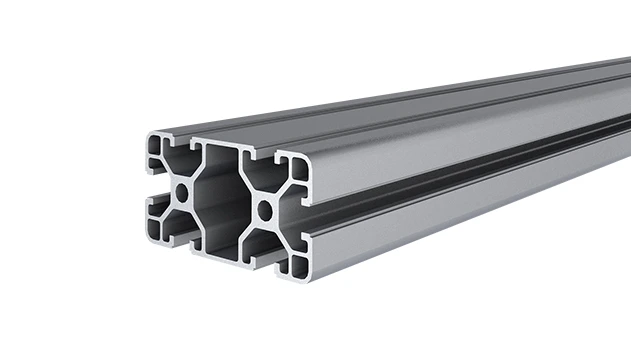
4080A is a 4.00x8.00 CM fractional 40 series square extrusion T-slot profile with two side open T-slots, each side with 4.00cm face, two side with 8.00cm face. The profile has align-a-grooves to assist in aligning connecting profiles.
In today's fast-paced manufacturing and logistics world, the ability to adapt quickly isn't just a luxury—it's a necessity. Whether it's ramping up for seasonal demand, testing a new product line, or reorganizing a workspace during maintenance, temporary production setups have become the backbone of agile operations. But here's the catch: traditional temporary solutions often come with hidden costs. Think about it—wooden frames that warp after one use, steel structures that rust when stored, or custom-built workbenches that end up in a landfill once the project wraps. What if there was a way to build temporary setups that don't just serve the moment, but keep serving long after? Enter the 4080A EU Standard Aluminum Profile—a material that's quietly revolutionizing how businesses approach temporary production. Let's dive into why this unassuming aluminum extrusion is becoming the go-to choice for teams that refuse to compromise on flexibility, cost, or sustainability.
The Rise of Temporary Production Setups: Why Flexibility Matters More Than Ever
Gone are the days when production lines were set in stone. Today's manufacturers, warehouses, and even small workshops face a constant need to pivot. Maybe your company just landed a big order for a new gadget, and you need to set up a temporary assembly line in three weeks. Or perhaps your warehouse is gearing up for the holiday rush, requiring extra storage racks that can be taken down in January. Even research and development teams rely on temporary workstations to prototype new products without disrupting existing workflows. The common thread? These setups need to be fast to build , easy to modify , and cost-effective over time .
But here's where many teams get stuck: traditional materials simply aren't designed for this kind of flexibility. Wood is cheap upfront, but it's heavy, prone to damage, and almost impossible to reuse without significant repairs. Steel is strong, but it's bulky, requires welding or heavy tools to assemble, and rusts if not properly maintained—making it a poor candidate for storage between projects. And let's not forget the waste: according to a 2023 report by the Manufacturing Sustainability Council, temporary production setups account for nearly 15% of all industrial waste, much of it from single-use materials. That's not just bad for the planet; it's bad for the bottom line.
Real Scenario: The Cost of "Cheap" Temporary Setups
A mid-sized electronics manufacturer needed to set up a temporary testing station for a new smartphone model. They opted for wooden workbenches and steel shelving, reasoning it was the most budget-friendly choice. The setup took two days to build and worked well for the three-month project. But when they tried to disassemble it, the wood had warped from humidity, and the steel shelves were already showing rust spots. The team ended up paying to haul everything to the dump, and when a similar project came up six months later, they had to buy all new materials. Total cost for two temporary setups? $8,200. Two years later, they switched to aluminum profiles—and we'll get to that outcome later.
Meet the 4080A EU Standard Aluminum Profile: A Material Built for Reusability
So, what exactly is the 4080A EU Standard Aluminum Profile? Let's start with the basics. The "4080" refers to its dimensions: 40mm in width and 80mm in height, making it a versatile middleweight in the aluminum extrusion family. The "A" denotes its specific profile design—think of it as a cross-section with precision-engineered T-slots running along its length. These slots are the secret sauce: they allow accessories like brackets, shelves, and rollers to be attached (and reattached) without drilling or welding. And because it's EU Standard, you can trust its quality: consistent dimensions, high-grade aluminum alloy (typically 6063-T5, known for strength and corrosion resistance), and strict manufacturing tolerances that ensure compatibility across brands.
But numbers and specs only tell part of the story. What makes the 4080A truly special is how it balances strength and flexibility. At just 2.2kg per meter, it's lightweight enough for two people to carry and assemble without heavy machinery. Yet it can support up to 150kg per linear meter when properly braced—more than enough for most temporary applications, from workbenches to material racks. And unlike steel, aluminum doesn't rust, so even if you store it in a damp warehouse between projects, it'll look and perform like new when you need it again.
The T-Slot Advantage: Why Modularity Matters for Temporary Setups
If you've ever tried to build something with traditional materials, you know the frustration: a misplaced hole, a bent bracket, or a cut that's just slightly off, and the whole project is compromised. The 4080A's T-slot system eliminates that stress. Imagine a track with grooves that run the length of the profile—these slots let you slide in bolts, nuts, or specialized connectors, then tighten them in place wherever you need. Need to move a shelf up by 5cm? Loosen the bolts, slide, retighten. Want to add a light fixture to a workbench? Clip a bracket into the T-slot, and you're done. This modularity isn't just convenient; it's what makes reusability possible. Unlike wood or steel, which are often cut to fixed lengths, the 4080A is designed to be reconfigured on the fly .
Let's talk about that reusability factor. When your temporary setup is no longer needed, you don't have to tear it apart and start over. You simply disassemble the 4080A profiles and accessories, pack them away, and reuse them for the next project. A workbench today can become a material rack tomorrow, which can become a roller track next month. And because aluminum is so durable, this cycle can repeat dozens of times over decades—something no wooden or steel setup can match.

The Secret to Seamless Reusability: Aluminum Profile Accessories
A profile is only as good as the accessories that bring it to life. And the 4080A has a whole ecosystem of aluminum profile accessories designed to maximize its reusability. Let's break down the essentials:
4080 Aluminum Profile End Caps: Protecting Your Investment
First up: 4080 aluminum profile end caps. These small, often-overlooked pieces are critical for reusability. When you cut an aluminum profile to length, the raw ends can be sharp and prone to dents during storage. End caps snap or screw onto the ends, protecting both the profile and anyone handling it. They also keep dust and debris out of the T-slots, ensuring the slots remain clean and functional for future assemblies. Think of them as the "shock absorbers" of your setup—small, but vital for keeping your profiles in top shape between uses.
Connectors: The Glue That Holds (and Releases) Your Setup Together
Next, connectors. These come in all shapes and sizes—90° angle brackets for corners, T-connectors for branching off, and even 135° joints for angled structures. The best part? Most connectors are tool-free or require just a hex key to tighten. Take the 90° aluminum profile connector, for example: slide it into the T-slots of two perpendicular 4080A profiles, tighten the grub screws, and you've got a rock-solid joint. When you're done, loosen the screws, pull it apart, and the connector is ready to use again. No welding, no glue, no permanent damage—just pure flexibility.
Workbench Tops, Roller Tracks, and Beyond: Building What You Need, When You Need It
Accessories like workbench tops (think plywood, MDF, or even aluminum honeycomb panels) can be attached directly to 4080A frames using bracket clamps. Need a flat surface for assembly? Screw the top to the brackets, and you're ready. Later, if you need a material rack instead, remove the top, add some roller tracks, and suddenly your workbench is a gravity-fed storage system. Roller tracks, in particular, are a game-changer for lean systems—they let materials flow smoothly from one workstation to the next, reducing manual handling. And because they attach via T-slot brackets, you can adjust their angle or length in minutes.
From Workbench to Roller Track: A 4080A Transformation
A automotive parts supplier used 4080A profiles to build eight workbenches for a three-month assembly project. Each workbench had a wooden top, LED lights, and tool hooks—all attached via T-slot accessories. When the project ended, instead of discarding the workbenches, they removed the tops and lights, added aluminum guide rails and plastic roller track guide rails (grey, to match their warehouse aesthetic), and transformed the frames into roller tracks for moving heavy parts. Total time to reconfigure? Four hours. Cost saved by reusing materials? $3,600 compared to buying new roller tracks.
Lean Systems and 4080A: Reducing Waste, Maximizing Value
If you're familiar with lean manufacturing principles—eliminating waste, continuous improvement, customer value—you'll see why the 4080A is a natural fit. Lean systems thrive on minimizing non-value-added activities, and nothing wastes time and money like building (and rebuilding) temporary setups from scratch. The 4080A aligns with lean goals in three key ways:
1. Eliminating Material Waste: Reusing profiles and accessories means less raw material consumption and less waste sent to landfills. A 2022 study by the Lean Enterprise Institute found that companies using aluminum profiles for temporary setups reduced material waste by 68% compared to traditional methods.
2. Reducing Setup Time: With pre-engineered accessories and tool-free assembly, 4080A setups can be built in a fraction of the time of wood or steel. One electronics manufacturer reported cutting temporary line setup time from 3 days to 8 hours after switching to aluminum profiles.
3. Enabling Continuous Improvement: Because 4080A setups are so easy to modify, teams can experiment with layouts and processes without fear of wasting resources. Want to test a U-shaped assembly line instead of a straight one? Disassemble the old layout, reconfigure the profiles, and see what works—all in a day's work.
The Numbers Speak: A Comparison of Temporary Setup Materials
Still not convinced? Let's put it all together with a side-by-side comparison. The table below shows how the 4080A Aluminum Profile stacks up against traditional temporary setup materials for a hypothetical 3-month project, with reusability factored in over 5 years (assuming 4 reuses):
| Metric | Wooden Frames | Steel Tubing | 4080A Aluminum Profile |
|---|---|---|---|
| Initial Setup Cost | $1,200 | $2,500 | $3,000 |
| Assembly Time | 16 hours | 24 hours (welding required) | 8 hours (tool-free) |
| Reusability Rate | 10% (mostly warped/unusable after first use) | 40% (rust and bending reduce lifespan) | 95% (minimal wear, no corrosion) |
| Cost After 5 Reuses | $6,000 (5 new setups) | $3,750 (2 new setups + repairs) | $3,150 (initial + minor accessories) |
| Waste Generated | 80kg (wood, nails, paint) | 50kg (rusted steel, welding slag) | 2kg (only packaging from new accessories) |
The takeaway? While aluminum has a higher upfront cost, its reusability turns it into the most cost-effective option over time. Add in the time saved on assembly and the environmental benefits, and it's clear why more teams are making the switch.
Real-World Success: How Companies Are Leveraging 4080A for Reusability
Let's look at two companies that have embraced 4080A for their temporary setups—and never looked back.
Case Study 1: A Food Packaging Plant's Seasonal Surge
A food packaging company experiences a 300% increase in demand every holiday season. For years, they built temporary packaging lines using wooden tables and steel shelving, which cost $4,500 per season and ended up in the trash by January. In 2021, they switched to 4080A profiles. They built 12 workstations with adjustable heights, roller tracks for moving packages, and overhead lighting—all using aluminum profiles and accessories. The initial cost was $9,000, but they reused the setup in 2022, 2023, and 2024. Total savings over 4 years? $8,000. Plus, setup time dropped from 3 days to 1 day, letting them start production earlier.
Case Study 2: A Medical Device Startup's Agile R&D
A medical device startup needed to test multiple prototype assembly processes. They used 4080A profiles to build modular workstations that could be reconfigured weekly. One week, it was a bench for circuit board assembly; the next, a rack for sterilizing tools; the next, a testing station with roller tracks for product movement. Over two years, they reconfigured the same set of profiles 17 times, avoiding the need to buy specialized equipment for each test. As their R&D lead put it: "The 4080A profiles are like a 3D puzzle for adults—we can build anything we imagine, then take it apart and build something else. It's been critical for staying agile in a competitive market."
Tips for Maximizing Reusability with 4080A Aluminum Profiles
Ready to start using 4080A for your temporary setups? Here are a few pro tips to get the most out of your investment:
- Invest in quality accessories: Cheap connectors or end caps can wear out quickly, reducing reusability. Stick with EU-standard accessories to ensure compatibility and durability.
- Label and organize: When disassembling, label profiles by length and accessories by type (e.g., "4080A-1m," "90° connector"). Use storage bins with dividers to keep everything organized between uses.
- Avoid cutting unless necessary: The more you cut profiles to custom lengths, the less flexible they are for future setups. Opt for adjustable accessories (like sliding brackets) instead of trimming profiles.
- Train your team: Make sure everyone knows how to properly assemble and disassemble the profiles. A quick 30-minute demo on T-slot connectors can prevent damage during teardown.
- Store properly: Keep profiles flat and dry to prevent bending. Use racks or bins for accessories to avoid crushing or misplacing small parts.
Conclusion: The Future of Temporary Production Is Reusable
Temporary production setups don't have to be a drain on resources. With the 4080A EU Standard Aluminum Profile, businesses can build flexible, durable, and infinitely reusable systems that adapt to changing needs—all while reducing waste and saving money in the long run. From workbenches to roller tracks, from lean systems to R&D labs, the 4080A proves that reusability isn't just a sustainability buzzword; it's a smarter way to do business.
So, the next time you're faced with a temporary project, ask yourself: Is this setup built to last, or built to be thrown away? With 4080A, the answer can be both—built to serve today, and ready to serve again tomorrow. And in a world where agility and sustainability are more important than ever, that's a competitive edge you can't afford to ignore.