- Company Articles
- Industry articles
- Industry standards
- 4080A vs 2020 EU Standard Aluminum Profiles: Micro vs Macro Applications

4080A vs 2020 EU Standard Aluminum Profiles: Micro vs Macro Applications
Related Product
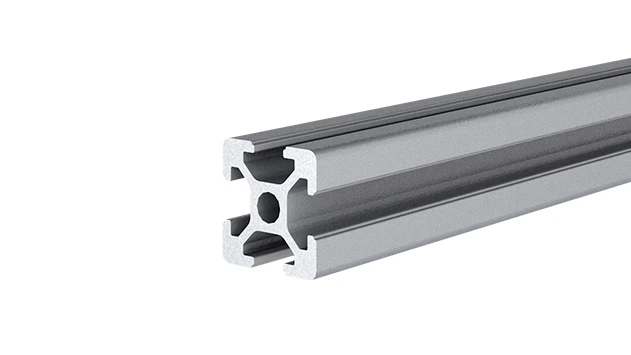
2020 EU Standard Aluminum Profile
2020 is a 2.00 x 2.00CM fractional 20 series square extrusion T-slot profile with four open T-slots, one on each 2.00 face. The profile has align-a-grooves to assist in aligning connecting profiles.
In the world of manufacturing, where efficiency and adaptability are the name of the game, aluminum profiles have quietly become the unsung heroes. These modular, lightweight, and surprisingly strong structures form the backbone of everything from factory workbenches to automated production lines. Today, we're zeroing in on two heavyweights of the EU standard aluminum profile family: the 4080A and the 2020. While they might sound like just numbers and letters, these profiles represent two ends of a spectrum—one built for big, bold, macro-scale projects, the other for precise, space-saving micro applications. Let's dive in and explore how these two profiles stack up, where they shine, and why choosing the right one can make or break your workflow.
What Are EU Standard Aluminum Profiles, Anyway?
Before we get into the specifics of 4080A and 2020, let's take a quick step back. EU standard aluminum profiles are extrusion-molded aluminum structures with a T-slot design running along their length. These slots are like the profile's "universal language"—they let you attach accessories, panels, and other components without welding or drilling. Think of them as adult Lego blocks, but for factories and workshops. The "EU standard" part ensures consistency in dimensions and slot sizes, so parts from different suppliers work together seamlessly. Now, onto our two stars.
The 4080A EU Standard Aluminum Profile: The Heavyweight Champion
Let's start with the 4080A. If aluminum profiles had a heavyweight division, this one would be holding the title belt. The numbers "4080" tell you the basics: it's 40mm wide and 80mm tall. The "A" denotes a specific variant—usually with standard wall thickness and slot dimensions, though exact specs can vary slightly by manufacturer (more on that later). But make no mistake, this profile means business.
Specs That Matter
Most 4080A profiles are made from 6063-T5 aluminum, an alloy known for its excellent balance of strength, corrosion resistance, and machinability. The wall thickness typically ranges from 2.0mm to 3.0mm, which might not sound like much until you realize that translates to a profile that can support hundreds of kilograms without bending. Per meter, it weighs in at around 1.8kg to 2.2kg—sturdy enough to anchor large structures but still light enough to move with a forklift or a team of two.
Macro Applications: Big Jobs Call for Big Profiles
The 4080A is all about macro applications—projects where size, stability, and load capacity are non-negotiable. Let's paint a picture: imagine a busy automotive parts factory. The production line needs a material rack that can hold stacked boxes of heavy components, maybe 3 rows and 3 floors high (hello, material rack b (3 row and 3 floor) ). That's where 4080A shines. Its thick walls and wide base prevent wobbling, even when fully loaded with metal parts. The T-slots make it easy to add dividers, label holders, or even roller track sections to slide boxes in and out smoothly.
Another classic use? Heavy-duty workbench setups. Think of a workbench in a machine shop where operators grind, drill, or assemble large parts. The 4080A frame ensures the bench doesn't shift during use, protecting both the workers and the precision of their tasks. Add a steel or aluminum honeycomb top, some tool hangers, and a vice, and you've got a workstation built to last decades.
Industrial conveyors are another sweet spot. When you need to move pallets or large containers across a factory floor, the conveyor's frame needs to handle the constant vibration and weight. 4080A profiles form the rails and supports, often paired with heavy-duty casters or fixed feet to keep everything aligned. Even in automated systems, where robots load and unload materials, the 4080A provides the rigid backbone that keeps the entire line running smoothly.

The 2020 EU Standard Aluminum Profile: The Precision Specialist
Now, let's shift gears to the 2020 EU standard profile. If the 4080A is a heavyweight boxer, the 2020 is a gymnast—small, agile, and built for precision. The "2020" here means 20mm wide and 20mm tall, making it less than half the size of the 4080A. It's the profile you reach for when space is tight, weight matters, and every millimeter counts.
Specs That Make It Unique
Like its bigger sibling, the 2020 is usually made from 6063-T5 aluminum, but with a thinner wall thickness—often 1.0mm to 1.5mm. This brings the weight per meter down to a featherlight 0.3kg to 0.5kg. Don't let the small size fool you, though: its square cross-section and T-slot design still offer impressive rigidity for its scale. It's also incredibly versatile—you can cut it with a hacksaw, drill it with a handheld drill, and assemble it on a desktop without heavy tools.
Micro Applications: Small Spaces, Big Impact
The 2020 thrives in micro applications—think electronics assembly, lab equipment, or small-batch production lines where precision and flexibility are key. Let's say you're setting up a workstation for assembling smartphone circuit boards. You need a workbench that's compact enough to fit in a tight cleanroom but sturdy enough to hold a microscope, soldering iron, and bins of tiny components. The 2020 profile is perfect here. You can build a lightweight frame, add a (ESD) top to protect sensitive electronics, and mount small shelves or tool hooks directly into the T-slots. Since it's so light, you can even add casters to roll the workbench around as needed—no forklift required.
Another example? Automated pick-and-place machines in a semiconductor plant. These machines have intricate moving parts that need to be guided along precise paths. The 2020 profile's small size allows engineers to build custom guide rails or enclosures that fit into tight spaces, while its smooth surface ensures minimal friction. It's also a favorite for prototyping—startups love it because they can quickly build, test, and modify small-scale production tools without investing in heavy steel.
Head-to-Head: 4080A vs 2020 in the Real World
To really understand the difference, let's put them side by side. Below is a table comparing key features and common uses:
| Feature | 4080A EU Standard Aluminum Profile | 2020 EU Standard Aluminum Profile |
|---|---|---|
| Dimensions | 40mm (width) x 80mm (height) | 20mm (width) x 20mm (height) |
| Wall Thickness | 2.0mm – 3.0mm | 1.0mm – 1.5mm |
| Weight per Meter | 1.8kg – 2.2kg | 0.3kg – 0.5kg |
| Max Load Capacity (per linear meter) | 500kg – 800kg (static) | 50kg – 150kg (static) |
| Common Accessories | Heavy-duty brackets, 4080 aluminum profile end caps, large casters | Lightweight connectors, 2020 aluminum profile end caps, mini clamps |
| Typical Applications | Material racks (3 row/3 floor), industrial workbenches, conveyor frames | Small workbenches, electronic enclosures, lightweight trolleys |
When to Choose Which?
It boils down to three questions: How much weight do you need to support? How much space do you have? And how mobile does the structure need to be? If you're building something that stays put and holds heavy items (like that material rack b), go with 4080A. If you need something that's easy to reconfigure, fits in a closet, or gets moved daily (like a small assembly workbench ), 2020 is your friend.
The Unsung Heroes: Aluminum Profile Accessories
Neither profile works alone—they rely on aluminum profile accessories to turn basic frames into functional tools. For the 4080A, that means heavy-duty corner brackets, gusset plates to reinforce joints, and large-diameter casters with brakes. These accessories are built to match the profile's strength; a single 90° connector for 4080A can handle as much torque as a car axle bolt.
For the 2020, accessories are all about precision and minimalism. Think tiny L-brackets that fit in the palm of your hand, plastic end caps to smooth sharp edges, or panel mounts that let you attach acrylic sheets for enclosures. Even roller track systems get in on the action—small-diameter roller tracks with plastic wheels (like the 0.5 inch swivel roller balls) can be mounted to 2020 profiles to create mini-conveyors for light parts, like circuit boards or small plastic components.
One accessory that bridges both worlds is the roller track placon mount. These small, plastic or metal brackets let you attach roller tracks to aluminum profiles. For 4080A, you might use a "high" placon mount to raise the track above the profile, while for 2020, a "flat" mount keeps everything low and compact. It's a great example of how the modular system adapts to different scales.
Beyond the Basics: Customization and Creativity
What I love most about these profiles is their flexibility. You're not stuck with off-the-shelf designs. Let's say you need a workbench that's half 4080A and half 2020—maybe a heavy base for stability and lightweight upper shelves for tools. The T-slot system makes that possible. You can mix and match, add cutouts for cables, or even integrate LED lights into the slots for task lighting. It's engineering meets creativity, and it's why aluminum profiles have become a staple in modern manufacturing.
Final Thoughts: The Right Tool for the Job
At the end of the day, 4080A and 2020 EU standard aluminum profiles aren't competitors—they're teammates. The 4080A handles the heavy lifting, keeping large-scale operations grounded and efficient. The 2020 nimbly navigates tight spaces and precision tasks, proving that good things come in small packages. Together, with the help of aluminum profile accessories and a little ingenuity, they form the backbone of lean manufacturing systems, helping factories, labs, and workshops do more with less.
So, the next time you walk through a factory or a workshop, take a closer look at the racks, benches, and conveyors around you. Chances are, you'll spot these profiles hard at work—quietly, reliably, and always ready to adapt to whatever the job throws their way.