- Company Articles
- Industry articles
- Industry standards
- 4080B EU Standard Aluminum Profile Dimensions: A Detailed Technical Overview

4080B EU Standard Aluminum Profile Dimensions: A Detailed Technical Overview
Related Product
4080B EU Standard Aluminum Profile
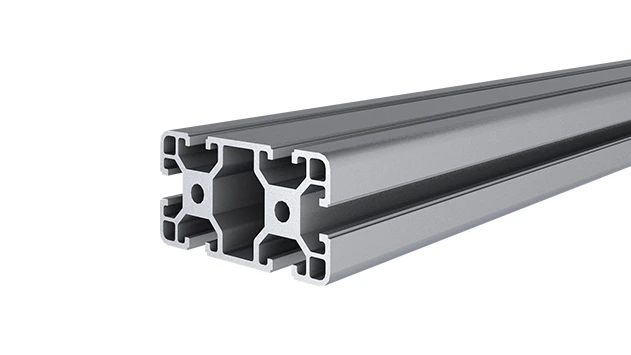
4080B is a 4.00x8.00 CM fractional 40 series square extrusion T-slot profile with two side open T-slots, each side with 4.00cm face, two side with 8.00cm face. The profile has align-a-grooves to assist in aligning connecting profiles.
Introduction: The Backbone of Modern Industrial Modularity
In the world of industrial manufacturing, assembly lines, and workshop design, the search for flexible, durable, and cost-effective solutions is never-ending. Enter the 4080B EU Standard Aluminum Profile—a workhorse in the realm of aluminum extrusion profiles that has quietly become the backbone of modular systems across countless industries. From automotive plants to electronics assembly floors, from material handling facilities to custom workbench setups, this profile stands out for its perfect balance of strength, versatility, and adaptability. But what exactly makes the 4080B so indispensable? In this article, we'll dive deep into its dimensions, material composition, design features, and real-world applications, uncovering why it's a top choice for engineers, facility managers, and DIY enthusiasts alike.
Dimensions: The Building Blocks of Precision
At the heart of any aluminum profile's functionality lies its dimensions. The 4080B EU Standard Aluminum Profile is no exception—every millimeter is engineered with purpose, ensuring compatibility with accessories, structural integrity, and modular flexibility. Let's break down its key measurements, starting with the basics and moving into the details that make it a standout in industrial settings.
Core Dimensions: Width, Height, and Wall Thickness
The "4080" in its name is no arbitrary label. It refers to the profile's cross-sectional dimensions: 40mm in width and 80mm in height. This rectangular shape provides a stable base for heavy-duty applications, offering more vertical surface area than narrower profiles like the 4040 or 3030, making it ideal for supporting larger loads or mounting multiple accessories along its length. But numbers alone don't tell the story—let's put these measurements into context.
A width of 40mm ensures that the profile can accommodate standard T-slot accessories, while the 80mm height adds rigidity, reducing flex under stress. This combination is particularly valuable in setups like workbenches, where stability during assembly or machining is non-negotiable. Imagine a technician working on a delicate electronic component—any wobble in the workbench could compromise precision. The 4080B's height minimizes that risk, acting as a solid foundation.
Wall Thickness: Balancing Strength and Weight
Wall thickness is another critical dimension, and the 4080B typically features a wall thickness of 2.0mm (though this can vary slightly by manufacturer). This thickness strikes a balance between two competing needs: strength and weight. Aluminum is already lighter than steel, but a 2.0mm wall ensures the profile can handle significant loads without adding unnecessary bulk. For example, when used in a material rack b (3 row and 3 floor)—a common setup in warehouses—the 4080B's walls distribute weight evenly across shelves, preventing sagging even when stocked with heavy parts.
T-Slot Specifications: The Key to Modularity
Perhaps the most defining feature of the 4080B is its T-slot design—a groove running along the length of the profile that allows for quick, tool-free attachment of accessories. The T-slot dimensions are standardized to EU specifications, ensuring compatibility with a wide range of nuts, bolts, brackets, and panels. Typically, the slot width is 8mm, with a slot depth of 10mm. This size is large enough to accommodate M8 bolts (a common industrial standard) while still maintaining the profile's structural integrity.
The T-slot isn't just a single groove, either. The 4080B usually features four T-slots: one on each of its four sides. This multi-directional access means accessories can be mounted on any face, opening up endless configuration possibilities. Need to attach a shelf to the front and a tool holder to the side? The 4080B makes it possible without reconfiguring the entire structure.
Weight per Meter: Practical for Handling and Installation
For anyone who's ever installed aluminum profiles, weight matters. A profile that's too heavy is cumbersome to transport and assemble; too light may lack strength. The 4080B, with its 40x80mm cross-section and 2.0mm wall thickness, typically weighs around 2.5–3.0 kg per meter (depending on surface treatment). This weight is manageable for two people to handle during installation, yet robust enough to support loads of up to 500kg or more when properly braced—a testament to its engineering.
Detailed Dimension Table
| Dimension | Measurement | Significance |
|---|---|---|
| Width | 40mm | Accommodates standard T-slot accessories; ensures compatibility with EU-standard components. |
| Height | 80mm | Adds vertical rigidity, reducing flex in heavy-duty applications like workbenches or material racks. |
| Wall Thickness | 2.0mm (typical) | Balances strength and weight, supporting loads up to 500kg+ when properly installed. |
| T-Slot Width | 8mm | Fits M8 bolts and standard T-slot nuts, enabling quick accessory attachment. |
| T-Slot Depth | 10mm | Provides enough space for nut insertion and adjustment, even with thick brackets. |
| Weight per Meter | 2.5–3.0 kg | Easy to handle during installation while maintaining structural integrity. |
These dimensions aren't just numbers on a spec sheet—they're the result of decades of innovation in aluminum extrusion profile design. Every measurement is calibrated to work with the broader ecosystem of aluminum profile accessories, from end caps to corner brackets, ensuring that the 4080B can be integrated into virtually any industrial setup.

Material Composition: Why 6063-T5 Aluminum Alloy Matters
Dimensions tell part of the story, but the material itself is what gives the 4080B its strength, durability, and versatility. Most 4080B profiles are made from 6063-T5 aluminum alloy—a material chosen for its exceptional combination of properties. Let's unpack what makes this alloy so special.
6063 Aluminum: The "Architectural Alloy"
6063 is part of the 6000-series aluminum alloys, which are known for their excellent extrudability, corrosion resistance, and moderate strength. Composed primarily of aluminum, with magnesium and silicon as the main alloying elements, 6063 is often called the "architectural alloy" due to its widespread use in (doors and windows) and structural framing. But in industrial settings, its benefits go beyond aesthetics.
Magnesium and silicon react to form magnesium silicide (Mg2Si), which strengthens the alloy when heat-treated. This heat treatment process, known as "T5," involves solution heat treating and artificial aging, resulting in a material with a tensile strength of around 180–210 MPa and a yield strength of 140–170 MPa. For context, this means the 4080B can withstand forces of up to 180 million Pascals before deforming—more than enough for most industrial applications, from supporting workbenches to holding up conveyor systems.
Corrosion Resistance: Built to Last in Tough Environments
Industrial facilities are rarely pristine. Dust, moisture, oils, and chemicals can take a toll on metal components over time. 6063 aluminum naturally forms a protective oxide layer, but to enhance this, most 4080B profiles undergo surface treatments like anodizing. Anodizing creates a thicker, harder oxide layer (typically 10–20 microns) that resists corrosion, scratches, and fading. This makes the 4080B suitable for use in humid environments, such as food processing plants, or in areas with frequent cleaning, like electronics manufacturing cleanrooms.
Thermal Conductivity: A Hidden Advantage
While not always top of mind, thermal conductivity is another benefit of aluminum. 6063 has a thermal conductivity of about 201 W/(m·K), which is significantly higher than steel (45 W/(m·K)). In applications where heat dissipation is important—such as mounting electrical enclosures or machinery with hot components—the 4080B can help draw heat away, preventing overheating and extending equipment life.
Recyclability: Sustainable by Design
In an era of increasing focus on sustainability, aluminum's recyclability is a major plus. Aluminum can be recycled repeatedly without losing quality, and recycling requires just 5% of the energy needed to produce new aluminum from ore. The 4080B, made from 6063 alloy, aligns with green manufacturing goals, allowing facilities to reduce their carbon footprint when upgrading or replacing old equipment.
Manufacturing Process: From Billet to Profile
Creating a 4080B EU Standard Aluminum Profile is a blend of art and science, requiring precision machinery, skilled operators, and strict quality control. Let's walk through the journey from raw aluminum billet to the finished profile you'd find in a factory or workshop.
Step 1: Billet Preparation
The process starts with aluminum billets—cylindrical logs of 6063 alloy, typically 6–12 meters long and 150–200mm in diameter. These billets are inspected for defects like cracks or impurities before being cut into shorter lengths (usually 1–3 meters) to fit into the extrusion press. Next, they're preheated in a furnace to around 480–520°C—hot enough to make the aluminum malleable but not molten. This temperature is critical: too low, and the billet won't extrude smoothly; too high, and the alloy may weaken.
Step 2: Extrusion: Shaping the Profile
Once heated, the billet is transferred to the extrusion press, where a hydraulic ram pushes it through a steel die. The die is a custom tool with a cross-sectional opening matching the 4080B's shape—40mm wide, 80mm tall, with T-slots on all four sides. As the billet is forced through the die, it takes on the die's shape, emerging as a long, continuous profile. This process is similar to squeezing toothpaste from a tube, but on an industrial scale, with pressures reaching 10,000–20,000 tons.
The extrusion speed varies depending on the profile's complexity and the billet's temperature, but for the 4080B, it's typically around 5–10 meters per minute. As the profile exits the die, it's cooled rapidly with water sprays to lock in its shape and prevent warping.
Step 3: Heat Treatment (T5 Aging)
After extrusion, the profile is still soft. To achieve the T5 temper, it undergoes artificial aging: heating to 170–190°C for 4–6 hours. This process allows the magnesium silicide particles to precipitate, strengthening the alloy without the need for quenching (as in T6 tempering). The result is a profile that's strong yet ductile, able to withstand bending without cracking—a crucial trait for modular assembly, where profiles may be cut or modified on-site.
Step 4: Surface Treatment
With the profile now strong and stable, it's time for surface treatment. Most 4080B profiles undergo anodizing, as mentioned earlier. Anodizing involves submerging the profile in an electrolyte bath (usually sulfuric acid) and passing an electric current through it. This causes the aluminum surface to oxidize, forming a porous oxide layer that can be dyed (common colors include silver, black, or blue) and sealed to enhance durability. Alternatively, some profiles may receive powder coating, where a dry powder is electrostatically applied and baked on, creating a thick, colorful finish ideal for decorative or high-wear applications.
Step 5: Cutting and Quality Control
The continuous profile is then cut to standard lengths (often 2, 3, or 6 meters) using precision saws. Each cut piece undergoes rigorous quality checks: dimensional accuracy (using calipers and gauges to verify width, height, and T-slot size), straightness (ensuring no bowing or twisting), and surface quality (checking for scratches, dents, or uneven anodization). Profiles that fail these checks are rejected or recycled, ensuring only top-quality products reach customers.
Step 6: Packaging and Shipping
Finally, the 4080B profiles are packaged with protective film or cardboard to prevent damage during shipping. They're then loaded onto pallets and sent to distributors or directly to customers, ready to be transformed into workbenches, material racks, or whatever modular system the user envisions.
Design Features: The T-Slot Advantage
While dimensions and material are critical, the 4080B's true genius lies in its design—specifically, its T-slot system. This feature turns a simple aluminum bar into a modular building block, allowing for endless configurations without welding or drilling. Let's explore how the T-slot design enhances versatility and why it's become the gold standard in industrial framing.
What Is a T-Slot?
A T-slot is a groove along the length of the profile with a narrow opening and a wider interior, shaped like the letter "T." This design allows T-nuts (small, T-shaped fasteners) to slide into the slot from the end of the profile and then lock into place with a bolt. Once locked, the nut won't rotate, providing a secure connection for accessories like brackets, panels, or shelves.
Multi-Directional Mounting
The 4080B features four T-slots—one on each side—enabling mounting from any direction. This is a game-changer for customization. For example, a workbench built with 4080B can have a shelf mounted to the top slot, a tool holder on the side, and a power strip bracket on the bottom—all without modifying the profile itself. In contrast, a solid steel beam would require drilling holes, which is time-consuming and permanent.
Tool-Free Adjustments
Industrial environments are dynamic; workflows change, and equipment needs to adapt. The T-slot system allows for quick adjustments. Need to reposition a shelf on a material rack b? Loosen the bolts, slide the bracket to the new position, and retighten—done in minutes. This flexibility reduces downtime during reconfigurations, a critical advantage in fast-paced manufacturing settings.
Compatibility with Accessories
The 4080B's T-slots are standardized to EU specifications, meaning they work with a vast ecosystem of aluminum profile accessories. From 4080 aluminum profile end caps that protect against sharp edges to 90° aluminum profile connectors that join profiles at right angles, the options are nearly limitless. Even specialized accessories like cable management clips or LED light mounts can be attached, turning the profile into a hub for integrated systems.
Strength in Modularity
Modularity doesn't mean sacrificing strength. When properly assembled with high-quality accessories, 4080B structures are surprisingly rigid. For example, a frame built with 4080B profiles and gusset plates (triangular brackets that reinforce corners) can support thousands of kilograms. This is why the 4080B is often used in heavy machinery frames, where stability is critical.
Applications: Where the 4080B Shines
Now that we've explored the 4080B's dimensions, material, and design, let's look at how it's applied in real-world settings. From factory floors to workshops, this profile is the backbone of countless systems, solving problems and improving efficiency.
Workbenches: The Heart of Assembly Lines
Workbenches are where the magic happens in manufacturing—whether assembling circuit boards, packaging products, or repairing machinery. A workbench built with 4080B profiles offers the stability needed for precision work, plus the flexibility to add accessories like drawers, monitor arms, and anti-fatigue mats. For example, a workbench E (single deck-without caster) might use 4080B legs for added height and rigidity, ensuring the surface stays level even when loaded with tools and components.
Material Racks: Organizing Efficiency
Warehouses and factories thrive on organization, and material racks are essential for keeping parts accessible. The 4080B excels here, especially in setups like the material rack b (3 row and 3 floor). With its 80mm height, the profile provides ample vertical space for three tiers of shelves, each capable of holding heavy boxes or pallets. The T-slots make it easy to add dividers, label holders, or even roller tracks for sliding bins, streamlining the picking process.
Conveyor Systems: Moving Materials Smoothly
Conveyors are the arteries of production lines, and the 4080B is often used in their frames. Its rigidity ensures the conveyor belt or roller track stays aligned, preventing jams and reducing wear. Additionally, the T-slots allow for mounting motors, sensors, and guide rails, making it easy to integrate automation features like barcode scanners or diverters.
Machine Frames: Supporting Heavy Equipment
Industrial machines like 3D printers, CNC routers, or packaging equipment require sturdy frames to minimize vibration and ensure accuracy. The 4080B's strength-to-weight ratio makes it an excellent choice here. Engineers can design frames that are both lightweight (reducing shipping costs) and rigid (improving machine precision), with the added benefit of easy access for maintenance via removable panels mounted in T-slots.
Retail Displays: Combining Function and Aesthetics
While less obvious, the 4080B also finds use in retail settings. Its clean, modern look—especially when anodized silver or black—makes it ideal for custom display racks. T-slots allow for attaching shelves, hooks, or signage, and the profile's strength ensures displays can hold heavy products like tools or appliances.
Aluminum Profile Accessories: Enhancing Versatility
A profile is only as good as the accessories that complement it, and the 4080B works with a wide range of aluminum profile accessories to extend its functionality. Let's highlight some of the most essential ones and how they transform the profile into a complete system.
End Caps: Safety and Finishing
Raw aluminum profile ends can be sharp, posing a safety hazard. 4080 aluminum profile end caps—typically made of plastic or rubber—snap into the ends of the profile, covering sharp edges and preventing dust or debris from entering the T-slots. They also give the profile a polished, professional look, which is why they're standard in customer-facing applications like retail displays.
Connectors: Joining Profiles with Precision
Connectors are the glue that holds modular systems together, and the 4080B works with several types:
- 90° Aluminum Profile Connectors: Used to join two profiles at a right angle, these come in internal (hidden) or external (visible) styles. Internal connectors are ideal for clean, streamlined looks, while external ones add extra strength for heavy loads.
- 45° Connectors: For angled joints, such as in A-frame structures or sloped shelves.
- Straight Connectors: Join two profiles end-to-end to create longer lengths, often used in conveyor frames or large workbenches.
Brackets and Gussets: Reinforcing Weak Points
Corners and joints are common stress points in aluminum structures. Gusset plates—triangular brackets that attach to two adjacent T-slots—distribute weight and prevent bending. For example, adding a gusset to a workbench leg joint increases stability, allowing the bench to support heavier loads without wobbling.
Panels and Shelves: Adding Functionality
From plywood to aluminum honeycomb panels, shelves and panels turn the 4080B into a storage solution. Panel brackets slide into T-slots, supporting shelves of various materials and thicknesses. In a material rack b, these panels might be perforated for hanging tools or solid for holding boxes, depending on the needs of the facility.
Wheels and Casters: Mobility When Needed
Not all systems need to be stationary. Adding casters to a 4080B frame creates mobile workstations or carts. Heavy-duty casters with brakes can support the weight of the profile and its load, making it easy to move equipment around the factory floor as needed.
Quality Control and EU Compliance
As an EU Standard profile, the 4080B is held to strict quality and safety standards. Manufacturers must adhere to regulations like EN 755 (aluminum and aluminum alloy extruded profiles for general structural purposes) and CE marking requirements, ensuring the profile meets criteria for strength, dimensional accuracy, and surface treatment.
EN 755 Compliance
EN 755 specifies mechanical properties, tolerances, and testing methods for aluminum extrusions. For the 4080B, this means ensuring its tensile strength, yield strength, and elongation meet minimum values, and that dimensions like width, height, and wall thickness are within acceptable tolerances (typically ±0.3mm for critical measurements). Compliance with EN 755 gives buyers confidence that the profile will perform as expected in structural applications.
CE Marking
CE marking indicates that a product meets EU safety, health, and environmental requirements. For aluminum profiles used in machinery or structural systems, this may involve testing for load capacity, fire resistance, or chemical resistance (in cases where the profile will be used in food or pharmaceutical industries). A CE-marked 4080B profile is not just a product—it's a promise of compliance.
Third-Party Testing
Reputable manufacturers often go beyond basic compliance, subjecting their 4080B profiles to third-party testing. This may include destructive testing (like bending until failure to measure strength) or non-destructive testing (like ultrasonic scans to detect internal defects). These tests provide additional assurance that the profile is reliable and safe for use.
Conclusion: Why the 4080B Stands Out
The 4080B EU Standard Aluminum Profile is more than just a piece of metal—it's a testament to modular engineering. Its carefully calibrated dimensions, durable 6063-T5 alloy, and versatile T-slot design make it a go-to choice for industrial applications ranging from workbenches to material racks. Whether you're a facility manager looking to optimize workflow, an engineer designing a custom machine frame, or a DIY enthusiast building a workshop setup, the 4080B offers the strength, flexibility, and reliability needed to get the job done.
As manufacturing continues to evolve, the demand for modular, sustainable solutions will only grow. The 4080B, with its recyclable aluminum construction and adaptability, is poised to remain a cornerstone of industrial design for years to come. So the next time you walk through a factory or workshop, take a closer look—chances are, the 4080B is there, quietly supporting the tools, systems, and people that keep our world running.