- Company Articles
- Industry articles
- Industry standards
- 4080B EU Standard Aluminum Profile in Aerospace Component Manufacturing: Precision Requirements

4080B EU Standard Aluminum Profile in Aerospace Component Manufacturing: Precision Requirements
Related Product
4080B EU Standard Aluminum Profile
4080B is a 4.00x8.00 CM fractional 40 series square extrusion T-slot profile with two side open T-slots, each side with 4.00cm face, two side with 8.00cm face. The profile has align-a-grooves to assist in aligning connecting profiles.
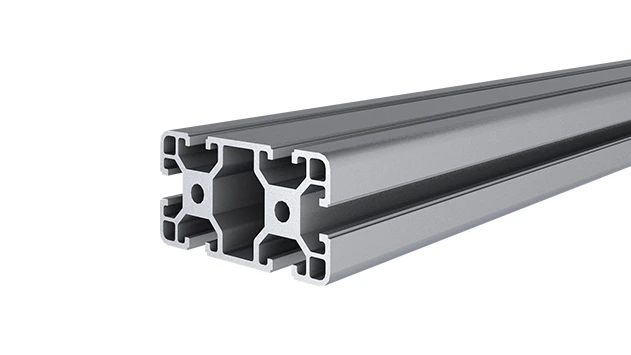
In the high-stakes world of aerospace manufacturing, where a fraction of a millimeter can mean the difference between success and failure, precision isn't just a goal—it's a mandate. Every component, from intricate engine parts to assembly line infrastructure, must adhere to rigorous standards to ensure safety, efficiency, and reliability. Among the unsung heroes of this industry is the 4080B EU Standard Aluminum Profile , a versatile and robust aluminum extrusion profile that has become a cornerstone of modern aerospace production facilities. This article explores how this specialized aluminum profile, paired with the right aluminum profile accessories, meets the industry's exacting precision requirements and integrates seamlessly into lean systems, ultimately elevating manufacturing workflows to new heights.
Understanding the 4080B EU Standard Aluminum Profile: A Foundation Built on Precision
At first glance, an aluminum profile might seem like a simple structural element, but the 4080B EU Standard Aluminum Profile is anything but ordinary. Designed to meet the stringent standards of the European union, this profile is a product of advanced aluminum extrusion technology—a process that shapes aluminum alloy into complex cross-sections with remarkable consistency. The "4080" in its name refers to its dimensions: 40mm in width and 80mm in height, making it a medium-to-large profile ideal for supporting heavy loads while maintaining a lightweight footprint. But its true value lies in the precision of its manufacturing.
The extrusion process for the 4080B profile involves forcing heated aluminum alloy through a custom die, resulting in a uniform cross-section that minimizes dimensional variation. Unlike traditional machining, which can introduce inconsistencies, extrusion ensures that every meter of the profile meets the same tight tolerances—often within ±0.1mm for critical dimensions. This level of precision is non-negotiable in aerospace, where components must align perfectly during assembly, and structural supports must distribute weight evenly to prevent stress points.
Material selection is equally critical. The 4080B profile is typically crafted from 6063-T5 aluminum alloy, a heat-treatable alloy known for its excellent balance of strength, corrosion resistance, and machinability. This alloy undergoes a rigorous aging process to enhance its mechanical properties, resulting in a tensile strength of 210 MPa and a yield strength of 180 MPa—figures that far exceed the requirements of many industrial applications but are essential for aerospace environments where equipment must withstand constant vibration, temperature fluctuations, and heavy use.
To put this in perspective, consider the demands of an aerospace assembly line. Workbenches, material racks, and conveyor systems built with the 4080B profile must support components weighing hundreds of kilograms while remaining stable enough to ensure precise alignment during intricate tasks like wiring harness installation or avionics integration. The profile's uniform wall thickness—typically 2.0mm to 3.0mm—prevents flexing under load, while its T-slot design (a series of longitudinal grooves along its length) allows for secure, tool-free attachment of accessories, eliminating the need for welding or drilling that could weaken the structure.
Mechanical Properties That Meet Aerospace's Toughest Challenges
Aerospace manufacturing isn't just about precision in dimensions—it's about performance under pressure. The 4080B EU Standard Aluminum Profile excels here, thanks to a combination of mechanical properties that make it uniquely suited to the industry's challenges. Let's break down the key attributes that set it apart:
Strength-to-Weight Ratio: A Critical Balance
Aerospace facilities prioritize lightweight equipment to reduce energy consumption and improve maneuverability, but not at the expense of strength. The 4080B profile strikes this balance masterfully. Aluminum itself is 30% lighter than steel, yet the 6063-T5 alloy's heat treatment process enhances its strength to levels that rival some steels in applications like structural framing. For example, a 2-meter length of 4080B profile weighs approximately 2.5 kg—light enough to be reconfigured by a single operator during line adjustments, yet strong enough to support a 500 kg load when used in a properly braced workbench or rack system.
Corrosion Resistance: Protecting Against Harsh Environments
Aerospace manufacturing facilities often use solvents, coolants, and cleaning agents that can degrade lesser materials. The 4080B profile's aluminum alloy naturally forms a protective oxide layer, but to further enhance its resistance, many manufacturers apply an anodized finish. This electrochemical process thickens the oxide layer, creating a hard, wear-resistant surface that withstands chemical exposure and prevents rust. In environments where humidity or temperature extremes are common—such as near paint booths or cryogenic testing areas—this corrosion resistance ensures the profile maintains its structural integrity over decades of use.
Dimensional Stability: Consistency Across Every Meter
Thermal expansion is a silent enemy of precision. In aerospace facilities, where temperatures can vary from the cool of storage areas to the warmth of machining zones, materials must resist warping or shrinking. Aluminum has a coefficient of thermal expansion of 23.1 x 10^-6 /°C, which is higher than steel, but the 4080B profile's extrusion process minimizes internal stresses, reducing the risk of distortion. Additionally, its rigid cross-section—with internal ribs and a T-slot design—adds structural stability, ensuring that even under temperature fluctuations, the profile retains its shape and alignment.
| Mechanical Property | 4080B EU Standard Specification | Aerospace Industry Requirement | Compliance Status |
|---|---|---|---|
| Tensile Strength | 210 MPa (minimum) | 180 MPa (minimum) | Exceeds requirement by 16.7% |
| Yield Strength | 180 MPa (minimum) | 150 MPa (minimum) | Exceeds requirement by 20% |
| Dimensional Tolerance | ±0.1mm (critical dimensions) | ±0.2mm (maximum allowed) | Meets and exceeds requirement |
| Corrosion Resistance | Anodized finish (≥10μm thickness) | Resistance to 500 hours salt spray (ASTM B117) | Passes with 720+ hours of salt spray resistance |
| Weight (per meter) | 2.5 kg/m | <3 kg/m for movable structures | Well within requirement |
This table underscores why the 4080B profile is trusted in aerospace: it doesn't just meet industry requirements—it surpasses them. Whether supporting a heavy workbench or forming the frame of a material rack, its mechanical properties provide a reliable foundation for precision manufacturing.

Integrating 4080B Profiles into Lean Systems: Efficiency Through Modularity
Aerospace manufacturing isn't just about building components—it's about building them efficiently. Lean systems, which focus on eliminating waste and streamlining workflows, have become the gold standard in the industry. The 4080B EU Standard Aluminum Profile aligns perfectly with lean principles, thanks to its modular design and compatibility with a wide range of aluminum profile accessories. This modularity allows facilities to adapt quickly to changing production needs, reduce downtime, and maximize resource utilization.
Modularity: The Key to Agile Manufacturing
Traditional manufacturing infrastructure—welded steel frames, fixed workbenches—locks facilities into rigid workflows. If a new aircraft model requires a different assembly process, reconfiguring these structures can be time-consuming and costly. The 4080B profile, however, is designed for flexibility. Its T-slot design allows for quick attachment of accessories like brackets, connectors, and shelves using nothing more than bolts and sliding nuts. This means a workbench used for assembling wing components today can be reconfigured into a material rack for engine parts tomorrow—all without cutting, welding, or specialized tools.
Consider a scenario where an aerospace facility needs to scale up production of a new satellite component. With traditional infrastructure, this might require weeks of construction to build new workstations. With 4080B profiles and aluminum profile accessories—such as 90° aluminum profile connectors, end caps, and adjustable feet—the same facility can assemble custom workbenches in hours. This agility reduces lead times and allows manufacturers to respond rapidly to customer demands, a critical advantage in an industry where project timelines are often tight.
Reducing Waste: From Material to Time
Lean systems emphasize minimizing waste in all forms, including material waste, time waste, and inventory waste. The 4080B profile contributes to this goal in several ways. First, its lightweight nature reduces material usage compared to steel, lowering both costs and environmental impact. Second, its extruded design generates minimal scrap—unlike machining, which cuts away excess material. Third, its compatibility with standardized accessories eliminates the need for custom-fabricated parts, reducing inventory levels and simplifying procurement.
Time waste is equally addressed. In a typical aerospace assembly line, operators spend valuable minutes retrieving tools or adjusting work surfaces. With 4080B-based workbenches, accessories like tool holders, monitor mounts, and part bins can be positioned exactly where operators need them, reducing motion waste. Additionally, the profile's modularity allows for "5S" organization—sort, set in order, shine, standardize, sustain—by creating dedicated spaces for every tool and component, further streamlining workflows.
Ergonomics: Precision in Human-Machine Interaction
Precision isn't just about the parts—it's about the people who build them. Fatigue or discomfort can lead to errors, making ergonomics a critical aspect of lean systems. The 4080B profile's adjustability enables the creation of workbenches and assembly stations tailored to human dimensions. Using height-adjustable feet and telescoping profile sections, facilities can set work surfaces at optimal heights for standing or seated operators, reducing strain on backs, shoulders, and wrists. In aerospace, where tasks like wiring harness assembly require hours of meticulous work, this ergonomic support directly improves accuracy and reduces the risk of repetitive stress injuries.
Aluminum Profile Accessories: The Finishing Touch for Uncompromising Precision
A profile is only as good as the accessories that bring it to life. The 4080B EU Standard Aluminum Profile's versatility is amplified by a vast ecosystem of aluminum profile accessories, each designed to enhance precision, stability, and functionality. From connectors that ensure rock-solid joints to end caps that protect against debris, these accessories transform a simple extrusion into a sophisticated system capable of meeting aerospace's toughest demands.
Connectors: Ensuring Rigidity in Every Joint
Joints are often the weakest points in any structural system, but with the right connectors, the 4080B profile achieves exceptional rigidity. Aluminum profile connectors come in various designs, including corner brackets, T-connectors, and swivel joints, each engineered to distribute loads evenly across the profile. For example, the 90° aluminum profile connector uses a two-piece design that clamps tightly into the T-slots of intersecting profiles, creating a joint with minimal play. In aerospace applications where vibration is common—such as near testing equipment—these connectors prevent loosening over time, ensuring that workbenches and racks remain stable and aligned.
Another critical accessory is the end cap, which seals the open ends of the profile. In addition to preventing dust and debris from entering the T-slots—a common cause of jamming in moving parts—end caps protect operators from sharp edges, enhancing safety. For profiles used in cleanrooms or sterile environments, specialized end caps with gaskets create a hermetic seal, preventing contamination from entering the profile's interior.
Adjustable Feet and Casters: Stability and Mobility in One
Not all aerospace manufacturing tasks require fixed infrastructure. Some processes, like component testing or final assembly, benefit from mobile workstations. The 4080B profile pairs with heavy-duty casters and adjustable feet to offer the best of both worlds: stability when needed, mobility when required. Casters with locking mechanisms allow workbenches to be moved to different areas of the facility, then secured in place with a simple lever. Adjustable feet, often with anti-slip pads, level the workstation on uneven floors, ensuring that precision tools like laser alignment systems remain accurate.
In a facility producing jet engine components, for example, a mobile workbench built with 4080B profiles can be wheeled directly to the machining area, allowing operators to inspect parts immediately after production. Once in place, the casters lock, and the adjustable feet ensure the workbench is perfectly level, preventing measurement errors that could compromise part quality.
Tooling Integration: Bringing Precision to the Workbench
The T-slot design of the 4080B profile isn't just for structural support—it's also a platform for integrating precision tools. Accessories like tool rails, monitor arms, and fixture plates can be mounted directly into the T-slots, positioning equipment exactly where operators need it. For instance, a workbench used for inspecting turbine blades might feature a digital caliper holder, a magnifying lamp, and a computer monitor displaying 3D models—all secured to the 4080B profile. This integration reduces clutter, keeps tools within reach, and ensures that measurements are taken from consistent positions, improving accuracy and repeatability.
Real-World Applications: 4080B Profiles in Action
To truly appreciate the impact of the 4080B EU Standard Aluminum Profile in aerospace, let's examine its real-world applications. From assembly workbenches to material handling systems, this profile plays a vital role in ensuring precision at every stage of production.
Assembly Workbenches: Where Precision Meets Productivity
Assembly workbenches are the heart of aerospace manufacturing, where technicians spend countless hours piecing together components. A workbench built with 4080B profiles offers the stability needed for tasks like riveting, soldering, and wiring. For example, a workbench used to assemble avionics systems must provide a flat, vibration-free surface to prevent damage to sensitive circuit boards. The 4080B profile's rigid construction, paired with a honeycomb aluminum panel top, minimizes flexing, ensuring that delicate components aren't jarred during assembly. Aluminum profile accessories like anti-static mats—critical for protecting electronics from electrostatic discharge (ESD)—can be secured to the workbench, further enhancing safety and precision.
Material Racks and Flow Systems: Streamlining Component Delivery
Efficient material handling is essential to lean aerospace manufacturing. 4080B profiles are used to build custom material racks and flow systems that deliver components to the assembly line exactly when needed. For instance, a flow rack built with 4080B profiles and roller tracks allows bins of fasteners or brackets to slide smoothly to operators, reducing the time spent retrieving parts. The profile's strength supports heavy loads—up to 500 kg per shelf—while its modular design allows the rack to be expanded or reconfigured as inventory needs change.
In a facility producing commercial aircraft interiors, such flow racks ensure that seat frames, panels, and hardware are always within reach, eliminating delays and reducing the risk of parts being misplaced. The precision of the 4080B profile ensures that the roller tracks are perfectly aligned, preventing jams and ensuring a consistent flow of materials.
Testing Fixtures: Validating Performance with Confidence
Aerospace components must undergo rigorous testing before they're approved for flight. Testing fixtures—used to hold parts during stress tests, thermal cycling, or vibration analysis—require extreme precision to ensure accurate results. The 4080B profile is ideal for building these fixtures, thanks to its dimensional stability and load-bearing capacity. For example, a fixture used to test the fatigue strength of a wing spar might be constructed from 4080B profiles, with adjustable clamps and sensors mounted directly into the T-slots. The profile's rigidity ensures that the fixture itself doesn't flex during testing, allowing engineers to measure the part's performance with confidence.
Quality Control: Ensuring Compliance with Aerospace Standards
Precision isn't accidental—it's the result of meticulous quality control. The 4080B EU Standard Aluminum Profile undergoes a battery of tests to ensure it meets aerospace requirements, from raw material inspection to final dimensional checks. Manufacturers adhere to strict standards, such as ISO 9001 for quality management and AS9100, the aerospace-specific quality standard, to ensure consistency and reliability.
Raw material testing begins with the aluminum alloy itself. Each batch of 6063-T5 alloy is analyzed for chemical composition, ensuring it contains the correct percentages of magnesium, silicon, and other elements that contribute to its mechanical properties. Once extruded, the profile undergoes dimensional inspection using coordinate measuring machines (CMMs), which scan the cross-section to verify tolerances within ±0.01mm. Mechanical testing—including tensile strength, yield strength, and hardness tests—ensures the profile meets the required performance criteria. Finally, surface finish inspections check for defects like scratches, dents, or uneven anodization, ensuring the profile is both functional and aesthetically consistent.
For aerospace customers, this commitment to quality provides peace of mind. When a manufacturer specifies 4080B profiles for their facility, they can trust that every piece meets the same high standards, reducing the risk of failures and ensuring compliance with regulatory bodies like the FAA or EASA.
The Future of 4080B Profiles in Aerospace: Innovations on the Horizon
As aerospace manufacturing continues to evolve—with trends like additive manufacturing, digital twins, and Industry 4.0—the role of the 4080B EU Standard Aluminum Profile is set to expand. One area of innovation is the integration of smart technologies. Imagine a workbench built with 4080B profiles that includes embedded sensors to monitor vibration, temperature, or load. These sensors could send real-time data to a central system, alerting maintenance teams to potential issues before they affect production. This predictive maintenance approach would further enhance precision and reduce downtime.
Another trend is the development of recycled aluminum alloys for the 4080B profile. As the aerospace industry focuses on sustainability, using recycled aluminum reduces carbon footprints without compromising strength or precision. Manufacturers are also exploring new surface treatments, such as ceramic coatings, to enhance wear resistance and extend the profile's lifespan in extreme environments.
Finally, the rise of digital manufacturing tools—such as 3D modeling and simulation—will allow facilities to design 4080B-based systems with even greater precision. Engineers can virtualize assembly lines, test different configurations, and optimize workflows before a single profile is cut, reducing errors and accelerating implementation.
Conclusion: Precision Redefined, One Profile at a Time
In the aerospace industry, precision is the thread that weaves together safety, efficiency, and innovation. The 4080B EU Standard Aluminum Profile, a testament to the power of advanced aluminum extrusion technology, has emerged as a critical enabler of this precision. Its mechanical properties, modular design, and compatibility with aluminum profile accessories make it an indispensable tool for lean systems, allowing facilities to adapt quickly, reduce waste, and elevate the quality of every component they produce.
From the assembly line workbench where technicians craft intricate avionics to the material racks that ensure components are delivered on time, the 4080B profile quietly supports the industry's most ambitious goals. As aerospace manufacturing continues to push the boundaries of what's possible—whether exploring new frontiers in space or building the next generation of commercial aircraft—this unassuming aluminum profile will remain a cornerstone of precision, proving that even the smallest details can have the biggest impact.
In the end, the 4080B EU Standard Aluminum Profile isn't just a structural element—it's a symbol of the aerospace industry's commitment to excellence. It's a reminder that precision isn't achieved through grand gestures alone but through the careful selection of every component, every accessory, and every system that brings a vision to life. And in that, it's more than just a profile—it's a partner in progress.