- Company Articles
- Industry articles
- Industry standards
- 5 Mistakes to Avoid When Designing with 2040 EU Standard Aluminum Profile

5 Mistakes to Avoid When Designing with 2040 EU Standard Aluminum Profile
Related Product
2040 EU Standard Aluminum Profile
2040 is a 2.00 x 4.00CM fractional 20 series square extrusion T-slot profile with four open T-slots, two side with 2.00cm face, the other side with 4.00cm face. The profile has align-a-grooves to assist in aligning connecting profiles.
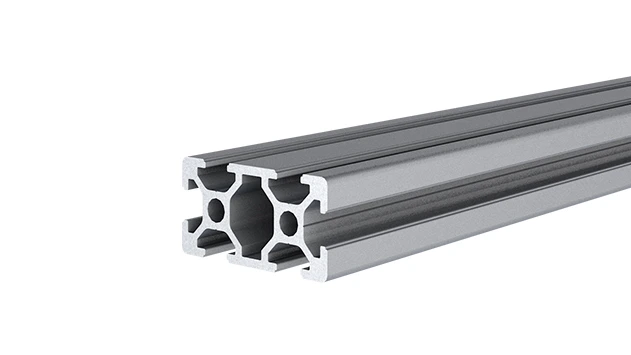
Walk into any modern workshop, manufacturing facility, or even a well-equipped home garage, and you'll likely spot a common hero: aluminum profiles. These sleek, modular rails have revolutionized how we build workbenches, material racks, conveyor systems, and even custom furniture. Among the countless profiles available, the 2040 EU standard aluminum profile stands out as a true workhorse. Its name gives a clue to its dimensions—approximately 20mm in width and 40mm in height—and its EU standard designation means it adheres to strict tolerances for slot sizes, wall thickness, and compatibility. It's strong enough to support heavy tools, lightweight enough for easy assembly, and versatile enough to adapt to projects from simple shelving to complex automated systems.
But here's the thing: even seasoned designers and DIY enthusiasts make mistakes with this seemingly straightforward material. What starts as a promising project can quickly turn into a wobbly mess, a safety hazard, or a budget-busting redo. Maybe you've experienced it yourself—shelves that sag under weight, joints that loosen after a few weeks, or accessories that just don't fit right. The good news? Most of these issues stem from avoidable errors. Today, we're diving into the five most critical mistakes people make when designing with 2040 EU standard aluminum profiles, why they happen, and exactly how to steer clear of them.
Mistake #1: Underestimating Load Capacity—Don't Let Thin Walls Derail Your Project
Let's start with a mistake that's surprisingly common, even among folks who consider themselves "in the know": assuming all 2040 aluminum profiles are created equal when it comes to strength. Walk into a supplier's catalog, and you'll see 2040 profiles listed with different wall thicknesses—1.0mm, 1.5mm, 2.0mm, even 3.0mm in some industrial grades. It's easy to think, "Hey, 20x40 is 20x40, right? I'll just grab the cheapest one." But that's where trouble begins.
The wall thickness of a 2040 profile directly impacts its load-bearing capacity. A profile with a 1.0mm wall might be fine for holding lightweight items like small tools or display shelves, but slap a 50kg industrial laser cutter on a workbench made with those thin rails, and you're asking for trouble. Over time, the profile will flex, sag, or even bend permanently. Worse, if the profile is part of a structural frame—say, a material rack holding heavy inventory—the whole system could collapse, risking injury or damage to equipment.
Real-World Example:
A local electronics repair shop once reached out to me frustrated with their new workbench. They'd built it using 1.2mm wall 2040 profiles, thinking it would handle their soldering stations, oscilloscopes, and tool chests. Within a month, the middle of the bench was sagging by nearly 2cm, and the T-slot nuts holding the shelf brackets were starting to strip from the strain. They thought they'd saved money by choosing the thinner profile, but in reality, they had to rebuild the entire bench with thicker rails—costing them twice the time and materials.
So, how do you avoid this? Start by asking: What's the maximum weight this structure will need to support? Be honest—don't just guess. If it's a workbench, calculate the weight of tools, materials, and even the people who might lean on it. For shelving, multiply the weight of each item by the number of items per shelf. Once you have that number, check the manufacturer's load capacity charts. Most reputable suppliers provide data on how much a 2040 profile can support over a given span (e.g., a 1.5m length of 2.0mm wall 2040 can typically hold 50-70kg evenly distributed). When in doubt, round up—over-engineering is better than under-delivering.
Another pro tip: pair your profile with the right aluminum profile accessories to boost strength. Even a 2.0mm wall profile can benefit from gussets (triangular support brackets) at joints, or cross-bracing between vertical posts. These small additions distribute weight more evenly and prevent twisting or bending, turning a "good enough" structure into one that lasts for years.
Mistake #2: Ignoring Accessory Compatibility—T-Slots, End Caps, and the "One Size Fits All" Myth
The beauty of 2040 EU standard aluminum profiles lies in their modularity—they're designed to work with a vast ecosystem of accessories: end caps, T-slot nuts, angle brackets, handles, and even specialized parts like roller track guides. But here's where many projects go off the rails: assuming that any "aluminum profile accessory" will work with any 2040 profile. Spoiler: they won't. The EU standard specifies exact dimensions for the T-slot (the groove that runs along the profile's length), including the width of the slot opening, the depth, and the shape of the internal channel. If an accessory doesn't match these specs, it either won't fit at all or will fit loosely—leading to wobbly joints, stripped threads, or parts that pop out under vibration.
Let's take end caps as an example. The 2040 EU standard profile has a specific cross-section, so its end caps are designed to snap or press-fit into the open ends, covering sharp edges and giving a clean finish. But if you mistakenly grab a 2020 aluminum profile end cap (intended for the smaller 20x20mm profile) and try to jam it into a 2040, it will rattle loose or fall out entirely. Similarly, T-slot nuts—those handy fasteners that slide into the T-slot to attach brackets—come in different sizes. A nut designed for a 6mm slot won't grip properly in a 2040's 8mm slot, leading to brackets that shift or loosen over time.
| Accessory Type | Correct for 2040 EU Profile | Common Incompatible Option | Result of Incompatibility |
|---|---|---|---|
| End Caps | 2040 aluminum profile end cap (EU standard) | 2020 aluminum profile end cap | Loose fit; falls out easily; exposed sharp edges |
| T-Slot Nuts | M8 or M6 T-slot nuts (8mm slot width) | M5 T-slot nuts (6mm slot width) | Won't tighten securely; brackets shift under load |
| Angle Brackets | Brackets with 20mm hole spacing (matching profile width) | Brackets with 15mm hole spacing (for narrower profiles) | Holes don't align with T-slots; requires drilling (ruining profile) |
| Rubber Strips | Aluminum profile rubber strip (8mm width for T-slot) | Generic foam stripping (too thick/thin) | Doesn't seal slot; collects debris; strips tear easily |
The solution here is simple: always check the accessory specs against your 2040 profile's specifications. Most suppliers list compatibility on their product pages (e.g., "Fits 2040 EU Standard Profiles" or "For 8mm T-Slot"). If you're buying from a physical store, bring a small sample of your profile to test the fit—slide a T-slot nut into the slot, press an end cap into the end, and wiggle it to ensure a snug, rattle-free connection. And resist the urge to "make do" with what you have on hand. That leftover 2020 end cap might save you a trip to the store today, but it'll cost you in frustration (and possibly safety) tomorrow.
Pro Hack:
Create a "compatibility kit" for your workshop. Keep a few 2040 aluminum profile end caps, T-slot nuts, and angle brackets in a labeled container. When shopping for new accessories, compare them to your kit to ensure a match. It takes 30 seconds and prevents hours of headaches later.

Mistake #3: Overlooking Environmental Factors—Corrosion, Temperature, and the Elements
Aluminum is naturally resistant to corrosion, thanks to a thin oxide layer that forms on its surface. But that doesn't make it invincible. One of the biggest mistakes designers make is assuming their 2040 profile structure will hold up in any environment—whether that's a damp garage, a factory with chemical fumes, or an outdoor workspace exposed to rain and sun. The truth is, environmental factors can degrade even the toughest aluminum profiles over time, leading to discoloration, weakened joints, or even structural failure.
Let's break down the risks: humidity and moisture are the most common culprits. In a workshop near a water source (like a car wash or a brewery), or in a coastal area with salt air, unprotected aluminum profiles can develop white, powdery corrosion (called "white rust"). This isn't just unsightly—it eats away at the profile's surface, thinning the walls and reducing load capacity. Chemicals are another threat: oils, solvents, and cleaning agents can break down the oxide layer, leaving the metal vulnerable. Even temperature extremes matter—profiles expand and contract with heat and cold, which can loosen joints if not accounted for in the design.
Case Study:
A food processing plant installed a material rack using standard 2040 profiles in their cold storage room. The room maintained temperatures around 4°C with high humidity, and over six months, the profiles near the floor began to corrode. The rack's lower shelves, which held heavy ingredient bins, started to bow as the corroded metal weakened. The fix? They replaced the standard profiles with anodized 2040 aluminum profiles (which have a thicker oxide layer) and added aluminum profile rubber strips to seal the T-slots, preventing moisture from getting trapped inside. Problem solved.
So, how do you protect your 2040 profile project? Start by assessing the environment: Is it indoors or outdoors? Humid or dry? Exposed to chemicals or salt? For most indoor workshops with moderate conditions, standard anodized 2040 profiles will suffice. Anodization is an electrolytic process that thickens the oxide layer, boosting corrosion resistance. If you're in a high-moisture area, look for profiles with a "marine-grade" anodization or consider powder coating for extra protection. For outdoor use, stainless steel fasteners (instead of standard steel) will prevent rust from spreading to the aluminum.
Don't forget about the T-slots! These grooves are perfect traps for moisture, dust, and debris. Sealing them with an aluminum profile rubber strip not only keeps out gunk but also reduces noise from rattling accessories and prevents small parts from falling into the slot. Choose a rubber strip designed for 2040 profiles—look for one that's slightly wider than the slot so it compresses when installed, creating a tight seal.
Mistake #4: Rushing the Design—Skipping Prototyping and Overlooking Ergonomics
It's easy to get excited about a new project. You've got your 2040 profiles, your accessories, and a vision in mind—so why not start drilling, cutting, and assembling right away? Here's why: rushing the design phase often leads to ergonomic nightmares and inefficient layouts. Maybe the workbench is too tall, forcing you to hunch over. Or the material rack is so deep that you can't reach items in the back without climbing on a stool. These might seem like minor annoyances, but over time, they lead to fatigue, reduced productivity, and even repetitive strain injuries.
Ergonomics is all about designing tools and workspaces that fit the people using them. For a workbench built with 2040 profiles, that means height matters—a lot. The average workbench height is 80-90cm, but it should be adjusted based on the user's height (elbows should rest comfortably at a 90° angle when standing). If you're building a collaborative workspace, consider adjustable-height legs using telescoping 2040 profiles or height-adjustable feet. Similarly, material racks should be designed so that frequently used items are at eye level or waist level—no one wants to bend over to grab a heavy box from the floor or stretch to reach the top shelf every five minutes.
Then there's the issue of workflow. A poorly designed structure can disrupt the natural flow of work, turning a smooth process into a series of frustrating detours. For example, a manufacturing facility might build a conveyor system using 2040 profiles and roller tracks, only to realize the track is too narrow for their bins, or the incline is too steep, causing items to jam. These issues could have been avoided with a simple prototype.
Design Hack: Build a Quick Prototype First
You don't need to assemble the entire structure to test your design. Use cardboard, PVC pipes, or even leftover 2040 scraps to mock up key components. For a workbench, cut cardboard to the desired height and width, and simulate using tools on it for 10-15 minutes. For a material rack, stack boxes of similar weight to the items you'll store and see how easy (or hard) it is to access them. Prototyping takes an extra afternoon but saves weeks of rework later.
Another design oversight is ignoring future adaptability. That workbench you're building today might need to expand next year when you add new tools. That material rack might need extra shelves as inventory grows. 2040 profiles are modular by nature—take advantage of that! Leave extra T-slots empty for future accessories, use longer profiles than you need (you can always cut them down later), and avoid permanent connections like welding (which defeats the purpose of aluminum's modularity). A little foresight turns a "one-and-done" project into a structure that evolves with your needs.
Mistake #5: Skimping on Quality—Cheap Profiles, Weak Joints, and False Economies
We've all been there: you're comparing prices online, and you find a 2040 EU standard aluminum profile that's 30% cheaper than the leading brand. It looks the same in the photos—same dimensions, same T-slot design—so why not save the money? Here's the harsh reality: not all 2040 profiles are created equal. Cheap, off-brand profiles often cut corners on material quality, wall thickness consistency, and slot precision. What seems like a deal can quickly become a disaster.
Let's start with material quality. Reputable manufacturers use high-grade aluminum alloys (like 6063-T5) that balance strength, weldability, and corrosion resistance. Cheap profiles might use recycled or lower-grade aluminum, which is more prone to bending, cracking, or warping under stress. Then there's wall thickness: a "2040 profile" from a no-name supplier might claim to be 2.0mm thick, but in reality, the walls could vary from 1.5mm to 2.0mm along the same length, leading to weak spots. Slot precision is another issue—if the T-slot is too narrow, too wide, or uneven, even compatible accessories won't fit properly, leading to loose joints and instability.
Joints are another area where quality matters. The strength of your entire structure depends on how well the profiles connect. Using cheap, poorly machined joints (like cast aluminum brackets with rough threads) can lead to stripped bolts, misaligned holes, or joints that loosen with vibration. Even the fasteners matter—low-quality screws can snap under torque, or their threads can strip when tightened into T-slot nuts.
So, how do you spot a quality 2040 profile? Look for suppliers who provide detailed specifications: alloy type, wall thickness tolerance (aim for ±0.1mm), and slot dimension accuracy. Check reviews from other customers—if multiple people mention "inconsistent thickness" or "accessories don't fit," steer clear. And don't be afraid to ask for a sample. A reputable supplier will send a small section of profile so you can measure the walls, test the slot with a T-slot nut, and bend it gently to check for flexibility (high-quality aluminum should spring back, not bend permanently).
Remember: your project is only as strong as its weakest link. Investing in quality 2040 profiles and aluminum profile accessories might cost a bit more upfront, but it pays off in durability, safety, and peace of mind. A structure that lasts 10 years instead of 2 is a better value in the long run.
Final Thoughts: Design Smarter, Build Better with 2040 Profiles
The 2040 EU standard aluminum profile is a remarkable tool—one that puts the power to build, create, and innovate in your hands. But like any tool, it requires care, attention to detail, and a bit of know-how to use effectively. By avoiding these five mistakes—underestimating load capacity, ignoring accessory compatibility, overlooking environmental factors, rushing the design, and skimping on quality—you'll transform your project from a frustrating chore into a source of pride.
Whether you're building a workbench for your garage, a material rack for your factory, or a custom conveyor system, take the time to plan, test, and choose quality components. Measure twice, cut once. Test accessories before buying in bulk. And when in doubt, consult the experts—most suppliers have technical support teams happy to help you select the right profile, thickness, and accessories for your needs.
At the end of the day, the goal isn't just to build something—it's to build something that works, lasts, and makes your work easier. With the right approach, your 2040 profile project won't just meet your expectations; it'll exceed them.