- Company Articles
- Industry articles
- Industry standards
- 60 Aluminum Roller Track Small Wheel Safety Standards: OSHA & ISO Compliance

60 Aluminum Roller Track Small Wheel Safety Standards: OSHA & ISO Compliance
Related Product
60 Aluminum Roller Track Small Wheel
Modular system roller tracks aluminum gravity roller tracks are an excellent solution for transporting materials within industrial environments, warehouses and distribution centres.
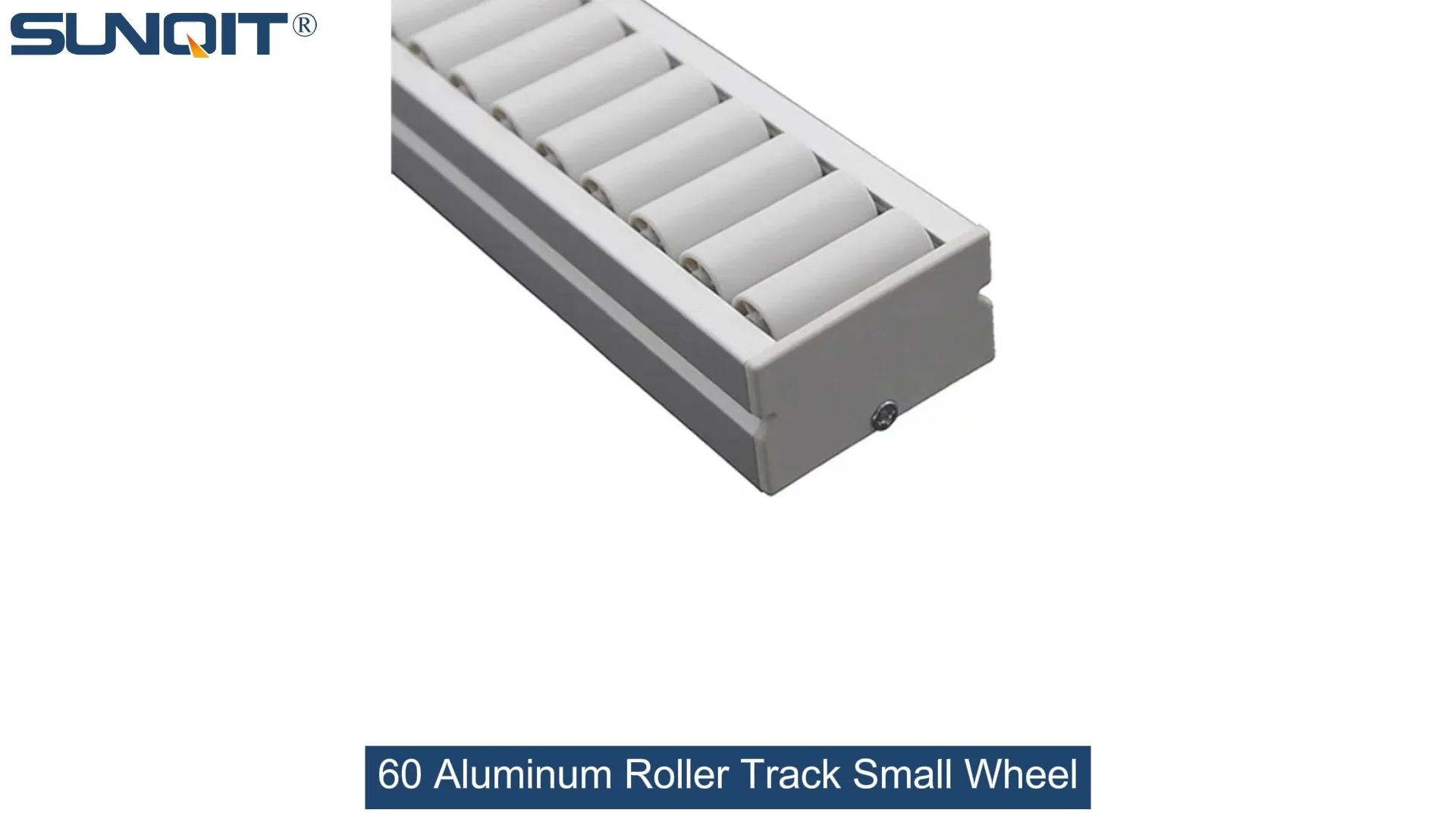
In today's fast-paced manufacturing environments, every component plays a critical role in ensuring both efficiency and safety. One such component that often goes unnoticed but is integral to smooth operations is the 60 aluminum roller track small wheel. These wheels are the backbone of many material handling systems, from conveyors moving parts along assembly lines to flow racks storing and distributing components. However, their importance extends beyond just functionality—adhering to strict safety standards set by OSHA (Occupational Safety and Health Administration) and ISO (International Organization for Standardization) is non-negotiable for protecting workers and maintaining regulatory compliance.
For manufacturers and facility managers, understanding these safety standards isn't just a legal requirement; it's a way to build a culture of safety, reduce workplace accidents, and optimize operational performance. In this article, we'll dive deep into the OSHA and ISO standards relevant to 60 aluminum roller track small wheels, explore their key safety features, and discuss how they integrate into lean systems to enhance both safety and efficiency.
OSHA Compliance Requirements for Roller Track Systems
The Occupational Safety and Health Administration (OSHA) sets the bar for workplace safety in the United States, with a focus on preventing injuries and illnesses. When it comes to roller track systems and their components like small wheels, several OSHA standards apply directly:
OSHA 29 CFR 1910.212: Machine Guarding
This standard requires that any machine part, function, or process that may cause injury must be guarded. For 60 aluminum roller track small wheels, this means ensuring that moving parts are enclosed or shielded to prevent workers from getting their fingers caught or being struck by moving components. For example, in conveyor systems using these wheels, guards should be placed around areas where wheels are exposed, especially near pinch points where parts might get trapped.
OSHA 29 CFR 1910.176: Material Handling
OSHA's material handling standard emphasizes safe practices for moving, storing, and handling materials. For roller track systems, this translates to ensuring that the 60 aluminum roller track small wheels can support the intended load without failure. Manufacturers must clearly label the maximum load capacity of each roller track assembly, and facility managers must ensure that these limits are not exceeded. Overloading can lead to wheel deformation, track collapse, or component failure, all of which pose significant safety risks.
OSHA 29 CFR 1910.303: Electrical Safety (for ESD-Protected Environments)
In environments where electrostatic discharge (ESD) is a concern—like those using esd workstations for electronic component assembly—OSHA requires measures to prevent electrical hazards. While 60 aluminum roller track small wheels themselves may not be electrical components, their integration into ESD-compliant systems must adhere to guidelines that prevent static buildup. This might include using anti-static materials or coatings on the wheels to dissipate static electricity, protecting sensitive electronic parts from damage and reducing the risk of electrical shocks to workers.
Compliance with OSHA standards isn't just about avoiding fines; it's about creating a safe workplace where employees feel protected. By ensuring that 60 aluminum roller track small wheels meet these standards, businesses can minimize the risk of accidents like falls, cuts, or crush injuries, which can lead to costly downtime and lost productivity.
ISO Compliance Standards for 60 Aluminum Roller Track Small Wheels
On the international stage, ISO standards provide a framework for ensuring product quality, safety, and consistency across borders. For 60 aluminum roller track small wheels, two key ISO standards are particularly relevant: ISO 12100 (Machinery Safety) and ISO 45001 (Occupational Health and Safety Management Systems).
ISO 12100: Risk Assessment and Reduction
ISO 12100 focuses on the design of machinery to minimize risks to operators and other personnel. For roller track systems, this means that every aspect of the 60 aluminum roller track small wheel—from material selection to manufacturing processes—must undergo a thorough risk assessment. Manufacturers must identify potential hazards (like sharp edges, unstable loads, or moving parts) and implement measures to eliminate or reduce them. For example, using rounded edges on aluminum components to prevent cuts, or designing wheels with a smooth surface to reduce friction and wear.
ISO 45001: Occupational Health and Safety Management
ISO 45001 is a globally recognized standard for occupational health and safety management systems. It requires organizations to establish, implement, and maintain processes that protect workers from harm. For suppliers of 60 aluminum roller track small wheels, this means documenting their manufacturing processes, conducting regular audits, and ensuring that their products meet all relevant safety standards. For end-users, ISO 45001 compliance means having a structured approach to inspecting and maintaining roller track systems to ensure they remain safe over time.
Other Relevant ISO Standards
Additional ISO standards may apply depending on the application. For instance, ISO 9001 (Quality Management Systems) ensures that products are consistently manufactured to meet customer and regulatory requirements. ISO 14001 (Environmental Management Systems) may also be relevant if the production process involves materials that impact the environment, though this is more indirect for the roller wheels themselves.
By adhering to ISO standards, manufacturers of 60 aluminum roller track small wheels demonstrate their commitment to quality and safety. For businesses operating in global markets, ISO compliance is often a prerequisite for doing business, as it provides a common language for safety and quality across different countries and industries.

Key Safety Features of 60 Aluminum Roller Track Small Wheels
To meet OSHA and ISO standards, 60 aluminum roller track small wheels must incorporate specific safety features that address potential hazards. Let's take a closer look at these features:
High-Quality Aluminum Material
Aluminum is chosen for these wheels because it's lightweight yet durable, making it ideal for material handling systems. The 60 series aluminum (referring to the profile size) is strong enough to support heavy loads while remaining easy to install and maintain. Additionally, aluminum is corrosion-resistant, which is crucial for systems used in environments with moisture or chemicals, preventing rust and ensuring long-term performance.
Precision-Engineered Small Wheels
The small wheel design of these roller tracks allows for smooth, low-friction movement of materials. Each wheel is precision-engineered to ensure consistent performance, reducing the risk of jams or sudden stops that could cause parts to fall or workers to be injured. The wheels are also designed to distribute load evenly, preventing excessive wear on any single component.
Load Capacity Testing
Before being released to the market, 60 aluminum roller track small wheels undergo rigorous load capacity testing to ensure they can handle the specified weight limits. This testing is critical for OSHA compliance, as it ensures that the wheels won't fail under normal operating conditions. Manufacturers must provide documentation of these tests to customers, proving that their products meet the required safety standards.
Anti-Slip and Anti-Static Properties
In applications where slippage is a concern—like on inclined conveyors—or where static electricity poses a risk (such as in esd workstations), these wheels may include anti-slip coatings or anti-static materials. These features help keep materials in place during transport and protect sensitive electronic components from damage, while also reducing the risk of electrical shocks to workers.
Easy Maintenance and Inspection
OSHA and ISO standards require regular maintenance and inspection of equipment to ensure ongoing safety. 60 aluminum roller track small wheels are designed for easy inspection—their simple structure allows workers to quickly check for wear, loose components, or damage. Additionally, they require minimal maintenance, such as occasional lubrication (if needed), which helps keep them operating safely and efficiently over time.

Integration with Lean Systems for Enhanced Safety and Efficiency
Lean manufacturing is a philosophy that focuses on eliminating waste and improving efficiency, but it also places a strong emphasis on safety. 60 aluminum roller track small wheels are a key component of lean systems, as they enable smooth material flow and support the principles of just-in-time production.
Role in Conveyors and Flow Racks
Conveyors using these roller wheels are essential for moving parts along production lines without manual handling, reducing the risk of back injuries and other musculoskeletal disorders. Flow racks, which use gravity to move components to the point of use, rely on these wheels to ensure that parts slide smoothly and safely, minimizing the need for workers to reach or lift heavy items. By integrating these components into a lean solution, businesses can create a more efficient and safer workplace.
Supporting Just-In-Time Production
Just-in-time (JIT) production requires that materials are delivered exactly when they're needed, reducing inventory costs and waste. 60 aluminum roller track small wheels facilitate this by enabling fast, reliable transport of parts between workstations. This not only improves efficiency but also reduces the risk of accidents caused by cluttered workspaces or overstocked inventory.
Flexibility and Adaptability
Lean systems are designed to be flexible, allowing for quick changes in production processes. The modular design of 60 aluminum roller track small wheels makes them easy to reconfigure, so businesses can adapt their material handling systems as their needs change. This flexibility ensures that safety standards are maintained even as production lines evolve, as components can be easily inspected and replaced if necessary.
By combining lean principles with strict safety standards, businesses can create a workplace that is both efficient and safe. 60 aluminum roller track small wheels are a perfect example of how functional components can support both goals, making them an essential part of modern manufacturing operations.

Application in Production Assembly Lines
60 aluminum roller track small wheels are used across a wide range of industries, but their impact is particularly significant in production assembly lines. Let's explore some key applications:
3C Assembly and ESD Workstations
In the 3C (computers, communications, consumer electronics) industry, precision and safety are paramount. ESD workstations use these roller wheels to handle sensitive electronic components, as their anti-static properties prevent damage from static electricity. Conveyors with these wheels move components between assembly stations, ensuring that parts are delivered quickly and safely, reducing the risk of damage and improving overall productivity.
Automotive Manufacturing
Automotive assembly lines rely heavily on material handling systems to move heavy parts like engines, doors, and chassis. 60 aluminum roller track small wheels are used in conveyors and flow racks to transport these parts, reducing the need for manual lifting and minimizing the risk of injuries. Their high load capacity and durability make them ideal for this demanding environment.
Medical Device Production
Medical device manufacturing requires strict adherence to safety and hygiene standards. These roller wheels are used in cleanroom environments to move components and finished products, as their aluminum material is easy to clean and resistant to corrosion. Their smooth operation ensures that delicate medical devices are not damaged during transport, maintaining the integrity of the products and ensuring patient safety.
Warehouse and Logistics
In warehouses and distribution centers, flow racks using these roller wheels are used to store and distribute products efficiently. They allow workers to access items quickly without having to reach or climb, reducing the risk of falls and other accidents. Conveyors with these wheels also help in sorting and shipping products, ensuring that items are handled safely and delivered on time.
Across all these industries, the common thread is the need for safe, reliable material handling. 60 aluminum roller track small wheels meet this need by adhering to OSHA and ISO standards, making them a trusted choice for production assemble lines worldwide.
Maintenance and Inspection Guidelines for Ongoing Compliance
Even the highest-quality 60 aluminum roller track small wheels require regular maintenance and inspection to ensure they remain safe and compliant. Here are some guidelines to follow:
Regular Visual Inspections
Workers should inspect roller track systems daily for signs of wear, damage, or loose components. This includes checking the wheels for cracks, deformation, or excessive wear, as well as ensuring that all fasteners are tight. Any damaged components should be replaced immediately to prevent accidents.
Load Capacity Checks
Facility managers should periodically verify that the load capacity of the roller track system is not being exceeded. This can be done by weighing materials before they're placed on the track or by reviewing production records to ensure that the system is being used within its specified limits.
Lubrication (If Required)
Some roller wheels may require lubrication to maintain smooth operation. Manufacturers should provide guidelines on how often to lubricate and what type of lubricant to use. Over-lubrication can attract dust and debris, which can cause the wheels to jam, so it's important to follow these guidelines carefully.
Documentation and Record-Keeping
OSHA and ISO standards require that maintenance and inspection activities are documented. This includes keeping records of inspections, repairs, and replacements. These records not only prove compliance but also help identify trends and prevent future issues.
Training for Workers
Workers who operate or maintain roller track systems should receive proper training on safety procedures and inspection guidelines. This includes understanding how to identify potential hazards, how to use the equipment safely, and what to do in case of an emergency. Regular training sessions help reinforce safety practices and ensure that all workers are aware of their responsibilities.
Conclusion
60 aluminum roller track small wheels are more than just a component of material handling systems—they are a critical part of ensuring workplace safety and regulatory compliance. By adhering to OSHA and ISO standards, manufacturers can produce wheels that are safe, reliable, and efficient, while businesses can create a workplace that protects their most valuable asset: their employees.
The integration of these wheels into lean systems further enhances their value, as they support both efficiency and safety. Whether used in conveyors moving parts along production lines, flow racks storing components, or esd workstations handling sensitive electronics, these wheels play a key role in modern manufacturing.
For businesses looking to invest in these components, it's important to choose suppliers that prioritize safety and compliance. By selecting products that meet OSHA and ISO standards, you can ensure that your material handling systems are not only efficient but also safe, reducing the risk of accidents and improving overall operational performance.
In the end, safety is not just a legal requirement—it's a commitment to your workers and your business. By understanding and adhering to the safety standards for 60 aluminum roller track small wheels, you can build a safer, more efficient, and more successful manufacturing operation.