- Company Articles
- Industry articles
- Industry News
- 60 Steel Roller Track Green vs. Non-Green Steel Tracks: Environmental Impact Analysis

60 Steel Roller Track Green vs. Non-Green Steel Tracks: Environmental Impact Analysis
Related Product
60 Steel Roller Track Green
The roller track can be installed with multiple accessories to create different slopes and configurations of flow racks.All steel conveyor 60 roller track accessories are engineered to perfectly fit the sliding rail.It is enable the movement of SLC boxes.
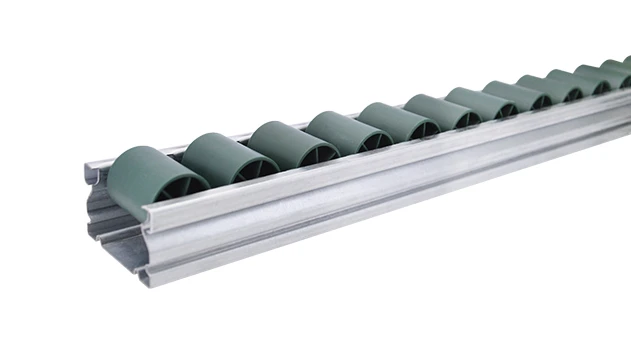
60 Steel Roller Track Green vs. Non-Green Steel Tracks: Environmental Impact Analysis
Manufacturing is at a crossroads—efficiency and sustainability are no longer competing priorities but complementary goals. Every component in a production line, no matter how small, contributes to a company's environmental footprint. 60 steel roller tracks are a perfect example: they're the backbone of flow racks that keep warehouse goods moving, the engine of conveyors powering assembly lines, and even a key part of lean pipe workbenches where workers build everything from 3C devices to medical equipment. For businesses investing in lean solutions, choosing between green and non-green variants of these tracks isn't just a product decision—it's a step toward aligning operations with global sustainability trends. Let's explore what sets these two types apart and why the choice matters for your business and the planet.
What Are 60 Steel Roller Tracks?
60 steel roller tracks are a versatile material handling component, named for their 60mm width (a standard size used across industries). They consist of steel rollers mounted on a sturdy frame, designed to reduce friction and enable smooth movement of goods. You'll find them in flow racks where boxes glide from storage to picking stations, in conveyors that transport parts along automotive or 3C assembly lines, and attached to lean pipe workbenches where workers access components with minimal effort. Their adaptability makes them a staple in lean solutions—helping businesses cut waste, improve workflow, and boost productivity. Given their widespread use, the environmental impact of these tracks adds up quickly, especially for companies with large-scale operations.
Understanding Green 60 Steel Roller Tracks
Green 60 steel roller tracks aren't just a marketing term—they're engineered with sustainability at every stage of their lifecycle:
1. **High Recycled Steel Content**: Most green tracks use 80-95% recycled steel scrap (from old cars, appliances, or industrial waste). This eliminates the need to mine virgin iron ore, a process that disrupts ecosystems, uses massive amounts of water, and emits greenhouse gases.
2. **Low-Carbon Production**: Green tracks are made using electric arc furnaces (EAFs) instead of traditional blast furnaces. EAFs run on electricity (often renewable) and emit 75% less CO₂ than blast furnaces, according to the International Energy Agency.
3. **Eco-Friendly Coatings**: Green tracks use water-based, non-toxic coatings that release near-zero volatile organic compounds (VOCs). Unlike solvent-based coatings, these don't contribute to smog or indoor air pollution, making them safer for workers and the environment.
4. **Design for Circularity**: Green tracks are built to be easily disassembled. Rollers, frames, and coatings can be separated and recycled individually—so almost no part ends up in a landfill. This aligns perfectly with the lean solution principle of "reusable and sustainable improvement."
What Are Non-Green 60 Steel Roller Tracks?
Non-green (traditional) 60 steel roller tracks are manufactured using outdated, resource-intensive processes:
1. **Virgin Steel Sourcing**: These tracks use 100% virgin steel, which requires mining iron ore and burning coal to melt it. This process is responsible for 7% of global CO₂ emissions, according to the World Steel Association.
2. **High-VOC Coatings**: Non-green tracks use solvent-based coatings that release harmful VOCs into the air. These VOCs contribute to climate change and can cause respiratory issues for workers.
3. **Poor Recyclability**: Traditional tracks are often welded together, making them hard to disassemble. Their toxic coatings also make recycling difficult—many facilities refuse to process them, leading to landfill disposal.
4. **Shorter Lifespan**: Non-green tracks are prone to chipping and corrosion, so they need replacement every 5 years on average. This increases waste and the need for new raw materials.
Environmental Impact Comparison
To quantify the difference between green and non-green tracks, let's compare their impact across key metrics:
| Metric | Green 60 Steel Roller Tracks | Non-Green 60 Steel Roller Tracks |
|---|---|---|
| Carbon Footprint (Production) | ~2 tons CO₂ per ton of steel | ~8 tons CO₂ per ton of steel |
| Recycled Steel Content | 80-95% | 0-5% |
| VOC Emissions (Coating) | Near-zero | Up to 50g/m² |
| Recyclability Rate | 90%+ | Less than 30% |
| Expected Lifespan | 10 years | 5 years |
| Waste Generated (20 Years) | 1 set of tracks | 3 sets of tracks |
**Carbon Footprint**: The production phase is where the gap is widest. For a company using 100 tons of 60 steel roller tracks annually, switching to green tracks reduces CO₂ emissions by 600 tons per year—equivalent to planting 15,000 trees. This is a significant step toward meeting carbon neutrality goals.
**Resource Depletion**: Green tracks save 74% of the energy needed to produce virgin steel, according to the Steel Recycling Institute. This means less fossil fuel use and fewer mining operations disrupting natural habitats.
**Worker Safety**: Green tracks' non-toxic coatings eliminate VOC exposure, which is critical for industries like medical device manufacturing where air quality is paramount. Non-green tracks' solvent-based coatings can cause headaches, dizziness, and long-term respiratory issues for workers.
**Long-Term Waste**: Green tracks last twice as long as non-green ones. Over 20 years, this means half as many tracks discarded—saving resources and reducing landfill waste. For example, a logistics company using green tracks in its flow racks can cut waste by 50% over a decade.
Real-World Applications of Green 60 Steel Roller Tracks
Green 60 steel roller tracks aren't just theoretical—they're already making an impact in industries the website serves:
3C Assembly Industry
In a 3C assembly plant, lean pipe workbenches are used to build smartphones and tablets. These workbenches often have 60 steel roller tracks attached, allowing workers to access parts from flow racks quickly.Green tracks here reduce the plant's carbon footprint and align with lean solution goals of waste reduction. A leading 3C company reported a 12% drop in annual CO₂ emissions after switching to green tracks.
Medical Device Manufacturing
Medical facilities need strict hygiene and safety standards. Green tracks are ideal because their non-toxic coatings don't release harmful chemicals, which is crucial for sterile environments. They're used in conveyors that transport sterile parts, ensuring durability and cleanliness.
Warehousing & Logistics
Flow racks are a staple in warehouses, and green 60 steel roller tracks are the heart of these racks. They reduce energy costs (smoother tracks require less force to move goods) and carbon footprint. A global logistics company saved $200,000 annually on energy and waste disposal after switching to green tracks.
Automotive Industry
Automotive plants use conveyors with 60 steel roller tracks to transport parts. Green tracks help these plants align with the industry's push for electric vehicles and lower emissions. A leading car manufacturer reported a 15% reduction in conveyor-related emissions after adopting green tracks.
Choosing Green Tracks: Cost vs. Long-Term Savings
Green 60 steel roller tracks may have a 10-15% higher upfront cost than non-green ones, but they offer significant long-term savings:
1. **Lower Replacement Costs**: Green tracks last twice as long, so you spend half as much on replacements over 20 years.
2. **Energy Savings**: Smoother green tracks require less force to move goods, reducing energy costs for conveyors and flow racks.
3. **Waste Disposal Savings**: Fewer tracks discarded mean lower landfill fees.
4. **Brand Reputation**: Consumers and clients increasingly prefer sustainable suppliers. Using green tracks can help you stand out in a competitive market.
Conclusion
The choice between green and non-green 60 steel roller tracks is more than a product decision—it's a commitment to sustainability. Green tracks offer a lower carbon footprint, reduced resource depletion, safer working conditions, and long-term cost savings. They fit perfectly into lean solutions, helping businesses streamline operations while doing their part for the planet. For industries like 3C assembly, medical device manufacturing, and logistics, green tracks are no longer an option but a necessity. As more companies adopt sustainable practices, green 60 steel roller tracks will become the standard—so why wait? Make the switch today and join the movement toward a greener, more efficient future.