- Company Articles
- Industry articles
- Industry standards
- 7 Common Applications of 2040 EU Standard Aluminum Profile in Consumer Electronics

7 Common Applications of 2040 EU Standard Aluminum Profile in Consumer Electronics
Related Product
2040 EU Standard Aluminum Profile
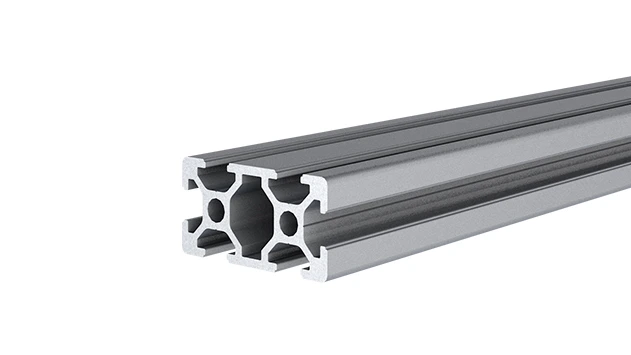
2040 is a 2.00 x 4.00CM fractional 20 series square extrusion T-slot profile with four open T-slots, two side with 2.00cm face, the other side with 4.00cm face. The profile has align-a-grooves to assist in aligning connecting profiles.
The consumer electronics industry is a realm of relentless innovation, where sleek smartphones, ultra-thin laptops, and cutting-edge wearables evolve faster than the blink of an eye. Behind every polished device lies a manufacturing process that demands precision, flexibility, and efficiency. From the moment a circuit board is populated with microchips to the final quality check before packaging, every step relies on tools and infrastructure that can keep up with rapid product cycles and ever-tighter tolerances. Enter the 2040 EU Standard Aluminum Profile —a humble yet transformative component that has quietly become the backbone of modern electronics manufacturing. Lightweight yet robust, modular yet customizable, this aluminum extrusion profile has redefined how production lines, workstations, and storage systems are designed. In this article, we'll explore seven key applications of the 2040 EU Standard Aluminum Profile in consumer electronics manufacturing, uncovering how it solves real-world challenges and drives operational excellence.
1. Ergonomic Assembly Workbenches: Where Precision Meets Comfort
At the heart of any consumer electronics production facility are the assembly workbenches—where technicians spend hours meticulously fitting components, soldering wires, and testing subassemblies. These workstations are more than just tables; they're the command centers of craftsmanship, requiring a delicate balance of stability, adjustability, and organization. Here, the 2040 EU Standard Aluminum Profile shines as an ideal material for building custom workbenches tailored to the unique needs of electronics assembly.
Unlike traditional wooden or steel workbenches, which are heavy, fixed, and difficult to modify, aluminum profile workbenches offer unmatched flexibility. The 2040 profile's modular design—characterized by its 20mm x 40mm cross-section and T-slot grooves—allows manufacturers to easily attach accessories like tool holders, LED task lights, ESD (electrostatic discharge) mats, and cable management systems using aluminum profile accessories such as brackets, clamps, and sliding nuts. For example, a workstation dedicated to smartphone screen assembly might include a 2040 frame with adjustable height (via telescoping profile legs) to accommodate technicians of different statures, while integrated shelves (mounted using corner brackets) hold tweezers, micro screwdrivers, and anti-static containers within arm's reach.
The benefits extend beyond adjustability. Aluminum's natural conductivity (when paired with ESD-safe finishes) helps dissipate static electricity—a critical feature when handling sensitive microchips and PCBs (printed circuit boards) that can be irreparably damaged by electrostatic discharge. Additionally, the profile's lightweight nature makes it easy to reconfigure workbenches as production needs change. If a facility shifts from assembling smartwatches to tablets, the same 2040 frame can be disassembled, re-cut, and reassembled into a larger workstation with minimal downtime. This adaptability is a game-changer in an industry where product lines can pivot overnight.
Real-world examples abound. A leading manufacturer of wireless earbuds, for instance, replaced its static steel workbenches with 2040 aluminum profile workstations and reported a 25% reduction in technician fatigue (thanks to height-adjustable legs) and a 15% decrease in assembly errors (attributed to better tool organization via profile-mounted accessories). Another case study from a laptop motherboard plant highlighted how the T-slot design allowed for quick integration of automated screw-driving tools, cutting cycle times by 10%. In short, 2040 aluminum profile workbenches don't just hold tools—they elevate the entire assembly process.
2. Material Handling Racks: Streamlining Component Storage and Access
Consumer electronics manufacturing relies on a steady flow of small, high-value components—from resistors and capacitors to camera modules and batteries. Misplacing or damaging these parts can lead to production delays, increased costs, and even quality issues in the final product. Material handling racks, which store and organize these components, are thus critical to maintaining efficiency. Here, the 2040 EU Standard Aluminum Profile has emerged as a superior alternative to traditional steel racks, offering a blend of durability, visibility, and modularity that steel simply can't match.
A typical material rack built with 2040 profiles consists of vertical support columns, horizontal shelves, and optional dividers—all connected using corner brackets, T-joints, and end caps (common aluminum profile accessories ). The T-slot grooves in the profiles allow for easy adjustment of shelf heights, so racks can accommodate everything from tiny component trays to larger subassemblies like display panels. Unlike steel racks, which require welding or drilling to modify, aluminum profile racks can be reconfigured in minutes using basic hand tools. For example, if a production line switches from using 18650 battery cells to larger 21700 cells, the shelves can be spaced further apart without replacing the entire rack.
Visibility is another key advantage. Aluminum's light, neutral color contrasts sharply with the colorful bins and labels used to identify components, making it easier for workers to quickly locate parts. This reduces "pick time"—the time spent retrieving components—which is a major contributor to production bottlenecks. A study by the Manufacturing Engineering Research Corporation found that facilities using aluminum profile material racks reduced pick time by an average of 18% compared to steel racks, translating to hundreds of labor hours saved annually.
Case Study: A Smart Speaker Manufacturer's Storage Revolution
A mid-sized manufacturer of smart speakers faced a common challenge: its steel material racks were too rigid to keep up with the frequent introduction of new components (e.g., larger microphones, updated circuit boards). Workers often had to stack bins haphazardly on shelves, leading to misplaced parts and occasional damage. The company replaced 80% of its steel racks with 2040 aluminum profile systems, complete with adjustable shelves, clear acrylic dividers, and color-coded bin holders. Within three months, component retrieval errors dropped by 32%, and the time spent restocking racks decreased by 25%. "We used to dread product launches because we'd have to rebuild half our storage," said the plant manager. "Now, we just adjust the shelves and add new dividers—no welding, no downtime."

3. Testing Fixtures: Ensuring Reliability in Every Device
Before a consumer electronic device reaches store shelves, it undergoes rigorous testing—drop tests, thermal cycling, waterproofing checks, and functionality verifications, to name a few. These tests require specialized fixtures that hold the device securely, apply precise forces, or simulate real-world conditions. Designing such fixtures is a balancing act: they must be strong enough to withstand repeated use, precise enough to avoid damaging the device, and adaptable enough to test multiple product models. The 2040 EU Standard Aluminum Profile excels in this role, offering the rigidity needed for accuracy and the modularity needed for versatility.
Consider a fixture used to test the touch sensitivity of a tablet screen. The fixture must hold the tablet at a specific angle while a robotic arm presses different points on the display. The 2040 profile's high strength-to-weight ratio ensures the fixture doesn't flex during testing, maintaining positional accuracy. Meanwhile, T-slot grooves allow for the easy attachment of clamping mechanisms (e.g., adjustable brackets with rubberized grips) that can be repositioned to fit tablets of different sizes—from 7-inch to 12-inch models. This eliminates the need to build a new fixture for each product, saving both time and money.
Thermal testing fixtures are another example. Consumer electronics like laptops and gaming consoles must perform reliably in extreme temperatures, so manufacturers use chambers that cycle between -40°C and 85°C. The fixtures holding the devices inside these chambers must withstand thermal expansion and contraction without warping. Aluminum's low thermal conductivity (compared to steel) helps insulate the device from temperature fluctuations in the fixture itself, while the 2040 profile's structural integrity ensures it remains stable even after thousands of thermal cycles.
| Testing Fixture Type | Key Requirement | How 2040 Aluminum Profile Delivers | Traditional Material (Steel) |
|---|---|---|---|
| drop Test Fixture | Shock absorption, repeatable drop height | Lightweight frame reduces inertia; T-slots allow quick adjustment of drop rails | Heavy, difficult to reposition; prone to warping after repeated impacts |
| Waterproofing Test Fixture | Corrosion resistance, tight seal alignment | Aluminum's natural corrosion resistance; precision-machined brackets ensure seal accuracy | Prone to rust; requires frequent repainting |
| Vibration Test Fixture | Minimal resonance, high rigidity | Stiff profile design dampens vibrations; modular joints reduce harmonic oscillation | Heavy, may amplify vibrations at certain frequencies |
For small-batch or prototype testing, the 2040 profile's quick-assembly nature is a boon. Engineers can sketch a fixture design in the morning, assemble it using pre-cut profiles and off-the-shelf accessories by afternoon, and begin testing by evening. This agility is crucial in the fast-paced world of consumer electronics, where getting a new device to market ahead of competitors can mean the difference between success and failure.
4. Modular Production Line Conveyors: Keeping the Flow Smooth
In consumer electronics manufacturing, time is money—and nowhere is this truer than on the production line, where products move from station to station in a carefully choreographed dance. Conveyors are the arteries of this process, transporting PCBs, subassemblies, and finished devices between assembly, testing, and packaging zones. Traditional conveyor systems, often built with steel frames and fixed tracks, are expensive to install and even costlier to reconfigure when production needs change. The 2040 EU Standard Aluminum Profile has revolutionized conveyor design by enabling modular, lightweight systems that can be adapted on the fly.
A typical aluminum profile conveyor frame consists of 2040 profiles connected via corner joints and T-slot brackets, supporting roller tracks, belts, or chain drives. The profile's low weight reduces the load on motors, lowering energy consumption, while its rigidity ensures the conveyor remains stable even at high speeds (up to 2 meters per second in some cases). What truly sets it apart, though, is its modularity. If a production line needs to be extended by 3 meters to accommodate a new testing station, additional 2040 sections can be bolted on without dismantling the entire system. Similarly, if a bottleneck emerges at the packaging stage, the conveyor's angle can be adjusted by swapping out fixed legs for telescoping ones—no welding or heavy machinery required.
For example, a manufacturer of wireless charging pads recently faced a challenge: its steel conveyor system was too rigid to handle the introduction of a new, larger pad model. The wider product required the conveyor track to be expanded by 50mm, a modification that would have taken weeks with steel. Instead, the company switched to a 2040 aluminum profile frame, using adjustable side rails (mounted via T-slot nuts) to widen the track in under a day. "We went from planning a weekend shutdown to making the change during a lunch break," said the production supervisor. "That's the power of aluminum profiles."
The use of roller track accessories further enhances the conveyor's versatility. Plastic or aluminum roller tracks can be easily clipped into the T-slots of the 2040 profile, allowing for smooth product movement with minimal friction. For delicate items like OLED displays, soft rubber-coated rollers (mounted using profile brackets) prevent scratches, while for heavier subassemblies (like laptop bases), steel-reinforced rollers ensure durability. This adaptability makes aluminum profile conveyors suitable for virtually every stage of electronics production, from bare PCB transport to final product packaging.
5. Storage Solutions for Small Parts: Organizing the "Nuts and Bolts" of Electronics
Consumer electronics are built from thousands of tiny components—resistors smaller than a grain of rice, capacitors the size of a pinhead, and connectors that require magnification to inspect. Storing these parts efficiently is a logistical puzzle: too much space, and retrieval becomes time-consuming; too little, and parts get damaged or lost. The 2040 EU Standard Aluminum Profile solves this puzzle by enabling the creation of custom small-parts storage systems that maximize space, improve accessibility, and scale with inventory.
These storage systems range from wall-mounted pegboards to floor-standing cabinets, all built using 2040 profiles as the structural framework. For wall-mounted units, vertical 2040 profiles are secured to studs, with horizontal profiles (adjustable via T-slot nuts) holding bins, drawers, or peg hooks. This design allows for infinite customization: a facility can add a new shelf for incoming components by simply sliding two brackets into the T-slots and tightening a few screws. Floor-standing cabinets, on the other hand, use 2040 profiles for the frame and doors, with internal dividers (made from thinner aluminum strips) creating compartments sized to fit specific parts. For example, a cabinet dedicated to smartphone charging ports might have 5mm-wide dividers for micro-USB connectors and 8mm dividers for USB-C ports, ensuring each part type has its own designated space.
The benefits of these systems are quantifiable. A study by the Institute of Industrial Engineers found that facilities using aluminum profile small-parts storage reported a 22% reduction in time spent searching for components and a 35% decrease in lost or damaged parts compared to traditional plastic bins or cardboard boxes. The secret lies in the system's visibility and organization: clear acrylic bin fronts (mounted using profile clips) allow workers to see contents at a glance, while color-coded labels (attached to profile edges) make sorting intuitive.
From Chaos to Order: A PCB Manufacturer's Success Story
A contract manufacturer specializing in PCB assembly was drowning in small parts. With over 500 unique components (resistors, capacitors, inductors) in stock, its workers were spending up to 45 minutes per shift searching for the right parts, often resorting to digging through unlabeled bins. The company invested in a 2040 aluminum profile storage wall: 10 feet wide, 8 feet tall, with 120 adjustable bins (each labeled with a QR code linked to inventory software). Within a month, search time dropped to under 5 minutes per shift, and inventory accuracy (measured via barcode scans) rose from 82% to 99.7%. "We used to have to overstock parts because we were never sure what was missing," said the inventory manager. "Now, we know exactly what's in each bin, and we've cut carrying costs by 18%."
6. Prototyping Frames: Bringing Ideas to Life Faster
Innovation in consumer electronics often starts with a prototype—a rough sketch turned into a physical model that engineers can test, tweak, and refine. Prototyping frames, which support 3D-printed enclosures, sensor arrays, or mechanical components, need to be strong enough to withstand testing but flexible enough to be modified as designs evolve. The 2040 EU Standard Aluminum Profile has become a favorite among R&D teams for this very reason, serving as a "digital-to-physical" bridge that accelerates the prototyping process.
Unlike 3D-printed frames (which are slow to produce and weak under stress) or steel frames (which are heavy and hard to modify), aluminum profile prototypes offer the best of both worlds: speed and strength. Engineers can design a frame in CAD (computer-aided design) software, cut 2040 profiles to length using a miter saw, and assemble the frame in minutes using aluminum profile accessories like corner joints, hinges, and sliding brackets. If a design change is needed—say, extending the frame by 10cm to accommodate a larger battery—additional profile sections can be added without reprinting or rebuilding from scratch.
For example, a startup developing a portable smart projector needed to test different lens positions to optimize image clarity. Using 2040 profiles, the team built a prototype frame with adjustable lens mounts (sliding along T-slot grooves) and a removable back panel (held in place by quick-release clips). Over two weeks, they tested 12 different configurations, making adjustments in minutes rather than days. "With aluminum profiles, we could iterate faster than our competitors," said the lead engineer. "That speed let us file a patent before anyone else."
The profile's compatibility with other materials further expands its prototyping potential. Engineers can attach 3D-printed brackets (using T-slot nuts), mount sensors (via clamp-on holders), or even integrate small motors (secured with profile clamps) to test mechanical functions like sliding screens or rotating cameras. This versatility makes the 2040 profile not just a frame, but a complete prototyping platform that bridges the gap between digital design and physical testing.
7. Custom Enclosures for Production Equipment: Protecting What Powers the Line
Behind the scenes of every electronics production line are countless pieces of equipment: programmable logic controllers (PLCs), power supplies, sensors, and robotic arms. These devices are the brains of the operation, but they're also vulnerable to dust, moisture, and accidental damage. Custom enclosures—built to fit specific equipment and environmental needs—are essential for protecting them. The 2040 EU Standard Aluminum Profile has emerged as a go-to material for these enclosures, offering a cost-effective, customizable alternative to off-the-shelf steel boxes.
Aluminum profile enclosures are built using 2040 frames with panels (acrylic, steel, or polycarbonate) attached via T-slot brackets. This design allows for precise sizing: if a PLC measures 300mm x 200mm x 150mm, the enclosure can be built to those exact dimensions, with cutouts for cables, vents, and display screens added using hole saws or CNC routers. Unlike prefabricated enclosures, which often require drilling or modification to fit equipment, aluminum profile enclosures are designed around the device, ensuring a perfect fit and maximum protection.
The benefits extend to maintenance. Enclosure panels can be mounted using hinges (another type of aluminum profile accessory ), allowing technicians to swing them open for easy access to wiring or components. For example, a sensor controller enclosure in a smartphone camera assembly line can be opened in seconds to adjust calibration settings, whereas a traditional steel enclosure might require removing eight screws and disconnecting cables. This ease of access reduces downtime during maintenance, a critical advantage in high-volume production environments.
Durability is another key factor. Aluminum's resistance to corrosion makes it suitable for use in cleanrooms (where harsh chemicals are used for cleaning) or factory floors (where spills are common). When paired with IP-rated gaskets (mounted in T-slot grooves), aluminum profile enclosures can achieve water and dust resistance up to IP65, protecting sensitive electronics from even the harshest conditions. For example, a food processing electronics manufacturer (which uses similar cleanroom standards to consumer electronics) replaced steel enclosures with 2040 aluminum profile versions and saw a 50% reduction in corrosion-related equipment failures over three years.
Conclusion: The Unsung Hero of Consumer Electronics Manufacturing
In the fast-paced world of consumer electronics, where innovation is measured in nanometers and production cycles in months, the 2040 EU Standard Aluminum Profile has quietly become an unsung hero. From ergonomic workbenches that protect technicians and components alike to modular conveyors that keep production flowing, from precision testing fixtures to agile prototyping frames, this versatile aluminum extrusion profile has redefined what's possible in manufacturing. Its success lies in its simplicity: a modular design that adapts to change, a strength-to-weight ratio that balances durability and efficiency, and a compatibility with endless accessories that turns a basic profile into a complete solution.
As consumer electronics continue to evolve—growing smaller, more powerful, and more complex—the demand for flexible, reliable manufacturing infrastructure will only increase. The 2040 EU Standard Aluminum Profile, with its ability to keep pace with change, will undoubtedly remain at the forefront of this evolution. Whether you're assembling the next generation of smartphones, testing cutting-edge wearables, or prototyping the device of tomorrow, chances are, the 2040 profile is already hard at work behind the scenes—proving that sometimes, the most transformative innovations are the ones that hold everything else together.