- Company Articles
- Industry articles
- Industry standards
- 85 Staggered Roller Track Load Testing: Ensuring Safety Standards

85 Staggered Roller Track Load Testing: Ensuring Safety Standards
Related Product
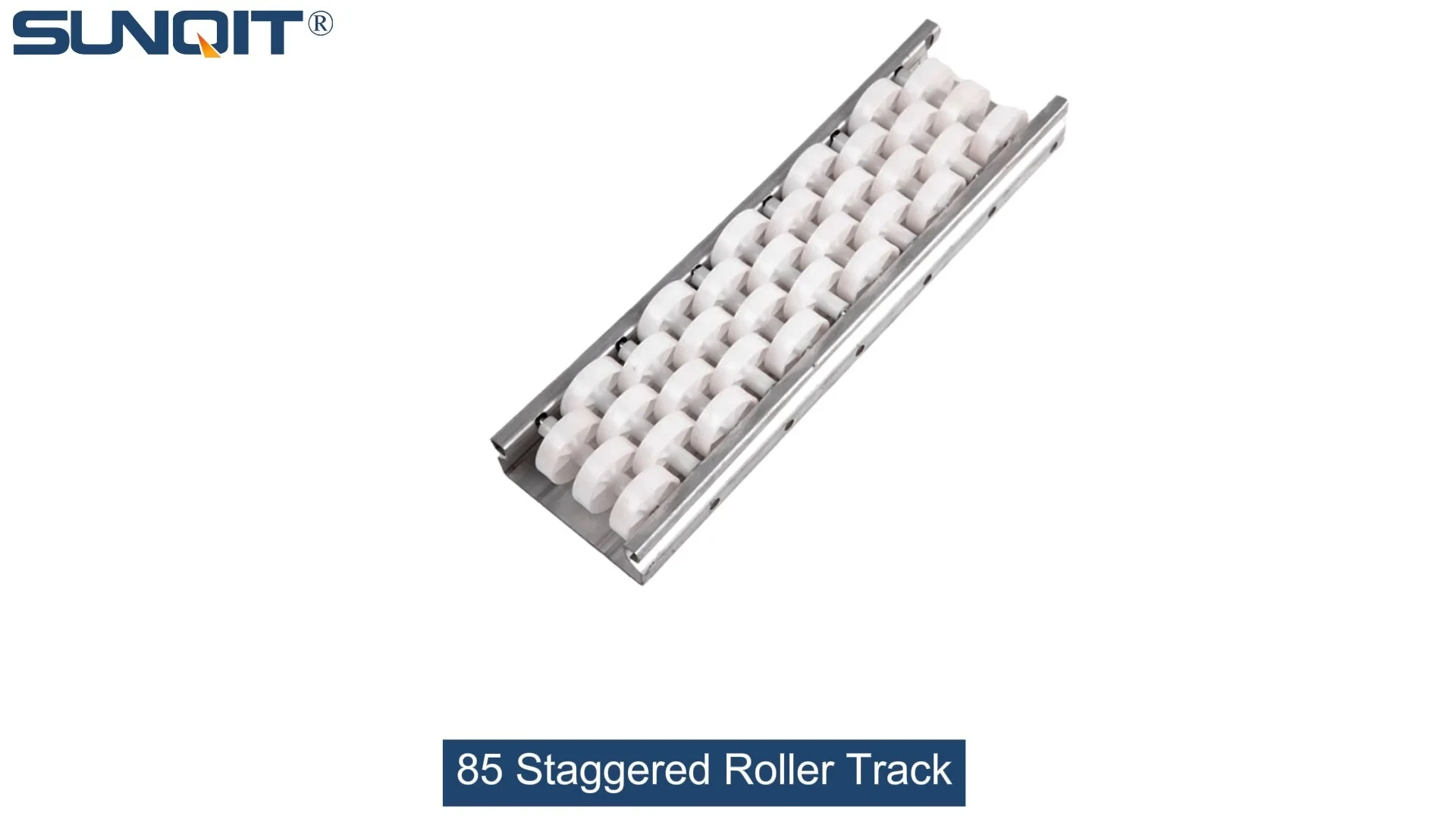
85 Staggered Roller Track
Triple staggered roller track is designed to enhance carton flow in various applications, such as flow racks and carton flow systems. This triple-staggered roller track is ideal for bins, boxes, or products that require smoother, more efficient rolling.
85 Staggered Roller Track Load Testing: Ensuring Safety Standards
In the fast-paced world of manufacturing, every component on the production floor plays a silent but critical role. From the workbench where operators assemble delicate parts to the conveyor belts that move products seamlessly, each piece needs to be reliable—especially when it comes to supporting heavy loads day in and day out. That's where the 85 Staggered Roller Track comes in. As a key player in material handling systems, it's not just about moving items from point A to B; it's about doing so safely, efficiently, and consistently. But how do we know it can handle the pressure? The answer lies in rigorous load testing—a process that goes beyond numbers to protect workers, safeguard products, and keep your production line running without a hitch.
Why Load Testing Matters: More Than Just a Checklist
Let's start with the obvious: when a roller track fails under load, the consequences can be devastating. A collapsed track might damage expensive components, halt production for hours (or even days), and worst of all, put your team members at risk of injury. But load testing isn't just about avoiding disasters—it's about building trust. When you invest in equipment that's been tested to the limit, you're telling your team, "We care about your safety." You're also telling your clients, "Our solutions don't cut corners."
For manufacturers in high-stakes industries like 3C assembly or medical device production, where precision and reliability are non-negotiable, load testing becomes a competitive advantage. Imagine a scenario where a medical equipment manufacturer relies on a roller track to move sensitive components. If that track can't handle the weight of those parts, the entire batch might be compromised, leading to delays in life-saving devices reaching hospitals. That's why we don't see load testing as a one-time task; it's the foundation of everything we do.
Meet the 85 Staggered Roller Track: Designed for the Demands of Modern Manufacturing
Before we dive into the testing process, let's get to know the star of the show: the 85 Staggered Roller Track. What makes it stand out in a market flooded with generic material handling solutions? For starters, it's built with durability in mind. Crafted from high-grade aluminum extrusion profile, it's lightweight yet surprisingly strong—perfect for balancing maneuverability with load-bearing capacity. The staggered roller design is another game-changer: by offsetting the rollers, it ensures smoother movement of products, reduces friction, and minimizes jams, even when handling irregularly shaped items.
But what really sets it apart is its flexibility. As part of our broader lean system, the 85 Staggered Roller Track isn't a one-size-fits-all solution. It's designed to work seamlessly with other components like our lean pipe workbenches, flow racks, and conveyors. Need to adjust the height to match a specific workstation? No problem—its compatibility with aluminum profile accessories means you can tweak it to fit your exact needs. Whether you're moving small electronic parts in a 3C assembly line or heavier components in automotive manufacturing, this track is built to adapt.
The Load Testing Process: From Lab to Factory Floor
So, how do we ensure the 85 Staggered Roller Track lives up to its promises? Our load testing process is rigorous, methodical, and rooted in real-world scenarios. Let's break it down step by step.
Step 1: Pre-Test Preparation – Setting the Stage for Accuracy
Before we even place a single pound on the track, we start with preparation. First, we inspect each component: the aluminum profile rails, the roller bearings, the connectors, and the end supports. We check for any manufacturing defects—tiny cracks, misaligned rollers, or loose fittings—that could skew results. Then, we simulate real-world installation conditions. That means mounting the track at the same angles and heights our clients would use, whether it's a horizontal conveyor line or an inclined flow rack setup. We even factor in environmental variables, like temperature and humidity, because we know your factory floor isn't always a controlled lab.
Step 2: Execution – Pushing It to the Limit (and Beyond)
Now comes the hands-on part: applying the load. We start with static load testing, where we place a constant weight on the track for an extended period (usually 24–48 hours) to check for deformation. But manufacturing isn't static—products are always moving—so we follow up with dynamic load testing. Using specialized equipment, we simulate the movement of products across the track at different speeds, adding varying weights to mimic peak production times. We don't just test the maximum load; we test beyond it. If the track is rated for 500 lbs, we'll push it to 600, 700, even 800 lbs to see where it bends (literally and figuratively). Why? Because we want to know its breaking point, so we can build in a safety margin that gives you peace of mind.
Step 3: Data Analysis – Turning Numbers into Trust
After the tests, we don't just look at "pass" or "fail." We dive into the data. How much did the track deflect under maximum load? Did the rollers show signs of wear after 10,000 cycles? Did any connectors loosen? We compare these results to industry standards—like those set by the Material Handling Industry (MHI)—and to our own internal benchmarks, which are often stricter. For example, while MHI might require a safety factor of 2:1 (meaning the track can handle twice its rated load), we aim for 3:1. Why? Because we've seen too many manufacturers cut corners, and we refuse to be one of them.
| Test Type | Rated Load | Tested Load | Result | Safety Margin |
|---|---|---|---|---|
| Static Load (24hr) | 500 lbs | 750 lbs | No deformation | 3:1 |
| Dynamic Load (10,000 cycles) | 400 lbs (moving) | 600 lbs (moving) | Rollers function normally | 2.5:1 |
| Impact Load | 300 lbs (sudden drop) | 450 lbs (sudden drop) | Connectors intact | 3:1 |
Safety Standards: Going Above and Beyond Industry Norms
Load testing doesn't happen in a vacuum—it's guided by strict safety standards. But here's the thing: we don't just meet these standards; we aim to exceed them. Let's take ESD (Electrostatic Discharge) safety, for example. In industries like electronics manufacturing, even a small static charge can fry sensitive components. That's why our ESD-compliant versions of the 85 Staggered Roller Track undergo additional testing to ensure they dissipate static electricity safely. We don't just check for ESD resistance once—we test it repeatedly over time, because we know wear and tear can affect performance.
Another area where we excel is adaptability to global standards. Whether you're based in the EU, Asia, or North America, our roller tracks meet regional safety norms, from CE marking to OSHA regulations. This isn't just about compliance; it's about making your life easier. When you work with us, you don't have to worry about juggling different standards for different markets—we've already done the homework.
Real-World Impact: How Load Testing Solves Our Clients' Toughest Problems
Numbers and standards are important, but they're just part of the story. What really matters is how our load-tested roller tracks impact our clients' day-to-day operations. Let's look at a recent case: a 3C assembly plant in Southern China that was struggling with production bottlenecks. Their old conveyor system couldn't handle the weight of their new, heavier smartphone components, leading to frequent breakdowns and missed deadlines.
We worked with their team to design a custom lean solution: integrating the 85 Staggered Roller Track with our aluminum profile workstations and flow racks. But before installation, we conducted on-site load tests, simulating their peak production hours. The results? The track handled 30% more weight than their old system, with zero jams or slowdowns. Six months later, they reported a 25% increase in line efficiency and a 90% reduction in downtime. "It's not just about the track," their production manager told us. "It's knowing that it won't fail when we need it most. That confidence lets us focus on making better products, not fixing equipment."
Another client, a medical device manufacturer, needed a roller track that could handle sterile environments and frequent cleaning. We modified the 85 Staggered Roller Track with stainless steel components and sealed bearings, then tested it under repeated washdowns with harsh disinfectants. Today, it's used to transport surgical tools, and the client no longer worries about corrosion or contamination—two critical concerns in their industry.
Working in Harmony: The 85 Staggered Roller Track and Your Lean Ecosystem
Manufacturing isn't about isolated components—it's about systems. The 85 Staggered Roller Track shines brightest when it's part of a larger lean system, working alongside our lean pipe workbenches, flow racks, and conveyors. For example, pair it with a lean pipe workbench E (single deck) and you've got a workstation where parts flow smoothly from the track to the assembly line, reducing the need for manual lifting. Add a flow rack B (3 row, 3 floor) into the mix, and you've created a seamless material handling loop that minimizes waste and maximizes efficiency.
What's more, because all our components are designed with the same "lean DNA"—modular, reusable, and easy to reconfigure—you can adapt your system as your needs change. A year from now, if you launch a new product line that requires heavier parts, you won't need to replace the entire track; just swap out a few aluminum profile accessories or upgrade the rollers. That's the power of sustainable improvement—one of the core principles of our lean solution philosophy.
Quality That Lasts: Our Commitment to Continuous Improvement
Load testing isn't a one-and-done process for us. We believe in kaizen—the Japanese philosophy of continuous improvement. Every time we get feedback from a client, every time we see a new trend in manufacturing (like the shift to heavier electric vehicle components), we go back to the lab. We test new materials, refine our designs, and update our testing protocols. Last year, for example, we added a "fatigue test" to our process, running the 85 Staggered Roller Track with a 400 lbs load for 100,000 cycles—mimicking five years of average use. The goal? To ensure it doesn't just meet today's standards, but tomorrow's too.
We also involve our clients in this process. Through our lean solution workshops, we invite them to share their pain points, and we use that input to drive innovation. "What if the track could adjust height automatically?" one client asked. Today, we're testing a motorized version with integrated sensors. It's still in development, but it's a direct result of listening to the people who use our products every day.
More Than a Product: Partnering for Your Success
At the end of the day, the 85 Staggered Roller Track isn't just a piece of equipment. It's a promise—a promise that we've done everything possible to keep your team safe, your production line running, and your business growing. When you choose us as your lean pipe supplier, you're not just buying a product; you're joining a partnership built on trust, quality, and a shared commitment to excellence.
So, the next time you're evaluating material handling solutions, ask yourself: "Does this supplier test their products like my business depends on it?" Because at the end of the day, it does. Your team's safety, your clients' satisfaction, your bottom line—they all rely on equipment that's built to perform, tested to the limit, and designed with your success in mind.
Ready to see the difference a load-tested roller track can make? Let's talk about your unique needs. Together, we'll build a lean system that doesn't just meet expectations—it exceeds them.