- Company Articles
- Industry articles
- Industry standards
- Nano-Coating Innovations for 2040 EU Standard Aluminum Profile Durability

Nano-Coating Innovations for 2040 EU Standard Aluminum Profile Durability
Related Product
2040 EU Standard Aluminum Profile
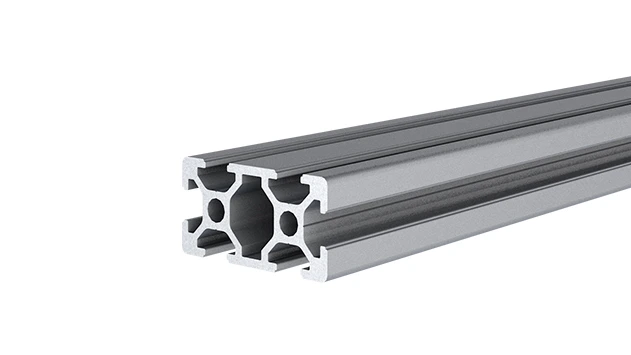
2040 is a 2.00 x 4.00CM fractional 20 series square extrusion T-slot profile with four open T-slots, two side with 2.00cm face, the other side with 4.00cm face. The profile has align-a-grooves to assist in aligning connecting profiles.
In the bustling world of manufacturing, where every component plays a silent role in keeping production lines moving, aluminum profiles stand out as the unsung heroes. From the workbenches where artisans assemble intricate parts to the conveyor systems that ferry materials across factories, these lightweight yet sturdy structures form the backbone of modern industrial setups. Among the myriad of aluminum profiles available, the 2040 EU standard aluminum profile has emerged as a gold standard for quality, precision, and reliability. But as industries evolve and demand more from their equipment, even the most robust profiles face challenges in maintaining long-term durability. Enter nano-coating innovations—a breakthrough that's redefining what these profiles can endure, and in turn, transforming the offerings of lean system suppliers and manufacturers worldwide.
The Backbone of Modern Manufacturing: 2040 EU Standard Aluminum Profiles
Before diving into the world of nano-coatings, it's essential to understand why the 2040 EU standard aluminum profile has become a cornerstone for lean system suppliers and industrial designers. The "2040" in its name refers to its dimensions—20mm in width and 40mm in height—a size that strikes the perfect balance between structural stability and versatility. But the EU standard isn't just about measurements; it's a promise of quality. These profiles are crafted from high-grade aluminum extrusion profile, ensuring uniform thickness, consistent mechanical properties, and compliance with strict European regulations on material safety and environmental impact.
What makes the 2040 EU standard aluminum profile so indispensable? For starters, its T-slot design, a hallmark of aluminum extrusion profiles, allows for seamless integration with aluminum profile accessories. Whether it's attaching a bracket for a conveyor belt, securing a workbench top, or adding end caps to prevent debris buildup, the T-slot system eliminates the need for welding or drilling, making assembly and customization a breeze. This flexibility is a boon for lean system suppliers, who rely on adaptable components to create tailored solutions for their clients—solutions that minimize waste, maximize space, and streamline workflows.
Take, for example, a lean manufacturing facility that uses 2040 EU standard profiles to build material racks, workstations, and turnover trolleys. The profile's load-bearing capacity (often tested to withstand weights of up to 500kg per meter) ensures it can handle heavy tools and materials without bending or warping. Its lightweight nature, meanwhile, makes it easy to reconfigure layouts as production needs change—no small feat in an industry where agility is key to staying competitive. It's no wonder that alongside its cousin, the 4040 EU standard aluminum profile (a square 40x40mm variant), the 2040 has become a staple in factories, warehouses, and workshops across Europe and beyond.
The Durability Dilemma: Why Traditional Coatings Fall Short
For all their strengths, aluminum profiles—even those meeting EU standards—are not invincible. Aluminum, by nature, is prone to corrosion when exposed to moisture, chemicals, or salt-laden air. In industrial environments, where profiles are often subjected to oils, coolants, and frequent handling, this vulnerability can lead to premature wear and tear. Scratches from tools, dents from accidental impacts, and the slow creep of rust can degrade a profile's structural integrity over time, forcing manufacturers to replace components sooner than expected.
Traditional solutions to boost durability have included anodizing, powder coating, or painting. Anodizing, a process that forms a protective oxide layer on the aluminum surface, offers decent corrosion resistance but is prone to chipping if scratched. Powder coating, which involves applying a dry powder and curing it with heat, provides a thicker, more colorful finish but can crack under heavy impact. Both methods add thickness to the profile, which can sometimes interfere with the fit of aluminum profile accessories—think loose joints or misaligned T-slot connections that compromise stability.
Lean system suppliers, in particular, feel the pinch of these limitations. When a client invests in a lean system built with 2040 EU standard aluminum profiles, they expect it to last for years, even decades. Frequent replacements not only drive up costs but also disrupt production schedules, undermining the very "lean" principles of efficiency and waste reduction that these systems are designed to uphold. It was clear that a new approach to protecting aluminum extrusion profiles was needed—one that could enhance durability without sacrificing the profile's inherent advantages of lightness, flexibility, and precision.

Nano-Coatings: A Molecular Shield for Aluminum Profiles
Imagine a shield so thin it's invisible to the naked eye, yet so strong it can repel water, resist scratches, and block corrosive substances from reaching the aluminum beneath. That's the promise of nano-coating technology. Unlike traditional coatings, which sit on the surface like a layer of armor, nano-coatings penetrate the microscopic pores of the aluminum extrusion profile, forming a chemical bond at the molecular level. This bond creates a barrier that's not just a coating, but an integral part of the profile itself.
The magic lies in the size of the particles used in these coatings—measured in nanometers (one billionth of a meter). These tiny particles can fill in the smallest imperfections on the aluminum surface, creating a smooth, uniform layer that's far more resistant to wear than conventional options. For 2040 EU standard aluminum profiles, this means a protective layer that's often less than 100 nanometers thick—thinner than a human hair—yet exponentially more durable than anodizing or powder coating.
One of the most exciting advancements in nano-coatings for aluminum profiles is the use of ceramic-based formulas. These coatings, infused with silica or titanium dioxide nanoparticles, create a hard, glass-like surface that's resistant to scratches, chemicals, and UV radiation. Another innovation is graphene-reinforced nano-coatings, where sheets of graphene (the strongest material known to man) are dispersed within the coating to add unparalleled tensile strength. Both options are applied using low-pressure spray or dip methods, ensuring even coverage across complex shapes—including the T-slots and edges of 2040 EU standard profiles that are critical for attaching aluminum profile accessories.
| Coating Type | Thickness | Corrosion Resistance | Wear Resistance | Impact on Aluminum Profile Accessories | Environmental Impact |
|---|---|---|---|---|---|
| Anodizing | 5-20 μm | Moderate (prone to pitting in saltwater) | Low (easily scratched) | May thicken profile, causing tight fits with accessories | Uses toxic electrolytes; requires wastewater treatment |
| Powder Coating | 50-150 μm | High (but cracks allow moisture ingress) | Moderate (chips under heavy impact) | Thick layer can block T-slots, limiting accessory compatibility | Low VOCs but requires high-temperature curing (energy-intensive) |
| Nano-Ceramic Coating | 50-100 nm | Excellent (resists acids, alkalis, and salt spray) | High (9H pencil hardness rating) | Ultra-thin; no impact on accessory fit or T-slot functionality | Low VOCs; water-based formulas; minimal waste |
| Graphene-Reinforced Nano-Coating | 30-80 nm | Exceptional (barrier against most chemicals) | Superior (resists abrasion even under heavy loads) | Maintains profile dimensions; ideal for precision accessories | Energy-efficient application; recyclable coating |
Beyond Durability: The Ripple Effects of Nano-Coated Profiles
The benefits of nano-coating 2040 EU standard aluminum profiles extend far beyond just making them tougher. For lean system suppliers, these innovations are a game-changer in how they design and market their solutions. Let's break down the ripple effects:
1. Extended Lifespan, Lower Total Cost of Ownership
In industrial settings, downtime is the enemy of productivity. A single corroded profile in a conveyor system or a scratched workbench edge that snags materials can bring operations to a halt. Nano-coated profiles, with their enhanced resistance to wear and corrosion, last up to 3-5 times longer than traditionally coated ones. This means fewer replacements, less maintenance, and lower long-term costs for manufacturers—a selling point that lean system suppliers are quick to highlight. When a client knows their aluminum extrusion profile workbench or material rack will stay in top shape for a decade instead of three, the initial investment in nano-coating becomes a no-brainer.
2. Seamless Compatibility with Aluminum Profile Accessories
One of the biggest frustrations with traditional coatings is how they can alter a profile's dimensions. A powder-coated 2040 EU standard profile might measure slightly wider or taller, making it difficult to slide in T-slot nuts or attach brackets. Nano-coatings, being ultra-thin, preserve the profile's original dimensions to within micrometers. This precision ensures that aluminum profile accessories—from end caps to connectors—fit perfectly every time, reducing assembly time and eliminating the need for modifications. For lean system suppliers, this means faster installation, happier clients, and a reputation for reliability.
3. Enhanced Aesthetics and Brand Perception
Industrial equipment doesn't have to be utilitarian. A sleek, scratch-free aluminum profile not only functions better but also looks more professional. Nano-coatings, which can be formulated to enhance the natural metallic sheen of aluminum or add subtle color tints, give profiles a high-end finish that stands out in a factory floor. For manufacturers that open their facilities to clients or investors, this attention to detail speaks volumes about their commitment to quality. Lean system suppliers, too, benefit from offering solutions that are as visually appealing as they are functional—turning industrial equipment into a showcase of innovation.
4. Eco-Friendly Manufacturing Practices
Sustainability is no longer a buzzword; it's a business imperative. Traditional coating methods like anodizing use harsh chemicals, while powder coating requires high-energy curing ovens. Nano-coatings, by contrast, often use water-based formulas with low volatile organic compounds (VOCs) and can be applied at room temperature. This reduces energy consumption and minimizes the need for wastewater treatment, aligning with the EU's strict environmental regulations. For lean system suppliers aiming to position themselves as green partners, nano-coated 2040 EU standard aluminum profiles are a powerful tool in their sustainability toolkit.
Real-World Impact: How Lean System Suppliers Are Embracing Nano-Coatings
To truly grasp the impact of nano-coating innovations, look no further than the stories of lean system suppliers that have adopted this technology. Take, for instance, a mid-sized supplier based in Germany that specializes in building custom workstations and material handling systems for the automotive industry. A few years ago, they began receiving complaints from clients about their 4040 EU standard aluminum profile racks rusting in the humid conditions of paint shops. After switching to nano-ceramic coated 2040 and 4040 profiles, the complaints stopped. Today, they report a 40% reduction in warranty claims and a 25% increase in repeat business—proof that durability sells.
Another example comes from a lean system supplier in Spain that serves the food and beverage sector. Here, hygiene is paramount, and profiles are frequently washed down with harsh sanitizers. Traditional coatings would degrade quickly under these conditions, leading to bacterial buildup in scratches. By using graphene-reinforced nano-coatings on their aluminum extrusion profile conveyors, they've created systems that withstand daily sanitization without corroding or harboring germs. The result? Contracts with major beverage brands and a reputation as a leader in hygienic manufacturing solutions.
These success stories highlight a broader trend: nano-coatings are not just a technical upgrade but a strategic differentiator. In a market where lean system suppliers compete fiercely on quality and price, the ability to offer profiles that last longer, perform better, and align with sustainability goals is a powerful advantage. It's no surprise, then, that demand for nano-coated 2040 EU standard aluminum profiles is soaring, with suppliers reporting double-digit growth in orders for these enhanced components.
Looking Ahead: The Future of Nano-Coatings and Aluminum Profiles
As technology advances, the potential of nano-coatings for aluminum profiles continues to expand. Researchers are now experimenting with self-healing nano-coatings, which use microcapsules filled with healing agents to repair small scratches automatically. Imagine a 2040 EU standard aluminum profile that, when nicked by a tool, releases a tiny amount of polymer to seal the damage—eliminating the need for manual repairs. Other innovations include conductive nano-coatings that turn aluminum profiles into smart components, capable of monitoring temperature, vibration, or strain in real time. For lean system suppliers, this opens the door to "predictive maintenance" systems that alert operators to potential issues before they cause downtime.
There's also a growing focus on making nano-coatings more accessible. While the initial cost of nano-coating is higher than traditional methods, economies of scale are driving prices down. Some suppliers now offer nano-coating as a standard option on their 2040 EU standard aluminum profiles, rather than a premium add-on. As awareness grows and more manufacturers experience the benefits firsthand, it's likely that nano-coatings will become the new norm for aluminum extrusion profiles—much like anodizing did decades ago.
Conclusion: A New Era of Durability
In the end, the story of nano-coating innovations for 2040 EU standard aluminum profiles is about more than just making metal stronger. It's about empowering manufacturers to build better, more efficient systems. It's about lean system suppliers delivering on the promise of longevity and reliability. And it's about reimagining what aluminum extrusion profiles can achieve when paired with cutting-edge technology. As nano-coatings continue to evolve, one thing is clear: the future of industrial manufacturing will be built on profiles that are not just standard, but extraordinary—profiles that stand the test of time, adapt to changing needs, and help businesses thrive in an ever-competitive world.
For anyone involved in the design, supply, or use of aluminum profiles—whether you're a lean system supplier crafting the next generation of workbenches or a manufacturer looking to upgrade your production line—nano-coatings offer a glimpse into a more durable, efficient, and sustainable future. And as we move forward, it's innovations like these that will keep the wheels of industry turning, one nano-protected profile at a time.