- Company Articles
- Industry articles
- Industry standards
- OSHA Compliance: Safety Standards for Lean Pipe Clamp B Installations

OSHA Compliance: Safety Standards for Lean Pipe Clamp B Installations
Related Product
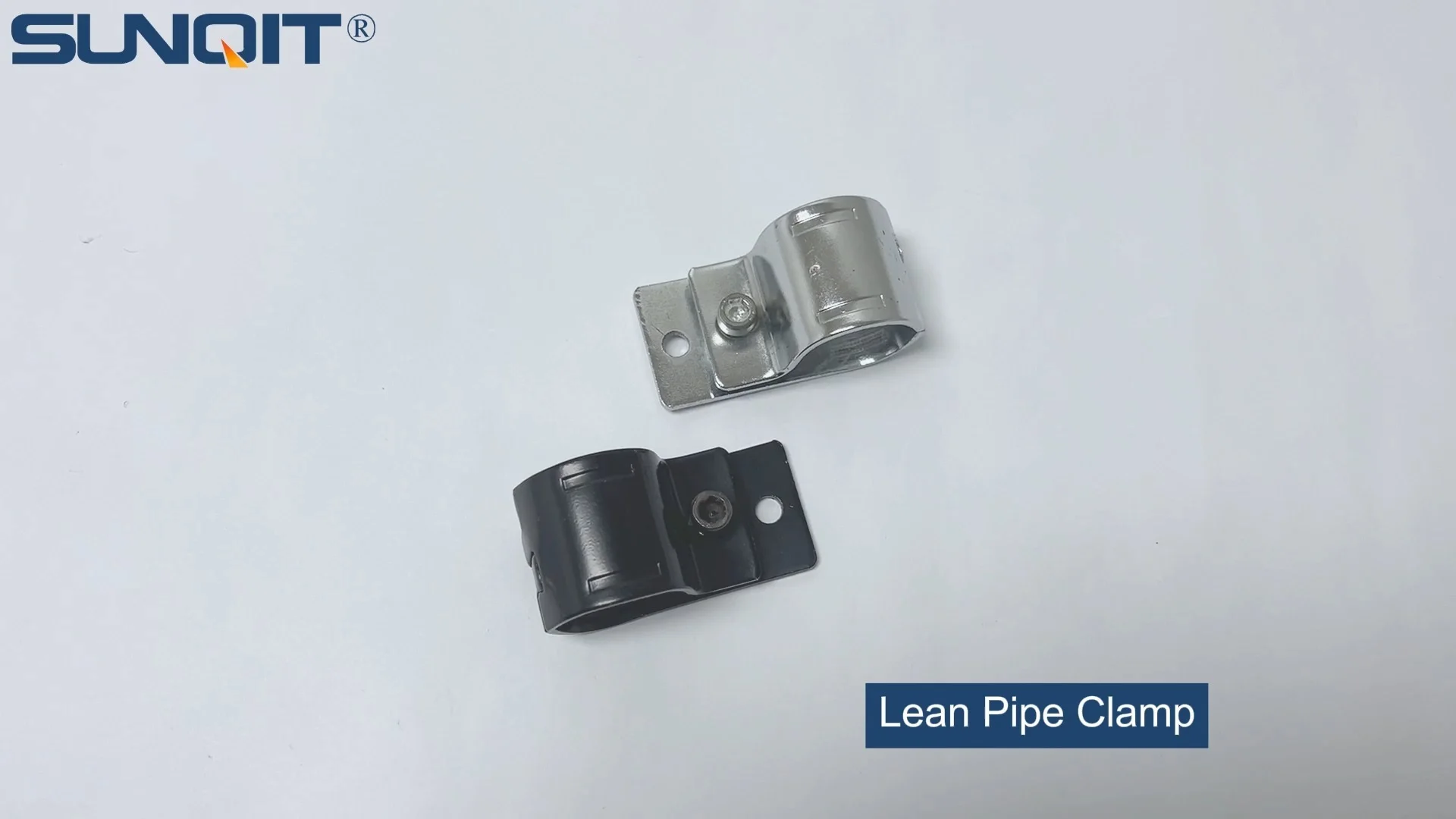
Lean Pipe Clamp
Lean pipe clamp is used for rack system hang monitor or other panel for workbenck, flowrack in production daily use.
In the fast-paced world of manufacturing and production, efficiency and safety walk hand in hand. Lean systems have revolutionized how facilities operate, streamlining workflows and reducing waste—but none of that matters if the very structures supporting these systems put workers at risk. Enter the unsung hero of many lean setups: the lean pipe clamp B. This small but critical component holds together everything from workbenches to material racks, ensuring that production lines run smoothly and safely. But here's the catch: improper installation of these clamps can turn a well-oiled operation into a disaster zone. That's where OSHA steps in. The Occupational Safety and Health Administration (OSHA) sets strict standards to protect workers from hazards, and when it comes to lean pipe clamp B installations, compliance isn't just a box to check—it's a lifeline for your team.
In this article, we'll dive into why OSHA compliance matters for lean pipe clamp B installations, break down the key safety standards you need to follow, and explore how getting it right protects your workers, your productivity, and your bottom line. Whether you're a facility manager, an installer, or simply someone invested in workplace safety, this guide will equip you with the knowledge to keep your lean systems both efficient and secure.
What Is Lean Pipe Clamp B, and Why Does It Matter?
Before we jump into OSHA standards, let's make sure we're all on the same page about what lean pipe clamp B is and why it's so crucial. Lean pipe systems—often made from aluminum, stainless steel, or coated steel—are modular structures used to build everything from workbenches to conveyor supports. These systems rely on joints and clamps to connect pipes, and lean pipe clamp B is one of the most common types of connectors in these setups.
Think of lean pipe clamp B as the "glue" that holds your lean system together. It's designed to secure two or more pipes at specific angles (often 90 degrees, though some variants allow for adjustments), creating stable frames for workbenches, material racks, or even turnover trolleys. Unlike fixed lean pipe joints, clamp B offers a balance of rigidity and adjustability, making it ideal for dynamic production environments where layouts might change over time. But this adjustability is a double-edged sword: if not installed correctly, a loose or misaligned clamp B can compromise the entire structure's integrity.
Consider a typical scenario: a workbench in an electronics assembly line, built with aluminum lean pipes and secured with clamp Bs. If those clamps are under-tightened, the workbench might wobble when an employee places heavy tools on it. Over time, the stress could cause the clamps to slip, the pipes to bend, and eventually, the workbench to collapse. The result? Injuries, damaged equipment, and costly downtime. That's why understanding lean pipe clamp B—its design, its limitations, and how to install it safely—is the first step toward OSHA compliance.
OSHA's General Requirements for Machinery and Equipment Installation
OSHA doesn't mess around when it comes to workplace safety, and its standards for machinery and equipment installation are broad, covering everything from guardrails to electrical wiring. For lean pipe clamp B installations, two key OSHA regulations take center stage: 29 CFR 1910.212 (General Requirements for All Machines) and 29 CFR 1910.176 (Handling Materials – General). Let's break down what these mean for your clamps.
29 CFR 1910.212 focuses on machine guarding, but its principles apply directly to lean structures. It states that "one or more methods of machine guarding shall be provided to protect the operator and other employees in the machine area from hazards such as those created by point of operation, ingoing nip points, rotating parts, flying chips and sparks." While your lean pipe workbench might not have "rotating parts," a collapsing structure due to faulty clamps creates a "flying chips" or "struck-by" hazard. OSHA requires that all equipment—including the frames and supports holding it—be "constructed and arranged to prevent injury to employees." In short: your clamp B installations must be strong enough to withstand the loads they'll bear, with no loose or unstable components that could fail.
29 CFR 1910.176 deals with material handling, emphasizing that "all materials handling equipment shall be inspected before use, and defective equipment shall not be used." This includes the lean pipe systems used to store or transport materials. If a material rack held together by clamp Bs collapses because the clamps were improperly installed, you're violating this standard. OSHA also requires that "permanent aisles and passageways shall be appropriately marked and kept clear and in good repair." A collapsed rack blocking an aisle? That's a violation too.
But OSHA's standards aren't just about avoiding penalties (though those can be steep—up to $156,259 for willful violations). They're about preventing tragedies. In 2022, OSHA reported over 2,000 workplace fatalities due to "contact with objects and equipment"—many of which could have been prevented with proper installation and maintenance of structural components like lean pipe clamp B. Compliance isn't just about following rules; it's about valuing the people who keep your business running.

Key Safety Standards for Lean Pipe Clamp B Installation
Now that we understand why OSHA cares about your clamp Bs, let's get into the nitty-gritty of how to install them correctly. These standards aren't arbitrary—they're based on engineering best practices and real-world data on what causes failures. Follow these steps, and you'll be well on your way to a compliant, safe workplace.
1. Start with Quality: Inspect Before You Install
OSHA's first rule of thumb? "Defective equipment shall not be used." That means before you even pick up a wrench, you need to inspect your lean pipe clamp Bs for signs of damage or wear. Look for cracks in the metal, stripped threads, or bent components—any of these can weaken the clamp's grip. Also, check that the clamps are compatible with your lean pipes. Using a clamp B designed for 28mm aluminum pipe on a 30mm stainless steel pipe is a recipe for disaster; the fit will be loose, and the joint will fail under stress.
Pro tip: Keep a log of your inspections. OSHA loves documentation, and having a record that you checked each clamp before installation can protect you in the event of an audit. Note the date, the inspector's name, and any issues found (and replaced!).
2. Torque It Right: Don't Guess—Measure
Here's a common mistake: tightening a clamp B "until it feels snug." But "snug" is subjective, and under-tightening is just as bad as over-tightening. Under-tighten, and the clamp will loosen over time as the structure vibrates. Over-tighten, and you risk stripping the threads or warping the clamp, which weakens it. OSHA doesn't specify exact torque values for every clamp (that's up to the manufacturer), but it does require that "fasteners shall be tightened to the manufacturer's specifications."
To make this concrete, let's look at a typical scenario. Suppose you're installing a lean pipe clamp B on an aluminum lean pipe (a popular choice for its lightweight and corrosion resistance). The manufacturer's specs might recommend 15-20 Nm of torque. For a stainless steel pipe, which is denser, the torque might be higher—say, 20-25 Nm. The table below breaks down common torque ranges by pipe material:
| Pipe Material | Pipe Diameter | Recommended Torque for Clamp B (Nm) | Notes |
|---|---|---|---|
| Aluminum Lean Pipe | 28mm | 15-20 | Use a torque wrench to avoid warping aluminum |
| Stainless Steel Pipe | 28mm | 20-25 | Stainless steel is stronger; higher torque prevents slipping |
| PE-Coated Lean Pipe | 30mm | 18-22 | Coating adds friction; avoid over-tightening to prevent tearing |
Always refer to your clamp manufacturer's datasheet for exact values—this table is a general guide, not a substitute for specific instructions.
3. Align for Stability: Joint Geometry Matters
A clamp B is only as strong as the joint it creates. Even if you torque it perfectly, if the pipes are misaligned, the clamp will bear uneven stress. For example, if you're building a workbench and the vertical pipes are tilted outward, the horizontal crossbars (held by clamp Bs) will pull against the clamps, causing them to loosen over time. OSHA requires that "structures shall be stable under all conditions of use," which means taking the time to ensure pipes are perpendicular or at the intended angle before tightening.
Use a level to check vertical pipes and a square to verify 90-degree angles. For angled joints (like those in a material rack with sloped shelves), use a protractor to ensure the angle matches the design specs. Remember: a joint that's off by just a few degrees can double the stress on the clamp B, leading to premature failure.
4. Consider the Load: Don't Overburden the Clamp
OSHA's 1910.176 standard warns against "overloading equipment beyond its rated capacity." That applies to your clamp Bs too. Every clamp has a maximum load it can withstand—usually listed by the manufacturer as a "static load rating" (for stationary structures like workbenches) and a "dynamic load rating" (for moving structures like turnover trolleys with caster wheels). Exceeding these ratings is a direct violation and a major safety risk.
Let's say you're building a material rack B (3 row and 3 floor) using clamp Bs. The rack is designed to hold 50kg per shelf. If you load each shelf with 75kg, the clamp Bs at the corners will be under excessive stress. Over time, the threads will stretch, the clamp will loosen, and the shelf could collapse. To avoid this, always check the load rating of both the clamp B and the entire structure. When in doubt, add extra clamps or reinforce the joints—better safe than sorry.

The Risks of Cutting Corners: What Happens When Clamp B Installations Fail
You might be thinking, "We've been installing clamp Bs without following all these steps for years, and nothing's gone wrong." But luck isn't a safety plan. Let's look at real-world examples of what happens when OSHA standards are ignored—and why these risks are too high to take.
Case 1: The Wobbly Workbench
A small electronics manufacturer decided to build new workbenches using aluminum lean pipes and clamp Bs to save costs. The installer skipped the torque wrench, tightening the clamps "by feel." A few weeks later, an employee was soldering components on the workbench when the corner clamp B failed. The bench tilted, sending tools and circuit boards crashing to the floor. The employee tried to catch the falling equipment and suffered a sprained wrist. OSHA investigated and cited the company for "failure to ensure equipment was installed to manufacturer specifications," resulting in a $12,000 fine. Worse, production was halted for two days while the benches were rebuilt—costing the company far more than the fines.
Case 2: The Collapsing Material Rack
A warehouse used lean pipe clamp Bs to build a material rack for heavy boxes. The installer used clamp Bs that were slightly cracked (they "looked fine") and ignored the load rating, stacking boxes weighing 80kg on shelves rated for 50kg. One afternoon, the top shelf collapsed, sending boxes crashing down onto the shelves below. The entire rack toppled, injuring a nearby worker with a broken leg. OSHA's report cited "use of defective equipment" and "overloading," resulting in a $35,000 fine and a mandatory safety training program for all employees. The worker's medical bills and workers' comp claim cost the company an additional $150,000.
Case 3: The Unstable Trolley
A food processing plant used turnover trolleys with caster wheels to move ingredients between stations. The trolleys were built with lean pipe clamp Bs, but the installer didn't secure the caster wheel mounts properly—again, skipping the torque wrench. One day, an employee pushed a loaded trolley around a corner, and the front caster mount (held by a loose clamp B) snapped. The trolley tipped, spilling 50kg of flour and causing the employee to slip and fall, suffering a concussion. OSHA fined the company for "failure to maintain material handling equipment in safe condition," and the plant had to shut down for a day to inspect all trolleys—costing thousands in lost production.
These stories aren't anomalies. They're reminders that every clamp B installation is a critical link in your safety chain. Cut corners, and that chain breaks—with devastating consequences for your team and your business.

Best Practices: Beyond Installation—Maintaining Compliance
OSHA compliance isn't a one-and-done task. Even the best-installed clamp Bs need regular maintenance to stay safe. Here's how to keep your lean systems compliant long after the initial setup.
1. Train Your Team: Knowledge Is Power
OSHA requires that "employees shall be trained in the safe operation and maintenance of equipment." That means everyone involved in installing or maintaining clamp Bs—from installers to facility managers—needs to know the standards. Train them to inspect clamps, use torque wrenches correctly, and recognize signs of wear. Role-play scenarios (like "What do you do if you find a cracked clamp?") to reinforce learning. The more your team understands why these steps matter, the more likely they are to follow them.
2. Inspect Regularly: Catch Issues Before They Escalate
Daily visual inspections are a must. Have employees check clamp Bs for looseness, cracks, or rust during their pre-shift walkthroughs. For high-stress areas (like workbenches used for heavy assembly or material racks with frequent loading/unloading), do weekly torque checks with a wrench. Every six months, bring in a qualified engineer to do a structural audit—they can spot issues (like fatigue in the pipe joints) that untrained eyes might miss.
Again, document everything. Note inspection dates, who did them, and any issues found (and fixed). If OSHA comes knocking, this paperwork will prove you're serious about safety.
3. replace When Necessary: Don't Band-Aid a Broken Clamp
If a clamp B is cracked, stripped, or worn, replace it—don't try to "fix" it with tape, extra washers, or over-tightening. A damaged clamp can't be trusted, and OSHA won't accept "temporary fixes" as compliance. Keep a stock of spare clamp Bs on hand so you can replace them immediately, minimizing downtime.
Conclusion: Safety and Efficiency Go Hand in Hand
At the end of the day, OSHA compliance for lean pipe clamp B installations isn't about bureaucracy—it's about respect. Respect for your employees, who deserve to work in an environment where they don't have to worry about falling shelves or collapsing workbenches. Respect for your business, which can't afford the cost of accidents, fines, or downtime. And respect for the lean principles that make your operation successful—because true efficiency isn't just about speed; it's about sustainability, and a safe workplace is the most sustainable workplace of all.
So the next time you install a lean pipe clamp B, remember: this small component is holding up more than just pipes. It's holding up your commitment to safety, your team's trust, and your company's future. Take the time to inspect, torque, align, and maintain it properly. Your employees will thank you, OSHA will thank you, and your bottom line will too.
Stay safe, stay compliant, and keep building lean systems that work—for everyone.