- Company Articles
- Industry articles
- Industry standards
- OSHA Compliance: Using Suction Cup Anti-Slip Foot Adjusters to Meet Regulations

OSHA Compliance: Using Suction Cup Anti-Slip Foot Adjusters to Meet Regulations
Related Product
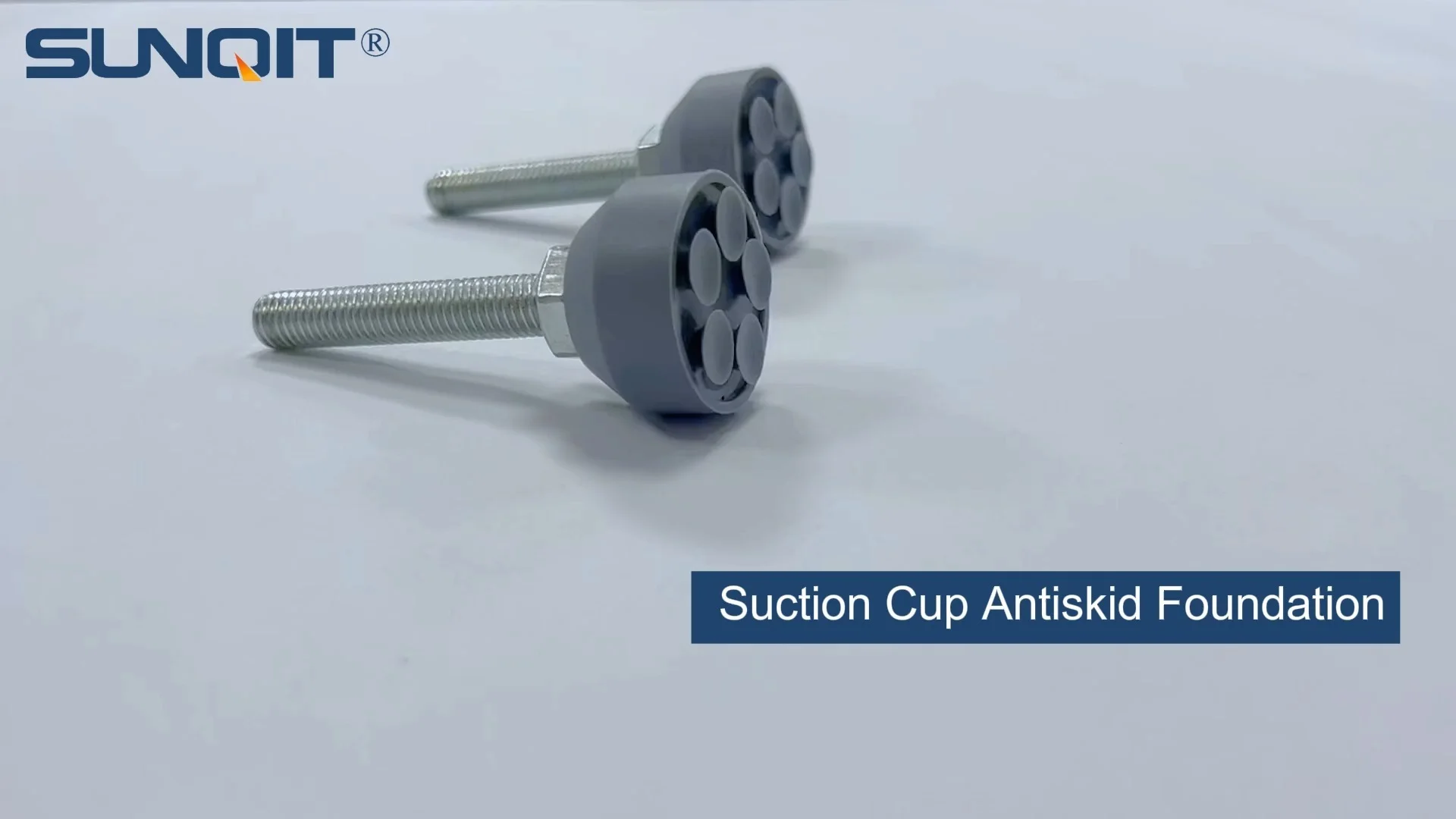
Suction Cup Anti-slip Foot Adjuster
D=35mm suction cup anti-slip foot adjusterï¼screw M10*55ï¼with a blot, used for workbench, flowrack pipe contact with groud.
Walk into any manufacturing plant, warehouse, or assembly facility, and you'll likely hear the hum of machinery, the clink of tools, and the steady rhythm of workers focused on their tasks. What you might not immediately notice—though it's critical to everyone's safety—is the invisible framework of regulations that keeps those workplaces from becoming hazards. At the center of that framework is OSHA, the Occupational Safety and Health Administration, whose standards are designed to protect workers from injuries, illnesses, and fatalities. Among the most common and costly workplace risks are slips, trips, and falls, which OSHA consistently ranks among the top causes of non-fatal injuries. In this article, we'll explore how a simple yet innovative tool—suction cup anti-slip foot adjusters—plays a pivotal role in keeping workplaces OSHA-compliant, with a focus on their application in workbenches, lean pipe systems, and other essential equipment.
Understanding OSHA's Role in Workplace Safety
Before diving into the specifics of anti-slip solutions, it's important to grasp why OSHA regulations matter beyond just "checking a box." OSHA's mission is straightforward: to ensure safe and healthy working conditions by setting and enforcing standards, and by providing training, outreach, education, and assistance. For employers, compliance isn't just about avoiding fines (though those can be steep—up to $156,259 for willful or repeated violations). It's about protecting their most valuable asset: their workforce. A single slip-and-fall incident can lead to lost workdays, increased workers' compensation costs, damaged morale, and even legal liability. OSHA's General Industry Standards (29 CFR 1910) outline requirements for everything from machine guarding to electrical safety, but one subpart stands out for our discussion: Subpart D, which covers "Walking-Working Surfaces."
Subpart D is where OSHA addresses slip, trip, and fall hazards directly. It mandates that all walking-working surfaces be "maintained free of hazards such as sharp or protruding objects, loose boards, corrosion, leaks, spills, snow, and ice." It also requires that surfaces "have a coefficient of friction (COF) sufficient to provide safe traction." For dry surfaces, OSHA recommends a minimum COF of 0.5; for wet or oily surfaces, that drops to 0.3, though higher is always better. The challenge? Many common workplace tools—from workbenches to material racks—rest on feet or casters that, over time, can wear down, become unstable, or fail to grip slippery floors, putting workers at risk of injury and employers at risk of non-compliance.
The Hidden Risk: Unstable Workbenches and Slippery Surfaces
Consider the humble workbench, a staple in almost every industrial setting. Whether it's a simple wooden table in a small workshop or a sophisticated lean pipe workbench in a high-tech assembly line, the workbench is where precision meets productivity. But if that workbench isn't properly stabilized, it becomes a hazard. Imagine a worker leaning into a task, applying force to tighten a bolt or align a component, only to have the workbench shift suddenly because its feet can't grip the floor. The result? A jarring movement that throws off their balance, potentially causing them to fall or strain a muscle. Worse, if the workbench itself slides, tools, parts, or even heavy equipment could topple, leading to crushed fingers, sprains, or worse.
Traditional solutions for stabilizing workbenches and equipment often fall short of OSHA's rigorous standards. Fixed plastic or rubber feet, for example, may wear down quickly, especially in high-traffic areas where floors are frequently cleaned with water or chemicals. Caster wheels, while useful for mobility, can lock improperly or slide on smooth surfaces like concrete or polished tile. Even adjustable metal feet, which allow users to level equipment on uneven floors, often lack the grip needed to prevent lateral movement—a critical oversight when OSHA's COF requirements are on the line. This is where suction cup anti-slip foot adjusters enter the picture: they combine adjustability with a powerful grip, addressing both stability and slip resistance in one design.

What Are Suction Cup Anti-Slip Foot Adjusters?
At first glance, suction cup anti-slip foot adjusters might seem unassuming—small, often circular components attached to the bottom of workbenches, racks, or machinery. But their design is deceptively clever. Unlike traditional feet, which rely on friction alone, these adjusters use a dual mechanism: a durable, high-friction rubber or silicone suction cup paired with an adjustable threaded stem. The stem allows users to raise or lower the foot to level the equipment on uneven floors, while the suction cup creates a vacuum seal with the ground, dramatically increasing grip and preventing sliding.
The magic of the suction cup lies in its ability to conform to the floor surface. When pressure is applied (from the weight of the equipment), air is squeezed out from under the cup, creating a partial vacuum. This vacuum acts like a "sticky" seal that resists lateral forces—think of how a suction cup stays attached to a window, even when tugged gently. In industrial settings, this translates to workbenches that stay put, even when workers lean on them, or when spills (like oil, coolant, or water) create slippery conditions. The materials used in the suction cups are also key: many are made from oil-resistant rubber or food-grade silicone, ensuring they maintain their grip even in environments with chemical exposure.
Another advantage is their compatibility with a wide range of equipment. Whether you're using a basic wooden workbench, a metal lab station, or a modular lean pipe workbench constructed from aluminum profile and lean pipe joints, suction cup anti-slip foot adjusters can be retrofitted or integrated during manufacturing. This versatility makes them a go-to solution for facilities looking to upgrade existing equipment without replacing entire workstations—a cost-effective win for both safety and budgets.

Why Lean Pipe Workbenches and Aluminum Profile Systems Benefit Most
Lean pipe workbenches, also known as "flexible workstations," have become a cornerstone of modern manufacturing and assembly lines. Built from lightweight yet sturdy aluminum profile or lean pipe (often coated steel or aluminum) and connected with joints, these workbenches are prized for their modularity—they can be easily reconfigured to adapt to changing production needs. However, their flexibility comes with a trade-off: because they're often assembled from multiple components, they can be prone to instability if not properly anchored. This is where suction cup anti-slip foot adjusters shine.
Aluminum profile workbenches, in particular, are popular for their sleek design, corrosion resistance, and compatibility with accessories like tool holders and shelves. But aluminum is a lightweight material, and without proper stabilization, even a fully loaded workbench can slide on smooth floors. Adding suction cup adjusters to the base of the aluminum profile legs addresses this by creating a secure bond with the floor. For example, a lean pipe workbench used in electronics assembly—where workers handle small, delicate components—needs to stay perfectly still to prevent errors. A sudden slide could knock a circuit board off the bench, damaging parts or causing rework. With suction cup feet, that risk is virtually eliminated.
Warehouses and distribution centers also benefit, especially those using lean systems for material handling. Racks, turnover trolleys, and even conveyor systems (though conveyors often use casters for mobility) can be outfitted with suction cup adjusters to prevent shifting during loading and unloading. In fact, OSHA's standard 1910.22(b) specifically requires that "permanent aisles and passageways shall be appropriately marked" and that "materials or equipment shall not be placed in such a manner as to block exits, access to fire extinguishers, or other safety equipment." A sliding rack or workbench could easily encroach on these aisles, violating OSHA standards and creating a tripping hazard. Suction cup adjusters ensure equipment stays within its designated space, keeping pathways clear and compliant.

Comparing Traditional Solutions to Suction Cup Anti-Slip Foot Adjusters
To truly appreciate the value of suction cup anti-slip foot adjusters, it helps to compare them to the alternatives. Let's break down how they stack up against traditional feet, caster wheels, and fixed metal feet in key areas like slip resistance, adjustability, and OSHA compliance.
| Feature | Traditional Rubber Feet | Caster Wheels (Locked) | Fixed Metal Feet | Suction Cup Anti-Slip Foot Adjusters |
|---|---|---|---|---|
| Slip Resistance (Dry Floors) | Moderate (relies on friction; wears quickly) | Low (locks can fail; wheels slide on smooth surfaces) | Low (hard metal has minimal grip) | High (vacuum seal + friction; maintains grip long-term) |
| Slip Resistance (Wet/Oily Floors) | Poor (rubber breaks down with chemicals; loses friction) | Very Low (wheels + moisture = high slide risk) | Very Low (no friction; can become a sliding hazard) | High (oil-resistant materials; vacuum seal resists moisture) |
| Adjustability for Uneven Floors | None (fixed height; can wobble on uneven surfaces) | Limited (casters may sink; hard to level) | Limited (some are adjustable, but no grip enhancement) | High (threaded stem allows precise leveling; maintains seal) |
| OSHA Compliance (COF ≥ 0.5 Dry) | Often fails (worn feet drop below 0.5) | Fails (locked casters typically ≤ 0.3) | Fails (metal-on-concrete COF ≈ 0.2-0.3) | Passes (consistently ≥ 0.6-0.8 with new cups) |
| Durability | Low (rubber wears thin; needs frequent replacement) | Moderate (wheels wear; locks can jam) | High (metal lasts long but lacks grip) | High (suction cups resist wear; replaceable when needed) |
As the table shows, suction cup anti-slip foot adjusters outperform traditional solutions in nearly every category that matters for OSHA compliance. Their ability to maintain high slip resistance even in wet or oily conditions, combined with adjustable leveling, makes them a standout choice for facilities serious about meeting OSHA standards.
Real-World Impact: A Case Study in Compliance
To illustrate how suction cup anti-slip foot adjusters make a difference, let's look at a hypothetical but realistic scenario: a mid-sized automotive parts manufacturer with 150 employees. Prior to 2023, the facility used standard rubber feet on its assembly workbenches, many of which were lean pipe systems built from aluminum profile. Over time, workers began reporting near-misses: workbenches sliding when leaned on, tools falling off due to wobbling, and one incident where a worker slipped on a small oil spill near a workbench that had shifted into the aisle.
After an OSHA inspection, the facility was cited for two violations: 1) "walking-working surfaces not maintained free of hazards" (due to the shifted workbench blocking the aisle) and 2) "equipment not adequately stabilized to prevent sliding" (violating 1910.22(a)). The company faced fines and was required to address the issues within 30 days. Rather than replacing all workbenches—a costly and time-consuming project—the safety manager researched alternatives and settled on retrofitting existing workbenches with suction cup anti-slip foot adjusters.
The results were immediate. Within six months, the facility reported zero slip-related incidents involving workbenches. Workers noted that the benches felt "more solid" and that they no longer worried about sudden movement. During a follow-up OSHA visit, the adjusters were praised for exceeding COF requirements, and the violations were lifted. The total cost of retrofitting 50 workbenches was a fraction of replacing them, and the investment paid off in reduced workers' compensation claims and improved morale. As one assembly line worker put it: "It's the little things that make the biggest difference. Knowing the bench isn't going to slide lets me focus on my job, not staying balanced."
Best Practices for Implementing Suction Cup Anti-Slip Foot Adjusters
While suction cup anti-slip foot adjusters are effective, their performance depends on proper installation and maintenance. Here are key best practices to ensure they deliver maximum OSHA compliance and safety:
1. Choose the Right Size and Material: Suction cups come in various diameters (typically 2-4 inches) and materials. Larger cups provide more grip for heavier equipment, while oil-resistant rubber is ideal for manufacturing settings with lubricants. For cleanrooms or food processing, opt for silicone cups, which are easy to sanitize.
2. Level Equipment First: Before tightening the suction cups, use the adjustable stem to level the workbench or equipment. An unlevel surface can cause uneven pressure on the cups, reducing their sealing ability. Most adjusters have a hex nut or knurled grip for easy height adjustment.
3. Clean Floors and Cups Regularly: Dirt, dust, or debris under the suction cup will break the vacuum seal. Establish a schedule for cleaning both the floors (sweeping, mopping) and the cups themselves (wipe with a damp cloth to remove grime). In high-spill areas, clean cups daily to maintain grip.
4. Inspect for Wear and Tear: Over time, suction cups can crack, harden, or lose elasticity. Check them monthly for signs of damage—if the cup is cracked or no longer conforms to the floor, replace it immediately. Most manufacturers offer replacement cups, making this a simple fix.
5. Train Staff to Report Issues: Workers are the first line of defense. Encourage them to report loose adjusters, worn cups, or equipment that feels unstable. A quick inspection can prevent an incident before it happens.
6. Pair with Other Safety Measures: Suction cup adjusters are part of a larger safety strategy, not a standalone solution. Combine them with anti-fatigue mats (to reduce standing strain), proper lighting (to spot spills), and regular housekeeping to create a comprehensive OSHA-compliant workplace.
Conclusion: Small Adjustments, Big Impact on Compliance
OSHA compliance is often viewed as a burden—a list of rules to follow to avoid fines. But at its core, it's about protecting the people who power our workplaces. Slips, trips, and falls are preventable, and tools like suction cup anti-slip foot adjusters make prevention easier than ever. For facilities using workbenches, lean pipe systems, or aluminum profile equipment, these adjusters offer a cost-effective, versatile way to meet OSHA's strict standards while improving stability, reducing injuries, and boosting productivity.
As we've seen, the difference between a compliant and non-compliant workplace can come down to the smallest details—like the feet on a workbench. By investing in solutions that prioritize grip, adjustability, and durability, employers send a clear message: their workers' safety matters. And in the end, that's the most important compliance of all.