- Company Articles
- Industry articles
- Industry standards
- Parallel Fixation Aluminum Pipe Joints in Cleanrooms: Meeting Medical Standards

Parallel Fixation Aluminum Pipe Joints in Cleanrooms: Meeting Medical Standards
Related Product
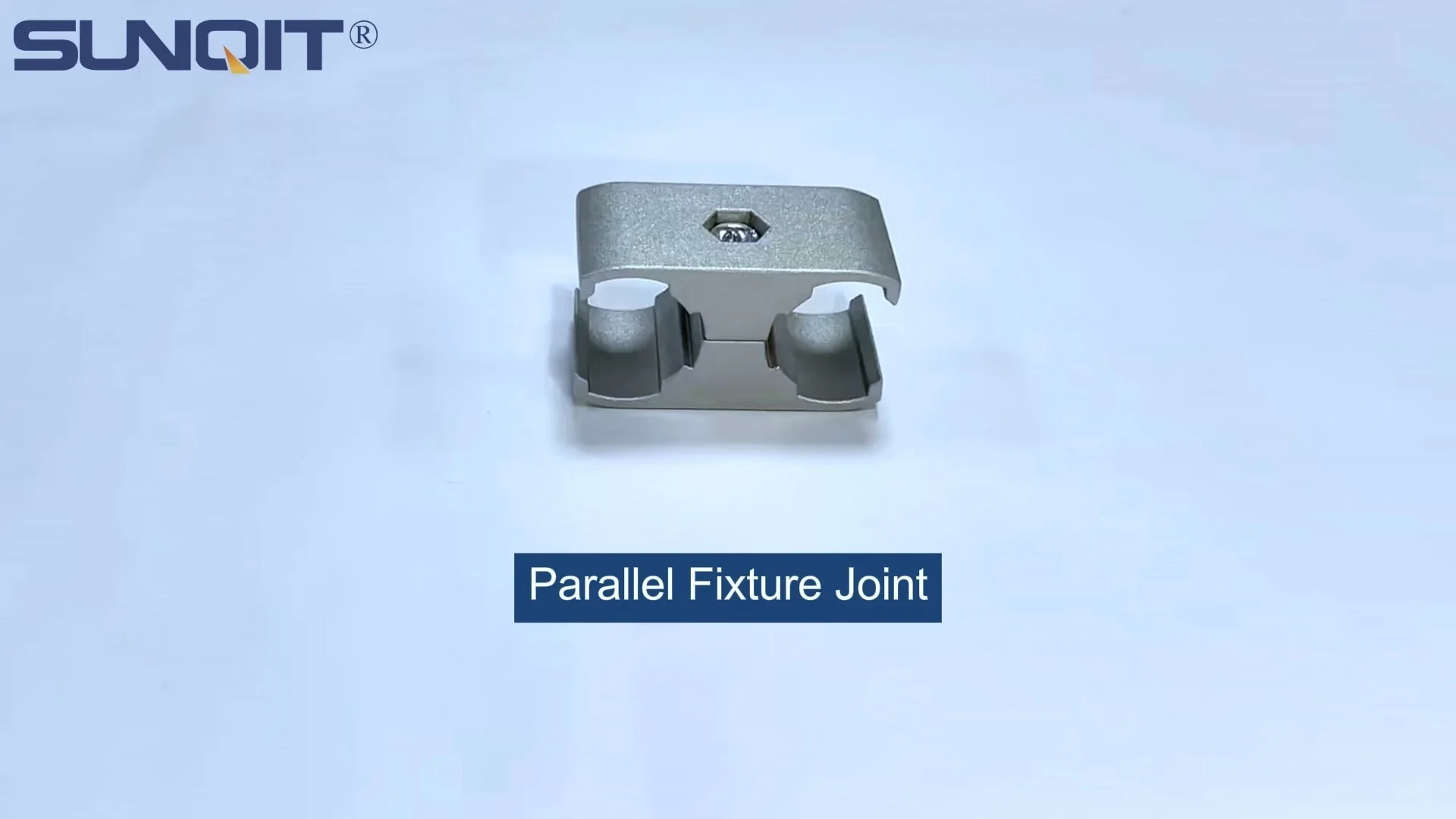
Parallel Fixation Aluminum Pipe Joint
Aluminum parallel joint for two pcs 28mm aluminum pipe connected by parallel direction.
The Critical Role of Cleanrooms in Modern Healthcare
Walk into any medical device manufacturing facility, pharmaceutical lab, or sterile packaging plant, and you'll likely find a space that feels almost otherworldly: pristine white walls, filtered air humming softly, and technicians in head-to-toe coverings moving with deliberate precision. These are cleanrooms—controlled environments where airborne particles, temperature, humidity, and even electrostatic discharge (ESD) are meticulously regulated. They're not just "clean" in the everyday sense; they're lifelines for industries where a single speck of dust or a tiny static spark could compromise a life-saving device or contaminate a batch of medication.
But behind the sterile facade lies a complex infrastructure puzzle. Cleanrooms aren't just empty spaces—they're filled with workstations, material racks, conveyor systems, and testing benches, all of which must adhere to the same strict standards as the air itself. Every component, from the largest workbench to the smallest connector, plays a role in maintaining the room's integrity. And in recent years, one component has emerged as a quiet hero in this ecosystem: the parallel fixation aluminum pipe joint.
The Challenge of Building Cleanroom Infrastructure: Why Traditional Solutions Fall Short
For decades, cleanroom designers relied on two main materials for structural components: stainless steel and plastic. Stainless steel, with its sleek surface and corrosion resistance, seemed like a natural fit. But anyone who's worked with it knows the downsides: it's heavy, making reconfiguration a back-breaking chore, and its rigidity leaves little room for adaptability. In an industry where manufacturing lines evolve overnight to meet new regulations or product demands, a "set-it-and-forget-it" stainless steel frame can quickly become a liability.
Plastic, on the other hand, is lightweight and cheap, but it lacks the durability needed for high-traffic cleanrooms. Over time, plastic joints crack under repeated stress, creating crevices where bacteria or particles can hide—exactly what cleanrooms are designed to avoid. Worse, many plastics generate static electricity, a silent threat in environments where sensitive electronics (like those in pacemakers or diagnostic equipment) are assembled. A single electrostatic discharge can fry a microchip, rendering an entire batch of devices useless.
Then there's the issue of compliance. Medical cleanrooms are governed by stringent standards, from ISO 14644 (which classifies air cleanliness based on particle count) to FDA regulations that mandate traceability and sterility. Traditional joints often fall short here: their rough edges or porous materials can shed particles, while their inability to integrate with ESD-safe components puts them at odds with modern safety protocols. It's no wonder engineers and facility managers have been searching for a better way.

Enter Parallel Fixation Aluminum Pipe Joints: A Game-Changer for Cleanroom Design
Enter the parallel fixation aluminum pipe joint—a small but mighty component that's quietly revolutionizing how cleanrooms are built. At first glance, it might look like just another connector, but its design is a masterclass in practicality. Unlike traditional joints that rely on welding or adhesives, these joints use a simple yet robust clamping mechanism that locks aluminum pipes into place with precision. The result? A structure that's both rock-solid and surprisingly flexible.
Let's break it down. The "parallel fixation" refers to how the joint distributes pressure evenly along the pipe's surface, eliminating weak points and ensuring a tight, wobble-free connection. Made from high-grade aluminum extrusion profile—an alloy prized for its strength-to-weight ratio—the joints are lightweight enough to be moved by a single technician but tough enough to withstand the daily wear and tear of a busy cleanroom. And because aluminum is naturally corrosion-resistant, it holds up to the harsh cleaning agents (like hydrogen peroxide or isopropyl alcohol) used to sanitize surfaces, unlike plastic, which can degrade over time.
But what really sets these joints apart is their modularity. In a world where medical manufacturers are constantly tweaking production lines to accommodate new devices or scale up output, adaptability is key. With parallel fixation joints, reconfiguring a workstation or material rack doesn't require cutting pipes or hiring a welder. Simply loosen the clamp, adjust the angle or length, and retighten—done. This not only saves time and labor but also reduces downtime, a critical factor in an industry where every minute of production counts.

Meeting Medical Standards: The Non-Negotiable Requirements
In the medical field, "good enough" isn't good enough. Cleanrooms must meet a laundry list of standards, and any component that doesn't measure up can put an entire operation at risk. Let's take a closer look at how parallel fixation aluminum pipe joints stack up against the most critical requirements.
ISO 14644: Controlling Airborne Particles
ISO 14644 classifies cleanrooms from ISO 1 (the cleanest) to ISO 9 (the least strict), based on the number of particles per cubic meter. For example, an ISO 7 cleanroom (common in medical device manufacturing) allows no more than 352,000 particles of 0.5μm or larger per cubic meter. To achieve this, every surface must be smooth and non-shedding—any crack, crevice, or rough edge can trap particles and release them into the air.
Parallel fixation joints excel here. Their precision-machined surfaces leave no gaps or burrs, and the aluminum extrusion profile is anodized to create a hard, non-porous finish that resists particle buildup. Compare that to traditional steel joints, which often have weld seams or sharp edges that act as particle magnets. It's a small detail, but in a cleanroom, small details add up.
ESD Protection: Safeguarding Sensitive Electronics
Electrostatic discharge (ESD) is a silent killer in medical manufacturing. A static charge as small as 3000 volts can damage a microchip, and with devices like insulin pumps or neural implants containing components smaller than a grain of sand, ESD protection is non-negotiable. That's where ESD workstations come into play, and parallel fixation joints are the perfect partner for these setups.
Aluminum is a conductive material, which means it can be grounded to dissipate static charges safely. Many parallel fixation joints are designed with integrated grounding points, allowing them to connect seamlessly to ESD mats, wrist straps, and flooring. This creates a continuous path for static electricity to flow away from sensitive components, reducing the risk of costly defects. Plastic joints, by contrast, are insulators—they trap static charges, turning a workstation into a ticking time bomb for electronics.
FDA Compliance: Traceability and Sterility
The FDA doesn't just regulate the products that come out of cleanrooms—it regulates the rooms themselves. Manufacturers must prove that their infrastructure is designed to prevent contamination, and that includes the materials used in structural components. Parallel fixation joints, made from food-grade aluminum alloys, meet FDA standards for non-toxicity and chemical resistance. They're also easy to clean and sanitize, with no hidden crevices where bacteria can grow. For companies undergoing FDA audits, this peace of mind is priceless.

Integration with Aluminum Profiles: Building a Cohesive Lean System
A joint is only as good as the pipes it connects, and parallel fixation joints shine when paired with aluminum profiles. These profiles—long, hollow tubes with T-slot grooves running their length—are the backbone of modern cleanroom infrastructure. The T-slots allow for easy attachment of accessories like shelves, brackets, or tool holders, turning a simple frame into a fully functional workstation or material rack.
Together, parallel fixation joints and aluminum profiles form the foundation of a lean system—an approach to manufacturing that minimizes waste and maximizes efficiency. In a lean system, every component has a purpose, and there's no room for unnecessary complexity. These joints embody that philosophy: they're simple to install, easy to reconfigure, and compatible with a wide range of accessories, from ESD-safe work surfaces to roller tracks for material flow. This modularity means manufacturers can build exactly what they need, without overcomplicating the design or overspending on custom parts.
Take, for example, a typical medical device assembly line. Using parallel fixation joints and aluminum profiles, engineers can design a series of workstations that are tailored to each step of the process—from component inspection to final packaging. If a new device requires a taller workstation or an extra shelf, the system can be adjusted in hours, not days. This agility is a game-changer in an industry where time-to-market can mean the difference between success and failure.
| Feature | Traditional Steel/Plastic Joints | Parallel Fixation Aluminum Pipe Joints |
|---|---|---|
| Material | Heavy steel (prone to rust) or brittle plastic | Lightweight, corrosion-resistant aluminum extrusion profile |
| ESD Protection | Poor (steel conducts but is hard to ground; plastic insulates) | Excellent (conductive aluminum with integrated grounding points) |
| Adjustability | Limited (requires welding or replacement) | High (easily reconfigured with basic tools) |
| Compliance | May fail ISO/FDA standards due to particle shedding | Meets ISO 14644 and FDA requirements for cleanliness |
| Durability | Steel rusts; plastic cracks under stress | Withstands harsh cleaning agents and daily wear |
Real-World Impact: A Day in the Life of a Medical Device Cleanroom
To understand the difference parallel fixation joints make, let's step into the shoes of Maria, a facility manager at a mid-sized medical device company specializing in cardiac monitors. A few years ago, Maria's cleanroom was a nightmare of rigid stainless steel frames and plastic shelving that never quite fit. "We were constantly reworking the line to keep up with new product designs," she recalls. "Every time we needed to adjust a workstation, we'd have to bring in a welder, shut down production for hours, and pray we didn't scratch the floor or kick up dust. It was frustrating, and it was costing us money."
Then, during a trade show, Maria discovered parallel fixation aluminum pipe joints and aluminum profiles. Skeptical at first—"I'd seen too many 'miracle solutions' come and go"—she decided to test them on a small section of the assembly line. The results were immediate. "We built a workstation in under an hour, and when we needed to raise the shelf height a week later, two technicians did it in 15 minutes with a hex key," she says. "No dust, no downtime, no headaches. And when we did our next ESD audit, the readings were better than ever—those aluminum joints grounded the whole system perfectly."
Today, Maria's entire cleanroom runs on parallel fixation joints and aluminum profiles. The facility has cut reconfiguration time by 80%, reduced product defects due to ESD damage by 90%, and passed FDA audits with flying colors. "It's not just about the joints themselves," she adds. "It's about how they let us adapt quickly, keep our space clean, and focus on what really matters: making devices that save lives."
Beyond the Joint: Complementary Components for a Complete Solution
Parallel fixation joints are powerful on their own, but they're even better when paired with the right accessories. Aluminum profile accessories like end caps, which snap into the ends of profiles to prevent particle shedding, or rubber gaskets that create a tight seal between components, add an extra layer of protection against contamination. For ESD workstations, there are specialized brackets that hold ESD mats in place, ensuring a continuous ground path from the work surface to the floor.
Then there are the little touches that make a big difference: caster wheels with ESD-safe rubber tires, allowing workstations to be moved without generating static; adjustable feet that level the structure on uneven floors, preventing wobbling; and cable management clips that tuck wires neatly into the T-slots of aluminum profiles, eliminating tripping hazards and keeping the space clutter-free.
The beauty of this system is its flexibility. Whether you're building a simple workbench or a complex conveyor system, the components work together seamlessly. It's a modular approach that grows with your needs, ensuring you never pay for more than you require—and can easily scale up when the time comes.
Future Trends: Where Cleanroom Infrastructure is Headed
As medical technology advances, so too will the demands on cleanroom infrastructure. We're already seeing trends toward smaller, more specialized cleanrooms (like those used for 3D printing of custom implants) and a greater focus on sustainability. Parallel fixation joints and aluminum profiles are well-positioned to meet these challenges.
For starters, aluminum is 100% recyclable, making it an eco-friendly alternative to steel or plastic. As companies strive to reduce their carbon footprints, this will become an increasingly important factor. There's also ongoing innovation in aluminum extrusion profile design, with manufacturers developing thinner, stronger profiles that use less material without sacrificing durability.
Looking further ahead, we might see smart joints embedded with sensors that monitor temperature, humidity, or ESD levels in real time, sending alerts to facility managers if something goes off-kilter. Imagine a joint that can tell you when it's time to retighten a clamp or when a pipe is showing signs of wear—proactive maintenance that prevents costly breakdowns.
Conclusion: The Quiet Hero of Cleanroom Excellence
In the high-stakes world of medical manufacturing, success hinges on the smallest details. Parallel fixation aluminum pipe joints may not be the most glamorous component in a cleanroom, but they're a testament to how thoughtful design can transform an industry. By combining durability, flexibility, and compliance, they've become an indispensable tool for engineers, facility managers, and technicians who are committed to excellence.
So the next time you walk into a cleanroom, take a moment to look beyond the sterile walls and spotless equipment. The infrastructure holding it all together—the aluminum profiles, the T-slots, the parallel fixation joints—might not grab headlines, but they're working tirelessly to ensure that the medical devices we rely on are safe, reliable, and made to the highest standards. In a world where precision matters most, these quiet heroes are making all the difference.