- Company Articles
- Industry articles
- Industry standards
- Parallel Lean Pipe Joint Chrome Dimensions: Standard Sizes & Custom Options

Parallel Lean Pipe Joint Chrome Dimensions: Standard Sizes & Custom Options
Related Product
Parallel Lean Pipe Joint Chrome
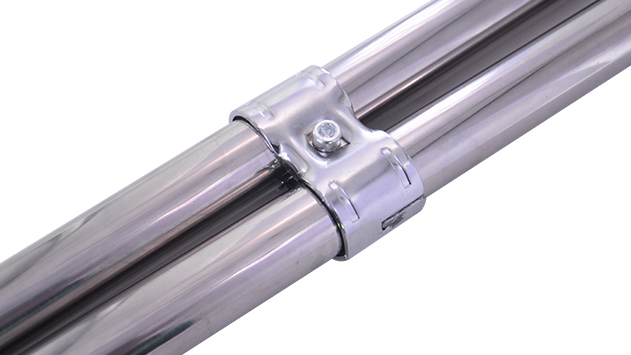
Parallel lean pipe joint used for 2 pcs 28MM lean pipe connection in parallel direction to enhance frame structure, usually for heavy payload requirement for workbench. flow rack, hand trolley.
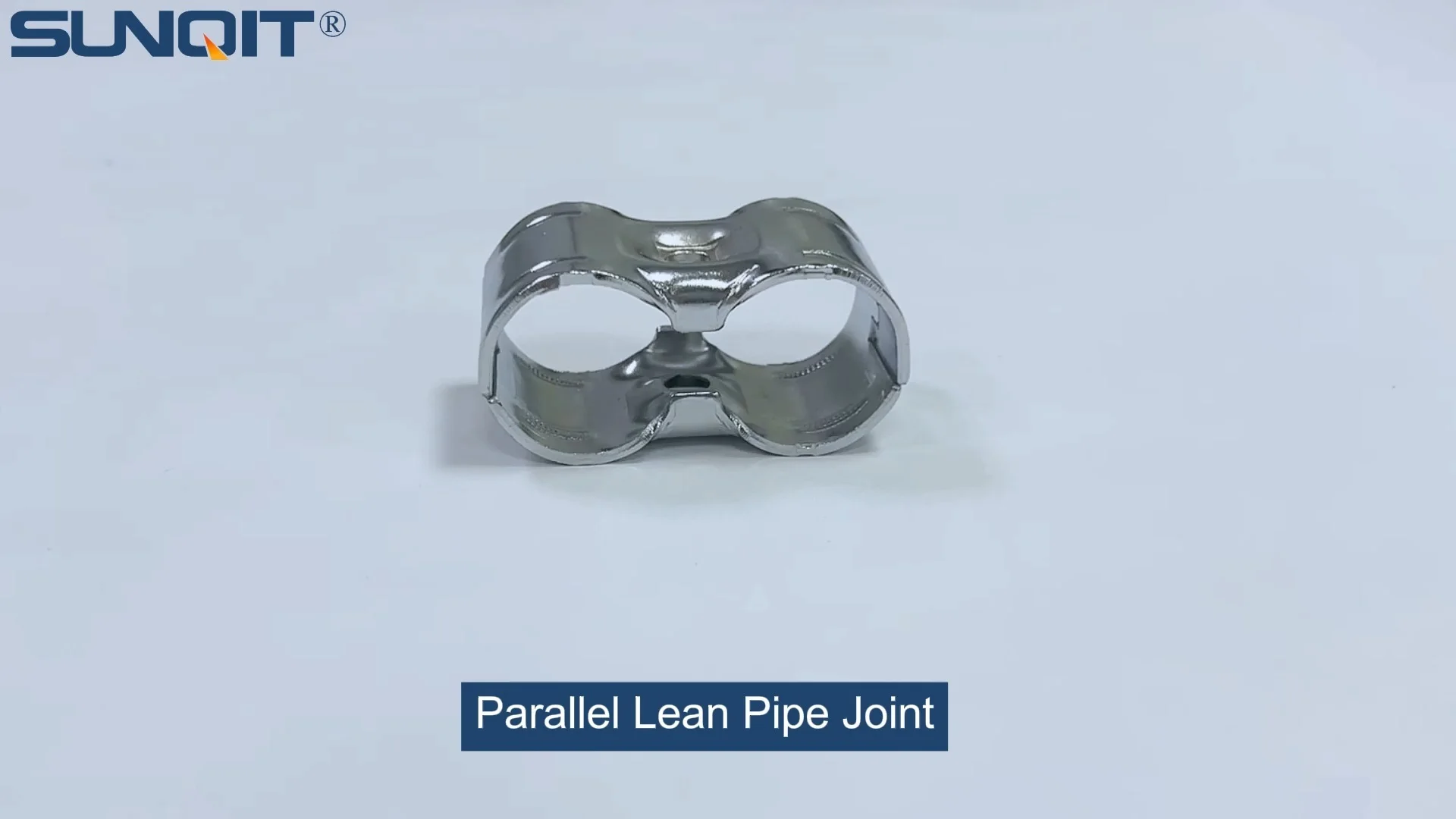
In the world of lean manufacturing, where efficiency, flexibility, and adaptability are the cornerstones of success, every component plays a vital role in keeping operations running smoothly. From the workbenches where assembly line workers meticulously piece together products to the flow racks that ensure materials move seamlessly through production, the right tools can make or break a facility's productivity. Among these essential tools, the parallel lean pipe joint chrome stands out as a quiet workhorse—unassuming in design but critical in function. These small yet robust connectors are the backbone of lean systems, linking lean pipes into sturdy, customizable structures that evolve with your business needs. In this article, we'll dive deep into the dimensions, standard sizes, and custom options of parallel lean pipe joint chrome, exploring how they empower manufacturers to build efficient, durable, and tailored workspaces.
What Are Parallel Lean Pipe Joints Chrome?
Before we get into dimensions, let's clarify what a parallel lean pipe joint chrome is and why it matters. At its core, this component is a connector designed to join two or more lean pipes in a parallel configuration—think of it as the "elbow" or "T-joint" of the lean manufacturing world, but optimized for parallel alignment. Unlike standard joints that might angle pipes at 90° or 45°, parallel joints keep pipes running side-by-side, creating stable frames for workbenches, material racks, or conveyor systems.
The "chrome" in the name refers to its finishing: a layer of chromium plating applied to the base material (typically steel). This plating isn't just for aesthetics—though it does give the joint a sleek, professional look. Chrome plating adds a hard, wear-resistant surface that stands up to constant friction from pipe movement, resists corrosion in humid or industrial environments, and makes cleaning a breeze (a must in settings like food processing or electronics manufacturing, where cleanliness is non-negotiable).
In short, parallel lean pipe joint chrome is the unsung hero of modular lean systems. It's what turns simple lean pipes into versatile structures that can be disassembled, reconfigured, and repurposed as your production needs change—all while maintaining the strength and stability required for heavy-duty industrial use.
Standard Dimensions: The Building Blocks of Consistency
One of the key advantages of lean manufacturing is standardization, and parallel lean pipe joint chrome is no exception. Manufacturers have developed standard sizes to ensure compatibility with common lean pipe diameters, making it easy for facilities to source, replace, and expand their systems without reinventing the wheel. Below, we'll break down the most common standard dimensions, including pipe compatibility, physical size, and load capacity.
1. Pipe Diameter Compatibility
Lean pipes (also called "lean tubes") typically come in a few standard diameters, and parallel joints are engineered to fit these precisely. The most common pipe diameters in industrial settings are:
- 28mm (1.1 inches): The industry standard for most lean pipe systems, used in workbenches, light-duty flow racks, and turnover trolleys.
- 30mm (1.18 inches): Slightly larger, often used for heavier loads or in environments where extra stability is needed, such as automotive assembly lines.
- 40mm (1.57 inches): Less common but used for heavy-duty applications like material racks or conveyor supports.
Parallel lean pipe joint chrome is almost always labeled by the pipe diameter it fits. For example, a "28mm parallel joint" is designed to connect 28mm lean pipes, with internal grooves or clamps that grip the pipe securely.
2. Physical Dimensions of the Joint
Beyond pipe compatibility, the joint itself has key physical dimensions that determine how it fits into your system. Let's take a 28mm parallel joint as a baseline (the most widely used) and break down its typical measurements:
- Length: 80–100mm (3.15–3.94 inches). This is the distance between the two pipe connection points, determining how far apart the parallel pipes will sit.
- Width: 40–50mm (1.57–1.97 inches). The width of the joint's body, which affects how much space it takes up in your structure.
- Height: 35–45mm (1.38–1.77 inches). The vertical height from the base of the joint to the top of the pipe connection points, important for clearance in tight spaces.
- Thread Size: M8 or M10 (metric threads). Many joints include threaded holes for securing with bolts, ensuring a tight, rattle-free connection.
3. Standard Sizes Table
To make it easier to compare, here's a table of common standard parallel lean pipe joint chrome sizes, along with their key specs:
| Model | Compatible Pipe Diameter | Length (mm) | Width (mm) | Load Capacity (kg) | Typical Application |
|---|---|---|---|---|---|
| PLC-28-01 | 28mm | 80 | 40 | 150 | Workbench frames, light-duty racks |
| PLC-28-02 | 28mm | 100 | 45 | 200 | Flow racks, conveyor side rails |
| PLC-30-01 | 30mm | 90 | 50 | 250 | Heavy-duty workbenches, material trolleys |
| PLC-40-01 | 40mm | 120 | 60 | 350 | Industrial conveyor supports, large material racks |
*Note: Load capacities are approximate and based on vertical load. Horizontal or dynamic loads may reduce capacity.
Materials & Construction: Why Chrome Steel Stands Out
While dimensions tell part of the story, the materials and construction of parallel lean pipe joint chrome are what ensure durability and performance. Let's break down what goes into making these joints reliable in tough industrial environments.
Base Material: Steel for Strength
The core of most parallel lean pipe joints is high-quality carbon steel. Steel is chosen for its exceptional strength-to-weight ratio—critical for supporting heavy loads without adding unnecessary bulk. Manufacturers often use low-carbon steel (mild steel) for the base, as it's easy to cast or machine into complex joint shapes while maintaining structural integrity. Some heavy-duty joints may use medium-carbon steel for added hardness, though this is less common for standard models.
Chrome Plating: Protection & Performance
The chrome plating process transforms the steel joint from functional to exceptional. Here's how it works: the steel joint is first cleaned and treated to remove impurities, then dipped in a chromium electrolyte bath. An electric current is applied, causing chromium ions to bond to the steel surface, forming a thin (5–10 microns) but dense layer. This layer offers three key benefits:
- Wear Resistance: Chrome is harder than steel, so it resists scratches and dents from pipe insertion, adjustment, and daily use. This extends the joint's lifespan, even in high-traffic areas.
- Corrosion Resistance: Chrome acts as a barrier, preventing moisture and chemicals from reaching the steel beneath. This is especially valuable in factories with high humidity or exposure to oils and coolants.
- Low Friction: The smooth chrome surface reduces friction when pipes are inserted or adjusted, making assembly faster and easier for workers.
Manufacturing Processes: Precision Matters
Most parallel lean pipe joints are made using one of two methods: casting or machining. Casting involves pouring molten steel into a mold shaped like the joint, then trimming and finishing the result. This is cost-effective for high-volume production and allows for intricate designs. Machining, on the other hand, involves cutting a solid block of steel into shape using CNC machines, resulting in tighter tolerances and smoother surfaces—ideal for custom or high-precision joints. Reputable lean pipe suppliers often use a combination, casting for basic shapes and machining critical areas (like pipe connection points) for a perfect fit.

Applications: Where Parallel Lean Pipe Joints Shine
Parallel lean pipe joint chrome is a versatile component, but it truly excels in specific applications where parallel pipe alignment is critical. Let's explore some of the most common uses in manufacturing and warehousing:
1. Workbenches: The Foundation of Productivity
Workbenches are the heart of any production line, and parallel joints are essential for building their frames. Whether it's a simple single-deck workbench (like "Workbench E (single deck-without caster)" from our keyword list) or a heavy-duty assembly station, parallel joints connect the front and back rails, ensuring the bench remains stable even when loaded with tools, parts, or equipment. The chrome finish is a bonus here, as workbenches are often wiped down daily—chrome resists stains and makes cleaning quick.
2. Flow Racks: Keeping Materials Moving
Flow racks (also called "flow racks B (3 row and 3 floor)" in some catalogs) rely on parallel joints to support the roller tracks that guide materials from the back to the front. The joints connect the vertical uprights to the horizontal supports, creating a sturdy frame that holds the weight of stacked boxes or bins. Since flow racks are often loaded with heavy materials, the high load capacity of parallel joints (up to 200kg for standard models) is crucial here.
3. Turnover Trolleys & Material Carts
Turnover trolleys are used to transport materials between workstations, and their frames need to be both lightweight and strong. Parallel lean pipe joints chrome provide the perfect balance: they're strong enough to support the trolley's load but not so heavy that they make the cart hard to maneuver. The chrome plating also helps resist scratches from daily use, ensuring the trolleys look professional even after months of wear.
4. Conveyor Side Rails
Conveyor systems, whether roller or belt-driven, require side rails to keep products centered and prevent jams. Parallel joints connect these rails to the conveyor frame, ensuring they run perfectly parallel to the belt or rollers. In electronics manufacturing, where ESD (electrostatic discharge) protection is critical, chrome joints can even be paired with ESD workbenches and stations, though the joints themselves are not typically ESD-rated—their role is structural here.
Custom Options: Tailoring Joints to Your Unique Needs
While standard sizes work for most applications, every facility has unique challenges—tight spaces, unusual load requirements, or non-standard pipe diameters. That's where custom parallel lean pipe joint chrome comes in. Working with a reputable lean pipe supplier, you can modify joints to fit your exact needs. Let's explore the most common customizations and why you might need them.
1. Size Adjustments: Beyond Standard Dimensions
The most requested custom option is size modification. For example, if your facility uses non-standard pipe diameters (like 25mm or 32mm), a lean pipe supplier can adjust the joint's internal diameter to fit. Similarly, if you need parallel pipes spaced closer together (for a compact workbench) or farther apart (to accommodate large tools), the joint's length can be shortened or extended. Some customers even request "offset" parallel joints, where the two pipe connection points are slightly staggered vertically to avoid component overlap.
2. Special Coatings: Beyond Chrome
While chrome is standard, some environments call for specialized coatings. For example, in food processing facilities, joints may need to be nickel-plated instead of chrome to meet FDA standards. In marine or chemical plants, zinc plating (galvanization) offers superior corrosion resistance. A good supplier can work with you to choose the right coating for your environment—just be sure to specify your needs upfront.
3. Load Capacity Upgrades
If your application requires supporting heavier loads than standard joints can handle (say, 500kg instead of 200kg), custom joints can be reinforced. This might involve using thicker steel, adding gussets (support brackets) to the joint body, or redesigning the connection points to distribute weight more evenly. Keep in mind that heavier-duty joints will be larger and heavier, so you'll need to balance load capacity with practicality.
4. Threaded or Welded Options
Standard joints often use friction fit or bolt-on connections, but some customers prefer threaded joints for permanent installations or welded joints for maximum strength. A custom supplier can add threads to the joint body or prepare it for welding, though welded joints lose the modularity that makes lean systems so flexible—so weigh this carefully!
Choosing the Right Parallel Lean Pipe Joint Chrome: Key Considerations
With so many options, selecting the right parallel lean pipe joint chrome can feel overwhelming. To simplify the process, focus on these key factors:
1. Pipe Diameter: Start with Compatibility
This is the first and most critical step: ensure the joint is designed for your lean pipe's diameter. Using a 28mm joint with 30mm pipes will result in a loose, unstable connection, while a 30mm joint on 28mm pipes won't grip properly. If you're unsure of your pipe size, measure the outer diameter with a caliper—most lean pipes are clearly labeled, but it never hurts to double-check.
2. Load Capacity: Don't Underestimate
Always choose a joint with a load capacity higher than your expected maximum load. If your workbench will hold 100kg of tools and parts, opt for a joint rated for 150kg to be safe. Remember that dynamic loads (like materials being dropped on the bench) can temporarily exceed static loads, so adding a safety margin is smart.
3. Environment: Match the Coating to the Space
Consider where the joint will be used. In dry, clean environments (like electronics assembly), standard chrome is fine. In humid or corrosive settings (like food processing or outdoor warehouses), look for extra corrosion protection, such as thick chrome plating or alternative coatings. If the joint will be exposed to oils or chemicals, check that the coating is resistant to those substances.
4. Supplier Reliability: Partner with Experts
Finally, work with a trusted lean pipe supplier. A reputable supplier will have a wide range of standard joints in stock, offer custom options, and provide technical support to help you choose the right product. Look for suppliers with certifications (like ISO 9001) to ensure quality, and ask for references from other manufacturers in your industry. A good supplier isn't just a vendor—they're a partner in optimizing your lean system.
Maintenance & Care: Keeping Your Joints in Top Shape
Even the best parallel lean pipe joint chrome needs proper care to last. Here are some simple maintenance tips to extend their lifespan:
- Clean Regularly: Wipe joints with a soft, damp cloth to remove dust, oil, or debris. For stubborn stains, use a mild detergent—avoid abrasive cleaners, as they can scratch the chrome.
- Lubricate Moving Parts: If your joints have adjustable components (like bolts or clamps), lubricate them with a light machine oil every few months to prevent rust and ensure smooth movement.
- Inspect for Wear: Check joints periodically for signs of damage, like cracks, bent connection points, or peeling chrome. replace any damaged joints immediately—compromised joints can lead to unstable structures and safety hazards.
- Tighten Connections: Over time, bolts or clamps may loosen with vibration. Tighten them gently with a wrench to keep pipes secure, but don't overtighten—this can strip threads or damage the joint.
Conclusion: The Small Component That Makes a Big Difference
Parallel lean pipe joint chrome may not be the most glamorous component in your lean system, but it's undoubtedly one of the most important. From standard sizes that ensure consistency to custom options that meet unique needs, these joints are the glue that holds your workbenches, flow racks, and trolleys together. By choosing the right dimensions, materials, and supplier, you can build a lean system that's not only efficient and flexible but also durable enough to withstand the demands of modern manufacturing.
Whether you're upgrading an existing facility or building a new production line, remember: the strength of your lean system starts with the joints. Invest in quality parallel lean pipe joint chrome, and you'll reap the benefits for years to come—fewer breakdowns, faster assembly, and a workspace that adapts as quickly as your business does.