- Company Articles
- Industry articles
- Industry standards
- Parallel Lean Pipe Joints in Medical Device Manufacturing: Compliance & Safety

Parallel Lean Pipe Joints in Medical Device Manufacturing: Compliance & Safety
Related Product
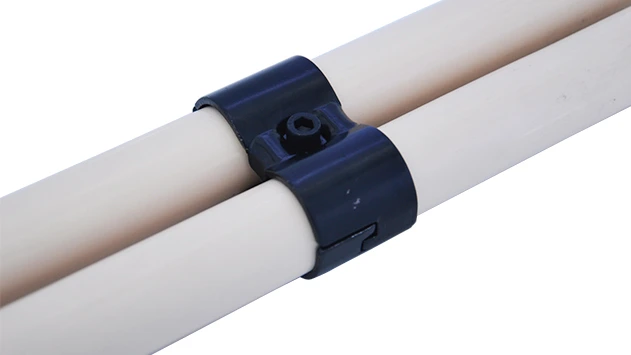
Parallel Lean Pipe Joint
Parallel lean pipe joint used for 2 pcs 28MM lean pipe connection in parallel direction to enhance frame structure, usually for heavy payload requirement for workbench. flow rack, hand trolley.
Step into a modern medical device manufacturing facility, and you'll immediately sense the precision in the air. Every tool, every process, and every surface is designed with a single, non-negotiable goal: to create products that save lives, from intricate surgical instruments to life-sustaining implants. In this high-stakes environment, even the smallest inefficiency or safety oversight can have far-reaching consequences—delayed production, compromised product quality, or worse, risks to patient health. That's where lean systems come into play, acting as the backbone of operational excellence. And within these systems, one component often flies under the radar but plays an outsized role: the parallel lean pipe joint. More than just a connector, it's a silent enabler of compliance, safety, and efficiency, ensuring that medical device manufacturing stays aligned with the strictest industry standards.
Lean Systems: The Foundation of Medical Manufacturing Excellence
Lean manufacturing isn't just a buzzword in medical device production—it's a necessity. Rooted in the principles of waste reduction and continuous improvement, lean systems streamline workflows, minimize errors, and maximize resource utilization. In an industry where regulatory bodies like the FDA (Food and Drug Administration) and ISO (International Organization for Standardization) set rigorous benchmarks, lean isn't optional; it's how manufacturers stay audit-ready and patient-focused.
At its core, a lean system in medical manufacturing is about creating value without compromise. This means reducing "muda" (waste) in all forms: unnecessary movement of materials, overproduction, waiting times, or inefficient workspace layouts. But unlike other industries, medical device manufacturing adds layers of complexity: every process must be traceable, every surface must be contamination-resistant, and every tool must support ergonomic safety for workers handling delicate components. Enter the modularity of lean systems, where flexibility meets compliance. And at the heart of this modularity lies the humble yet critical parallel lean pipe joint.
Parallel Lean Pipe Joints: The Unsung Heroes of Modular Design
So, what exactly is a parallel lean pipe joint? In simple terms, it's a connector designed to join two or more lean pipes (often aluminum or stainless steel) in parallel, creating stable, adjustable structures like workbenches, material racks, or conveyor supports. Unlike fixed joints, parallel lean pipe joints offer rotational flexibility and easy reconfiguration, allowing manufacturers to adapt their workspace to evolving production needs—say, shifting from assembling syringes to catheters overnight. But in medical manufacturing, this flexibility isn't just about efficiency; it's about compliance.
Consider the materials: most parallel lean pipe joints are made from high-grade aluminum or stainless steel, chosen for their corrosion resistance and ease of cleaning. In a cleanroom environment, where even a speck of dust can contaminate a batch of surgical tools, non-porous surfaces are non-negotiable. Aluminum, in particular, shines here—it resists rust, doesn't off-gas harmful particles, and can be quickly sanitized with industry-approved disinfectants. Stainless steel, on the other hand, offers added durability for heavy-duty applications, like supporting racks of sterilized equipment. Both materials meet FDA guidelines for food contact (a common benchmark for medical surfaces) and ISO 13485 requirements for medical device manufacturing processes.
But the real genius of parallel lean pipe joints lies in their modularity. Medical device production lines rarely stay static. New product launches, design iterations, or regulatory updates often require reconfiguring workstations. With fixed joints, this would mean disassembling entire structures, wasting time and risking damage to expensive equipment. Parallel lean pipe joints eliminate this hassle: a quick twist or release, and the structure can be adjusted, extended, or repurposed. This not only cuts downtime but also ensures that any changes are documented and traceable—critical for passing FDA inspections, where process validation is key.

Compliance: Meeting the Gold Standards of Medical Manufacturing
In medical device manufacturing, compliance isn't a box to check—it's a daily commitment. Regulatory bodies like the FDA enforce strict guidelines (such as 21 CFR Part 820) to ensure products are safe, effective, and consistently manufactured. ISO 13485, the international standard for medical device quality management systems, goes further, requiring manufacturers to demonstrate control over every aspect of production, from raw materials to finished goods. Parallel lean pipe joints, as they may seem, play a vital role in meeting these standards.
Take traceability, for example. FDA regulations mandate that every component used in production can be tracked back to its source, in case of recalls or quality issues. Reputable parallel lean pipe joint suppliers provide detailed material certificates, confirming that the aluminum or stainless steel used meets medical-grade specifications (e.g., 304 stainless steel, known for its biocompatibility). This documentation becomes part of the manufacturer's quality records, proving to auditors that even the smallest parts are held to the highest standards.
Cleanability is another compliance cornerstone. Medical device facilities operate under strict hygiene protocols, with regular deep cleaning to prevent cross-contamination. Parallel lean pipe joints are designed with smooth, crevice-free surfaces—no hidden gaps where bacteria or debris can accumulate. Unlike welded joints, which often have rough edges, these modular connectors can be disassembled for thorough sanitization, ensuring that workbenches or material racks remain within FDA's Current Good Manufacturing Practice (cGMP) guidelines. For example, a workbench assembled with parallel lean pipe joints can be quickly taken apart, wiped down with a hydrogen peroxide-based disinfectant, and reassembled—all while maintaining structural integrity.

Safety: Protecting Workers and Products Alike
In medical manufacturing, safety has two faces: protecting the workers who build the devices and safeguarding the products from damage or contamination. Parallel lean pipe joints excel at both, making them indispensable in creating a secure workspace.
For workers, ergonomics is a top priority. Medical device assembly often involves repetitive tasks—manipulating small parts, using precision tools, or standing for hours at a time. Poorly designed workstations can lead to musculoskeletal injuries, which not only harm employees but also disrupt production. Parallel lean pipe joints address this by enabling customizable workbench heights and layouts. A worker assembling pacemaker components, for instance, can adjust their workstation to elbow height, reducing strain on the shoulders and back. The joints' rotational flexibility allows for easy repositioning of shelves or tool holders, ensuring that frequently used items are within arm's reach, minimizing unnecessary movement.
Product safety is equally critical. Delicate components like stents or microelectrodes must be handled with extreme care to avoid scratches, dents, or contamination. Material racks built with parallel lean pipe joints provide stable, vibration-free storage, thanks to the joints' tight, secure fit. Unlike flimsy plastic connectors, aluminum or stainless steel parallel joints don't warp under weight, ensuring that trays of sensitive parts stay level and secure. Even in high-traffic areas, where trolleys or equipment might bump into racks, the joints' durability prevents structural failure, reducing the risk of product damage and costly rework.
Real-World Applications: How Parallel Lean Pipe Joints Drive Daily Operations
To truly appreciate the impact of parallel lean pipe joints, let's look at their most common applications in medical device manufacturing:
1. Workbenches: The Heart of Assembly Lines
Workbenches are where the magic happens—where skilled technicians assemble, inspect, and package medical devices. A typical workbench in a medical facility needs to be sturdy, adjustable, and easy to clean. Parallel lean pipe joints make this possible. By connecting aluminum profiles (another key component in lean systems) with parallel joints, manufacturers can build workbenches that adapt to different tasks. For example, a workbench for assembling insulin pens might feature a flat, non-slip surface supported by parallel joints, with adjustable shelves for tools and documentation. When production shifts to larger devices like surgical forceps, the same workbench can be reconfigured with taller legs (using the joints' height-adjustable design) to accommodate bulkier components—all without replacing the entire structure.
2. Material Racks: Organized, Accessible, and Compliant
Material handling is a critical part of medical manufacturing, with components ranging from sterile packaging to precision-machined metal parts. Material racks built with parallel lean pipe joints offer a balance of organization and accessibility. These racks can be customized with multiple levels, dividers, or even roller tracks (another lean system staple) to facilitate smooth material flow. For instance, a 3-row, 3-floor material rack (similar to "Material Rack B" in lean system catalogs) uses parallel joints to connect vertical and horizontal pipes, creating stable shelves that hold bins of components. The joints ensure that each shelf is level and secure, preventing bins from tipping and spilling parts. Plus, since the racks are modular, they can be expanded or reconfigured as inventory needs change—no need for costly new equipment.
3. Cleanroom Compatibility: Meeting Strict Environmental Controls
Cleanrooms, where air particulate levels are strictly controlled, are common in medical device manufacturing, especially for implantable devices. In these environments, even the smallest particle can compromise product sterility. Parallel lean pipe joints, made from aluminum or stainless steel, are inherently cleanroom-friendly. They don't shed fibers or particles, and their smooth surfaces resist chemical damage from harsh disinfectants. When paired with aluminum honeycomb panels (lightweight, non-porous work surfaces), they create workstations that meet ISO 8 cleanroom standards, ensuring that devices like artificial heart valves are assembled in a contamination-free zone.
Comparing Lean Pipe Joints: Why Parallel Design Stands Out
Not all lean pipe joints are created equal. In medical manufacturing, choosing the right joint type can mean the difference between seamless compliance and audit headaches. Below is a comparison of parallel lean pipe joints with other common joint types, highlighting their compliance and safety advantages:
| Joint Type | Material | Compliance Features | Safety Features | Best For |
|---|---|---|---|---|
| Parallel Lean Pipe Joint | Aluminum or Stainless Steel | Smooth, crevice-free surfaces; easy disassembly for cleaning; traceable material certificates | Adjustable height/layout for ergonomics; secure fit prevents structural failure; corrosion-resistant | Workbenches, material racks, cleanroom stations |
| Fixed 90° Joint | Plastic or Steel | Limited disassembly; may have hidden crevices; plastic prone to chemical damage | Rigid design limits ergonomic adjustment; less durable under heavy weight | Low-weight storage, non-critical areas |
| Welded Joint | Steel | Rough edges trap debris; impossible to disassemble for deep cleaning | Sturdy but non-adjustable; risk of weld failure under stress | Permanent structures, non-medical industries |
Case Study: How XYZ Medical Devices Improved Compliance with Parallel Lean Pipe Joints
Consider XYZ Medical Devices, a mid-sized manufacturer specializing in orthopedic implants. A few years ago, the company faced a challenge: their existing production line, built with fixed steel workbenches and welded material racks, was struggling to keep up with evolving FDA regulations. Auditors noted that the workbenches were difficult to clean thoroughly, with welded joints harboring bacteria, and the rigid racks couldn't be reconfigured to accommodate new implant designs, leading to inefficient material flow and increased risk of part damage.
The solution? A switch to lean systems centered around parallel lean pipe joints. XYZ replaced their fixed workbenches with modular ones assembled using aluminum profiles and parallel joints. The results were immediate: technicians could adjust their workstations to optimal heights, reducing reported cases of back pain by 30%. The joints' smooth surfaces and easy disassembly made cleaning faster and more effective, leading to a 15% improvement in audit scores for hygiene compliance.
Material racks were also upgraded. Using parallel lean pipe joints, XYZ built flexible racks that could be expanded or reconfigured as new implant sizes were introduced. This eliminated the need for purchasing new racks, saving the company $40,000 in equipment costs in the first year. Most importantly, the traceable material certificates from their lean pipe supplier (a key keyword in the industry) ensured that every joint met FDA standards, giving auditors confidence in the facility's commitment to quality.
Looking Ahead: Innovations in Lean Pipe Technology
As medical device manufacturing continues to evolve—with trends like personalized medicine and miniaturization driving demand for more flexible production—parallel lean pipe joints are evolving too. Suppliers are developing new designs that integrate smart technology, such as embedded sensors that monitor joint tightness or wear, alerting maintenance teams before a failure occurs. This predictive maintenance capability further reduces downtime and ensures ongoing compliance.
Sustainability is another growing focus. Aluminum parallel joints, already recyclable, are being made with higher percentages of recycled material, aligning with the medical industry's push for eco-friendly practices. Lightweight yet strong, these joints reduce the carbon footprint of manufacturing facilities by minimizing material waste and energy use during production.
Conclusion: Small Parts, Big Impact
In the world of medical device manufacturing, where precision and compliance are non-negotiable, parallel lean pipe joints are more than just connectors—they're partners in progress. They enable the flexibility needed to adapt to changing production demands, the cleanliness required to meet strict regulatory standards, and the safety that protects both workers and life-saving products. As technology advances and regulations grow more stringent, these unassuming components will only become more critical, proving that sometimes, the smallest parts make the biggest difference in delivering care that patients can trust.