- Company Articles
- Industry articles
- Industry standards
- Parallel Rotatory Lean Pipe Joint Chrome for Medical Industry: Compliance Guide

Parallel Rotatory Lean Pipe Joint Chrome for Medical Industry: Compliance Guide
Related Product
Parallel Rotatory Lean Pipe Joint
Parallel rotatory lean pipe joint, for 2 pcs pipe conenction in parallel direction with rotatory function.
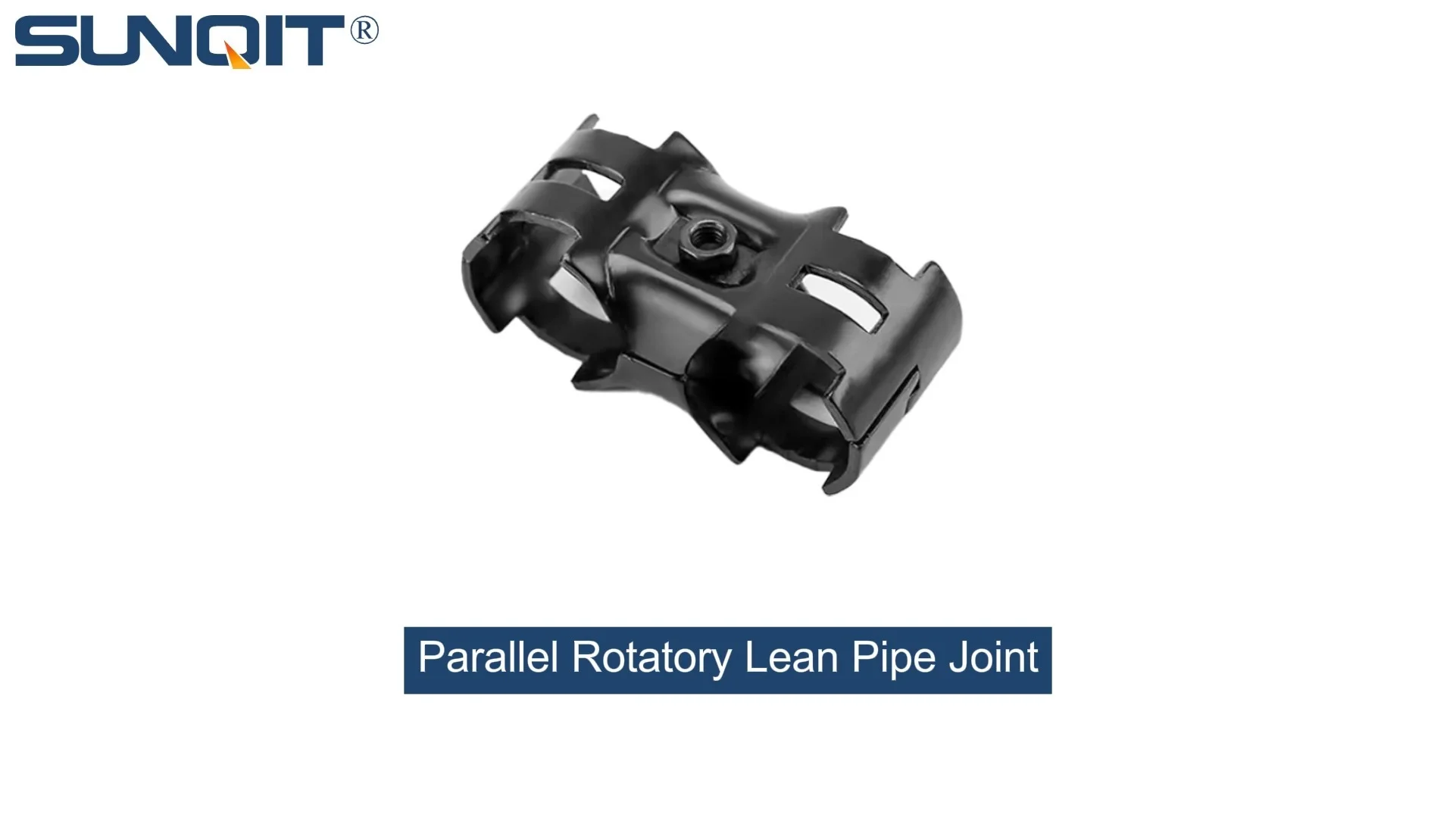
How a component ensures precision, adaptability, and regulatory adherence in critical healthcare manufacturing
Introduction: The Critical Intersection of Lean Systems and Medical Compliance
In the medical manufacturing industry, "good enough" is never enough. Every tool, every workbench, and every connection in the production line must meet standards that prioritize patient safety, operational precision, and regulatory compliance. Unlike other manufacturing sectors where efficiency and cost often take center stage, medical production adds layers of complexity: sterility requirements, traceability mandates, and the need for rapid adaptability to evolving product designs—all while adhering to strict guidelines from bodies like the FDA, ISO, and CE.
This is where lean systems shine, but not the lean of automotive assembly lines or consumer goods factories. Medical lean systems demand a unique balance: eliminating waste without cutting corners on compliance, optimizing workflows without compromising sterility, and building flexibility into processes that can't afford errors. At the heart of these systems lies a component that's easy to overlook but impossible to replace: the parallel rotatory lean pipe joint chrome.
These small, chrome-plated connectors are the unsung heroes of medical workstations, material racks, and assembly lines. They enable the modularity that allows teams to reconfigure workbenches for new device sizes, adjust material flows to meet sudden demand spikes, and maintain the structural integrity required for compliance audits. In this guide, we'll explore why the parallel rotatory lean pipe joint chrome is more than just a hardware piece—it's a compliance enabler, a workflow optimizer, and a silent guardian of patient safety.
Understanding Lean Systems in Medical Manufacturing: Beyond Efficiency
Lean manufacturing, born from Toyota's production philosophy, is often reduced to "waste reduction." But in medical settings, it's redefined. Here, "waste" isn't just excess inventory or idle time—it's any inefficiency that could delay life-saving devices, compromise sterility, or create gaps in traceability. A workbench that can't be sanitized thoroughly? Waste. A material rack that can't adjust to a new catheter design? Waste. A joint that corrodes after repeated cleaning? A compliance risk.
Medical lean systems prioritize three core pillars:
- Modularity: The ability to reconfigure workstations, racks, and lines quickly to adapt to new products (e.g., shifting from syringe assembly to IV bag packaging) without extensive downtime or costly overhauls.
- Sterility Compatibility: Surfaces and components must withstand frequent cleaning with harsh disinfectants (like hydrogen peroxide or alcohol) without degrading, chipping, or harboring bacteria.
- Structural Reliability: Even with frequent reconfiguration, systems must maintain stability to prevent product damage, operator injury, or audit failures.
Enter the parallel rotatory lean pipe joint chrome. Unlike fixed joints that lock structures into rigid, unchanging shapes, these rotatory joints allow for 360-degree rotation and easy repositioning of connected pipes—all while maintaining a tight, secure fit. This flexibility is a game-changer for medical teams, who often need to adjust workflows on short notice (e.g., scaling up vaccine production or pivoting to emergency medical supply assembly during a crisis).
But flexibility alone isn't enough. The chrome plating adds a critical layer: corrosion resistance. In environments where workbenches and racks are wiped down multiple times daily, exposed metal joints can rust or degrade, creating crevices for bacteria to hide. Chrome plating creates a smooth, non-porous surface that repels moisture, resists chemical damage, and simplifies cleaning—key for passing ISO 13485 audits, which require "control of work environment" to prevent contamination.
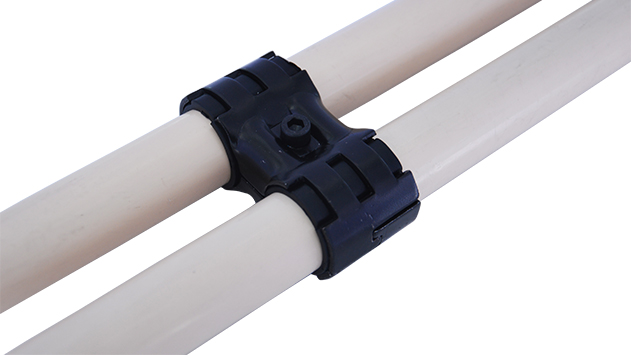
Parallel Rotatory Lean Pipe Joint Chrome: Design, Materials, and Why It Matters
To appreciate the role of the parallel rotatory lean pipe joint chrome in compliance, let's break down its design and material science. These joints are typically made from high-grade steel, then coated with a layer of chromium via electroplating—a process that bonds the chrome to the steel substrate, creating a surface that's both hard (resistant to scratches) and inert (unreactive to most cleaning agents).
The "parallel rotatory" feature refers to the joint's ability to rotate along its axis while keeping connected pipes parallel, ensuring that structures like workbench frames or material rack sides remain aligned even after adjustment. This is critical for maintaining stability: a misaligned rack could cause medical devices to shift during assembly, leading to defects or injuries.
Key Design Features for Medical Compliance
- Smooth, Crevice-Free Surfaces: Unlike threaded joints or those with overlapping parts, parallel rotatory joints are engineered with minimal gaps. This eliminates hiding spots for bacteria, a requirement under ISO 14644 (cleanroom standards) and FDA's Current Good Manufacturing Practices (cGMP).
- Precision Tolerances: These joints are manufactured to tight tolerances (often ±0.1mm), ensuring a consistent fit that doesn't loosen over time. Loose joints can create vibration during production, which is dangerous for delicate procedures like assembling pacemakers or microfluidic devices.
- Load-Bearing Capacity: Even with rotation, chrome-plated steel joints support significant weight (up to 50kg per joint in some models), making them suitable for heavy workbenches or racks holding bulk medical supplies (e.g., IV fluid bags, surgical instrument trays).
Compare this to alternatives: plastic joints, while lightweight, can warp under repeated cleaning; unplated steel joints corrode quickly; and fixed joints lack the adaptability needed for modern medical production. The parallel rotatory lean pipe joint chrome strikes the rare balance of flexibility, durability, and compliance that medical teams can't afford to ignore.

Compliance Standards: How Chrome-Plated Rotatory Joints Meet Regulatory Demands
Medical manufacturers don't just "follow" regulations—they live and breathe them. A single non-compliant component can lead to production halts, fines, or even product recalls. For parallel rotatory lean pipe joint chrome, compliance starts with material selection and extends to performance under real-world conditions. Let's unpack the key standards these joints must meet.
ISO 13485: Quality Management for Medical Devices
ISO 13485 is the gold standard for medical device manufacturing, requiring organizations to "establish, document, implement, and maintain a quality management system" that ensures product safety. For components like lean pipe joints, this translates to:
- Material Traceability: Manufacturers of chrome-plated joints must provide certificates of compliance (CoCs) for raw materials, proving that steel and chrome meet purity standards (e.g., no lead or heavy metal contaminants).
- Process Validation: Electroplating processes must be validated to ensure consistent chrome thickness (typically 5-10 microns) and adhesion, preventing flaking that could contaminate products.
- Cleanability Testing: Joints must pass tests simulating 1,000+ cleaning cycles with medical-grade disinfectants, showing no degradation, discoloration, or bacterial retention.
FDA Regulations: From Workbenches to Final Products
The FDA's cGMP guidelines (21 CFR Part 820) leave no room for ambiguity: "Equipment used in the manufacture, processing, packing, or holding of a device shall be designed, constructed, placed, and maintained to facilitate operations for its intended use and for cleaning and maintenance." For parallel rotatory lean pipe joint chrome, this means:
- No Toxic Leachables: Chrome plating must be free of hexavalent chromium (a carcinogen), using trivalent chromium instead—a safer, FDA-approved alternative.
- Stability Under Stress: Joints must maintain their grip on pipes even after repeated rotation and cleaning, preventing unexpected movement that could damage devices or create safety hazards.
| Regulatory Standard | Key Requirement for Parallel Rotatory Lean Pipe Joint Chrome | How Chrome-Plated Joints Meet It |
|---|---|---|
| ISO 13485:2016 | Material traceability and cleanability | CoCs for steel/chrome; smooth, non-porous surfaces resist bacterial growth. |
| FDA 21 CFR Part 820 | Equipment stability and non-toxicity | Trivalent chrome plating; precision engineering prevents loosening during use. |
| ISO 14644-1 (Cleanrooms) | Low particle shedding | Chrome plating bonds tightly to steel, preventing flaking or particle release. |
| CE Marking (EU MDR) | Biocompatibility for devices in contact with patients | Non-reactive chrome surface; no leachables that could migrate to products. |
For medical manufacturers, choosing joints that meet these standards isn't optional—it's a prerequisite for market access. A single failed audit due to corroded joints or non-traceable materials can cost thousands in rework and lost production time. The parallel rotatory lean pipe joint chrome, when sourced from reputable suppliers, comes with the documentation and testing data needed to streamline compliance efforts.

Applications in Medical Manufacturing: Where Parallel Rotatory Joints Make a Difference
To understand the real-world impact of parallel rotatory lean pipe joint chrome, let's look at three critical applications in medical production—each highlighting how these joints solve unique compliance and workflow challenges.
1. Modular Workbenches for Device Assembly
Medical device assembly (e.g., pacemakers, insulin pumps, or surgical tools) requires workbenches that balance stability and adaptability. Teams often switch between assembling small, delicate components (like microelectrodes) and larger devices (like infusion pumps), needing to adjust bench height, add tool holders, or reposition lighting quickly.
Fixed-joint workbenches force teams into rigid setups, leading to inefficient workflows or the need to purchase multiple benches—wasting space and budget. Parallel rotatory lean pipe joint chrome changes this. By using these joints to connect aluminum profile frames (lightweight, corrosion-resistant, and easy to sanitize), teams can:
- Raise/lower bench surfaces by rotating joints to adjust pipe angles, accommodating operators of different heights or seated/standing work preferences.
- Add modular accessories (e.g., tool hooks, monitor mounts, or ESD mats) by rotating joints to create attachment points, without drilling or welding (which would void compliance certifications).
- Disassemble and reconfigure benches entirely for new product lines, reducing lead times from weeks to days.
Example: A California-based medical device manufacturer producing neurostimulators reported a 35% reduction in setup time for new product runs after switching to lean workbenches with parallel rotatory joints. Their FDA audit scores also improved, with inspectors noting "exemplary cleanability and adaptability" of work surfaces.
2. Sanitary Material Racks for Sterile Supplies
Material racks in sterile processing departments (SPDs) or cleanrooms must store items like surgical gloves, drapes, or pre-packaged instruments in a way that prevents contamination. Traditional metal racks with welded joints often have sharp edges or crevices that trap dust and bacteria, failing ISO 14644 cleanroom standards.
Parallel rotatory lean pipe joint chrome, paired with stainless steel pipe series (known for their corrosion resistance and smooth surfaces), solves this. Racks built with these components feature:
- Smooth, rounded joints that eliminate crevices, making wipe-downs with quaternary ammonium compounds (QACs) or peracetic acid quick and effective.
- Adjustable shelving via rotating joints, allowing teams to customize rack height for different package sizes (e.g., shifting from 12-inch to 18-inch shelf spacing for bulk gown storage).
- Chrome plating that withstands daily exposure to high-humidity cleanroom environments without rusting, unlike uncoated steel.
A Midwest hospital's SPD team reported a 50% reduction in time spent cleaning material racks after upgrading to chrome-joint stainless steel racks. Post-upgrade, their monthly microbial testing showed a 70% decrease in surface bacteria counts—critical for maintaining their ISO Class 7 cleanroom certification.
3. Dynamic Assembly Lines for Vaccine Production
Vaccine production is a high-stakes, high-volume process with ever-changing demands (e.g., seasonal flu vaccines, COVID-19 boosters). Assembly lines must handle vials, syringes, and packaging materials with precision, while allowing for rapid reconfiguration to scale production up or down.
Parallel rotatory lean pipe joint chrome is integral to these lines, particularly in roller track systems that transport vials between filling, capping, and labeling stations. By using rotatory joints to connect roller tracks, teams can:
- Adjust track angles to control vial speed, preventing jams or spills that could contaminate batches.
- Add/remove track sections by rotating joints, scaling line length to match production volumes (e.g., doubling track length during flu season).
- replace worn roller components quickly by detaching sections via rotatory joints, minimizing downtime (critical when every minute of production equals thousands of doses).
A global pharmaceutical company producing mRNA vaccines credited parallel rotatory joints with helping them ramp up production by 40% during a surge, stating the joints "eliminated the need for custom track fabrication, letting us adapt on the fly."
Case Study: How a Medical Device Manufacturer Improved Compliance and Efficiency with Parallel Rotatory Joints
Company: MedTech Innovations (a mid-sized manufacturer of surgical robotics components, based in Texas)
Challenge: MedTech's assembly line for robotic surgical arms was struggling with two critical issues: (1) Fixed-joint aluminum profile workbenches couldn't adapt to new arm designs, leading to 8-hour reconfiguration times for each product changeover; (2) Welded joints on material racks were failing ISO 13485 audits due to corrosion from daily cleaning, requiring expensive replacements every 6-8 months.
Solution: The team partnered with a lean system supplier to replace fixed joints with parallel rotatory lean pipe joint chrome, paired with aluminum profile frames and stainless steel pipe series for racks.
Results:
- Changeover Time: Reduced from 8 hours to 90 minutes, as teams could now rotate joints to adjust workbench layouts instead of rebuilding them.
- Audit Performance: Passed their next ISO 13485 audit with zero findings related to rack corrosion or workbench cleanability. Inspectors noted the "excellent maintenance of structural integrity and surface finish" of chrome joints.
- Cost Savings: Eliminated $45,000/year in rack replacement costs, as chrome-joint racks showed no signs of corrosion after 18 months of daily cleaning.
Quote from Operations Manager: "We used to see the joints as just 'hardware.' Now, we realize they're the backbone of our compliance strategy. The parallel rotatory chrome joints didn't just make us more efficient—they made us audit-ready, every day."
Installation and Maintenance: Best Practices for Long-Term Compliance
Even the highest-quality parallel rotatory lean pipe joint chrome won't deliver results if installed or maintained improperly. Medical manufacturers must follow best practices to ensure these joints meet compliance standards for their entire lifecycle.
Installation: Precision is Key
Improper installation can lead to loose joints, misaligned structures, or premature wear—all compliance risks. Follow these steps:
- Use Certified Tools: Torque wrenches calibrated to supplier specifications (typically 8-12 Nm for chrome joints) ensure connections are tight enough to prevent movement but not over-tightened (which can strip threads or crack chrome plating).
- Inspect Joints Pre-Installation: Check for chrome plating defects (e.g., chips, bubbles, or uneven coverage) and ensure threads are clean and undamaged. Reject any joints with visible flaws—they'll fail audits and risk contamination.
- Align Pipes Accurately: Use a spirit level to ensure parallel pipes are straight before fully tightening joints. Misalignment causes uneven weight distribution, leading to joint stress and potential failure.
Maintenance: Protecting Chrome Plating and Performance
To maintain compliance and extend joint lifespan:
- Clean Regularly with Approved Agents: Use non-abrasive disinfectants (e.g., 70% isopropyl alcohol or neutral pH cleaners) and soft microfiber cloths. Avoid steel wool, scouring pads, or acidic cleaners (like vinegar), which can scratch chrome plating.
- Lubricate Moving Parts Sparingly: Apply a thin layer of food-grade silicone lubricant to rotatory joints every 3-6 months to maintain smooth rotation. Avoid petroleum-based lubricants, which can degrade chrome over time.
- Inspect Monthly: Check for signs of wear: loose connections, chrome flaking, or corrosion. Tighten loose joints immediately (using calibrated torque wrenches) and replace damaged joints—don't attempt to repair them, as this can compromise compliance.
Example Maintenance Schedule for a Medical Workbench with Parallel Rotatory Joints:
| Task | Frequency | Compliance Purpose |
|---|---|---|
| Wipe joints with 70% IPA | Daily (end of shift) | Prevent bacterial buildup; maintain cleanroom standards. |
| Torque check all joints | Weekly | Ensure structural stability; prevent unexpected movement. |
| Inspect chrome plating for damage | Monthly | Identify corrosion or flaking before it leads to contamination. |
| Lubricate rotatory components | Quarterly | Maintain adjustability; prevent joint seizing. |
Conclusion: Why Parallel Rotatory Lean Pipe Joint Chrome is Non-Negotiable for Medical Compliance
In the high-stakes world of medical manufacturing, every component matters. The parallel rotatory lean pipe joint chrome may be small, but its impact is enormous. It bridges the gap between lean efficiency and regulatory compliance, enabling teams to build systems that are adaptable, sanitary, and audit-ready.
From modular workbenches that reduce setup time to sanitary material racks that pass the strictest cleanroom standards, these joints are more than hardware—they're strategic assets. They allow medical manufacturers to focus on what matters most: producing safe, life-saving products without being held back by rigid, non-compliant infrastructure.
As the industry evolves—with new devices, stricter regulations, and the need for faster response to global health crises—the parallel rotatory lean pipe joint chrome will only grow in importance. It's not just a component for today's workflows; it's a foundation for tomorrow's compliance and innovation.
So, the next time you walk through a medical production line, take a closer look at those chrome-plated joints. They're not just holding pipes together—they're holding up the standards that protect patients, operators, and the integrity of the medical manufacturing process.