- Company Articles
- Industry articles
- Industry standards
- Parallel Rotatory Lean Pipe Joints: Compliance with Industry Standards

Parallel Rotatory Lean Pipe Joints: Compliance with Industry Standards
Related Product
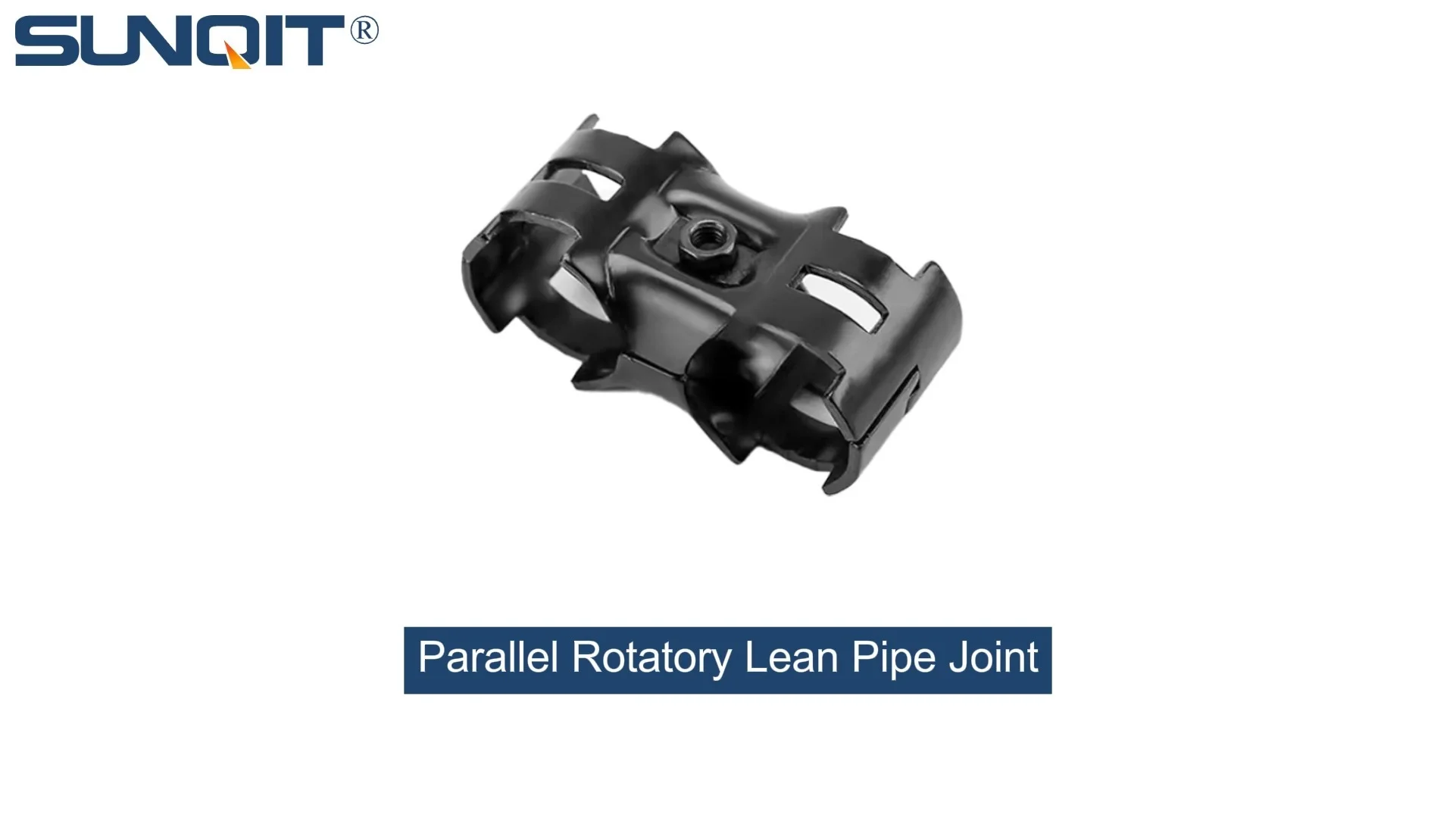
Parallel Rotatory Lean Pipe Joint
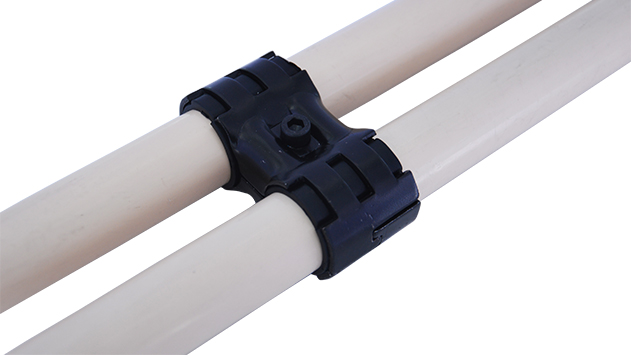
Parallel rotatory lean pipe joint, for 2 pcs pipe conenction in parallel direction with rotatory function.
Introduction: The Unsung Heroes of Lean Manufacturing
In the bustling world of manufacturing, where every second counts and efficiency is the name of the game, there's a quiet workhorse that keeps production lines moving, assembly stations adaptable, and material flow seamless: the parallel rotatory lean pipe joint. These unassuming components might not grab headlines, but they're the backbone of lean systems, enabling the flexibility and precision modern factories rely on. Whether you're setting up a new workbench, reconfiguring a roller track, or building a custom material rack, these joints are the silent architects of adaptability. But what makes a parallel rotatory lean pipe joint truly reliable? The answer lies in compliance with industry standards—those rigorous benchmarks that ensure safety, durability, and consistency across the board.
At first glance, a lean pipe joint might seem simple: a metal connector that links pipes, allowing rotation and adjustment. But beneath that simplicity is a world of engineering precision. Parallel rotatory joints, in particular, are designed to allow smooth, controlled rotation along a single axis, making them ideal for applications where angles need (fine-tuning) or components need to pivot without losing stability. Think of a workbench where operators need to adjust the height of a tool holder, or a roller track that tilts slightly to guide materials downhill—these joints make it possible. Yet, without adherence to strict industry standards, even the most well-designed joint could fail, leading to wobbly workstations, jammed roller tracks, or worse, safety hazards.
In this article, we'll dive deep into the world of parallel rotatory lean pipe joints, exploring why industry compliance matters, the key standards that govern their design and production, and how they integrate with other components like aluminum profile and caster wheels to create robust, future-ready manufacturing systems. We'll also look at real-world applications, testing protocols, and the ripple effects of choosing compliant joints—because when it comes to manufacturing, cutting corners on standards isn't just a risk; it's a disservice to the teams, products, and processes that depend on reliability.
Why Industry Standards Matter: Beyond "Good Enough"
In manufacturing, "good enough" is rarely good enough. A joint that holds together for a week but fails under heavy loads isn't just a nuisance—it's a liability. Industry standards exist to eliminate ambiguity, setting clear expectations for performance, materials, and safety. For parallel rotatory lean pipe joints, compliance isn't optional; it's the difference between a system that adapts and endures and one that falters when pushed to its limits.
Consider a scenario: A small electronics manufacturer invests in a new assembly line, using non-compliant lean pipe joints to save costs. Initially, everything works smoothly. But as production ramps up, the joints begin to loosen. A workbench tilts, causing a delicate circuit board to slip and crack. A roller track, held together by subpar joints, jams, halting the flow of components and delaying an order. What started as a "minor" cost-saving measure quickly becomes a major headache, with downtime, wasted materials, and frustrated employees. This is the reality of non-compliant components: they erode efficiency, compromise safety, and ultimately cost more than the savings they promise.
Industry standards, on the other hand, are built on decades of collective knowledge. They're developed by organizations like the International Organization for Standardization (ISO), the American Society for Testing and Materials (ASTM), and regional bodies, drawing input from engineers, manufacturers, and safety experts. These standards cover everything from the type of aluminum profile used in the joint's construction to the torque required to secure it, the load it must bear, and how it performs under extreme temperatures or repeated use. For parallel rotatory joints, compliance ensures that whether you buy a joint from Supplier A or Supplier B, it will fit the same lean pipe, support the same weight, and rotate with the same precision—eliminating compatibility issues and ensuring your system is built to last.
Key Industry Standards: The Building Blocks of Compliance
So, what specific standards govern parallel rotatory lean pipe joints? Let's break down the most critical ones, starting with the big picture and zooming into material and performance specifics.
ISO 9001: Quality Management Systems
At the foundation of compliance is ISO 9001, a globally recognized standard for quality management systems (QMS). While ISO 9001 doesn't dictate technical specifications for joints directly, it ensures that manufacturers follow consistent processes to design, produce, and test their products. For a parallel rotatory lean pipe joint manufacturer, ISO 9001 certification means rigorous documentation of design criteria, raw material sourcing, production workflows, and quality checks. It means every joint is traceable—you can track which batch it came from, who inspected it, and whether it passed all tests. This level of accountability is non-negotiable for industries like automotive or aerospace, where a single faulty joint could have catastrophic consequences.
Material Standards: The Aluminum Profile Advantage
The materials used in parallel rotatory lean pipe joints are just as important as the design itself. Most modern joints are made from aluminum or steel, with aluminum profile emerging as a top choice for its lightweight, corrosion-resistant, and eco-friendly properties. But not all aluminum is created equal. Industry standards like ASTM B221 (Standard Specification for Aluminum and Aluminum-Alloy Extruded Bars, Rods, Wire, Profiles, and Tubes) set strict guidelines for the composition, strength, and finish of aluminum extrusion profiles. For example, 6063-T5 aluminum, a common choice for lean pipe components, must meet specific tensile strength (≥18 ksi) and yield strength (≥14 ksi) requirements to ensure it can withstand the stresses of repeated rotation and heavy loads.
Why does this matter? Imagine a joint made from substandard aluminum that bends under the weight of a loaded workbench. Not only does it compromise the workstation's stability, but it also risks damaging the aluminum profile pipes it connects, leading to costly replacements. By adhering to ASTM B221, manufacturers ensure their joints are made from aluminum that's strong enough to last, even in high-stress environments.
Load-Bearing and Durability: ISO 8142 and Beyond
When it comes to performance, parallel rotatory lean pipe joints must meet load-bearing and durability standards to ensure they don't fail under real-world conditions. ISO 8142, for instance, specifies test methods for evaluating the mechanical properties of joints used in modular tube systems. This includes static load tests (how much weight the joint can support without deforming) and dynamic load tests (how it holds up under repeated stress, like constant rotation or vibration). For a typical parallel rotatory joint, these tests might involve applying a vertical load of 500 kg (1100 lbs) for 10,000 cycles to simulate years of use, then checking for cracks, loosening, or loss of rotational smoothness.
Another critical standard is DIN 2394, which governs the dimensions and tolerances of precision steel tubes—often used in conjunction with aluminum profile in lean systems. Even if a joint is made from high-quality aluminum, if the steel pipe it connects to has inconsistent diameters, the joint may not fit snugly, leading to wobble or slippage. By aligning with DIN 2394, manufacturers ensure their joints are compatible with standard pipes, reducing the risk of assembly errors and improving overall system stability.
Safety: OSHA and ANSI Guidelines
Safety is paramount in any manufacturing environment, and parallel rotatory lean pipe joints play a key role here. In the U.S., the Occupational Safety and Health Administration (OSHA) sets guidelines for workstation ergonomics and structural integrity, while the American National Standards Institute (ANSI) publishes standards like ANSI/RIA R15.06 for industrial robots and robot systems—many of which rely on lean pipe structures for support. For example, OSHA requires that workbenches be stable enough to prevent tipping, even when operators lean on them or heavy tools are placed on one side. A compliant parallel rotatory joint ensures that the bench remains level and secure, even after repeated adjustments, reducing the risk of trips, falls, or equipment damage.

Design Excellence: How Parallel Rotatory Joints Achieve Compliance
Compliance isn't just about meeting standards on paper—it's about engineering joints that live up to those standards in practice. Let's take a closer look at the design features that make parallel rotatory lean pipe joints compliant, reliable, and ready for the demands of modern manufacturing.
Precision Machining: The Key to Smooth Rotation
The defining feature of a parallel rotatory joint is its ability to rotate smoothly and consistently. This requires precision machining of the joint's internal components, including the bearing surfaces and locking mechanisms. Most compliant joints use ball bearings or bushings to reduce friction, ensuring rotation is both effortless and controlled. The tolerance for these components is incredibly tight—often within ±0.02 mm—to prevent play (excess movement) that could lead to instability. For example, the shaft that allows rotation must be perfectly aligned with the joint's housing; even a tiny misalignment can cause uneven wear, leading to stiff rotation or premature failure.
To achieve this precision, manufacturers use computer numerical control (CNC) machining, which ensures every joint is identical to the last. This consistency is critical for compliance: if one joint rotates smoothly but the next is stiff, it undermines the reliability of the entire system. CNC machining also allows for complex geometries, like internal lubrication channels that keep the joint moving smoothly over time—another feature that sets compliant joints apart from cheaper, manually machined alternatives.
Locking Mechanisms: Security Without Sacrificing Flexibility
A parallel rotatory joint isn't much use if it rotates when it shouldn't. That's why locking mechanisms are a vital part of compliance. These mechanisms—often lever-operated clamps or set screws—allow operators to lock the joint in place once the desired angle is set, preventing unintended movement. Industry standards require that these locks can withstand vibration and dynamic loads without slipping. For example, a lock might be tested by applying a torque of 20 Nm (14.8 ft-lbs) and ensuring the joint doesn't rotate more than 2 degrees under stress—a strict benchmark that ensures stability even in high-vibration environments like near a stamping press.
Some advanced joints use cam-action locks, which engage more securely as pressure is applied, reducing the risk of loosening over time. Others feature dual-locking systems, combining a set screw for primary security and a secondary clamp for backup. Whatever the design, the goal is the same: to balance flexibility (easy adjustment) with security (no unexpected movement)—a balance that's only achievable through rigorous testing and compliance with standards.
Corrosion Resistance: Thriving in Harsh Environments
Manufacturing floors are tough places for metal components. From oil and coolant spills to humid conditions, joints are exposed to elements that can cause rust and corrosion, weakening their structure over time. To combat this, compliant parallel rotatory joints undergo surface treatments that meet industry standards for corrosion resistance. For aluminum profile joints, anodizing is a common choice: an electrochemical process that creates a protective oxide layer on the surface, making the joint resistant to scratches and corrosion. ASTM B580 outlines the specifications for anodized aluminum coatings, including thickness (minimum 5 μm for general use) and adhesion (the coating shouldn't peel or flake under bending). For steel joints, zinc plating or powder coating is often used, with standards like ISO 2081 dictating the thickness and corrosion resistance of zinc layers.
The result? Joints that can withstand years of exposure to industrial environments without rusting or degrading. This not only extends the life of the joint but also reduces maintenance costs—no more replacing corroded components every few months.

Real-World Applications: From Workbenches to Roller Tracks
Compliant parallel rotatory lean pipe joints aren't just theoretical—they're hard at work in factories, warehouses, and assembly plants around the world. Let's explore two common applications where their compliance makes all the difference: workbenches and roller tracks.
Workbenches: Ergonomics Meets Stability
A well-designed workbench is the heart of any assembly station, and parallel rotatory joints are what make it adaptable. Imagine a electronics assembly line where operators alternate between assembling small circuit boards and larger components. With compliant joints, the workbench's height can be adjusted by rotating the legs, ensuring each operator can work at a comfortable, ergonomic height—reducing strain and boosting productivity. But without compliance, this adjustability could come at the cost of stability. A non-compliant joint might loosen over time, causing the bench to wobble as operators lean on it, increasing the risk of dropped components or repetitive stress injuries.
Take the "Workbench E (Single Deck-Without Caster)" from many lean system suppliers—a popular model used in electronics and light manufacturing. This workbench relies on parallel rotatory joints to connect its aluminum profile frame, allowing users to adjust the angle of the deck for tasks like soldering or inspection. Thanks to compliance with ISO 8142 load standards, the bench can support up to 300 kg (660 lbs) of tools and materials without bending, while the joints' locking mechanisms ensure the deck stays at the set angle, even during heavy use. It's this combination of flexibility and stability that makes compliant joints indispensable for modern workbenches.
Roller Tracks: Smooth Material Flow, No Jams
Roller tracks are another area where parallel rotatory lean pipe joints shine, enabling the seamless flow of materials from one workstation to the next. These tracks—often made from aluminum profile or steel—use gravity or powered rollers to move bins, pallets, or components. But to work effectively, the track's incline must be just right: too steep, and materials slide too fast; too shallow, and they jam. Parallel rotatory joints allow operators to (fine-tune) the track's angle, ensuring optimal flow. For example, a track feeding into a packaging station might need a 3-degree incline to move boxes gently, while one feeding into a sorting area might need a 5-degree incline for faster throughput.
Compliance is critical here, too. Roller tracks are often part of a larger material handling system, and any misalignment can cause jams that bring the entire line to a halt. Parallel rotatory joints that meet DIN 2394 dimensional standards ensure the track remains straight and level, even after repeated adjustments. Additionally, the joints' corrosion resistance (thanks to anodized aluminum profile) prevents rust from building up and jamming the rollers—especially important in environments with high humidity or coolant exposure.
Consider a food packaging plant where roller tracks move plastic bins of ingredients. Non-compliant joints might rust over time, causing the track to tilt and bins to tip, spilling ingredients and creating a safety hazard. Compliant joints, with their corrosion-resistant coatings and precise alignment, keep the track stable and the bins moving—saving time, reducing waste, and ensuring food safety standards are met.
Integration with Other Components: A System Approach to Compliance
Parallel rotatory lean pipe joints don't work in isolation. They're part of a larger ecosystem of components, from aluminum profile pipes and caster wheels to roller track guide rails and workbench accessories. For the entire system to be compliant, every piece must play by the same rules. Let's look at how these components interact and why compatibility matters.
Aluminum Profile Pipes: The Foundation
At the core of most lean systems are aluminum profile pipes, which connect to parallel rotatory joints to form frames, workbenches, and racks. These pipes must meet strict dimensional standards to ensure a snug fit with the joints. For example, a 28mm diameter pipe (common in lean systems) must have a tolerance of ±0.1mm to ensure it slides smoothly into the joint's housing without being too loose (which causes wobble) or too tight (which makes assembly difficult). This is where DIN 2394 comes into play, specifying the outer diameter, wall thickness, and straightness of the pipes. When joints and pipes both meet DIN 2394, assembly is faster, and the resulting structure is more stable—no gaps, no misalignments, just a solid, reliable frame.
Caster Wheels: Mobility Without Compromise
Add caster wheels to a lean system, and suddenly you have a mobile workstation or material cart—perfect for agile manufacturing. But caster wheels add another layer of complexity: the parallel rotatory joints must support not just the static weight of the cart, but also the dynamic forces of movement, like bumps or sudden stops. Compliance with ISO 10528 (which covers caster wheel performance) and ISO 8142 (joint load standards) ensures the system can handle both. For example, a mobile cart with four caster wheels might need each parallel rotatory joint to support 150 kg (330 lbs) of dynamic load—more than the static load, due to the forces of movement. Compliant joints are tested to withstand these forces, ensuring the cart remains stable and the joints don't loosen over time.
Roller Track Guide Rails: Alignment is Everything
Roller track guide rails—like the "Plastic Roller Track Guide Rail Yellow" or "Aluminum Guide Rail A" from many suppliers—keep materials centered on the track, preventing them from veering off course. These rails are mounted to the track's frame using brackets connected by parallel rotatory joints, allowing for alignment adjustments. If the joints are non-compliant, the rails might tilt or shift, causing materials to jam or fall off. By ensuring the joints meet ISO 8142's alignment standards, the rails stay straight, and the track runs smoothly—even at high speeds.
Testing and Certification: Proving Compliance in the Lab
Compliance isn't just claimed—it's proven through rigorous testing. Before a parallel rotatory lean pipe joint reaches the market, it undergoes a battery of tests to ensure it meets industry standards. Let's take a look at some of the most common tests and what they reveal about a joint's performance.
| Test Type | Standard | What It Measures | Pass/Fail Criteria |
|---|---|---|---|
| Static Load Test | ISO 8142 | Maximum weight the joint can support without deforming | No permanent deformation after 10,000 cycles at 500 kg load |
| Dynamic Load Test | ISO 8142 | Performance under repeated stress (e.g., rotation, vibration) | Rotational smoothness maintained; no loosening or cracks after 100,000 cycles |
| Corrosion Resistance Test | ASTM B117 (Salt Spray) | Resistance to rust and corrosion | No visible corrosion after 500 hours of salt spray exposure |
| Locking Mechanism Test | ANSI/RIA R15.06 | Security of locking mechanism under vibration | No rotation >2 degrees after applying 20 Nm torque |
| Dimensional Tolerance Test | DIN 2394 | Consistency of joint dimensions (e.g., pipe diameter, hole spacing) | Tolerances within ±0.02 mm for critical components |
These tests aren't just box-ticking exercises—they're designed to simulate real-world conditions. For example, the salt spray test (ASTM B117) mimics humid or coastal environments, ensuring joints won't corrode in factories near the ocean or with high moisture levels. The dynamic load test replicates years of use in just a few weeks, helping manufacturers identify weak points before the joint reaches the customer.
Certification bodies like SGS or TÜV often oversee these tests, issuing reports that confirm compliance. When choosing parallel rotatory lean pipe joints, look for suppliers who can provide these certifications—it's the best way to ensure you're getting a product that lives up to its claims.
The Ripple Effects of Compliance: Beyond the Joint
Choosing compliant parallel rotatory lean pipe joints isn't just about the joints themselves—it's about the entire manufacturing ecosystem. The benefits ripple outward, touching everything from productivity and safety to sustainability and bottom-line profits.
Reduced Downtime, Increased Productivity
Non-compliant joints are a common cause of unplanned downtime. A jammed roller track, a wobbly workbench, or a failed joint can bring a production line to a halt for hours while repairs are made. Compliant joints, on the other hand, are designed to last, reducing the frequency of breakdowns. In fact, studies show that factories using compliant lean components experience up to 30% less downtime than those using non-compliant alternatives. This uptime translates directly to higher productivity: more units produced, more orders fulfilled, and more revenue generated.
Safety First: Protecting Your Team
A manufacturing plant is only as strong as its commitment to safety, and compliant joints play a key role here. Loose joints can lead to falling tools, collapsing workbenches, or material spills—all of which put employees at risk. By meeting OSHA and ANSI safety standards, compliant joints reduce these risks, creating a safer workplace. This not only protects employees from injury but also reduces the risk of costly fines, workers' compensation claims, or damage to the company's reputation.
Sustainability: Less Waste, More Reuse
Lean manufacturing is about more than efficiency—it's about sustainability, too. Compliant parallel rotatory lean pipe joints are often made from recyclable materials like aluminum profile, which can be melted down and reused at the end of their life. Additionally, their durability means they need to be replaced less often, reducing waste. For example, a compliant joint might last 10 years, while a non-compliant one lasts only 3—tripling the lifespan and cutting waste by two-thirds. This aligns with ISO 14001 environmental standards, helping manufacturers reduce their carbon footprint and meet sustainability goals.
Scalability: Growing Without Rebuilding
As manufacturing needs change, so do lean systems. A factory might start with a small assembly line and expand to a full production floor, or shift from making one product to another. Compliant parallel rotatory joints make this scalability possible. Because they're compatible with standard aluminum profile pipes and components, they can be easily reconfigured or expanded without needing to replace the entire system. For example, a workbench built with compliant joints can be disassembled and reassembled into a material rack or roller track—saving time and money compared to buying new equipment.
Choosing the Right Supplier: Compliance Starts at the Source
Now that we've explored why compliance matters and what to look for in parallel rotatory lean pipe joints, the next step is choosing a supplier who prioritizes these standards. Not all suppliers are created equal, and cutting corners here can undo all the benefits of compliant joints. So, what should you look for?
First, ask for certifications. A reputable supplier will have no problem providing ISO 9001, ASTM B221, or ISO 8142 certificates for their joints. They should also be able to share test reports from third-party labs, proving their products meet load, durability, and safety standards. Second, inquire about material sourcing. Where do they get their aluminum profile? Do they use recycled materials? A supplier who's transparent about their supply chain is more likely to prioritize quality. Third, look for experience. A supplier with years of experience in lean manufacturing will understand the nuances of compliance and can help you choose the right joints for your specific application—whether it's a high-load workbench or a precision roller track.
Finally, consider customer support. Even the best joints might need adjustments or replacement parts, and a supplier with responsive support can save you time and frustration. Do they offer technical assistance? Can they help with installation or troubleshooting? These are all signs of a supplier who values long-term partnerships over quick sales.
Conclusion: Compliance as a Competitive Advantage
Parallel rotatory lean pipe joints might be small, but their impact on manufacturing is huge. They enable the flexibility, efficiency, and safety that modern factories need to thrive. Yet, none of this is possible without compliance with industry standards—those rigorous benchmarks that ensure every joint is strong, durable, and reliable. From ISO 9001 quality management to ASTM B221 aluminum profile standards, compliance is the thread that weaves together design, materials, and performance into a product you can trust.
As manufacturing continues to evolve—with trends like Industry 4.0, agile production, and sustainability taking center stage—the role of compliant components will only grow. Factories that invest in parallel rotatory lean pipe joints meeting these standards will be better equipped to adapt, scale, and compete in a fast-changing market. They'll reduce downtime, protect their teams, and build systems that last—turning compliance from a requirement into a competitive advantage.
So, the next time you're setting up a workbench, reconfiguring a roller track, or building a custom lean system, remember: the joints you choose matter. Choose compliant, and build a foundation for success.