- Company Articles
- Industry articles
- Industry standards
- Pharmaceutical Production: 2.0mm Stainless Steel Pipe Cleanliness Standards

Pharmaceutical Production: 2.0mm Stainless Steel Pipe Cleanliness Standards
Related Product
2.0mm Stainless Steel Pipe
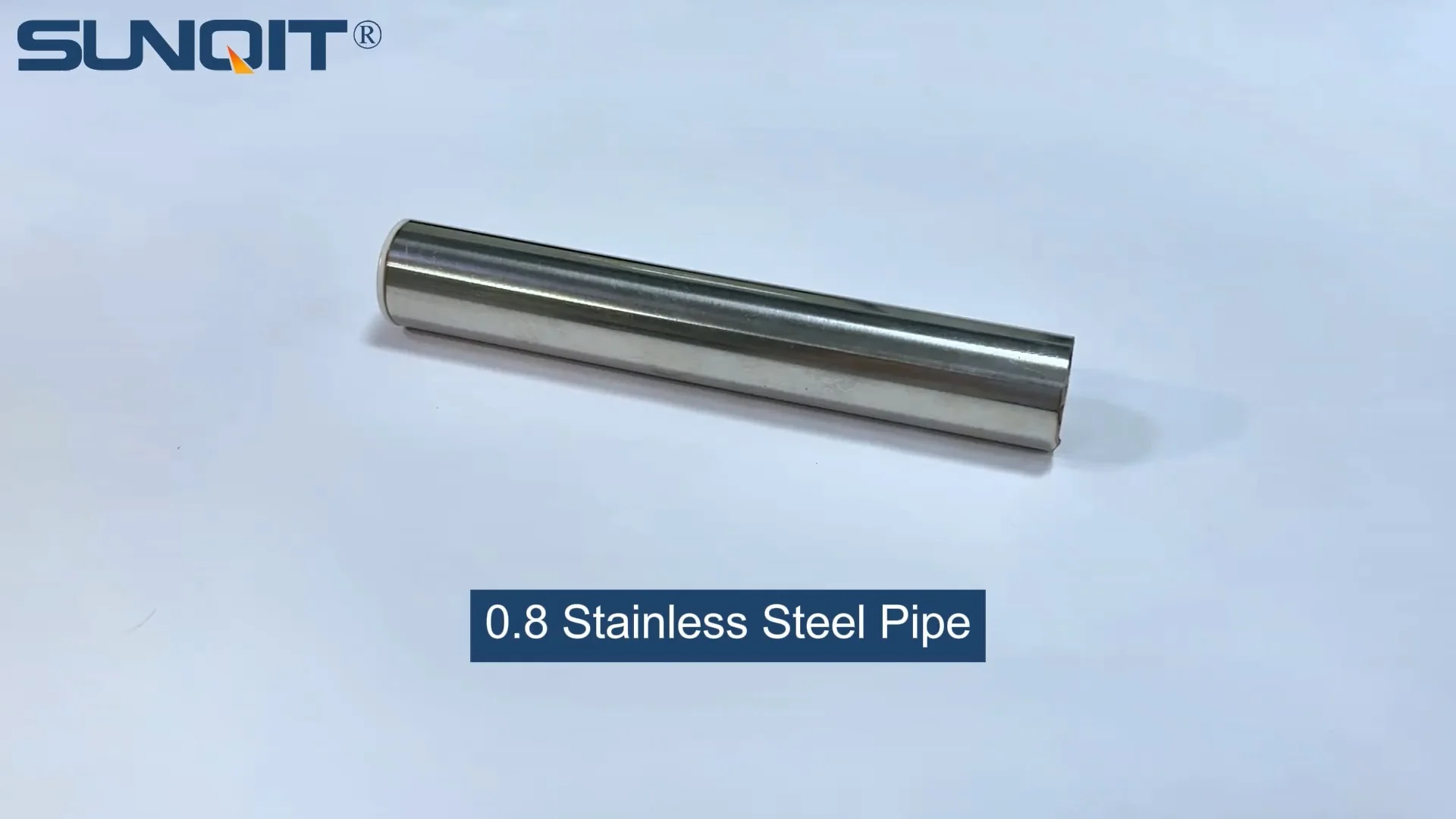
Stainless steel pipe, lean pipe, diameter is 28mm, material is SS201 or SS304, SS201 is normally used in the market. It knows a KARAKURI, KAIZEN material for industrial plant to improve efficiency, save labor cost, standard management.
Ensuring Purity, Compliance, and Patient Safety in Every Component
Introduction: The Invisible Backbone of Pharma Production
Walk through any pharmaceutical manufacturing facility, and you'll likely notice rows of gleaming equipment, sterile workspaces, and teams in head-to-toe protective gear. What you might not see—yet what keeps the entire operation running safely—is the network of stainless steel pipes snaking through walls, connecting mixing tanks, transporting raw materials, and carrying purified water. These pipes are more than just conduits; they are the silent guardians of drug purity. Among them, the 2.0mm stainless steel pipe stands out as a critical component, balancing strength, precision, and ease of cleaning to meet the industry's uncompromising standards.
In pharmaceutical production, even the smallest flaw—a microscopic scratch, a trace of residue, or a single bacterial cell—can compromise a batch, risking patient health and regulatory penalties. That's why cleanliness isn't just a goal here; it's a legal and ethical imperative. For 2.0mm stainless steel pipes, which are often used in tight spaces, precision dosing systems, and high-purity fluid transfer, the standards for cleanliness are particularly stringent. This article dives into what those standards entail, why they matter, and how manufacturers can ensure their 2.0mm stainless steel pipes meet—and exceed—expectations.
Why Stainless Steel? The Material of Choice in Pharma
Stainless steel has long been the gold standard in pharmaceutical manufacturing, and for good reason. Unlike plastic or copper, it is non-reactive, meaning it won't leach chemicals into sensitive formulations. Its smooth surface resists corrosion from harsh cleaning agents, and it can withstand repeated sterilization cycles—critical in a industry where "sterile" isn't just a buzzword, but a requirement. Within the broader stainless steel pipe series , the 2.0mm variant occupies a unique niche: thick enough to handle pressure and mechanical stress, yet thin enough to fit into compact production lines, such as those used for injectables or small-batch specialty drugs.
But why 2.0mm specifically? Let's break it down. Thinner pipes (like 1.0mm) may lack the structural integrity to withstand the high pressures of fluid transfer, while thicker ones (3.0mm+) can be cumbersome, harder to clean, and prone to trapping residue in welds or joints. The 2.0mm thickness strikes a sweet spot: it's rigid enough to maintain shape under stress, flexible enough for custom installations, and its narrow inner diameter minimizes dead spaces where contaminants could hide. For pharmaceutical companies, this balance translates to fewer risks, easier maintenance, and better compliance with global regulations.

Regulatory Foundations: What Standards Govern Pipe Cleanliness?
Pharmaceutical manufacturers don't just "follow" cleanliness standards—they live and breathe them. Regulatory bodies like the U.S. Food and Drug Administration (FDA), the European Medicines Agency (EMA), and the World Health Organization (WHO) have established strict guidelines to ensure that every piece of equipment, including stainless steel pipes, meets predefined levels of purity. These standards aren't arbitrary; they're rooted in decades of research on how contaminants spread and how to prevent them.
At the heart of these regulations is the principle of "current Good Manufacturing Practice" (cGMP), which mandates that equipment be "designed, constructed, placed, and maintained to facilitate cleaning, sanitization, and inspection." For 2.0mm stainless steel pipes, this means adhering to specifications for material grade, surface finish, and cleaning validation. Let's take a closer look at key requirements across major regulatory frameworks:
| Regulatory Body | Key Standard/Guidance | Material Grade Requirement | Surface Finish (Ra Value) | Bioburden Limit |
|---|---|---|---|---|
| FDA (U.S.) | 21 CFR Part 211 | 316L stainless steel (preferred for high-purity applications) | ≤ 0.8 μm (electropolished) | < 10 CFU/cm² (post-cleaning) |
| EMA (EU) | Annex 1 (Revised 2022) | 316L or 304L (with documentation of suitability) | ≤ 0.4 μm (critical process contact surfaces) | < 5 CFU/cm² (aseptic processing areas) |
| WHO | WHO GMP for Pharmaceuticals | Corrosion-resistant, non-reactive alloys | ≤ 1.6 μm (mechanical polish); ≤ 0.8 μm (electropolished) | No detectable pathogens; total aerobic count < 10 CFU/g |
| ISO | ISO 14644-1 (Cleanrooms) | N/A (focus on air quality, but references material compatibility) | N/A (indirectly via cleanroom classification) | Particle count: Class 5 (≤ 3,520 particles ≥ 0.5 μm/m³) |
One term you'll encounter repeatedly is "Ra value," which measures surface roughness. A lower Ra (e.g., 0.4 μm) indicates a smoother surface, leaving fewer crevices for bacteria or residue to cling to. For 2.0mm pipes used in aseptic processing—like those transferring sterile APIs (Active Pharmaceutical Ingredients)—electropolished surfaces (Ra ≤ 0.4 μm) are often required. This process uses an electrochemical bath to dissolve microscopic peaks on the metal surface, creating a mirror-like finish that's both easier to clean and more resistant to corrosion.

Anatomy of a 2.0mm Stainless Steel Pipe: Beyond Thickness
To truly understand why 2.0mm stainless steel pipes are critical in pharma, we need to look beyond their thickness. These pipes are engineered with precision, from the alloy composition to the way they're joined. Let's break down their key components:
Material Grade: Most pharmaceutical pipes are made from 316L stainless steel, a low-carbon variant of 316 that's highly resistant to acids, alkalis, and chloride corrosion—common in cleaning agents and bodily fluids (for drug delivery systems). While 304 stainless steel is cheaper and suitable for some non-critical applications, 316L is the gold standard for high-purity processes, as it minimizes the risk of metal ion leaching into drugs.
Surface Finish: As mentioned earlier, electropolishing is preferred over mechanical polishing for critical surfaces. Mechanical polishing uses abrasives to smooth the surface, but it can leave tiny grooves. Electropolishing, by contrast, removes material uniformly, resulting in a passive oxide layer that acts as a barrier against contaminants. For 2.0mm pipes, this finish is applied both inside and out, ensuring that even the inner diameter—where fluid flows—is as clean as the exterior.
Joint Design: Welds and connections are potential weak points for contamination. 2.0mm pipes are often joined using orbital welding, a computer-controlled process that creates precise, uniform welds with minimal heat-affected zones. This reduces the risk of cracks or pits where bacteria can grow. Some systems also use press-fit or flanged connections with gaskets made from FDA-approved materials like PTFE (Teflon), ensuring a tight seal that won't degrade over time.
Dimensions: The 2.0mm wall thickness is paired with inner diameters (IDs) ranging from 6mm to 25mm, depending on the application. For example, a 6mm ID pipe might transport small volumes of expensive APIs, while a 25mm ID pipe could carry purified water to mixing tanks. The key is that the ID is consistent along the pipe's length, preventing turbulence that could stir up sediment.
Cleanliness Metrics: How Do We Measure "Clean"?
"Clean" is a subjective term in everyday life, but in pharma, it's quantifiable. For 2.0mm stainless steel pipes, cleanliness is measured across three key metrics: bioburden, endotoxins, and visual/particulate contamination. Let's unpack each:
Bioburden: This refers to the total number of viable microorganisms (bacteria, fungi, etc.) on a surface. For 2.0mm pipes, regulatory limits typically range from < 10 to < 100 colony-forming units (CFU) per cm², depending on the drug type (e.g., injectables have stricter limits than oral tablets). Testing involves swabbing the pipe's inner surface with a sterile sponge or using rinse sampling, where a sterile fluid is flushed through the pipe and then cultured to count CFUs.
Endotoxins: These are toxic substances released by dead bacteria (e.g., E. coli ). Even non-viable bacteria can leave endotoxins behind, which can cause fever or inflammation in patients. The limit for endotoxins in parenteral drugs (injected or infused) is typically < 0.25 endotoxin units (EU) per mL. For pipes, this is measured using the Limulus Amebocyte Lysate (LAL) test, which uses blood cells from horseshoe crabs to detect even trace amounts of endotoxins.
Visual and Particulate Contamination: Pipes must be free of visible residue, rust, or discoloration. Additionally, the number of particles (e.g., dust, metal fragments) in fluid passing through the pipe is regulated. For example, the FDA requires that injectable drugs contain no particles larger than 10 μm in diameter, with limits on the total number of particles per mL. To test this, manufacturers flush pipes with purified water and analyze the effluent using light obscuration or microscopy.
Cleaning and Sanitization: The Process Behind the Purity
Maintaining cleanliness in 2.0mm stainless steel pipes isn't a one-time task—it's a rigorous, repeatable process. Most pharmaceutical facilities use either Clean-In-Place (CIP) or Clean-Out-of-Place (COP) systems, depending on the pipe's location and function.
CIP Systems: For pipes that are hardwired into production lines (e.g., those connecting mixing tanks to filling machines), CIP is the norm. This automated process involves flushing the pipe with a sequence of fluids: first, a pre-rinse with warm water to remove loose debris; then a detergent (e.g., alkaline or enzymatic) to break down organic residues; followed by a post-rinse to remove detergent; and finally, a sanitizing agent (e.g., peracetic acid or hot water) to kill remaining microorganisms. The entire cycle is controlled by sensors that monitor temperature, flow rate, and chemical concentration, ensuring consistency every time.
COP Systems: For smaller or pipes (e.g., those used in laboratory-scale production), COP is more practical. Pipes are disassembled, soaked in a cleaning solution, scrubbed with soft brushes (to avoid scratching the electropolished surface), rinsed, and sanitized before reassembly. This process is labor-intensive but allows for thorough inspection of each component, including joints and welds.
Validation: No cleaning process is complete without validation. Manufacturers must prove, through scientific testing, that their cleaning methods consistently reduce bioburden and endotoxins to acceptable levels. This involves "worst-case" scenarios—e.g., simulating a batch run with the most difficult-to-clean product, then testing the pipe to ensure all residue is removed. Validation data is then submitted to regulatory bodies as part of the facility's cGMP compliance documentation.
Here, the principles of lean system thinking come into play. By streamlining cleaning workflows—standardizing procedures, eliminating unnecessary steps, and using data to optimize cycle times—manufacturers can reduce downtime while maintaining compliance. For example, a lean approach might involve scheduling CIP cycles during production gaps, using single-use cleaning agents to avoid cross-contamination, or investing in sensors that alert operators when a pipe needs cleaning, rather than sticking to a rigid schedule.
Maintenance: Keeping Pipes Clean Over Time
Even the best-designed pipes degrade over time—especially in a pharmaceutical environment, where they're exposed to frequent cleaning, temperature cycles, and mechanical stress. Regular maintenance is critical to preserving their cleanliness and functionality.
Preventive Maintenance: This includes routine inspections for signs of wear, such as scratches, dents, or corrosion. Technicians use borescopes to examine the inner diameter of pipes, looking for pitting or discoloration that could harbor bacteria. They also check joints and gaskets for leaks or degradation, replacing them before they fail. For 2.0mm pipes, which are often in hard-to-reach areas, this may involve using flexible borescopes or ultrasonic testing to detect flaws without disassembly.
Calibration and Testing: CIP systems must be calibrated regularly to ensure that flow rates, temperatures, and chemical concentrations are within specified ranges. Similarly, testing equipment (e.g., ATP meters for bioburden, LAL kits for endotoxins) must be validated to ensure accuracy. Many facilities keep these tools organized on a dedicated workbench , complete with checklists and calibration logs, to ensure nothing is missed.
Training: Even the most advanced equipment is only as good as the people using it. Technicians and operators receive regular training on pipe maintenance, including how to handle pipes without scratching them, how to identify early signs of contamination, and how to document inspections. This human element is often the first line of defense against cleanliness failures.
Case Study: How One Manufacturer Solved a Persistent Contamination Issue
Background: A mid-sized pharmaceutical company producing injectable antibiotics was struggling with recurring bioburden spikes in their 2.0mm stainless steel transfer pipes. Despite following CIP protocols, swab tests consistently showed CFU counts above the 10 CFU/cm² limit, leading to batch rejections and delayed shipments.
Investigation: The team began by reviewing their CIP cycle: pre-rinse (5 min, 40°C), alkaline detergent (10 min, 60°C), post-rinse (5 min, 40°C), sanitization (5 min, 80°C). Borescope inspections revealed no visible damage to the pipes, but microbial testing of the rinse water showed that residue was accumulating in a 90-degree elbow joint, where flow turbulence was creating a dead space.
Solution: The company redesigned the elbow joint to a smoother, radiused bend (eliminating the sharp angle) and adjusted the CIP cycle to include a pulsating flow during the detergent phase, which helped dislodge residue in hard-to-reach areas. They also switched to an enzymatic detergent, which was more effective at breaking down protein-based residues from the antibiotic formulation.
Outcome: Within two weeks, bioburden levels dropped to < 1 CFU/cm², and batch rejections ceased. The radiused elbow joint became a standard part of their pipe design, and the pulsating CIP flow was adopted across all similar systems.
Future Trends: Innovations in Pipe Cleanliness
As pharmaceutical manufacturing evolves, so too do the tools and technologies for ensuring pipe cleanliness. Here are a few emerging trends to watch:
Smart Pipes with Embedded Sensors: Researchers are developing stainless steel pipes with integrated sensors that monitor temperature, pH, and even microbial activity in real time. These "smart" pipes could alert operators to contamination risks before they escalate, reducing downtime and improving safety.
Nanocoatings: New nanoscale coatings, such as titanium dioxide or silver ions, are being applied to pipe surfaces to inhibit bacterial growth. These coatings work by disrupting cell membranes or generating reactive oxygen species that kill microbes, adding an extra layer of protection between cleanings.
3D-Printed Pipes: Additive manufacturing (3D printing) allows for the creation of pipes with complex geometries—including smooth, seamless bends and internal channels designed to minimize turbulence. While still in early stages, 3D-printed 2.0mm stainless steel pipes could eliminate welds entirely, reducing contamination risks.
Conclusion: Every Millimeter Matters
In the world of pharmaceutical production, the 2.0mm stainless steel pipe may seem, but its role is irreplaceable. From transferring life-saving drugs to ensuring compliance with global regulations, these pipes are a testament to the industry's commitment to quality and patient safety. By understanding the standards that govern their cleanliness, investing in proper design and maintenance, and embracing new technologies, manufacturers can ensure that every millimeter of these pipes contributes to healthier outcomes for patients worldwide.
At the end of the day, cleanliness in pharmaceutical manufacturing isn't just about following rules—it's about honoring the trust that patients, doctors, and regulators place in every drug that leaves the facility. And in that mission, the 2.0mm stainless steel pipe is more than a component; it's a promise kept.