- Company Articles
- Industry articles
- Industry standards
- Precision Cutting Techniques for 2040 EU Standard Aluminum Profile

Precision Cutting Techniques for 2040 EU Standard Aluminum Profile
Related Product
2040 EU Standard Aluminum Profile
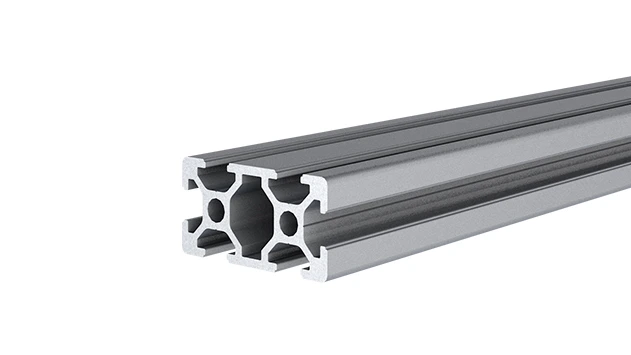
2040 is a 2.00 x 4.00CM fractional 20 series square extrusion T-slot profile with four open T-slots, two side with 2.00cm face, the other side with 4.00cm face. The profile has align-a-grooves to assist in aligning connecting profiles.
Introduction: The Backbone of Modern Workspaces
Walk into any modern workshop, manufacturing plant, or even a well-organized garage, and you'll likely spot a common hero: the 2040 EU Standard Aluminum Profile. Sleek, lightweight, and incredibly versatile, this aluminum extrusion profile has become the go-to choice for building everything from workbenches and material racks to machine guards and assembly lines. But here's the thing—its magic lies not just in its design, but in how well it's cut. A poorly cut profile can turn a promising project into a frustrating puzzle of misaligned parts, while precision cutting? It transforms those aluminum lengths into a seamless, functional system that fits like a glove.
If you've ever worked with aluminum profiles, you know the stakes. Whether you're a small business owner building custom workstations or a hobbyist crafting a DIY storage solution, the accuracy of your cuts directly impacts safety, durability, and even the overall look of your finished product. In this guide, we're diving deep into the art and science of precision cutting for 2040 EU Standard Aluminum Profiles. We'll cover the tools you need, the techniques that work, and how to avoid common pitfalls—because when it comes to aluminum extrusion profiles, the difference between "good enough" and "perfect" is all in the details.
Why 2040 EU Standard Aluminum Profile? A Quick Primer
Before we jump into cutting, let's take a second to appreciate why the 2040 profile is so widely loved. Part of the EU standard aluminum extrusion profile family, it gets its name from its dimensions: 20mm in width and 40mm in height (or vice versa, depending on orientation). What makes it special is its T-slot design—the grooves running along its length that let you slide in nuts, bolts, and accessories without drilling. This means endless customization: add a shelf here, a bracket there, or even a tool holder, all without permanently altering the profile.
But its popularity isn't just about flexibility. Aluminum extrusion profiles like the 2040 are lightweight yet surprisingly strong, resistant to corrosion, and easy to work with—no heavy machinery required for basic assembly. They're also cost-effective, especially when you factor in how reusable they are; disassemble a workstation, and you can repurpose the profiles into something entirely new. From small-scale projects like a home workshop bench to industrial setups like production line racks, the 2040 profile is the Swiss Army knife of building materials.
Of course, all this versatility hinges on one critical step: cutting the profiles to the exact lengths you need. A cut that's off by even a millimeter can throw off an entire assembly, making aluminum profile accessories like connectors and brackets misfit, or leaving unsightly gaps that compromise structural integrity. That's why mastering precision cutting isn't just a skill—it's essential to getting the most out of your 2040 EU Standard Aluminum Profile.

Tools of the Trade: Choosing What Works for You
You wouldn't paint a masterpiece with a sponge, right? The same logic applies to cutting aluminum profiles. The tools you use will make or break your precision, so let's break down the essentials. Whether you're working in a professional shop or a garage, there's a tool for every budget and project scale.
Saws: The Workhorses
The star of the show is, of course, the saw. But not all saws are created equal. Let's start with the basics:
- Circular Saws: A favorite for DIYers and small workshops, circular saws are portable and versatile. Look for one with variable speed settings—aluminum cuts best at medium speeds (around 3,000-4,000 RPM) to avoid overheating. Pair it with a carbide-tipped blade designed for non-ferrous metals (aluminum, brass) with 60-80 teeth; more teeth mean smoother cuts.
- Miter Saws: If you need angled cuts (like 45° or 90° joints), a miter saw is your best friend. Many models come with laser guides for precise marking, and sliding miter saws can handle longer profiles. Again, opt for a non-ferrous metal blade here—you'll get cleaner cuts and less blade wear.
- Band Saws: For industrial settings or high-volume projects, band saws are ideal. They offer consistent, straight cuts and can handle multiple profiles at once (with proper clamping). Choose a blade with 10-14 teeth per inch (TPI) for aluminum; lower TPI is better for thicker stock, higher TPI for finer finishes.
- CNC Cutters: When precision is non-negotiable (think aerospace or medical equipment), CNC (Computer Numerical Control) cutters are the gold standard. These machines use computer programs to make ultra-accurate cuts, often within 0.01mm tolerance. They're pricey, but for large-scale production, they're worth every penny.
Measuring Tools: Accuracy Starts Here
You can have the best saw in the world, but if your measurements are off, your cuts will be too. Invest in these measuring tools:
- Digital Calipers: For measuring the profile's dimensions and checking cut accuracy, a digital caliper is a must. Look for one with a resolution of 0.01mm—you'll be amazed how often that extra precision comes in handy.
- Squares and Protractors: A good combination square helps ensure 90° cuts, while a protractor is essential for angled work. Magnetic versions are a bonus—they stick to the profile, leaving your hands free to mark lines.
- Laser Levels or Straightedges: For longer cuts, a laser level projects a straight line across the profile, making marking easier. If you're on a budget, a rigid aluminum straightedge (yes, even a scrap piece of 2040 profile!) works too—just make sure it's perfectly straight.
Clamps, Cooling, and Cleanup
No cutting setup is complete without these supporting players:
- Clamps: To prevent the profile from shifting mid-cut, use heavy-duty clamps like C-clamps or F-clamps. Soft jaw clamps are ideal—they won't scratch the aluminum's finish.
- Coolant or Lubricant: Aluminum can melt and stick to the saw blade if it gets too hot, leaving burrs or damaging the blade. A light cutting fluid or even WD-40 helps cool the blade and reduce friction.
- Deburring Tools: Even the cleanest cut leaves tiny burrs—sharp edges that can cut fingers or interfere with assembly. A deburring tool (a small handheld device with a blade) or a fine file will smooth those edges in seconds.
Tool Comparison: Which One Should You Choose?
Still unsure which tool is right for your project? Let's break it down with a quick comparison:
| Tool Type | Best For | Precision Level | Budget Range | Learning Curve |
|---|---|---|---|---|
| Circular Saw | DIY projects, small batches, straight cuts | Good (±0.5mm) | $100–$300 | Low |
| Miter Saw | Angled cuts, repetitive cuts, home workshops | Very Good (±0.3mm) | $200–$600 | Medium |
| Band Saw | Industrial production, thick profiles, multiple cuts | Excellent (±0.2mm) | $500–$2,000+ | Medium |
| CNC Cutter | High-precision projects, large-scale manufacturing | Exceptional (±0.01mm) | $10,000+ | High |
For most small to medium projects—like building a workbench or a storage rack—a circular saw or miter saw will do the job beautifully. Save the CNC cutter for when you're producing hundreds of identical parts or need micron-level accuracy.
Step-by-Step Precision Cutting: From Marking to Finishing
Now that you've got your tools ready, let's walk through the process of cutting a 2040 EU Standard Aluminum Profile like a pro. This step-by-step method will help you achieve clean, accurate cuts every time—no guesswork involved.
Step 1: Measure Twice, Cut Once (The Golden Rule)
You've heard it a million times, but it bears repeating: measure twice, cut once. Aluminum extrusion profiles aren't cheap, and wasting a length because of a wrong measurement is frustrating (and costly). Here's how to do it right:
- Mark the Profile: Use a pencil or a fine-tip marker to draw your cut line. For straight cuts, align your straightedge with the marks and draw a continuous line—don't just dot it. For angled cuts, use a protractor to measure the angle, then extend the line across all sides of the profile (yes, all four sides—this ensures you can check alignment while cutting).
- Account for Kerf: The "kerf" is the width of the material removed by the saw blade. For most blades, this is around 1-2mm. If you're cutting two pieces that need to fit together (like a frame), subtract the kerf width from your measurement to avoid over-cutting.
- Double-Check: Use your calipers to verify the length from the end of the profile to your mark. If possible, have a second person confirm the measurement—fresh eyes catch mistakes!
Step 2: Secure the Profile (No Wiggle Room Allowed)
Even the steadiest hand can't compensate for a moving profile. Clamping is non-negotiable here. Follow these tips:
- Use a Stable Surface: Clamp the profile to a workbench or sawhorse, not just the floor. The surface should be flat and level to prevent the profile from tilting.
- Clamp Both Ends: If you're cutting a long profile, clamp both the section you're cutting and the "drop" piece (the part that will fall off) to prevent it from sagging or shifting mid-cut.
- Protect the Surface: Wrap the clamp jaws in tape or use soft jaw clamps to avoid scratching the aluminum's anodized finish. Those scratches might not affect function, but they'll bug you every time you look at your project!
Step 3: Cutting the Profile (Speed, Feed, and Focus)
Now comes the moment of truth: making the cut. The key here is control—rushing leads to mistakes. Here's how to nail it:
- Set the Right Speed: For circular saws, start with a medium speed (around 3,500 RPM). Too fast, and the blade might grab the aluminum; too slow, and it will tear the material instead of cutting cleanly.
- Steady Feed Rate: Let the blade do the work. Push the saw forward at a consistent pace—about 2-3 inches per second for 2040 profiles. If you hear a high-pitched squeal, you're going too slow; if the blade bogs down, slow down.
- Follow the Line: Keep your eyes on the blade, not the mark. Align the blade's edge with the cut line and adjust as you go. If you're using a miter saw with a laser guide, line up the laser with your mark before starting.
- Cool as You Cut: If you're making multiple cuts, pause every few minutes to let the blade cool, or apply cutting fluid to reduce heat. This prevents the aluminum from melting onto the blade and keeps the cut clean.
Step 4: Deburring and Cleaning Up
You've made the cut—congrats! But we're not done yet. Even a perfect cut leaves burrs, and those tiny metal fragments can ruin your hard work. Here's how to finish the job:
- Deburr the Edges: Run a deburring tool lightly along the cut edge, applying gentle pressure. The tool will shave off burrs in seconds. For tighter spots (like the T-slots), use a small file or a piece of sandpaper wrapped around a pencil.
- Clean the Profile: Wipe the cut end with a rag to remove metal shavings. If you used cutting fluid, clean it off with soap and water—leftover fluid can attract dust or stain the aluminum over time.
- Check the Cut: Use your calipers to measure the length again—did it come out as planned? Lay the cut profile flat on a surface to check if it's warped (a common issue with thin aluminum). If it's slightly bent, gently straighten it with your hands—aluminum is malleable, so a little pressure goes a long way.
Common Challenges (and How to Fix Them)
Even with the best tools and techniques, things can go wrong. Let's troubleshoot the most common issues and how to solve them:
Problem 1: Burrs Galore
Burrs are the most frequent annoyance, but they're also the easiest to fix. If your cuts are leaving thick, ragged burrs, the culprit is usually a dull blade or too slow a feed rate. replace the blade with a sharp one (look for carbide teeth), and try pushing the saw a bit faster—you'll notice a huge difference.
Problem 2: Crooked Cuts
A cut that veers off the line is often due to poor clamping or an unsteady hand. If the profile shifts mid-cut, check your clamps—they might be too loose. For angled cuts, make sure your miter saw is calibrated (most have a small adjustment screw to align the blade with the angle guide). If you're using a circular saw, attach a guide rail (a straight piece of wood clamped to the profile) to keep the saw on track.
Problem 3: Overheating and Melting
If you see aluminum "smearing" on the blade or the cut edge looks discolored (dark gray or black), the blade is overheating. Slow down the saw speed, apply more cutting fluid, or take breaks between cuts. You can also switch to a blade with more teeth—more teeth mean less friction per tooth, reducing heat buildup.
Problem 4: Inconsistent Lengths
If you're cutting multiple profiles and they're all slightly different lengths, the issue is likely in your measuring or marking. Try using a stop block—a piece of wood clamped to the workbench that acts as a guide for the end of the profile. That way, every cut starts from the same reference point, ensuring consistency.
Beyond the Cut: Accessories That Complete the Project
Precision cutting is just the first step. Once your 2040 profiles are cut to size, you'll need aluminum profile accessories to turn them into something functional. And here's the secret: those accessories only work well if your cuts are accurate. Let's take a look at the most common ones and how they rely on precise cutting:
2040 Aluminum Profile End Cap: The Finishing Touch
Ever noticed the plastic or metal caps on the ends of aluminum profiles? Those are 2040 aluminum profile end caps, and they're more than just decoration. They protect the T-slots from dust and debris, prevent sharp edges from cutting fingers, and give the profile a polished look. But if your cut is uneven or the profile is bent, the end cap won't snap into place properly—it might wobble or fall off. A clean, square cut ensures the end cap fits snugly, creating a seamless finish.
Aluminum Profile Fixings: Holding It All Together
Aluminum profile fixings are the unsung heroes of assembly—nuts, bolts, and brackets that secure profiles together. Take T-slot nuts, for example: they slide into the grooves of the profile and lock in place when you tighten a bolt. But if your cut is off, the holes in a bracket might not align with the T-slots, making it impossible to tighten the nut. Or, if the profile is warped, the bracket might sit at an angle, weakening the joint. Precise cuts mean fixings go in smoothly, and your structure stays strong.
Connectors and Brackets: The Glue of the System
From 90° angle brackets to corner connectors, aluminum profile accessories like these let you build complex structures with minimal effort. But they're designed to fit specific profile sizes—2040 in this case. A profile that's cut too short might leave a gap between connectors, while one that's too long could bend the bracket. When your cuts are accurate, the connectors slide on easily, and the entire assembly feels solid—no wiggling or creaking.
Maintenance: Keeping Your Tools (and Profiles) in Top Shape
Precision cutting isn't just about technique—it's also about taking care of your tools and materials. Here's how to make sure everything stays in prime condition:
Tool Maintenance
- Sharpen Blades Regularly: A dull blade is the enemy of clean cuts. Most saw blades can be sharpened 2-3 times before needing replacement. If you're not comfortable sharpening them yourself, take them to a professional— it's cheaper than buying new blades every month.
- Clean Blades After Use: Wipe saw blades with a rag soaked in mineral spirits to remove aluminum residue. Built-up gunk reduces cutting efficiency and causes burrs.
- Lubricate Moving Parts: Saws with moving parts (like miter saw hinges) need occasional oiling to stay smooth. Check the user manual for lubrication points and use a light machine oil.
Profile Storage
Aluminum profiles are tough, but they're not indestructible. Store them horizontally on a rack (not vertically, which can bend them) and keep them away from moisture to prevent corrosion. If you're storing cut pieces, wrap them in bubble wrap or paper to avoid scratches—especially if they're anodized (the colored finish is more delicate than bare aluminum).
Real-World Example: How Precision Cutting Transformed a Workshop
Let's wrap up with a quick story to drive the point home. A small electronics repair shop in Berlin was struggling with disorganized workbenches. They decided to build custom workstations using 2040 EU Standard Aluminum Profiles, but their first attempt was a disaster: cuts were uneven, end caps wouldn't fit, and the brackets kept slipping. Assembly took twice as long as planned, and the workbenches wobbled so much they were unsafe to use.
Frustrated, they invested in a miter saw with a laser guide and spent an hour practicing their measuring and clamping. The difference was night and day. Their next batch of cuts was precise to within 0.2mm, and the workbenches went together in half the time. The 2040 aluminum profile end caps snapped into place perfectly, and the aluminum profile fixings held tight—no more wobbling. Best of all, when they needed to add a new shelf later, the T-slots aligned perfectly with the brackets, thanks to those accurate initial cuts. Today, they swear by the mantra: "Measure once, cut once… but measure again just to be sure."
Conclusion: Precision Cutting = Better Results
At the end of the day, cutting 2040 EU Standard Aluminum Profile isn't rocket science—but it does require patience, the right tools, and a focus on the details. Whether you're building a simple shelf or a complex production line, the time you spend mastering precision cutting will pay off in smoother assemblies, stronger structures, and a finished product you can be proud of.
Remember: the 2040 profile is a tool for creativity, but it's only as good as the cuts you make. So grab your saw, double-check your measurements, and let those aluminum extrusion profiles shine. Happy cutting!