- Company Articles
- Industry articles
- Industry standards
- Quality Control Tests for 2040 EU Standard Aluminum Profile: Ensuring Consistency

Quality Control Tests for 2040 EU Standard Aluminum Profile: Ensuring Consistency
Related Product
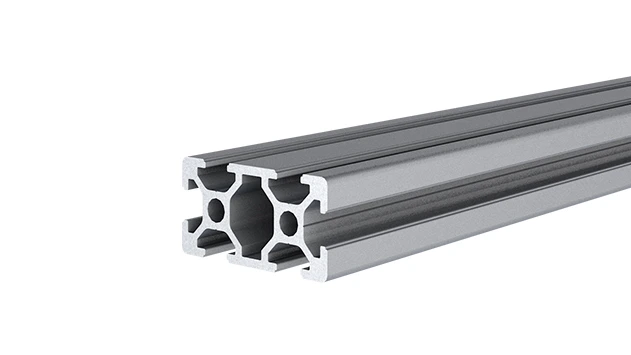
2040 EU Standard Aluminum Profile
2040 is a 2.00 x 4.00CM fractional 20 series square extrusion T-slot profile with four open T-slots, two side with 2.00cm face, the other side with 4.00cm face. The profile has align-a-grooves to assist in aligning connecting profiles.
Walk into any modern manufacturing facility, and you'll likely spot them: sleek, durable structures that form the backbone of assembly lines, workbenches, and material racks. These are often built with
2040 EU standard aluminum profiles
—a workhorse of industrial design known for its versatility, strength, and precision. But what makes these profiles reliable enough to support everything from delicate electronics assembly to heavy-duty material handling? The answer lies in rigorous quality control (QC) testing. In this article, we'll pull back the curtain on the critical tests that ensure every 2040 EU standard aluminum profile meets the strictest standards, exploring why each test matters and how it impacts the end products we rely on daily.
Understanding the 2040 EU Standard Aluminum Profile
Before diving into tests, let's clarify what makes the 2040 profile unique. Part of the broader family of
aluminum extrusion profiles
, the 2040 gets its name from its dimensions: 20mm in width and 40mm in height. Designed to meet EU standards (primarily EN 755, which governs aluminum and aluminum alloy extruded profiles), it's engineered for modularity. This means it works seamlessly with
aluminum profile accessories
like connectors, brackets, and end caps, allowing manufacturers to build custom structures quickly. Whether it's a workbench in a electronics plant or a conveyor system in a warehouse, the 2040 profile's consistency is non-negotiable. A minor flaw—a slightly off dimension or weak alloy—could throw off an entire assembly, leading to wobbly workbenches, jammed conveyors, or even safety hazards. That's why QC testing isn't just a box-checking exercise; it's the foundation of trust between suppliers and manufacturers.
Key Quality Control Tests: From Raw Material to Finished Profile
Quality control for 2040 profiles starts long before extrusion. It begins with raw material inspection and continues through extrusion, finishing, and even accessory compatibility checks. Below, we break down the most critical tests, explaining how they're performed and why they matter.
1. Material Composition Analysis: The Alloy Foundation
Aluminum profiles are only as strong as the alloy they're made from. Most 2040 EU standard profiles use 6063-T5 aluminum alloy—a blend prized for its excellent extrudability, corrosion resistance, and moderate strength. But how do QC teams ensure the alloy isn't cut with cheaper, weaker materials? Enter material composition analysis.
The process typically uses a spectrophotometer, a device that emits light onto a sample of the aluminum billet (the raw material before extrusion) and measures the wavelengths of light reflected back. Each element (like magnesium, silicon, or iron) absorbs and reflects light uniquely, allowing the device to generate a precise chemical fingerprint. For 6063-T5, EU standards specify strict limits: magnesium (0.45-0.9%), silicon (0.2-0.6%), iron (max 0.3%), and so on. A profile with too much iron, for example, might be brittle, while insufficient magnesium could weaken its load-bearing capacity.
Consider a scenario where a supplier skimps on magnesium. A 2040 profile made from this alloy might bend under the weight of tools on a workbench, forcing workers to readjust constantly and slowing production. By catching this in material testing, QC teams prevent such issues downstream.
The process typically uses a spectrophotometer, a device that emits light onto a sample of the aluminum billet (the raw material before extrusion) and measures the wavelengths of light reflected back. Each element (like magnesium, silicon, or iron) absorbs and reflects light uniquely, allowing the device to generate a precise chemical fingerprint. For 6063-T5, EU standards specify strict limits: magnesium (0.45-0.9%), silicon (0.2-0.6%), iron (max 0.3%), and so on. A profile with too much iron, for example, might be brittle, while insufficient magnesium could weaken its load-bearing capacity.
Consider a scenario where a supplier skimps on magnesium. A 2040 profile made from this alloy might bend under the weight of tools on a workbench, forcing workers to readjust constantly and slowing production. By catching this in material testing, QC teams prevent such issues downstream.
2. Dimensional Accuracy: Precision in Every Millimeter
The 2040 profile's value lies in its consistency—every piece must measure 20mm x 40mm (width x height) with minimal tolerance. Even a 0.1mm deviation can cause problems when assembling with accessories like brackets or
2040 aluminum profile end caps
. Dimensional accuracy testing ensures these specs are met.
Testing starts with calipers and micrometers for basic measurements: width, height, wall thickness (critical for strength), and length. For larger batches, coordinate measuring machines (CMMs) come into play. These automated devices use touch probes or laser scanners to map the profile's geometry in 3D, comparing it to a digital blueprint. EU standards (EN 755-2) define tolerances: for example, the width of a 20mm profile might have a tolerance of ±0.2mm, while straightness (how much the profile bends along its length) is limited to 0.5mm per meter.
Why does this matter? Imagine a manufacturer building a material rack using 2040 profiles and aluminum profile rubber strips (used to seal edges and prevent scratches). If one profile is 0.3mm wider than others, the rubber strip won't fit snugly, leaving gaps that collect dust or allow parts to slip. Over time, this could compromise the rack's stability. Dimensional testing eliminates such risks, ensuring every profile plays by the same rules.
Testing starts with calipers and micrometers for basic measurements: width, height, wall thickness (critical for strength), and length. For larger batches, coordinate measuring machines (CMMs) come into play. These automated devices use touch probes or laser scanners to map the profile's geometry in 3D, comparing it to a digital blueprint. EU standards (EN 755-2) define tolerances: for example, the width of a 20mm profile might have a tolerance of ±0.2mm, while straightness (how much the profile bends along its length) is limited to 0.5mm per meter.
Why does this matter? Imagine a manufacturer building a material rack using 2040 profiles and aluminum profile rubber strips (used to seal edges and prevent scratches). If one profile is 0.3mm wider than others, the rubber strip won't fit snugly, leaving gaps that collect dust or allow parts to slip. Over time, this could compromise the rack's stability. Dimensional testing eliminates such risks, ensuring every profile plays by the same rules.
3. Surface Finish Inspection: Beauty and Functionality
A 2040 profile's surface isn't just about looks—it affects corrosion resistance, paint adhesion, and even how well accessories like rubber strips or labels stick. Surface finish testing checks for defects like scratches, dents, pitting, or uneven anodization (a common finishing process that adds a protective oxide layer).
Visual inspection is the first line of defense. QC inspectors examine profiles under controlled lighting, looking for visible flaws. For more precision, a roughness tester is used: a small probe glides along the surface, measuring irregularities in micrometers (μm). EU standards for anodized 6063 profiles typically require a surface roughness (Ra) of 0.8-3.2 μm, depending on the application. A rough surface might trap moisture, leading to corrosion, while a too-smooth surface could make it hard for adhesives (used in labels or rubber strips) to bond.
Anodization thickness is another key check. Using an eddy current tester, inspectors measure the oxide layer's depth—usually 5-20 μm for decorative or protective finishes. Too thin, and the profile is vulnerable to scratches; too thick, and it might interfere with accessory fit (e.g., a 2040 aluminum profile end cap might not slide on smoothly if the anodization is uneven).
Visual inspection is the first line of defense. QC inspectors examine profiles under controlled lighting, looking for visible flaws. For more precision, a roughness tester is used: a small probe glides along the surface, measuring irregularities in micrometers (μm). EU standards for anodized 6063 profiles typically require a surface roughness (Ra) of 0.8-3.2 μm, depending on the application. A rough surface might trap moisture, leading to corrosion, while a too-smooth surface could make it hard for adhesives (used in labels or rubber strips) to bond.
Anodization thickness is another key check. Using an eddy current tester, inspectors measure the oxide layer's depth—usually 5-20 μm for decorative or protective finishes. Too thin, and the profile is vulnerable to scratches; too thick, and it might interfere with accessory fit (e.g., a 2040 aluminum profile end cap might not slide on smoothly if the anodization is uneven).
4. Mechanical Strength Testing: Proving It Can Handle the Load
A profile might look perfect, but can it withstand real-world stress? Mechanical strength tests answer this by pushing samples to their limits. The most common tests include:
Tensile Testing: A sample of the profile is pulled until it breaks, measuring how much force it can withstand (tensile strength) and how much it stretches before breaking (elongation). For 6063-T5, EU standards require a tensile strength of 160-220 MPa and elongation of at least 8%. A profile with low elongation might snap under sudden stress, like a heavy box being dropped on a rack.
Bending Testing: The profile is clamped at both ends and bent to a specific angle (often 90°) to check for cracks or permanent deformation. This simulates scenarios where the profile supports uneven loads, like a workbench with tools stacked on one side.
Hardness Testing: Using a Rockwell hardness tester, inspectors measure the profile's resistance to indentation. 6063-T5 typically has a Rockwell hardness (HRB) of 60-80. Low hardness could mean the profile dents easily, while high hardness might make it brittle.
These tests are destructive—samples are ruined in the process—but they're critical for validating batch consistency. If a batch fails a tensile test, the entire lot might be rejected, preventing weak profiles from reaching production lines.
Tensile Testing: A sample of the profile is pulled until it breaks, measuring how much force it can withstand (tensile strength) and how much it stretches before breaking (elongation). For 6063-T5, EU standards require a tensile strength of 160-220 MPa and elongation of at least 8%. A profile with low elongation might snap under sudden stress, like a heavy box being dropped on a rack.
Bending Testing: The profile is clamped at both ends and bent to a specific angle (often 90°) to check for cracks or permanent deformation. This simulates scenarios where the profile supports uneven loads, like a workbench with tools stacked on one side.
Hardness Testing: Using a Rockwell hardness tester, inspectors measure the profile's resistance to indentation. 6063-T5 typically has a Rockwell hardness (HRB) of 60-80. Low hardness could mean the profile dents easily, while high hardness might make it brittle.
These tests are destructive—samples are ruined in the process—but they're critical for validating batch consistency. If a batch fails a tensile test, the entire lot might be rejected, preventing weak profiles from reaching production lines.
5. Accessory Compatibility: Ensuring the "Click" of Modularity
The 2040 profile's modularity relies on seamless integration with
aluminum profile accessories
—connectors, end caps, brackets, and more. A profile might pass all material and dimensional tests, but if it doesn't work with standard accessories, it's useless. That's why accessory compatibility testing is a final, crucial step.
Testing involves assembling mock structures using the profile and common accessories. For example, QC teams might attach a 2040 aluminum profile end cap (used to cover sharp edges and prevent debris from entering the profile's T-slot) and check if it fits snugly without gaps or requiring excessive force. They'll also test T-slot compatibility: inserting bolts or nuts into the profile's slots to ensure they slide smoothly and tighten securely. A slot that's too narrow could strip bolts; too wide, and the connection might loosen over time.
Another key check is with aluminum profile rubber strips . These strips are inserted into the profile's edges to reduce noise, protect materials, or seal against dust. QC teams ensure the strip fits tightly, doesn't peel off easily, and maintains its shape after repeated assembly and disassembly. A loose rubber strip on a conveyor guide rail, for example, could catch on products, causing jams and delays.
Testing involves assembling mock structures using the profile and common accessories. For example, QC teams might attach a 2040 aluminum profile end cap (used to cover sharp edges and prevent debris from entering the profile's T-slot) and check if it fits snugly without gaps or requiring excessive force. They'll also test T-slot compatibility: inserting bolts or nuts into the profile's slots to ensure they slide smoothly and tighten securely. A slot that's too narrow could strip bolts; too wide, and the connection might loosen over time.
Another key check is with aluminum profile rubber strips . These strips are inserted into the profile's edges to reduce noise, protect materials, or seal against dust. QC teams ensure the strip fits tightly, doesn't peel off easily, and maintains its shape after repeated assembly and disassembly. A loose rubber strip on a conveyor guide rail, for example, could catch on products, causing jams and delays.

The Role of Testing in Real-World Applications
To put these tests in context, let's look at a real-world example: a medical device manufacturer building assembly workbenches with 2040 EU standard profiles. Medical devices demand precision—even a wobble in the workbench could lead to misaligned components in a pacemaker or syringe. Here's how each test impacts their workflow:
- Material Composition: A profile with the correct 6063-T5 alloy ensures the workbench supports heavy equipment without bending, even during long shifts.
- Dimensional Accuracy: Consistent 20x40mm dimensions mean the workbench's shelves and tool holders align perfectly, so tools are always within reach.
- Surface Finish: A smooth, corrosion-resistant surface prevents bacteria buildup (critical for sterile environments) and ensures labels with safety instructions stay stuck.
- Mechanical Strength: The bench withstands accidental impacts (like a dropped tool) without cracking, avoiding costly downtime.
- Accessory Compatibility: 2040 aluminum profile end caps fit tightly, eliminating sharp edges that could snag gloves or damage delicate parts.
Without these tests, the manufacturer might face rework, delays, or even product recalls—risks that no business can afford.
- Material Composition: A profile with the correct 6063-T5 alloy ensures the workbench supports heavy equipment without bending, even during long shifts.
- Dimensional Accuracy: Consistent 20x40mm dimensions mean the workbench's shelves and tool holders align perfectly, so tools are always within reach.
- Surface Finish: A smooth, corrosion-resistant surface prevents bacteria buildup (critical for sterile environments) and ensures labels with safety instructions stay stuck.
- Mechanical Strength: The bench withstands accidental impacts (like a dropped tool) without cracking, avoiding costly downtime.
- Accessory Compatibility: 2040 aluminum profile end caps fit tightly, eliminating sharp edges that could snag gloves or damage delicate parts.
Without these tests, the manufacturer might face rework, delays, or even product recalls—risks that no business can afford.
Test Summary: A Quick Reference Table
| Test Category | Test Method | EU Standard Reference | Key Acceptance Criteria |
|---|---|---|---|
| Material Composition | Spectrophotometry | EN 755-3 | 6063-T5 alloy: Mg (0.45-0.9%), Si (0.2-0.6%), Fe (max 0.3%) |
| Dimensional Accuracy | CMM, calipers, micrometers | EN 755-2 | Width: ±0.2mm; Height: ±0.2mm; Straightness: 0.5mm/m |
| Surface Finish | Visual inspection, roughness tester, eddy current | EN 12373-6 | Ra: 0.8-3.2 μm; Anodization thickness: 5-20 μm |
| Mechanical Strength | Tensile, bending, Rockwell hardness | EN 755-1 | Tensile strength: 160-220 MPa; Elongation: ≥8%; HRB: 60-80 |
| Accessory Compatibility | Mock assembly with end caps, rubber strips, connectors | EN 755-9 | No gaps, secure fit, no deformation after assembly |
Conclusion: Consistency as a Competitive Advantage
The 2040 EU standard aluminum profile may seem like a simple component, but its reliability is the result of meticulous testing—from material composition to accessory fit. For manufacturers, these tests aren't just about meeting standards; they're about building trust. A supplier that consistently delivers profiles passing all QC checks becomes a partner, not just a vendor, enabling manufacturers to focus on innovation rather than fixing avoidable defects.
For end-users—whether they're workers on an assembly line or patients relying on medical devices—this consistency translates to safety, efficiency, and peace of mind. The next time you see a sleek workbench or a smoothly running conveyor, remember: behind that seamless functionality is a battery of tests ensuring every millimeter, every alloy, and every accessory works in harmony. In the world of industrial design, quality control isn't just a process—it's the backbone of progress.
For end-users—whether they're workers on an assembly line or patients relying on medical devices—this consistency translates to safety, efficiency, and peace of mind. The next time you see a sleek workbench or a smoothly running conveyor, remember: behind that seamless functionality is a battery of tests ensuring every millimeter, every alloy, and every accessory works in harmony. In the world of industrial design, quality control isn't just a process—it's the backbone of progress.