- Company Articles
- Industry articles
- Industry standards
- Rapid Assembly: Why 2040 EU Standard Aluminum Profile Boosts Production Efficiency

Rapid Assembly: Why 2040 EU Standard Aluminum Profile Boosts Production Efficiency
Related Product
2040 EU Standard Aluminum Profile
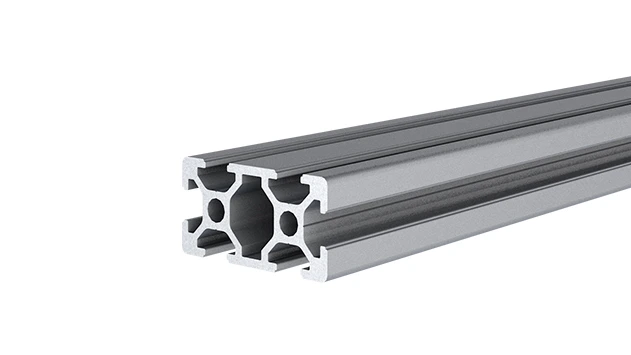
2040 is a 2.00 x 4.00CM fractional 20 series square extrusion T-slot profile with four open T-slots, two side with 2.00cm face, the other side with 4.00cm face. The profile has align-a-grooves to assist in aligning connecting profiles.
In today's fast-paced manufacturing world, every second counts. Whether you're running a small workshop or a large-scale production facility, the ability to set up, reconfigure, and adapt your workspace quickly can mean the difference between meeting tight deadlines and falling behind. If you've ever watched a team struggle with heavy steel frames, complicated welding, or custom-made wooden structures that take days to assemble, you know the frustration of inefficiency. But what if there was a solution that let you build, modify, and expand your workstations, racks, and production lines in hours—even minutes—without sacrificing durability or safety? Enter the 2040 EU standard aluminum profile: a game-changer for lean manufacturing, rapid prototyping, and flexible production setups.
In this article, we'll dive into why this unassuming piece of aluminum has become a cornerstone for modern factories and workshops. We'll explore its design, the benefits of EU standardization, how it simplifies assembly, and real-world examples of how it transforms production efficiency. Along the way, we'll touch on the essential aluminum profile accessories that make it all possible, and why it's more than just a material—it's a catalyst for smarter, faster, and more adaptable manufacturing.
What Is 2040 EU Standard Aluminum Profile, Anyway?
Let's start with the basics. The "2040" in 2040 EU standard aluminum profile refers to its cross-sectional dimensions: 20 millimeters in width and 40 millimeters in height. Picture a long, hollow rectangle—sleek, lightweight, and surprisingly strong. But what really sets it apart is its design: the profile features T-shaped slots (or "T-slots") running along its length, which act as built-in channels for connecting accessories, panels, and other profiles. These slots are the secret to its versatility, allowing for quick, tool-free (or minimal-tool) assembly.
Now, the "EU standard" part is crucial. Unlike generic aluminum profiles, EU standard profiles adhere to strict guidelines for material quality, dimensional accuracy, and safety. This means every 2040 EU standard profile you buy—whether from Germany, Italy, or a trusted global supplier—will have consistent wall thickness, precise slot dimensions, and compatibility with a wide range of accessories. No more guessing if a connector from one brand will fit a profile from another; EU standards ensure interoperability, which is a lifesaver when you're in the middle of a setup.
Material-wise, these profiles are typically made from 6063-T5 aluminum alloy, a grade known for its excellent balance of strength, corrosion resistance, and machinability. It's lightweight enough to be handled by a single person (unlike steel, which often requires heavy lifting equipment) but strong enough to support heavy loads—think workbenches stacked with tools, flow racks loaded with components, or conveyor systems moving products down the line.
Rapid Assembly: The Core Advantage of 2040 Profiles
Let's get to the heart of why manufacturers love 2040 EU standard aluminum profiles: speed. Traditional workbenches or material racks might require welding, drilling, or custom cutting—processes that take time, skilled labor, and often result in permanent structures that can't be easily changed. With 2040 profiles, assembly is a different story.
Imagine you need to build a new workbench for a temporary production line. With 2040 profiles, here's how it might go: You grab a few 2040 profile lengths, some aluminum profile accessories (like corner brackets, end caps, and T-slot nuts), and a hex key. You slide the T-slot nuts into the profile slots, align the brackets, tighten the bolts, and—boom—you've got the frame. Add a worktop (which can be attached via the same T-slots), and you're done. Total time? Maybe 30 minutes, even if you're not a seasoned engineer. Compare that to building a wooden workbench (which might take a day, plus drying time for paint or sealant) or welding a steel frame (requiring a certified welder and hours of setup). The difference is night and day.
The T-slot design is what makes this possible. Those slots aren't just for show—they let you attach accessories anywhere along the profile's length, not just at pre-drilled holes. Need to move a shelf up by 5cm? Loosen the bolts, slide the bracket, retighten. Want to add a tool holder on the side? drop a T-slot nut into the slot, attach the holder, and you're good. This flexibility eliminates the need for custom measurements or modifications; the profile adapts to your needs, not the other way around.
And it's not just about building from scratch. Reconfiguration is just as fast. Let's say your production line shifts from assembling small electronics to larger appliances. With traditional steel racks, you'd likely need to replace them entirely. With 2040 profiles, you can disassemble the existing flow rack, adjust the height of the shelves, add longer profile sections, and reassemble—all in a fraction of the time. This kind of agility is a cornerstone of lean manufacturing, where minimizing waste (including time wasted on retooling) is key.

Why EU Standards Matter: Quality, Compatibility, and Peace of Mind
You might be thinking, "There are plenty of cheap aluminum profiles out there—why pay extra for EU standard?" The answer lies in three words: quality, compatibility, and reliability. EU standards (like EN 755-9, which covers aluminum extrusions) set strict limits on things like dimensional tolerance, surface finish, and material strength. For example, a 2040 EU standard profile will have slot widths and depths that are consistent to within a fraction of a millimeter, ensuring that accessories from different suppliers (like a connector from Brand A and a bracket from Brand B) will fit together perfectly. Non-standard profiles, on the other hand, might have slots that are too narrow, walls that are uneven, or material that's prone to bending—all of which lead to frustrating, time-consuming assembly headaches.
Safety is another big factor. EU standards require rigorous testing for load capacity, corrosion resistance, and structural integrity. This means you can trust that a workbench built with 2040 EU profiles will safely support the weight of your tools and materials, even over years of use. Non-standard profiles? You might save a few dollars upfront, but you'll pay for it later when a shelf collapses or a joint fails, risking injury or damaged products.
Compatibility also extends to scalability. As your business grows, you can easily expand your setup by adding more 2040 profiles and accessories—no need to redesign everything from scratch. This modularity is a huge cost-saver in the long run, as it lets you invest in components that can be repurposed again and again.
Aluminum Profile Accessories: The Unsung Heroes of Rapid Assembly
A 2040 profile on its own is just a piece of aluminum. But pair it with the right aluminum profile accessories, and it becomes a building block for almost anything. Let's take a look at some of the most essential accessories and how they make assembly faster and more flexible:
- T-slot nuts and bolts: These are the workhorses of T-slot assembly. T-slot nuts slide into the profile's slots and lock in place when tightened, creating a secure connection without drilling. They come in various sizes to fit different slot widths, and many are reusable.
- Corner brackets and connectors: Need to join two profiles at a 90-degree angle? A corner bracket slides into the T-slots of both profiles and is secured with bolts. There are also 45-degree connectors, three-way connectors, and even swivel connectors for angled joints—all designed to click into place quickly.
- End caps: These simple plastic or aluminum caps snap onto the ends of profiles, protecting workers from sharp edges and preventing dust and debris from getting inside the slots. They're a small detail, but they add a professional finish and improve safety.
- Gussets: For extra strength at joints (like on a heavy-duty workbench), gussets (triangular brackets) reinforce connections, distributing weight more evenly. They're easy to attach via T-slots and can turn a basic frame into one that can handle heavy loads.
- Panel mounts: Want to add a plywood or metal panel to your frame (for a workbench top, toolboard, or machine guard)? Panel mounts slide into T-slots and clamp onto the panel, eliminating the need for screws or adhesives.
The beauty of these accessories is that they're designed to work together seamlessly. You don't need to be an engineer to figure out which bracket fits which profile—EU standards ensure compatibility across brands. This means you can mix and match accessories from different suppliers, giving you more options and keeping costs competitive.
Real-World Applications: From Workbenches to Flow Racks
To truly understand how 2040 EU standard aluminum profiles boost efficiency, let's look at some common applications where they shine:
1. Workbenches: Customized, Comfortable, and Quick to Build
A workbench is the heart of any production station, and 2040 profiles make building one a breeze. Whether you need a simple single-deck workbench (without casters) for a static assembly line or a mobile workbench with shelves and tool hooks, 2040 profiles let you tailor the height, width, and features to your workers' needs. For example, if a worker is taller than average, you can easily adjust the leg height by adding or removing profile sections. If you need to add a power strip, you can run cables through the hollow profiles (using cable management accessories) to keep the workspace tidy. And when the project ends, you can disassemble the workbench and reuse the profiles for something else—no waste, no leftover materials.
2. Flow Racks: Streamlining Material Handling
Flow racks (or gravity-fed racks) are essential for lean manufacturing, allowing materials to slide from the back to the front as they're used, reducing picking time and minimizing stockouts. Building a flow rack with 2040 profiles is straightforward: assemble the frame using vertical and horizontal profiles, then attach roller tracks (another accessory) via T-slots. The T-slots let you adjust the angle of the roller tracks to control how quickly materials flow, ensuring smooth, consistent movement. And if you need to expand the rack later (to add more rows or shelves), you can simply add more profiles and connectors—no need to buy a whole new rack.
3. Lean Systems: Adapting to Change on the Fly
Lean manufacturing is all about eliminating waste and continuously improving processes. 2040 profiles fit perfectly into this philosophy because they let you experiment with new layouts and workflows without committing to permanent structures. For example, if you want to test a U-shaped assembly line instead of a straight line, you can quickly reconfigure your workbenches, flow racks, and conveyor supports using 2040 profiles. If the new layout works, keep it; if not, change it back—all in a day's work. This kind of flexibility encourages innovation, as teams aren't afraid to try new ideas for fear of wasting time or money on setup.
2040 vs. Other Profiles: Why Size Matters
Of course, 2040 isn't the only aluminum profile out there. There's 2020 (20x20mm), 3030 (30x30mm), 4040 (40x40mm), and even larger profiles like 8080. So why choose 2040? It all comes down to balance. Let's compare it to a few common alternatives:
| Profile Type | Best For | Limitations | Why 2040 Stands Out |
|---|---|---|---|
| 2020 (20x20mm) | Light-duty applications (small shelves, display racks) | Low load capacity; not ideal for heavy workbenches or machinery | 2040 offers 2x the height (and thus 2x the load capacity) of 2020, making it better for medium-duty tasks without being overly bulky. |
| 4040 (40x40mm) | Heavy-duty machinery, industrial workbenches | Heavier and more expensive; overkill for many small to medium applications | 2040 is lighter and cheaper than 4040, making it easier to handle and more cost-effective for projects that don't require maximum load capacity. |
| Steel Profiles | Extreme load-bearing (e.g., automotive assembly lines) | Heavy, requires welding, prone to rust, hard to reconfigure | 2040 is 1/3 the weight of steel, corrosion-resistant, and requires no welding—making it faster to assemble and reconfigure. |
In short, 2040 hits the sweet spot for most small to medium manufacturing and workshop needs. It's strong enough to support workbenches, flow racks, and light machinery, but lightweight and affordable enough for everyday use. Unless you're building something that needs to support tons of weight (in which case 4040 or steel might be better) or something tiny (like a hobbyist's 3D printer frame, where 2020 works), 2040 is often the most practical choice.
Case Study: How a Small Electronics Factory Cut Setup Time by 75%
To put this all into perspective, let's look at a real example. A small electronics manufacturer in Poland was struggling with slow setup times for their assembly lines. They produced custom circuit boards for clients, and each client's order required a slightly different workstation layout (different tool positions, component shelves, and testing equipment). With their old steel workbenches, setting up a new line took 2–3 days: the team had to weld frames, drill holes for shelves, and paint the finished benches to prevent rust. If a client changed their order mid-production, the team often had to build entirely new benches, wasting time and materials.
Then they switched to 2040 EU standard aluminum profiles. The first new workstation took just 4 hours to assemble—including attaching a (ESD) worktop, tool holders, and a small conveyor for moving PCBs. When a client requested a taller shelf for larger components, the team adjusted the height in 15 minutes using T-slot brackets. Best of all, when the project ended, they disassembled the workstation and reused the profiles for the next client's order. Over six months, setup time for new lines dropped by 75%, and material waste (from scrapping old steel benches) was reduced to almost zero. The factory manager called it "the best investment we've ever made in efficiency."
The Future of Manufacturing: 2040 Profiles and Industry 4.0
As manufacturing moves toward Industry 4.0 (smart factories with connected machines and data-driven workflows), flexibility and adaptability will only become more important. 2040 EU standard aluminum profiles are well-positioned to play a role here, too. For example, they can be integrated with sensors (attached via T-slots) to monitor workflow, or with modular robotic arms (mounted on profile frames) that can be repositioned as production needs change. Even as factories become more automated, the need for physical flexibility—being able to move machines, workstations, and storage systems quickly—will remain, and 2040 profiles are ready to meet that need.
Sustainability is another growing trend, and aluminum profiles score here as well. Aluminum is 100% recyclable, and EU standard profiles are often made from recycled materials. Plus, their modular design means they can be reused indefinitely, reducing the need for new raw materials. For companies looking to reduce their carbon footprint, switching to 2040 profiles is a small change with a big impact.
Final Thoughts: More Than a Profile—A Productivity Tool
At the end of the day, 2040 EU standard aluminum profile is more than just a piece of metal. It's a tool that empowers manufacturers to work smarter, not harder. It reduces setup time, eliminates waste, encourages innovation, and adapts to changing needs—all while maintaining the strength and safety required for industrial environments. Paired with the right aluminum profile accessories and backed by EU standards for quality and compatibility, it's no wonder that more and more factories, workshops, and even hobbyists are making the switch.
So, if you're tired of waiting for custom steel frames, struggling with rigid wooden structures, or feeling stuck with a production line that can't keep up with demand, consider giving 2040 profiles a try. You might be surprised at how much time, money, and frustration they save—and how much more you can accomplish when your workspace is as flexible as your ideas.