- Company Articles
- Industry articles
- Industry standards
- Recyclability of 2040 EU Standard Aluminum Profile: Sustainable Manufacturing Insights

Recyclability of 2040 EU Standard Aluminum Profile: Sustainable Manufacturing Insights
Related Product
2040 EU Standard Aluminum Profile
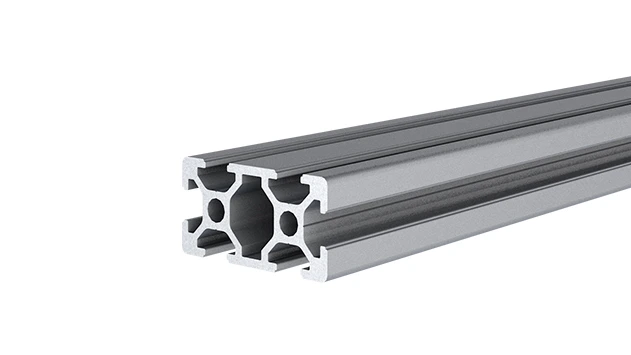
2040 is a 2.00 x 4.00CM fractional 20 series square extrusion T-slot profile with four open T-slots, two side with 2.00cm face, the other side with 4.00cm face. The profile has align-a-grooves to assist in aligning connecting profiles.
In an era where the phrase "sustainable manufacturing" has shifted from a buzzword to a business imperative, industries worldwide are reevaluating every aspect of their production cycles—from raw material sourcing to end-of-life disposal. At the heart of this transformation lies the search for materials that don't just meet functional needs but also align with the planet's finite resources. Enter aluminum: a metal celebrated for its strength, versatility, and—perhaps most importantly—its remarkable ability to be recycled repeatedly without losing quality. Today, we're diving deep into one specific star of the aluminum family: the 2040 EU Standard Aluminum Profile. What makes this extrusion so special? How does its design support the circular economy? And why should manufacturers, big and small, care about its recyclability? Let's unpack these questions and more, exploring how this unassuming profile is quietly reshaping sustainable manufacturing.
The Rise of Sustainable Manufacturing: Why Materials Matter
Before we zoom in on the 2040 EU Standard Aluminum Profile, let's set the stage: why does sustainable manufacturing matter now more than ever? For starters, consumer demand has spoken loud and clear. A 2023 survey by Nielsen found that 73% of global consumers are willing to pay more for products from companies committed to sustainability. Governments, too, are tightening regulations—take the EU's Circular Economy Action Plan, which mandates a 55% recycling rate for packaging by 2030, or the U.S. EPA's push for net-zero emissions by 2050. For manufacturers, ignoring these trends isn't just a missed opportunity; it's a risk to competitiveness.
But sustainability isn't just about compliance or consumer appeal. It's about resilience. Raw material prices are volatile, supply chains are fragile, and the cost of waste disposal is skyrocketing. By designing products with recyclability in mind, manufacturers create a closed-loop system: waste becomes a resource, reducing reliance on virgin materials and stabilizing costs. This is where aluminum shines. Unlike plastics, which degrade with each recycling cycle, or steel, which loses structural integrity over time, aluminum can be melted down, reshaped, and reused infinitely. In fact, 75% of all aluminum ever produced is still in use today—a statistic that makes even the most skeptical sustainability manager sit up and take notice.
What Exactly Is the 2040 EU Standard Aluminum Profile?
Let's get technical— but not too technical. The term "2040 EU Standard Aluminum Profile" might sound like industry jargon, but it's actually a straightforward description of a specific extrusion. Let's break it down: "2040" refers to its cross-sectional dimensions, typically 20mm in width and 40mm in height (though exact measurements can vary slightly by manufacturer). "EU Standard" means it adheres to strict European guidelines for quality, safety, and environmental performance—think ISO 9001 for manufacturing processes and REACH compliance for chemical safety. And "Aluminum Profile"? That's the result of aluminum extrusion —a process where heated aluminum billets are pushed through a die to create long, uniform shapes, like the beams, frames, and rails used in everything from factory workbenches to office furniture.
But what sets the 2040 profile apart from other extrusions? For one, its size makes it incredibly versatile. At 20x40mm, it's sturdy enough to support heavy loads (think conveyor systems or shelving) but lightweight enough for applications where portability matters (like mobile workstations). Its design often includes T-slots—longitudinal grooves along its length—that allow for easy attachment of aluminum profile accessories like brackets, hinges, and end caps. This modularity is key: instead of welding or drilling, manufacturers can assemble and reconfigure structures with simple fasteners, reducing waste and increasing adaptability. And because it's EU-standardized, there's consistency across suppliers—meaning a 2040 profile from Germany will fit seamlessly with accessories from Spain, simplifying global supply chains.
You might be wondering: Why focus on this specific profile? Because it's a workhorse. Walk into any modern manufacturing facility, and you'll likely spot 2040 profiles holding up assembly lines, organizing tools, or forming the frames of lean system workstations. Its ubiquity means its environmental impact—for better or worse—is amplified. If we can optimize the recyclability of a material used in millions of products worldwide, we're not just making a dent in sustainability; we're driving systemic change.

The Recyclability Journey: From Factory Floor to Recycling Bin (and Back)
To truly appreciate the recyclability of the 2040 EU Standard Aluminum Profile, let's trace its lifecycle. Imagine a manufacturer in Poland using this profile to build a production line for electric vehicle parts. Over time, the line becomes outdated, and the manufacturer decides to upgrade. Instead of sending the old aluminum frames to a landfill, they separate the profiles from non-aluminum components (like plastic end caps or rubber gaskets—more on that later) and send them to a local recycling facility. What happens next is nothing short of alchemy.
First, the profiles are shredded into small pieces to increase surface area, making them easier to melt. Then, they're fed into a furnace heated to around 660°C—aluminum's melting point. Here's where the magic of aluminum recycling really kicks in: melting recycled aluminum requires just 5% of the energy needed to produce new aluminum from bauxite ore. Let that sink in: for every ton of recycled aluminum, we save 95% of the energy that would have been used to mine, refine, and smelt virgin ore. That's not just good for the planet; it's good for the bottom line. The International Aluminum Institute estimates that global aluminum recycling saves over 90 million tons of CO2 annually—equivalent to taking 19 million cars off the road.
Once melted, impurities (like paint or small bits of plastic) are skimmed off, and the pure aluminum is cast into ingots. These ingots are then sent back to extrusion facilities, where they're remelted (again, with minimal energy) and pushed through dies to create new profiles—possibly even new 2040 EU Standard Aluminum Profiles. This cycle can repeat indefinitely. Unlike paper, which weakens with each recycle, or plastic, which becomes more brittle, aluminum retains its mechanical properties no matter how many times it's reprocessed. A 2040 profile recycled today could become part of a solar panel frame next year, then a bicycle frame the year after that, and so on. It's a loop with no end in sight.
Comparing Materials: Why Aluminum Outshines the Rest
To put aluminum's recyclability in perspective, let's stack it up against other common manufacturing materials. Below is a comparison of key environmental metrics for aluminum, steel, and plastic—three staples of industrial production:
| Material | Recyclability Rate (%) | Energy Saved vs. Virgin Production (%) | CO2 Emissions (kg CO2 per kg material) |
|---|---|---|---|
| Aluminum (Recycled) | 95-100% | 95% | 0.5 |
| Steel (Recycled) | 85% | 75% | 1.8 |
| Plastic (Recycled) | 9% | 10% | 3.0 |
*Data sourced from the International Aluminum Institute, World Steel Association, and Ellen MacArthur Foundation (2023).
The numbers speak for themselves. Aluminum's 95-100% recyclability rate is unmatched, and its energy savings are staggering. Producing one ton of recycled aluminum saves 14,000 kWh of electricity—enough to power an average home for over a year. Steel, while more recyclable than plastic, still lags in energy efficiency and emits over three times more CO2 per kilogram than aluminum. And plastic? With a measly 9% recycling rate (thanks to contamination and downcycling), it's hardly a contender in the sustainability race.
But here's the kicker: the 2040 EU Standard Aluminum Profile's design amplifies these benefits. Its modularity means less waste during production—if a section is cut too short, it can be repurposed as a smaller component instead of scrapped. Its T-slot system reduces the need for adhesives or welding, which can contaminate recycling streams. And because it's often used in lean system setups—think just-in-time manufacturing or continuous improvement workflows—manufacturers are already primed to minimize waste, making recycling a natural extension of their existing practices.
The Role of Aluminum Profile Accessories: Friend or Foe to Recyclability?
We've talked a lot about the profile itself, but what about the aluminum profile accessories that make it functional? Hinges, end caps, brackets, and gaskets—these small components can make or break recyclability. Here's why: if accessories are made from mixed materials (like a plastic bracket with a steel screw), separating them from the aluminum profile becomes time-consuming and costly. Recycling facilities often rely on magnets or eddy current separators to sort metals, but non-metallic accessories can gum up the works, leading to contamination and lower-quality recycled aluminum.
Fortunately, EU standards address this head-on. Most aluminum profile accessories designed for 2040 profiles are made from compatible materials: aluminum brackets, stainless steel fasteners, or plastic end caps that are easily removable. Take end caps, for example—those small plugs that seal the ends of profiles to prevent dust buildup. Many manufacturers now use low-density polyethylene (LDPE) caps that can be popped off by hand or with simple tools, leaving the aluminum profile clean and ready for recycling. Similarly, hinges and brackets are often made from the same aluminum alloy as the profile, so even if they're not removed, they melt down into the same recycled material, no sorting required.
This attention to detail isn't accidental. EU regulations like the Waste Framework Directive require producers to design products for "easy disassembly," meaning manufacturers must consider how their products will be taken apart at the end of life. For 2040 profile suppliers, this has led to innovations like snap-on accessories (no screws needed!) and color-coded materials (yellow for plastic, silver for aluminum) to simplify sorting. The result? A system where recycling a 2040 profile isn't a hassle but a streamlined process—one that even small manufacturers can implement without investing in expensive equipment.
Lean System Integration: Where Efficiency Meets Sustainability
Lean manufacturing— the philosophy of minimizing waste while maximizing value—has been around for decades, but its marriage with sustainability is relatively new. At first glance, lean and green might seem like separate goals: lean focuses on cutting costs and improving efficiency, while green focuses on reducing environmental impact. But in reality, they're two sides of the same coin. Waste is waste, whether it's a defective product (lean) or a non-recyclable material (green). The 2040 EU Standard Aluminum Profile bridges this gap beautifully, making it a cornerstone of lean system setups worldwide.
Consider a typical lean manufacturing scenario: a factory wants to redesign its assembly line to reduce bottlenecks. With traditional materials like steel, this might mean welding new frames or cutting custom parts—processes that generate scrap and take time. With 2040 aluminum profiles, however, the line can be reconfigured in hours. T-slots allow for quick attachment of new workstations or conveyor rails, and since the profiles are lightweight, workers can rearrange them without heavy machinery. When the line is no longer needed, the profiles are disassembled, sorted, and sent for recycling—no waste, no hassle. It's lean in action: less time, less cost, and less environmental impact.
But the benefits go beyond reconfiguration. Lean systems thrive on standardization, and the 2040 profile's EU-standardized design ensures consistency across all production lines. This means fewer errors, less rework, and—you guessed it—less waste. Plus, because aluminum is lighter than steel, transportation costs are lower, and fuel emissions are reduced. A study by the European Aluminum Association found that replacing steel with aluminum in manufacturing equipment reduced transportation-related CO2 emissions by 30% on average. When you combine that with aluminum's recyclability, the sustainability gains multiply.
Real-World Impact: Case Studies in Sustainable Manufacturing
Let's ground this in real life. Take a mid-sized automotive parts manufacturer in Hungary. Five years ago, the company relied on steel frames for its assembly workstations. When it came time to upgrade, they switched to 2040 EU Standard Aluminum Profiles. The results? Assembly time for new workstations dropped by 40% (thanks to T-slot accessories), and material costs decreased by 25% (since aluminum is lighter and easier to transport). But the biggest win came at the end of the workstations' lifecycle: instead of paying to landfill 20 tons of steel, the company sold the aluminum profiles to a local recycler for €300/ton, turning waste into revenue. Today, they estimate their annual CO2 emissions are down by 12%—all from a simple material switch.
Another example: a German electronics manufacturer using lean principles to produce circuit boards. They replaced plastic shelving with 2040 aluminum profile racks, citing two key reasons: aluminum's ESD (electrostatic discharge) properties (critical for sensitive electronics) and its recyclability. When a product line is retired, the racks are disassembled, and the profiles are sent to a recycler who specializes in aluminum extrusion scrap. The recycled aluminum is then used to make new profiles for the company's next project, creating a closed loop. "We're not just saving money," says the company's sustainability director. "We're future-proofing our business. Customers now ask about our material sourcing and recycling practices before signing contracts. The 2040 profile lets us answer those questions with pride."
Future Trends: Innovations in Aluminum Recycling
As impressive as the 2040 EU Standard Aluminum Profile's recyclability is today, the future holds even more promise. Innovations in recycling technology are making the process faster, cheaper, and more efficient. One breakthrough is "direct recycling," a method that skips the shredding and melting steps for certain aluminum alloys. Instead, scrap profiles are cleaned, heated to a semi-solid state, and reshaped directly into new extrusions. This cuts energy use by an additional 15% and reduces processing time by half. While still in the pilot phase, direct recycling could make aluminum extrusion even more sustainable in the next decade.
Another trend is the rise of "design for recycling" (DfR) software. These tools help engineers simulate how a product—like a 2040 profile assembly—will disassemble and recycle, flagging potential issues (like hard-to-remove plastic accessories) before production begins. EU manufacturers are already mandated to use DfR in certain industries, and it's quickly becoming standard practice for aluminum profile design. Imagine a world where every bracket, every end cap, and every profile is engineered with recycling in mind—no afterthought, just intentionality.
Finally, circular economy models are gaining traction. Some aluminum suppliers now offer "take-back" programs, where they repurchase used profiles from customers, recycle them, and sell the recycled aluminum back at a discount. This not only ensures a steady supply of scrap for recycling but also gives manufacturers a financial incentive to participate. For the 2040 profile, this could mean a future where its lifecycle is managed entirely within a closed loop—from supplier to manufacturer to recycler and back to supplier—with zero waste.
Conclusion: The 2040 Profile as a Catalyst for Change
At the end of the day, the 2040 EU Standard Aluminum Profile is more than just a piece of metal. It's a symbol of what sustainable manufacturing can look like: functional, affordable, and infinitely recyclable. Its design—modular, standardized, and compatible with eco-friendly accessories—proves that sustainability and profitability don't have to be at odds. Whether you're a small workshop owner or a global manufacturing giant, choosing materials like this profile is a step toward a future where waste is a thing of the past.
So, what's the takeaway? If you're in manufacturing, start small. Swap one steel component for a 2040 aluminum profile. Audit your accessories to ensure they're recyclable. Talk to your suppliers about take-back programs. And if you're a consumer, ask questions: What materials are in the products you buy? Can they be recycled? Your voice matters—demand for sustainable materials drives innovation, and innovation drives change.
The circular economy isn't coming; it's here. And the 2040 EU Standard Aluminum Profile? It's leading the charge—one extrusion, one accessory, and one recycled ton at a time.